

Hear from Our Customers

You stop finding droppings behind the stove. You stop hearing movement in the walls at 2 a.m. You stop wondering if that bite mark on the baseboard is something you should be worried about. That’s what pest control in Ovid actually looks like when it works — not a treatment that masks the problem for six weeks, but one that addresses why pests are getting in and cuts off their reason to come back.
Ovid sits in the middle of active Clinton County farmland — corn, soybeans, wheat, sugar beets. When those fields get harvested each fall, field mice don’t disappear. They move toward the nearest warm structure, and in a city this size, that’s your home. Older homes along Ovid’s grid streets are especially vulnerable, with aging foundations, wood framing, and gaps that weren’t designed to keep out a determined rodent population displaced by harvest season.
The same older housing stock that makes Ovid feel like a real community — not a cookie-cutter subdivision — also means carpenter ants have plenty to work with. Moisture gets into aging wood, and carpenter ants follow. A pest control program that actually fits where you live accounts for all of this, not just what’s visible on the surface.
We were founded on May 31, 2005 — which means this year marks 20 years of serving Michigan homeowners and businesses. The company is led by Roger, who brings 26 years of hands-on pest control experience to every job. This isn’t a national franchise routing your call through a regional dispatch center. We’re a family-owned Michigan operation where the person responsible for your service is the same person who built the business.
We hold Integrated Pest Management training, have earned awards through Angie’s List and HomeAdvisor, and carry BBB accreditation. Those credentials matter, but what matters more to most Ovid residents is simpler: do we know what we’re doing, and will we actually show up and do it? The answer to both is yes.
We serve Clinton County and the communities along the M-21 corridor — including Ovid, Elsie, and the surrounding rural areas. We understand the specific pest pressures that come with living near active farmland and working in food-adjacent commercial operations. That’s not generic knowledge. It’s two decades of experience in this exact region.
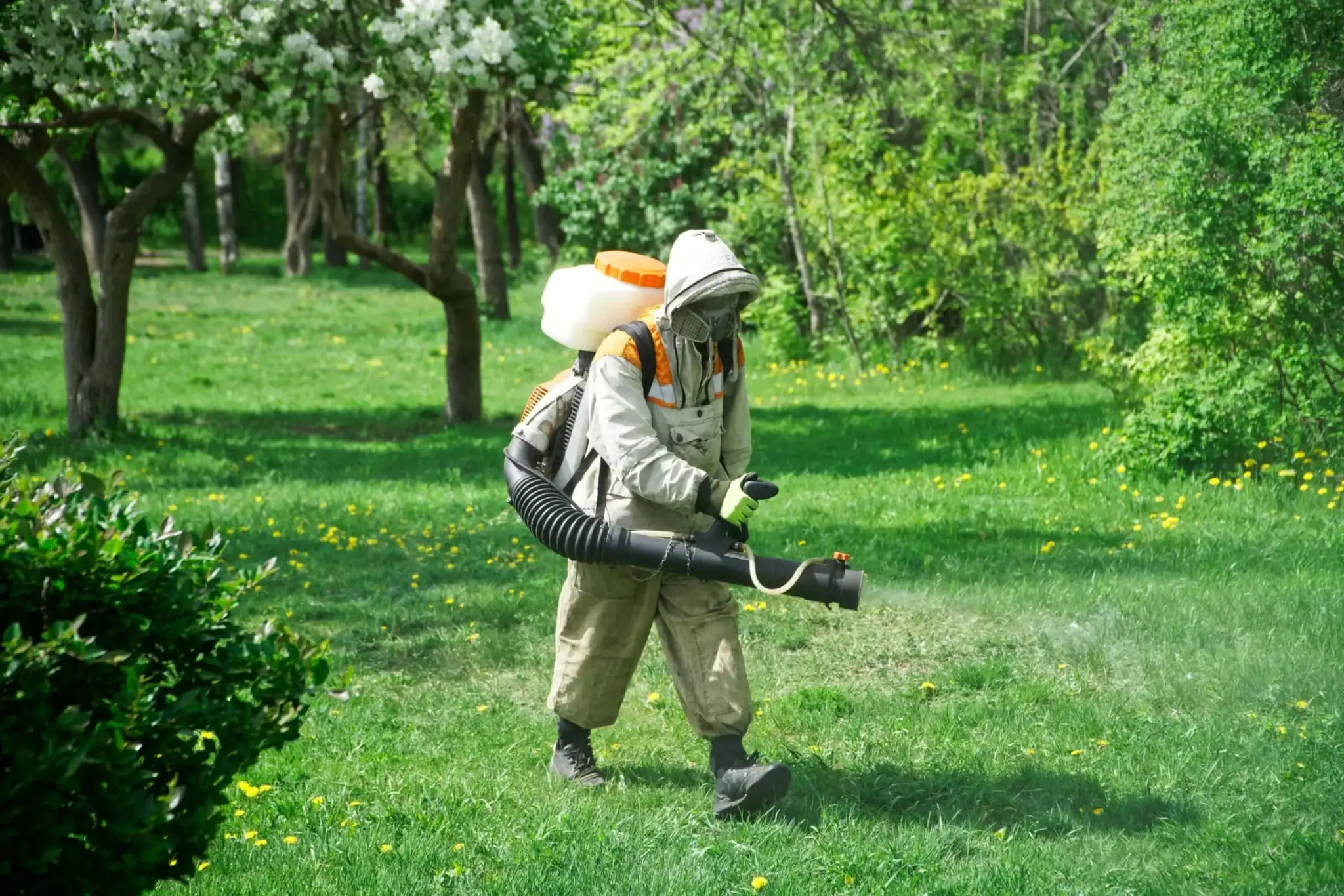
It starts with a real assessment — not a technician walking through your home with a clipboard and a checklist that applies to every house in every zip code. The inspection looks at what’s actually happening in your specific home: where pests are entering, what conditions are attracting them, and what treatment will actually address the root cause rather than just knock back the visible population temporarily.
From there, we build a personalized pest control program around your property. We use an Integrated Pest Management approach, which means the least invasive treatment that gets the job done is always the starting point. For Ovid homes near agricultural land, that often means addressing exterior entry points and perimeter conditions before anything goes inside. For homes with children or pets — or properties near the agricultural fields and drainage areas common throughout Clinton County — that approach matters. You’re not getting a one-size-fits-all chemical treatment. You’re getting a plan that fits your home.
Then the same technician comes back. Not a different person every visit. The same professional who knows your property, knows what was done before, and knows what to look for next time. That consistency is how problems stay solved instead of recurring every season.
Ready to get started?
We handle the full range of pest control services for both residential and commercial customers — rodents, carpenter ants, bed bugs, mosquitoes, wasps, hornets, fleas, ticks, and more. For Ovid homeowners, that means year-round coverage that accounts for Michigan’s full four-season pest cycle: carpenter ants in spring, mosquitoes and stinging insects through summer, rodent intrusion in fall, and ongoing bed bug vigilance through winter.
One service worth knowing about specifically: we’re one of fewer than 100 companies in the entire United States offering certified canine bed bug detection. The dogs find infestations with 95–98% accuracy — compared to about 50% for a standard visual inspection. Michigan ranks second in the nation for bed bug infestations, and with Flint just 30 miles east of Ovid along M-21, that’s not a statistic you can ignore. Early detection is the difference between a manageable treatment and a full-scale infestation in an older rental property or home.
For commercial customers — including businesses tied to Ovid’s growing dairy processing industry — we provide documented, IPM-based commercial pest control programs that meet the sanitation and compliance standards food-handling operations require. Our mosquito program also includes flea and tick treatment at no extra charge, which is a real value for families whose yards border fields or who use the Fred Meijer Clinton County Trail corridor. Seniors, veterans, and first responders receive dedicated discounts, and we’ll match any reasonable competitor’s rate.

It’s not a coincidence — it’s geography. Ovid is surrounded by active agricultural land growing corn, soybeans, wheat, and sugar beets. Field mice and rats live in those fields throughout the growing season. When harvest happens in September and October and temperatures start dropping, those rodents lose their cover and their food source at the same time. The nearest warm structures become their target, and in a city Ovid’s size, that means residential homes, commercial buildings, and anywhere else with a gap in the foundation or a worn door sweep.
The fix isn’t just setting traps. It’s identifying every entry point around your home’s exterior — foundation cracks, utility penetrations, gaps around pipes — and sealing them before the seasonal pressure hits. A proactive rodent control program that addresses exterior conditions in late summer and early fall is far more effective than trying to manage an active infestation once mice are already inside. If you’ve dealt with this more than one fall in a row, that’s your sign the problem needs a real solution, not another box of snap traps from the hardware store.
Bed bug bites alone aren’t a reliable indicator — they look similar to mosquito bites, flea bites, or even a skin reaction to detergent. What you’re looking for is physical evidence in the bed itself: small rust-colored stains on the mattress or box spring, tiny dark spots along the seams (that’s bed bug excrement), shed skins, or the bugs themselves, which are about the size and shape of an apple seed. They hide in seams, tufts, and folds — not just in the mattress but in the bed frame, headboard, and nearby furniture.
A standard visual inspection catches bed bugs roughly 50% of the time, which means there’s a real chance of missing an infestation that’s still in its early stages. We use certified detection dogs that find bed bug activity with 95–98% accuracy. If you’ve bought secondhand furniture recently, traveled, or live in an older rental property in Ovid — all common scenarios in a community with a median rent around $643 a month — early detection is the most cost-effective move you can make. Treating a small infestation is a fraction of the cost of treating one that’s had months to spread.
It depends on the company and the approach. We use Integrated Pest Management, which is the EPA-recognized standard for responsible pest control. IPM starts with the least invasive treatment that will actually work — modifying conditions that attract pests, sealing entry points, and applying targeted treatments only where and when they’re needed. That’s a fundamentally different approach than blanket chemical application throughout a home.
For Ovid families with children, dogs, or cats — and especially for households near agricultural land where kids play in yards that border fields — the question of chemical safety is completely reasonable. Before any treatment, your technician will walk you through exactly what’s being applied, where, and what precautions to take. Typically that means keeping kids and pets out of treated areas for a short window after application, which your technician will specify based on the product used. If you have specific concerns about sensitivities or exposures, bring them up at the start of the assessment. A good technician will factor that into the program, not dismiss it.
A one-time treatment addresses what’s visible right now. An ongoing program addresses why pests keep coming back. For most Michigan homes — and especially for Ovid properties that deal with agricultural-driven rodent pressure in fall, carpenter ant activity in spring, and mosquito and tick pressure through summer — a single treatment isn’t going to hold through every season. Pest pressure in central Michigan is cyclical, and your protection needs to be too.
Recurring pest control programs typically involve scheduled visits timed to the seasonal pressure peaks: perimeter treatments and entry-point work ahead of rodent season, carpenter ant and stinging insect management in spring, and mosquito and tick treatment through the warmer months. The advantage of a recurring program isn’t just coverage — it’s continuity. When the same technician visits your property season after season, they know what’s changed, what’s worked, and what to watch for. That institutional knowledge about your specific property is something a one-time treatment can never replicate. Nationally, 85% of residential pest control revenue now comes from recurring programs, and that shift happened because homeowners found they actually work better.
Yes, and it’s a meaningful part of what we do. Commercial pest control in Ovid isn’t a minor consideration — the city’s largest employer is a major dairy processing facility that handles millions of pounds of raw milk annually. Food-grade processing operations face strict sanitation requirements, and a pest control failure in that environment isn’t just an inconvenience. It’s a potential regulatory shutdown, a product contamination event, and a reputational problem that takes years to recover from.
We provide commercial pest control programs with IPM-trained technicians who understand documentation, compliance standards, and the kind of reliability that commercial operations require. That applies beyond food processing — retail businesses, rental properties, and any commercial operation in Clinton County that needs consistent, accountable pest management can work with us. Commercial programs are built around your specific facility, your schedule, and the regulatory requirements relevant to your industry. If you’re managing a commercial property in Ovid and your current pest control program feels like a checkbox rather than an actual protection plan, that’s worth a conversation.
They’re real discounts applied to real invoices — not a token percentage that disappears in the fine print. In a community like Ovid, where the median household income sits around $45,000 to $50,000 and roughly one in six residents is 65 or older, the cost of professional pest control matters. The discounts for seniors, veterans, and first responders reflect that reality. They exist because we work in communities where those groups make up a meaningful share of the population, and charging them the same rate as everyone else without acknowledging their circumstances didn’t feel right.
The price-match guarantee works alongside the discounts. If you’ve gotten a quote from another licensed pest control company and it’s lower than what we quoted, bring it up. If it’s a reasonable comparison — same scope, same service type, licensed provider — we’ll match it. The goal isn’t to be the cheapest option in Clinton County. It’s to make sure cost isn’t the reason someone goes without effective pest control when they genuinely need it. If you’re a senior homeowner in Ovid dealing with a rodent problem every fall, or a veteran renting an older property on the east side of town, you shouldn’t have to choose between fixing the problem and staying in your budget.
Useful Links