
Hear from Our Customers
There’s a specific kind of frustration that comes with finding a yellow jacket nest on your property. You’re not sure how big it is, you don’t know how long it’s been there, and you’re suddenly very aware of how close it is to your back door, your kids, or your dog. That frustration ends when the nest is properly identified, treated, and eliminated — and you can move through your own yard again without watching where you step.
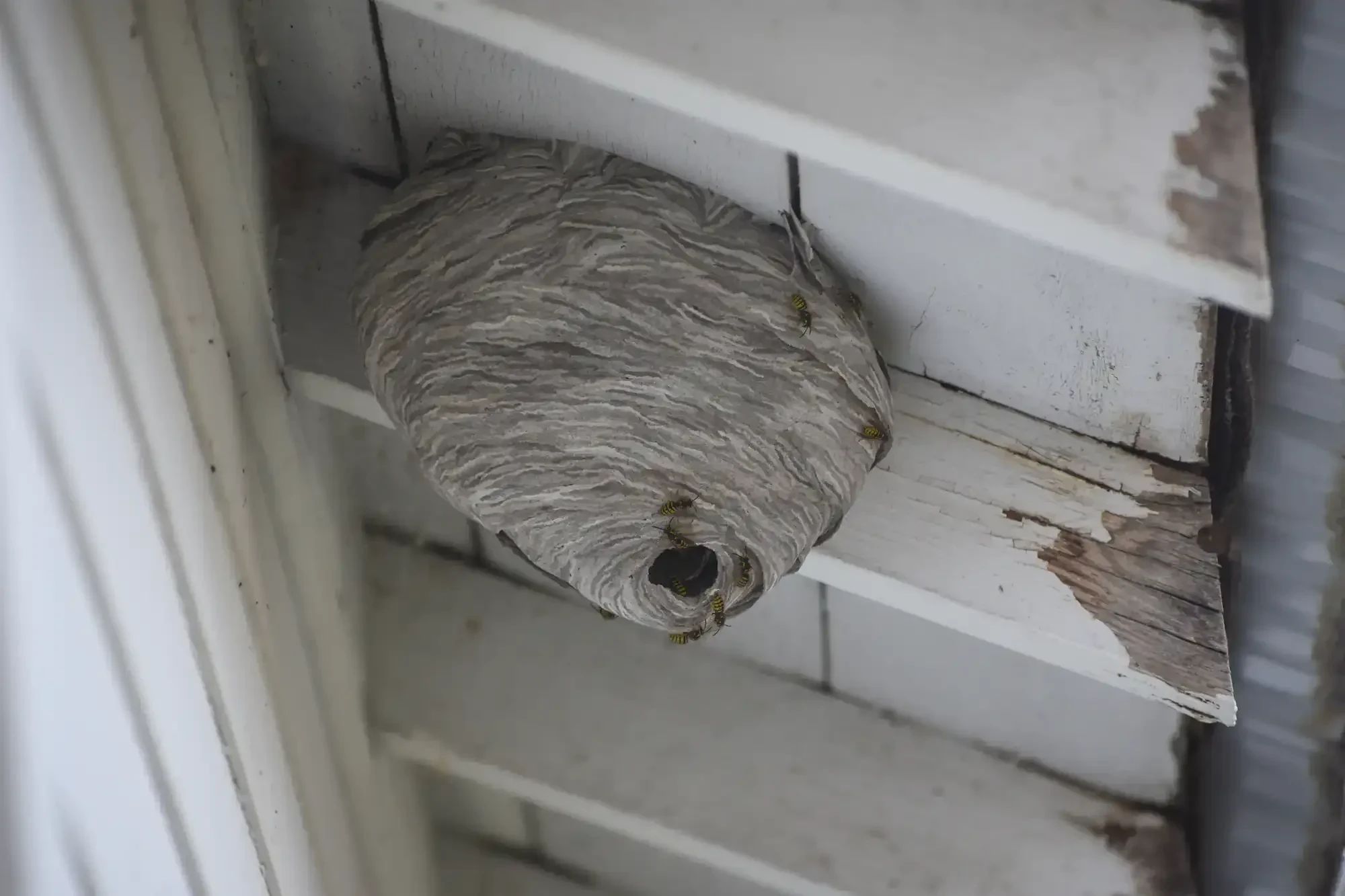
In Ovid, that frustration tends to run a little deeper than it does in a newer subdivision. The older housing stock along the city’s residential streets — homes built decades ago with aging soffits, loose trim, and gaps around chimneys — gives German Yellowjackets exactly the kind of enclosed void they need to build a colony inside your walls. You might not even see them from the outside. You hear them first, or you notice them coming and going near a roofline. By the time most people call us, the colony is already well-established.
The surrounding Ovid Township farmland adds another layer. Open fields, fence lines, and disturbed soil near agricultural borders are prime ground-nesting territory for Eastern Yellowjackets. Hit one of those nests with a mower and the response from the colony is immediate and overwhelming. These aren’t two versions of the same problem — they’re two different species with different behaviors, different nesting locations, and treatments that don’t work interchangeably. Getting that identification right from the start is what separates a resolved problem from a repeat call.
First Choice Pest Control has been serving Michigan homeowners since May 31, 2005 — which means two full decades of learning how Michigan yellow jackets behave, where they nest, and what it actually takes to get rid of them for good. We’ve spent those years working throughout Clinton County, from Ovid’s residential neighborhoods to the farmland that surrounds the community. Roger, who leads the company, brings 26 years of personal, hands-on pest control experience to every job. That’s not a corporate resume — that’s someone who has seen every variation of this problem that mid-Michigan can produce.
We hold MDARD Pesticide Application Business License #250081, carry full insurance, and have completed Integrated Pest Management training — which matters in an area like Clinton County, where properties sit close to farmland, water sources like the Shiawassee River, and working agricultural land. IPM means our approach is targeted: identify the species, treat the specific nest, and address the entry points — not just spray and hope.
What you won’t get here is a rotating cast of seasonal workers. We keep the same technician on your property year after year, which means whoever shows up this August already knows your home, your outbuildings, and your history. That continuity is rare in this industry, and it’s one of the reasons customers stay.
It starts with a call, and based on what customers consistently report, you won’t be waiting long for a callback. Once you connect, the conversation focuses on what you’re seeing — where the activity is, when you first noticed it, and whether it’s inside the structure or on the ground. That information shapes everything that comes next.
When our technician arrives, the first priority is species identification. In the Ovid area, that distinction matters more than most people realize. A ground nest in your lawn or along a field edge near Ovid Township is almost certainly an Eastern Yellowjacket — and it gets treated differently than a German Yellowjacket colony that’s worked its way into a wall void or attic space in an older home. Applying the wrong method to the wrong species doesn’t just fail — it can drive the colony deeper into your home’s structure and make the problem significantly worse.
Treatment is typically scheduled for evening or early morning, when the colony is fully inside the nest and the workers are least active. This timing isn’t a preference — it’s the approach that maximizes effectiveness and minimizes exposure risk for everyone on the property. After treatment, you’ll get a clear picture of what was done, what to watch for in the following days, and how to reduce the likelihood of a new colony establishing in the same location next season. The work is backed by a 1-year service guarantee — if yellow jacket activity returns within the guarantee period, we come back at no additional charge.
Ready to get started?
Yellow jacket infestations in and around Ovid don’t follow a single script. Some are ground nests buried in the lawn or tucked into a field edge along Ovid Township farmland. Some are wall-void colonies that have been quietly growing inside an older home’s siding since spring. Some are attic infestations in a farmhouse or outbuilding that nobody checked until late August — right around the time the Carriage Days Festival rolls around and everyone’s spending more time outdoors. We handle all of it: yellow jacket nest removal, attic yellow jacket removal, wall-void treatment, and ground nest extermination for both residential and commercial properties across the Clinton County area.
For properties near the Maple River State Game Area or along the wooded corridors near the Shiawassee River, yellow jacket pressure tends to be higher than average. Natural habitat borders mean active foraging colonies, and that means more exposure risk for anyone spending time outside. Our treatment approach accounts for the property’s surroundings — not just the nest itself.
Seniors, veterans, and first responders receive a discount on service, and we’ll match any reasonable competitor’s rate. There are no binding contracts, and the 1-year service guarantee means your investment is protected. One call covers your property — whether it’s a single-family home in the city limits or a multi-structure farm property just outside of town.
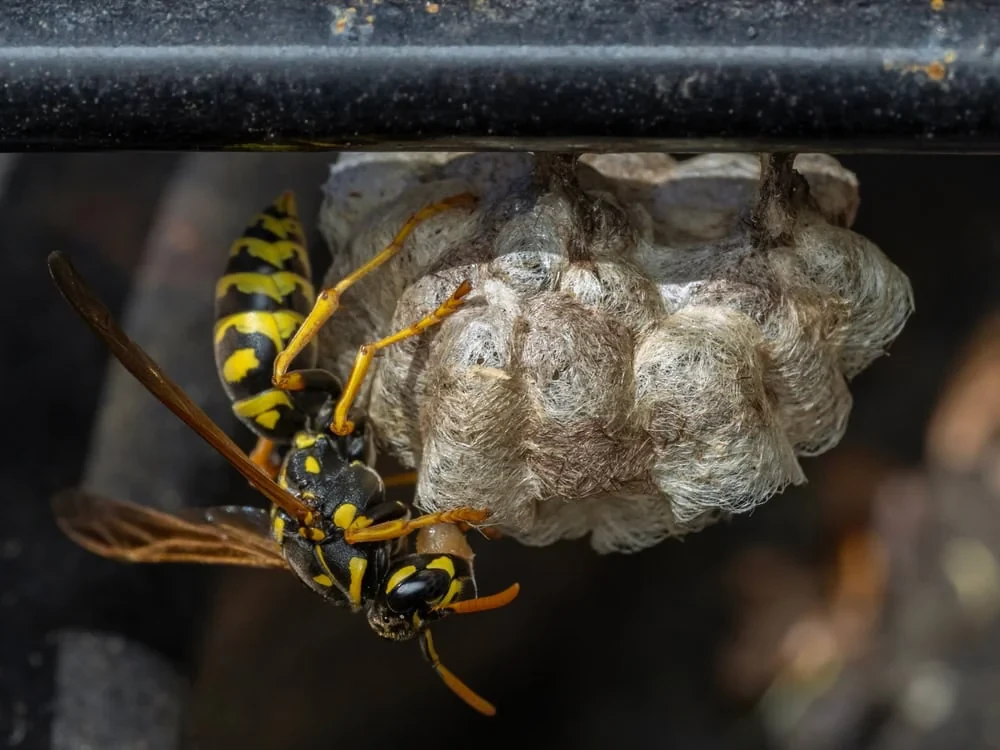
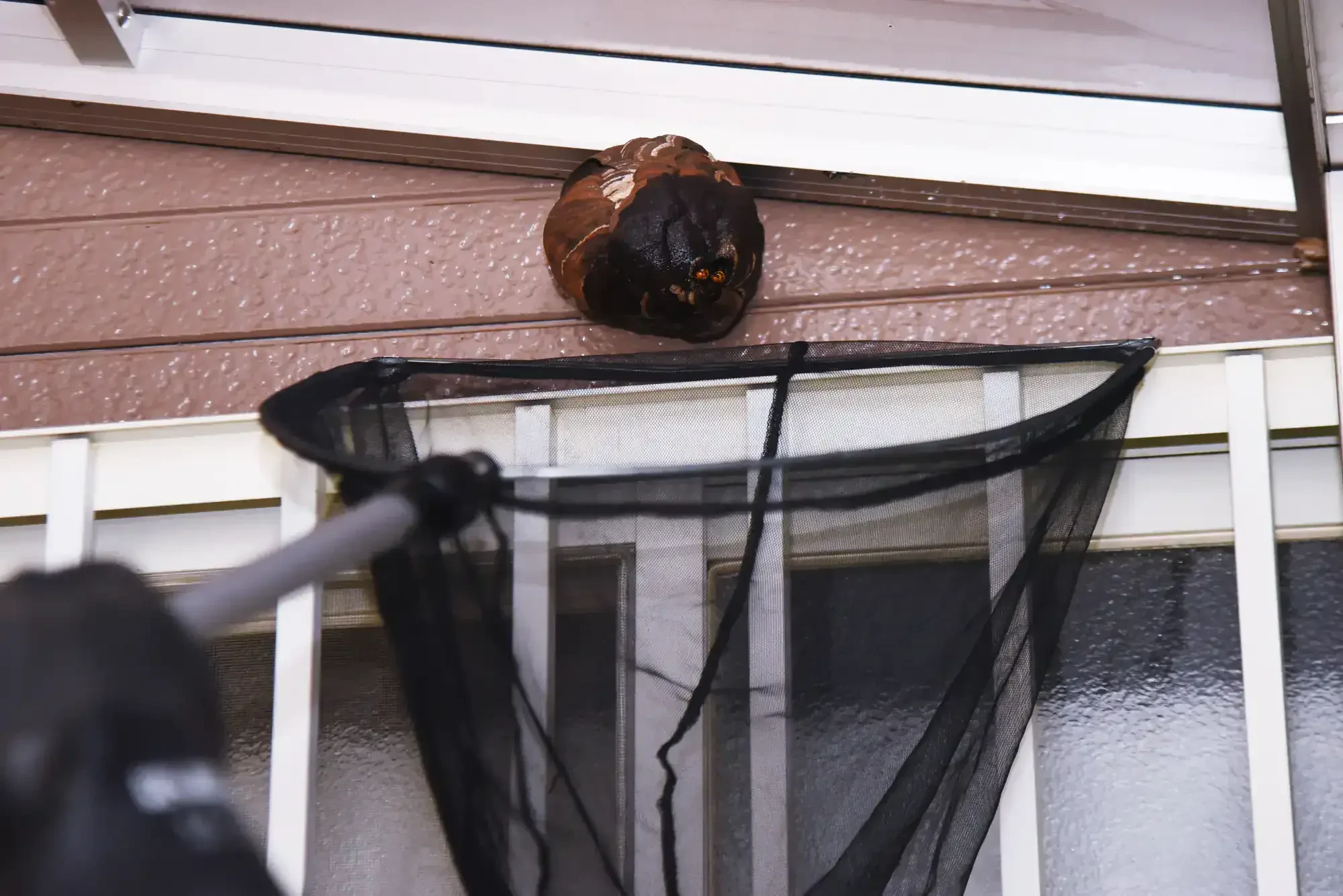
The behavior of the insects is usually your first clue. If you’re seeing yellow jackets entering and exiting through a gap in your siding, soffit, or around a window frame — especially on an older home in Ovid — there’s a strong chance you’re dealing with a wall-void colony. German Yellowjackets, which are the species most commonly responsible for structural infestations in mid-Michigan, are drawn to enclosed spaces and will exploit any opening in aging exterior material to build inside.
Ground nests behave differently. You’ll notice yellow jackets flying low to the ground and disappearing into a hole — often in the lawn, a garden bed, or along a field edge. In the Ovid Township area, where open farmland and disturbed soil are common, Eastern Yellowjacket ground nests are a frequent find, especially along fence lines and near agricultural borders. If you’re not sure which you’re dealing with, don’t probe around trying to find out — a trained technician can identify the species and nesting location safely, and that identification changes the entire treatment approach.
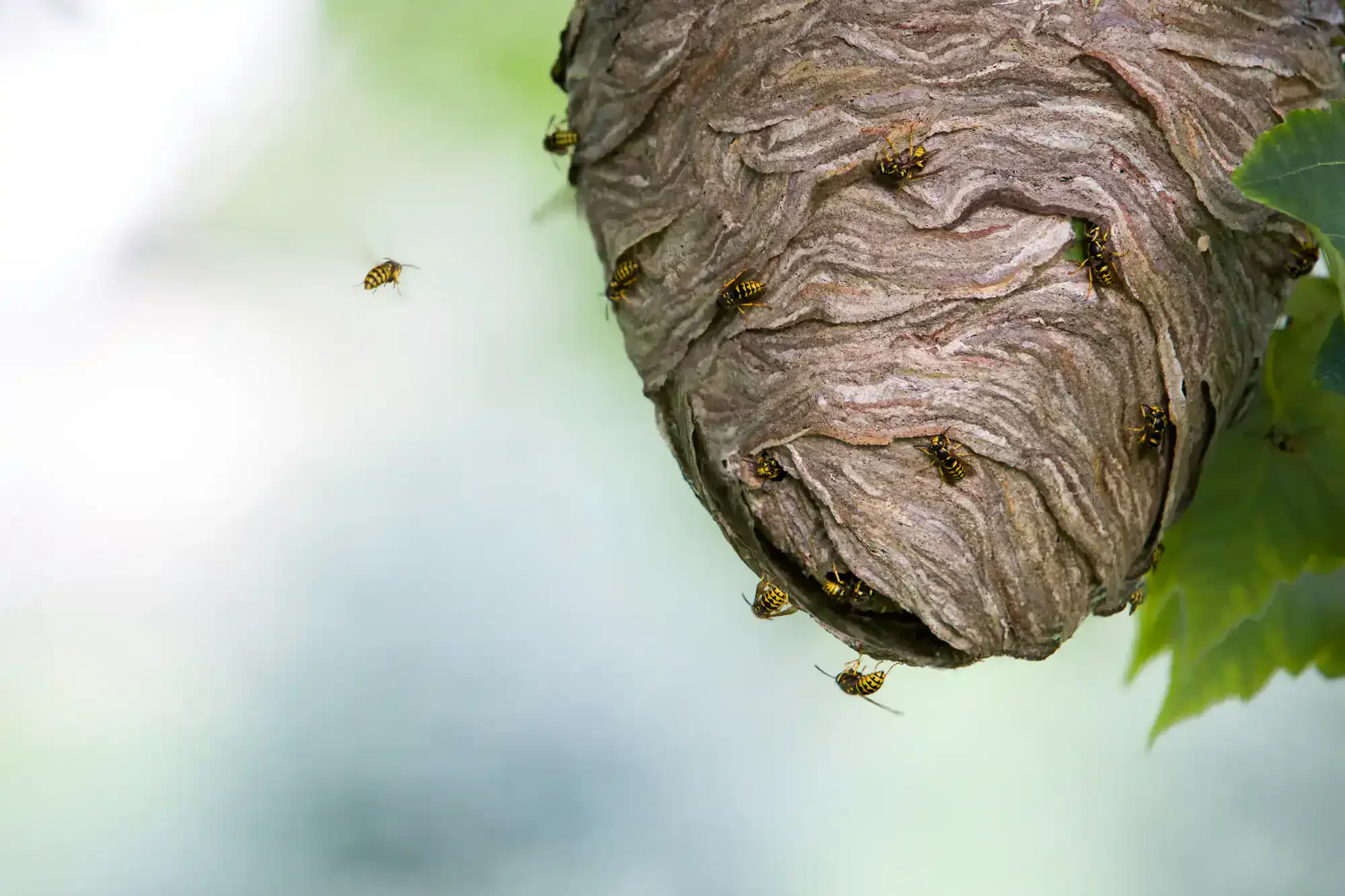
It depends on the situation, but for most homeowners the honest answer is no — not safely, and usually not effectively. Store-bought aerosol sprays can work on a small, newly established nest that’s fully visible and accessible. But by the time most people notice a yellow jacket problem, the colony is already large. A mature colony in late summer can contain anywhere from 1,000 to 5,000 workers, all of which can sting repeatedly and will respond aggressively to any perceived threat.
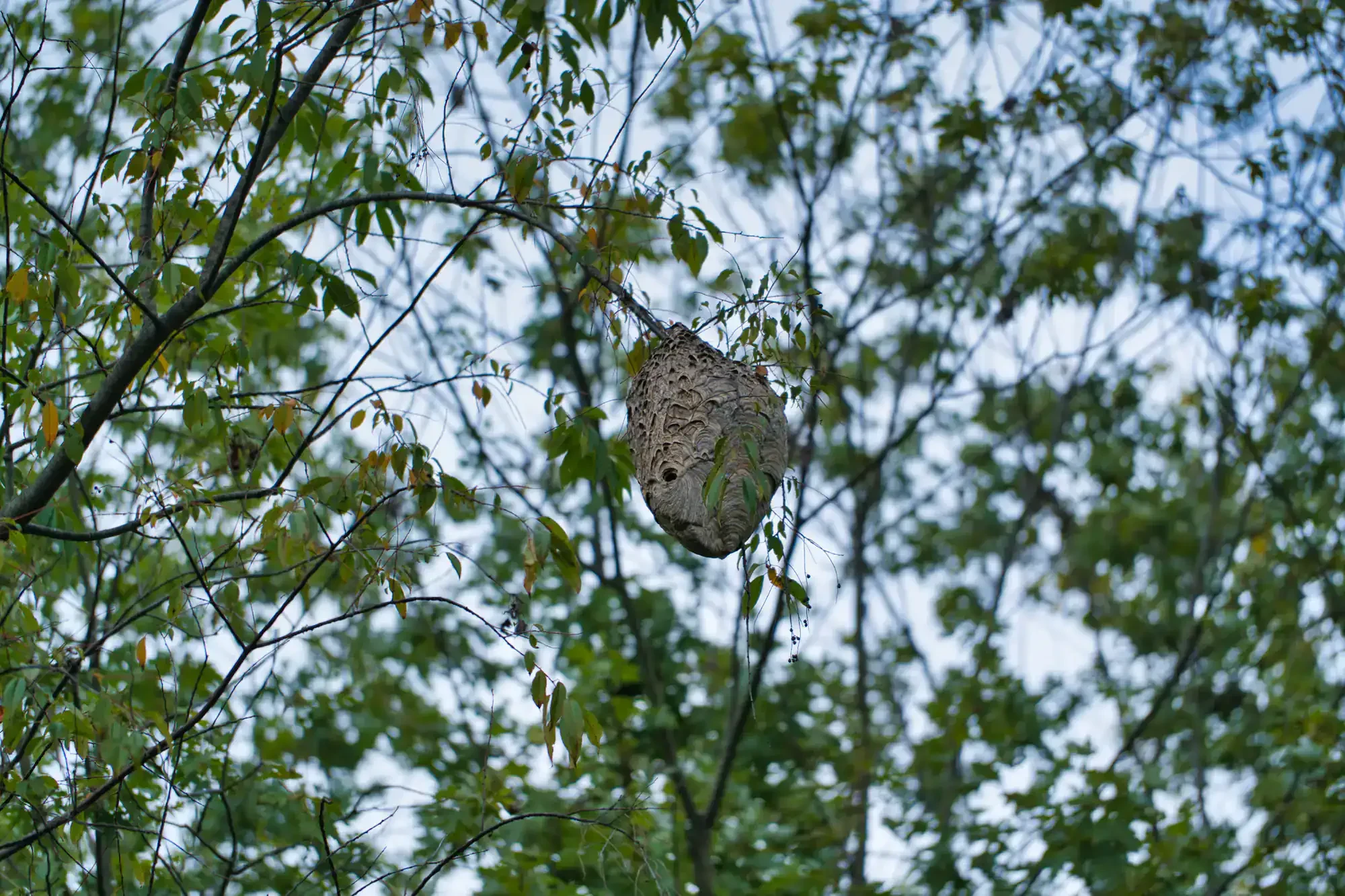
For wall-void or attic nests — which are common in Ovid’s older housing stock — a spray applied at the entry point often doesn’t reach the nest itself. It agitates the colony without eliminating it, and in some cases drives the insects to chew through drywall into the interior of the home. In a rural area like Ovid where the nearest emergency room may be 20 or more minutes away, a severe sting reaction becomes a much more serious situation than it would be in an urban setting. Professional treatment, timed correctly and applied to the right location, is the approach that actually resolves the problem.
Nationally, professional yellow jacket extermination typically runs between $500 and $1,300, with the lower end covering accessible ground nests and the higher end reflecting the complexity of wall-void or attic infestations in older structures. In the Ovid area, the specific cost depends on the species involved, where the nest is located, how large the colony has grown, and whether the nest is in a structure or in the ground.
What’s worth understanding is the cost comparison. An untreated wall-void nest doesn’t just go away when the colony dies in the fall — the entry points stay open, the comb and dead insects attract other pests, and the moisture from a large nest can damage insulation and framing. Structural repairs in that scenario can run well into the thousands. We’ll match any reasonable competitor’s rate, offer discounts for seniors, veterans, and first responders, and back the work with a 1-year service guarantee — so the price you pay is the price that covers the problem, not just the first visit.
Yellow jacket colonies in mid-Michigan start building in early spring when overwintered queens emerge and begin establishing new nests. Through May, June, and into July, the colony grows steadily but the workers are focused on hunting insects — they’re actually beneficial predators of crop-damaging pests during this period, which matters in an agricultural community like Ovid.
The window that most people recognize as “yellow jacket season” runs from August through September. That’s when colonies reach peak size, food sources shift toward sugary materials, and the insects become noticeably more aggressive. It’s also when Ovid’s Carriage Days Festival draws people outdoors in large numbers — exactly the kind of high-activity, food-present environment that provokes yellow jacket encounters. If you’ve noticed activity on your property this summer, August is the critical window to act. Waiting until September means dealing with a colony at its largest and most defensive. Calling earlier in the season gives you more options and typically a more straightforward treatment.
The original colony won’t survive the winter — worker yellow jackets die off as temperatures drop, and only newly mated queens overwinter to start fresh colonies in spring. So in that narrow sense, the nest itself won’t come back. But that framing misses the larger issue.
An untreated nest in a wall void or attic leaves the entry points wide open. New queens emerging in spring actively seek out enclosed spaces that offer shelter and a head start — and a void that previously housed a colony is exactly the kind of location they’ll find and reuse. Ground nests are slightly different, but disturbed soil and established burrow locations still attract new queens looking for nesting sites. Treating the nest this season and sealing the entry points afterward is what breaks that cycle. Our approach includes guidance on closing off the access points that allowed the colony to establish in the first place — which is the step that most DIY treatments skip entirely.
Yes. We offer price discounts for senior citizens, military veterans, and first responders. In a community like Ovid — where the cost of any home service is a real household consideration and where these groups make up a meaningful part of the population — it’s a straightforward way to make professional pest control accessible to the people who need it most.
Beyond those discounts, we’ll match any reasonable competitor’s rate. So if you’ve already gotten a quote from another provider serving the Clinton County area, bring it to the conversation. The goal is to make sure price isn’t the reason you end up with a less experienced technician or a company that doesn’t back its work with a guarantee. The 1-year service guarantee is included with every job — if yellow jacket activity returns within the guarantee period, we come back at no additional charge. No contracts, no fine print, no pressure.
Useful Links