Hear from Our Customers
Most wasp problems in Cohoctah Center don’t start at the front door. They start in the barn rafters, along the fence line, in the root cavity at the edge of the tree line, or in the abandoned rodent burrow your riding mower rolls over every Saturday. By the time you find it, the colony is already well established — and the first sign is usually a sting, not a sighting.
That’s what makes wasp nest removal on rural Livingston County properties different from a typical suburban call. You’re not dealing with one nest over a concrete stoop. You’re dealing with a property that has multiple outbuildings, wooded perimeter, and animals that can’t move away from a ground nest on their own. Horses, dogs, and livestock are especially vulnerable — they can’t tell you they’ve been stung, and they can’t avoid a nest they don’t know is there.
Once the nest is gone, the difference is immediate. You can mow the back field without watching your step. Your dogs can run the yard. The kids can play outside without you scanning the treeline. That’s not a small thing when you’ve been managing around a colony for weeks — or when you didn’t even know it was there until something went wrong.
We’ve been operating in Michigan since May 31, 2005 — which means Roger Chinault has been solving pest problems in Cohoctah Center and the surrounding area for two decades, with 26 years of hands-on experience behind him. This isn’t a franchise with rotating seasonal workers. It’s a family-owned company where the same technician comes back to your property year after year, already knowing your layout, your outbuildings, and your history.
Cohoctah Township borders Shiawassee County to the north — and we serve Shiawassee County directly. That’s not a stretch of our service area. That’s a neighbor showing up. We understand what rural Livingston County properties actually look like: the older farmhouses, the equipment sheds, the marshy low spots along the South Branch of the Shiawassee River corridor where insect pressure runs high all season.
No binding contracts. No part-time college students sent to handle something this serious. We’re recognized on Angie’s List and HomeAdvisor, IPM trained, and fully licensed by the Michigan Department of Agriculture and Rural Development. We offer discounts for seniors, veterans, and first responders — because a community like Cohoctah Center has earned that.
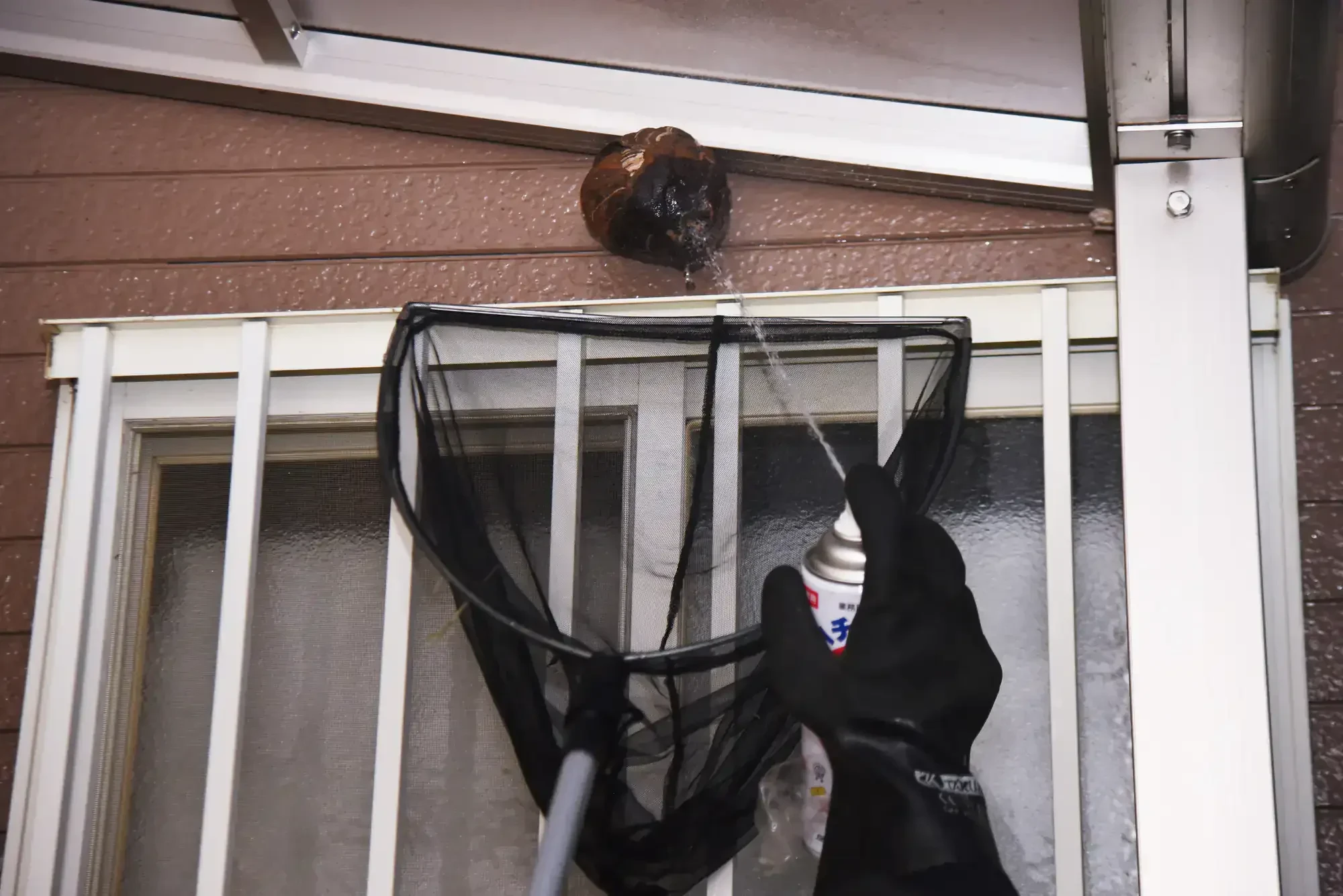
When you call, the first thing that happens is a real conversation — not a script. You describe what you’re seeing, where you think the nest is, and whether you’ve already tried to address it yourself. That last part matters. A colony that’s been agitated by a hardware store spray is more aggressive and requires a different approach than one that hasn’t been disturbed. Knowing that upfront changes how our technician prepares.
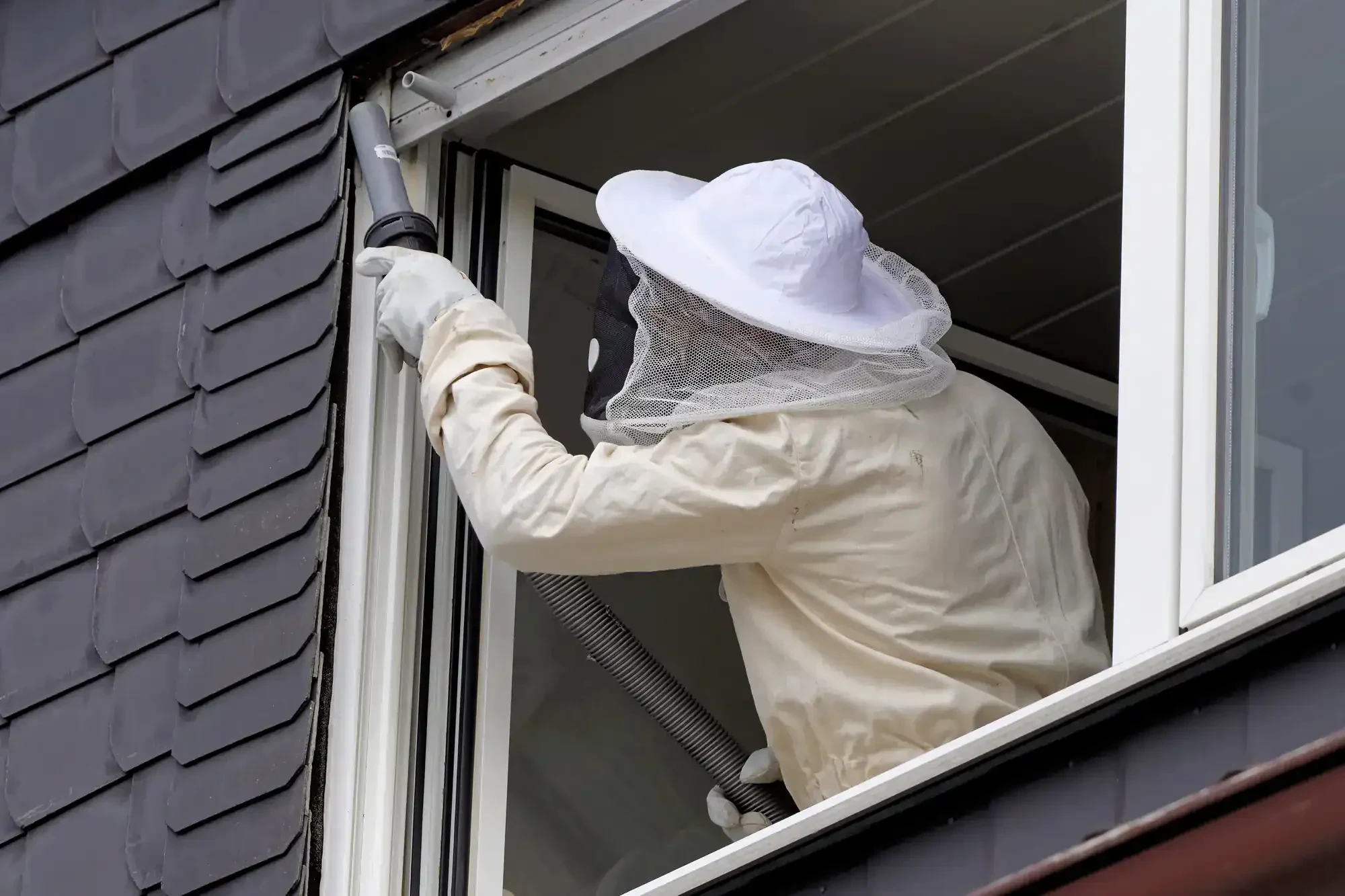
On the day of service, our technician does a full property assessment before treating anything. On a rural Cohoctah Center property, that means checking the obvious spots and the ones you wouldn’t think to look — barn eaves, shed wall voids, equipment storage areas, fence post cavities, and the ground along wooded edges where yellow jackets nest underground in abandoned burrows. Michigan yellow jacket colonies can reach 5,000 to 15,000 workers by late summer, so a thorough inspection isn’t optional. Missing a second nest on a large rural parcel creates the same problem you started with.
Our treatment targets the full colony — not just the entrance. After the colony is eliminated, we remove the nest and seal entry points so the location doesn’t become a nesting site again next spring. You’ll get a clear timeline for when it’s safe for people and animals to return to the treated area, and our technician will walk you through what to watch for in the weeks ahead. No guesswork, no vague reassurances.
Ready to get started?
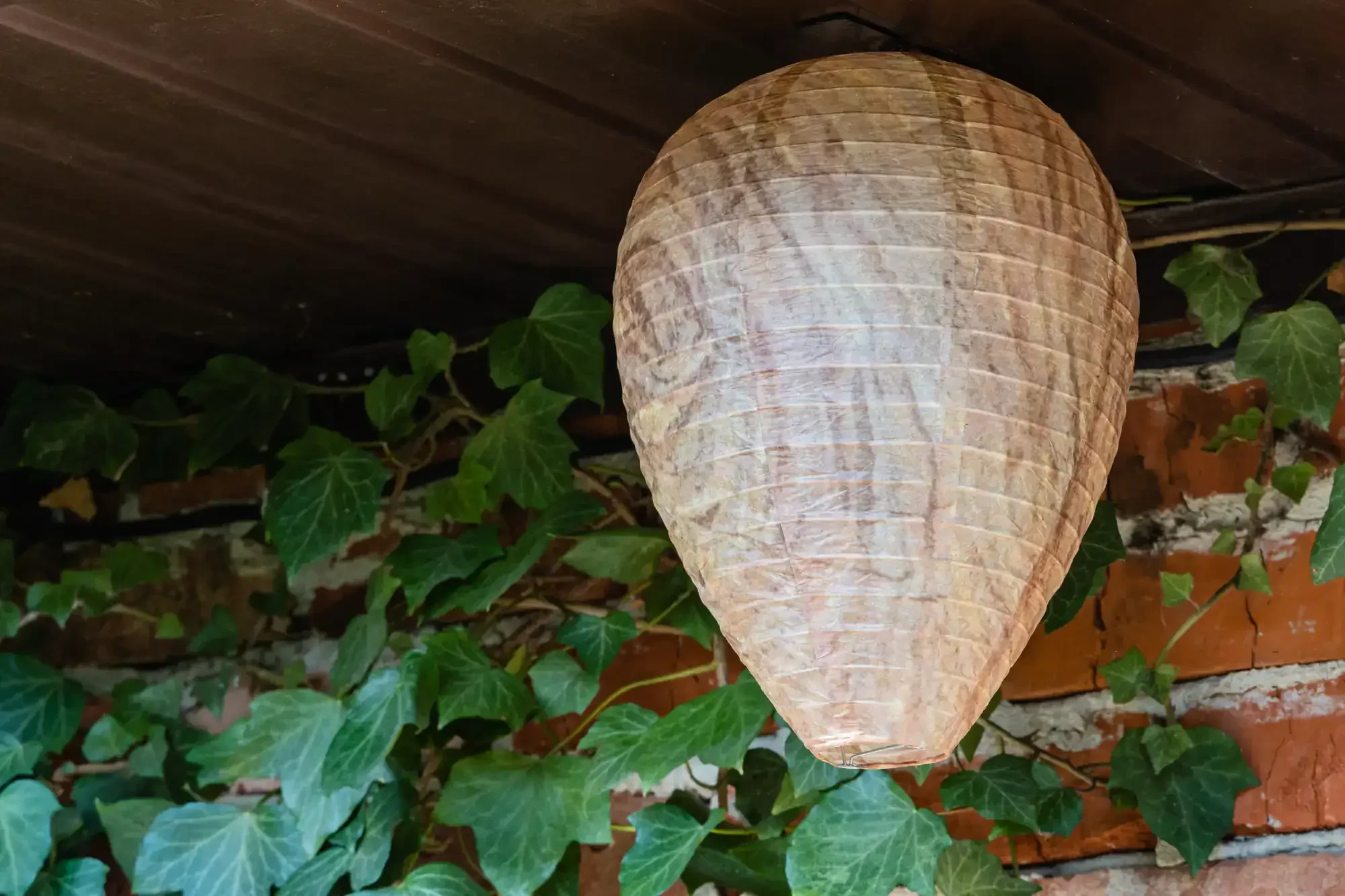
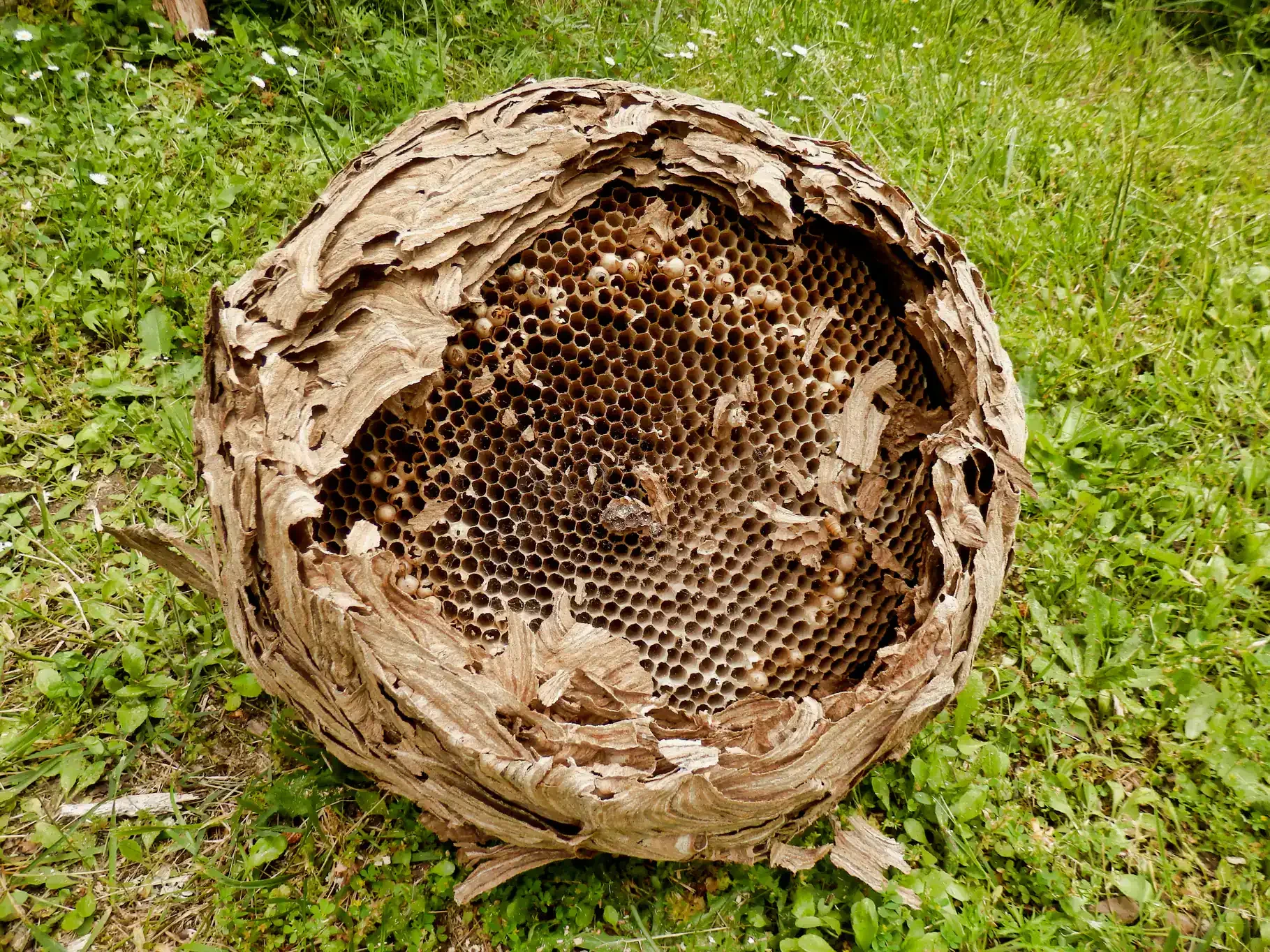
Not every wasp problem looks the same, and on a rural Cohoctah Center property, you’re more likely to encounter multiple species nesting in multiple locations than a homeowner in a suburban subdivision ever would. Paper wasps build open-comb nests under eaves, in barn rafters, and along fence lines. Bald-faced hornets build large, enclosed paper nests in the trees and shrubs along your wooded perimeter — sometimes growing to the size of a basketball before anyone notices. Yellow jackets are the most dangerous: they nest underground in field edges and root cavities, they’re invisible until you’re standing on them, and their colonies are the largest and most aggressive of the three.
We handle all of it. Our service includes full colony elimination, physical nest removal, and entry point sealing — not just a spray and a follow-up call. For properties with horses, livestock, or working dogs, our technician will communicate specifically about re-entry timing and any precautions relevant to your animals. That’s not an afterthought in Livingston County’s farming community — it’s part of the job.
Pest control in Michigan is regulated by the Michigan Department of Agriculture and Rural Development under Act 451. Every First Choice technician is a licensed commercial pesticide applicator, which means the products and methods we use on your property meet state standards for safety and efficacy. If you’ve found a reasonable competitor quote for wasp nest removal in the Cohoctah Center area, we’ll match it.
This is one of the most common questions from Cohoctah Center property owners, and it’s the right one to ask. The answer depends on the product used, the location of the nest, and how the treatment was applied — and our licensed technician should give you a specific re-entry window before leaving your property, not a generic estimate.
For most treatments, animals should be kept away from the treated area for a minimum of a few hours after application, and longer if the nest was inside a barn or enclosed structure where ventilation is limited. Horses are particularly sensitive to stress and disturbance, so it’s worth planning the service for a time when you can move them to a different paddock or pasture during and immediately after treatment. Our technician will walk through all of this with you before the job starts — because on a property with livestock in the Cohoctah Center area, the animal safety conversation is part of the service, not an afterthought.
It matters more than most people realize, because the species determines where the nest is, how large the colony gets, and how aggressive the removal needs to be. Paper wasps — the ones you usually see building small, open-comb nests under eaves and in barn rafters — are relatively docile unless directly disturbed. Bald-faced hornets build those large, enclosed gray paper nests in trees and shrubs, and they’re significantly more aggressive when threatened.
Yellow jackets are the ones that cause the most problems on rural Livingston County properties. They nest underground in old rodent burrows and root cavities along field edges — exactly the kind of terrain that makes up most of Cohoctah Township. Their colonies grow to between 5,000 and 15,000 workers by late summer, they’re invisible until you step on them, and they sting repeatedly without provocation once the nest is disturbed. Yellow jacket removal is also the most expensive category nationally, averaging around $725, because of the colony size, underground access, and level of aggression involved. Knowing what you’re dealing with before treatment starts is part of what makes the job go right.
The honest answer is: as soon as you find it, but earlier in the season is always better. In Michigan, queen wasps emerge from overwintering sites in April and May and begin building new nests. At that stage, a colony might have a few dozen workers and a nest the size of a golf ball. That’s the easiest and least expensive removal of the season.
By August and September — peak season in Livingston County — a yellow jacket colony can have thousands of workers, maximum aggression, and a nest that’s been expanding for months. Late summer is also when natural food sources start declining, which makes workers more likely to forage aggressively and sting without much provocation. If you’re mowing fields, working around the barn, or letting kids play in the yard during that window, the risk is real. Calling in June costs less and is far safer than calling in September when the colony is at full strength. If you’re already in late summer, don’t wait — the problem won’t resolve on its own until the first hard frost, and that’s a long time to manage around an active nest on a rural property.
Possibly, yes — and that’s not a judgment. It’s just how wasp biology works. When a colony is disturbed but not eliminated, the surviving workers become significantly more defensive. They’ll guard the nest entrance more aggressively, respond faster to vibration and movement nearby, and in some cases, the queen will relocate the colony to a more protected spot that’s harder to find and treat. A partially treated nest is often more dangerous than an untreated one.
The other issue with most hardware store sprays is that they’re designed to kill wasps on contact at the entrance — not to penetrate deep enough to reach the queen and the full colony. If the queen survives, the colony survives. Our professional treatment uses products and application methods specifically designed to reach the core of the nest, eliminate the entire colony, and prevent rebuilding. If you’ve already made an attempt, let our technician know when you call. That changes the approach and the level of protective equipment needed for the job.
On a rural Cohoctah Center property with multiple outbuildings, wooded edges, and open field, there’s a real possibility you have more than one active nest — especially if you’re seeing wasp activity in several different areas. A single property can have paper wasp nests under barn eaves, a bald-faced hornet nest in the tree line, and a yellow jacket ground nest along the fence row, all at the same time and all requiring different treatment approaches.
The full property assessment that happens at the start of every First Choice service call is specifically designed to find what you haven’t found yet. Our technician checks the locations that rural property owners typically miss — inside barn wall voids, around equipment storage areas, along the ground at wooded edges, and near any structure that sits undisturbed for weeks at a time. That’s not a bonus feature. On a property like yours, it’s the only way to actually solve the problem rather than just address the one nest you already knew about.
Yes, and they apply to every service call in the area. Cohoctah Township has a significant senior population — more than 650 adults over 65 — and a community character that runs deep with people who’ve served in the military or worked in public safety. The discounts aren’t a footnote. They’re a straightforward acknowledgment that these residents have contributed something real, and the pricing should reflect that.
If you qualify as a senior, veteran, or first responder, mention it when you call. There’s no complicated verification process or fine print to navigate. We also offer price matching for reasonable competitor rates, so if you’ve already gotten a quote from another wasp removal company serving the Cohoctah Center area, bring it up. The goal is to make sure cost isn’t the reason someone puts off a removal that genuinely needs to happen — especially on a rural property where a nest near the barn or paddock isn’t just an inconvenience.
Useful Links