
Hear from Our Customers
When a wasp nest is on your property, the backyard stops being a place your family uses. The deck sits empty. The kids stay inside. That’s the real cost — not just the pest, but the space you’re no longer comfortable using. A properly handled removal changes that quickly and completely.
Jossman Acres properties sit on large, wooded lots with exactly the conditions wasps prefer — mature tree canopy, natural ground cover, undisturbed soil near the tree line. Yellow jackets build ground nests in that kind of terrain. Paper wasps claim eave overhangs, garage frames, and deck structures. Bald-faced hornets go for the trees at your property boundary. The more natural habitat surrounding your home, the more nesting opportunities exist — and the more important it is to deal with a nest before the colony grows.
By late August, yellow jacket colonies in northern Oakland County can reach 5,000 to 15,000 workers. At that size, the aggression level is completely different than it was in June. Getting ahead of it — or responding quickly when you find one — matters more than most people realize until they’ve had a close call.
First Choice Pest Control was founded on May 31, 2005, by Roger Chinault — and Roger still runs it. He has 26 years of hands-on pest control experience and built this company on a straightforward idea: do the job right, send the same technician back every time, and don’t lock people into contracts they don’t need.
We operate out of Swartz Creek, right at the Genesee and Oakland County line — the same county border that Jossman Acres sits on. This isn’t a national chain dispatching someone unfamiliar with the area. The technicians who serve Jossman Acres and Springfield Township know the wooded, acreage-lot properties here. We know what the terrain looks like, where yellow jackets nest in this type of ground cover, and how to treat a property that’s more land than lawn.
We hold Integrated Pest Management training, have earned recognition from both Angie’s List and HomeAdvisor, and are fully licensed through the Michigan Department of Agriculture and Rural Development. No binding contracts. No part-time seasonal workers. Just career professionals who know what we’re doing.
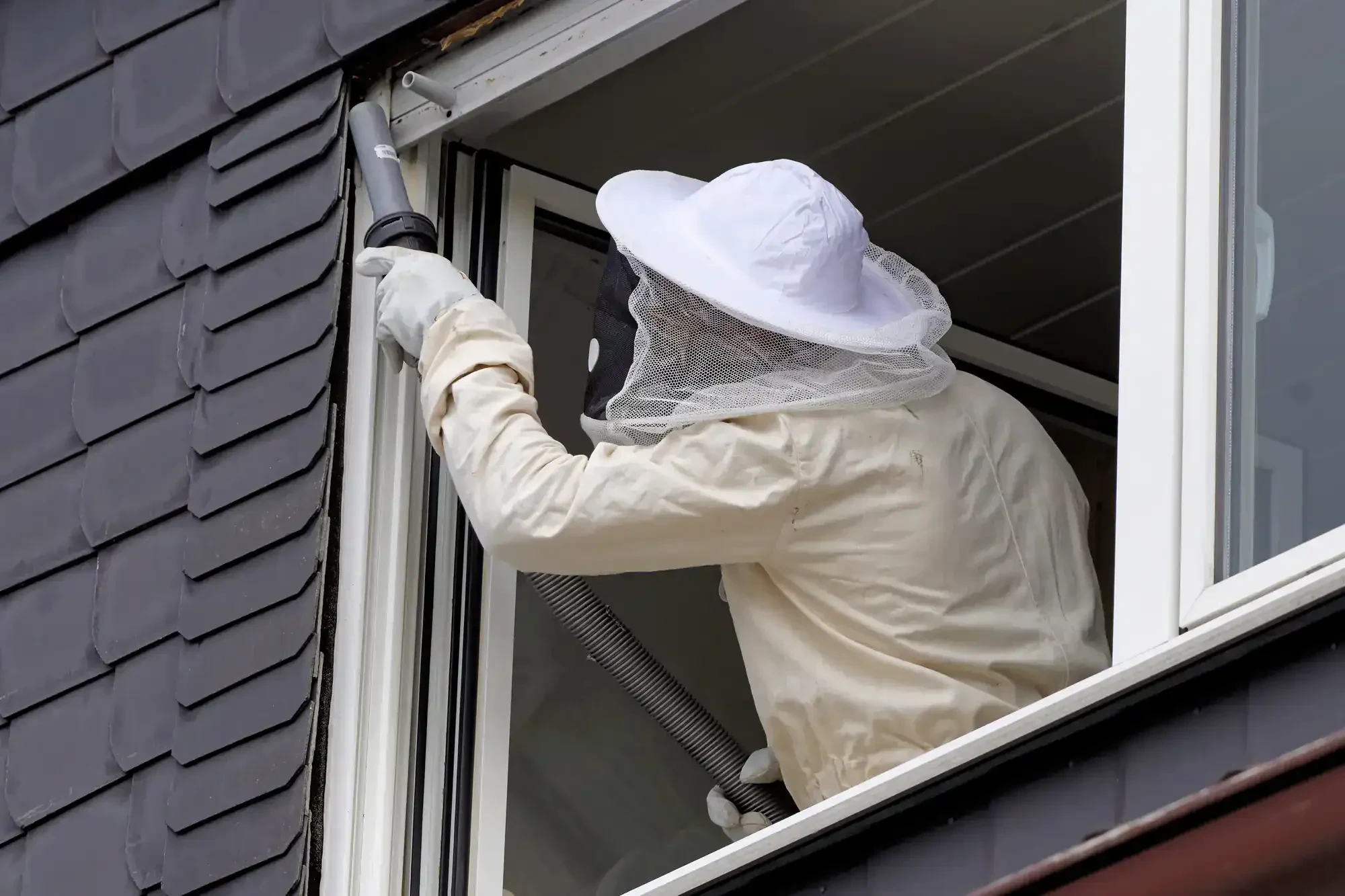
It starts with a thorough inspection of your property — not just the visible nest, but the surrounding areas where secondary activity or additional colonies might be present. On a wooded Jossman Acres lot, that means checking the tree line, the ground cover near undisturbed soil, eave overhangs, deck structures, garage frames, and any wall voids or attic vents that could be harboring activity you haven’t spotted yet.
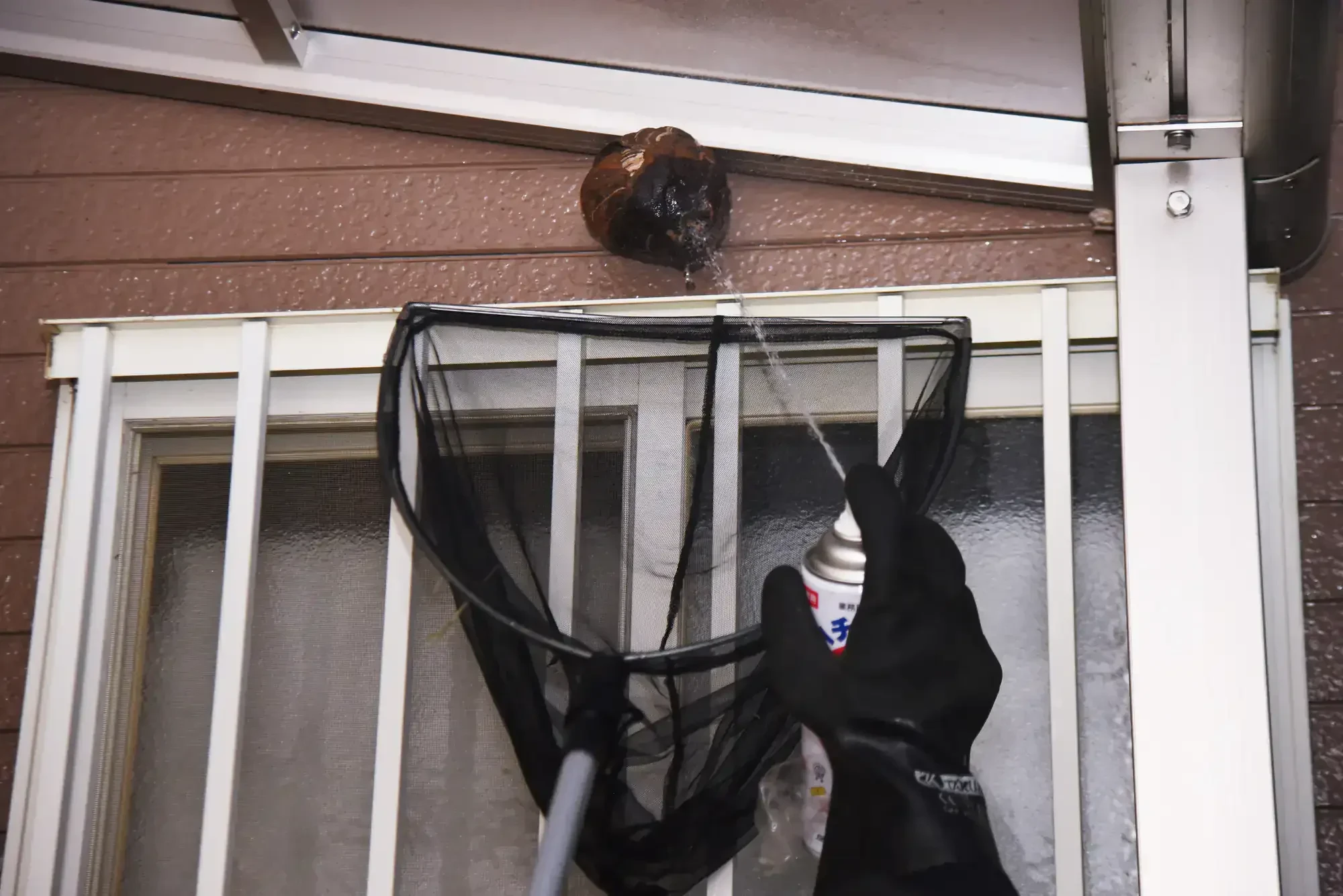
Once the full picture is clear, we apply treatment directly to the colony using targeted methods that match the nest type and location. Ground nests, aerial nests, and wall void infestations each require a different approach — and that distinction matters. After the colony is eliminated, the nest structure is physically removed where accessible, and entry points are sealed to reduce the likelihood of re-nesting in the same location.
Michigan’s peak season runs August through September, and that timing is relevant for Jossman Acres homeowners specifically. Colonies are at maximum size and maximum aggression during that window. If you’re finding a nest in late summer, don’t wait on it. Treatment timing affects both safety and outcome, and the sooner a colony is addressed, the more straightforward the process. If wasps return after treatment, we come back — that’s not a marketing line, it’s just how the job is supposed to work.
Ready to get started?
Most wasp problems on Jossman Acres properties aren’t limited to one visible nest. The wooded setting, mature landscaping, and acreage lots that make this neighborhood appealing to families also create multiple potential nesting sites — some obvious, some not. We treat the full scope of what’s actually present, not just the one spot that got your attention.
For yellow jacket nest removal in Jossman Acres, that often means addressing ground nests in the undisturbed soil near the tree line — a nesting type that’s common on larger lots with natural cover and one that’s particularly dangerous because the entry point is easy to step on without realizing it’s there. Paper wasp nests under eaves, deck railings, and garage door frames are handled with direct colony treatment and structural removal. Bald-faced hornet nests in trees or shrubs require a different application method and careful timing.
All commercial pesticide application in Michigan is regulated by the Michigan Department of Agriculture and Rural Development under Act 451, Part 83. We hold current MDARD licensing — something worth confirming with any provider you’re considering. We serve residential properties throughout the Jossman Acres and Springfield Township area, and we also serve commercial customers in Oakland County. Seniors, veterans, and first responders receive a discount — ask about it when you call.
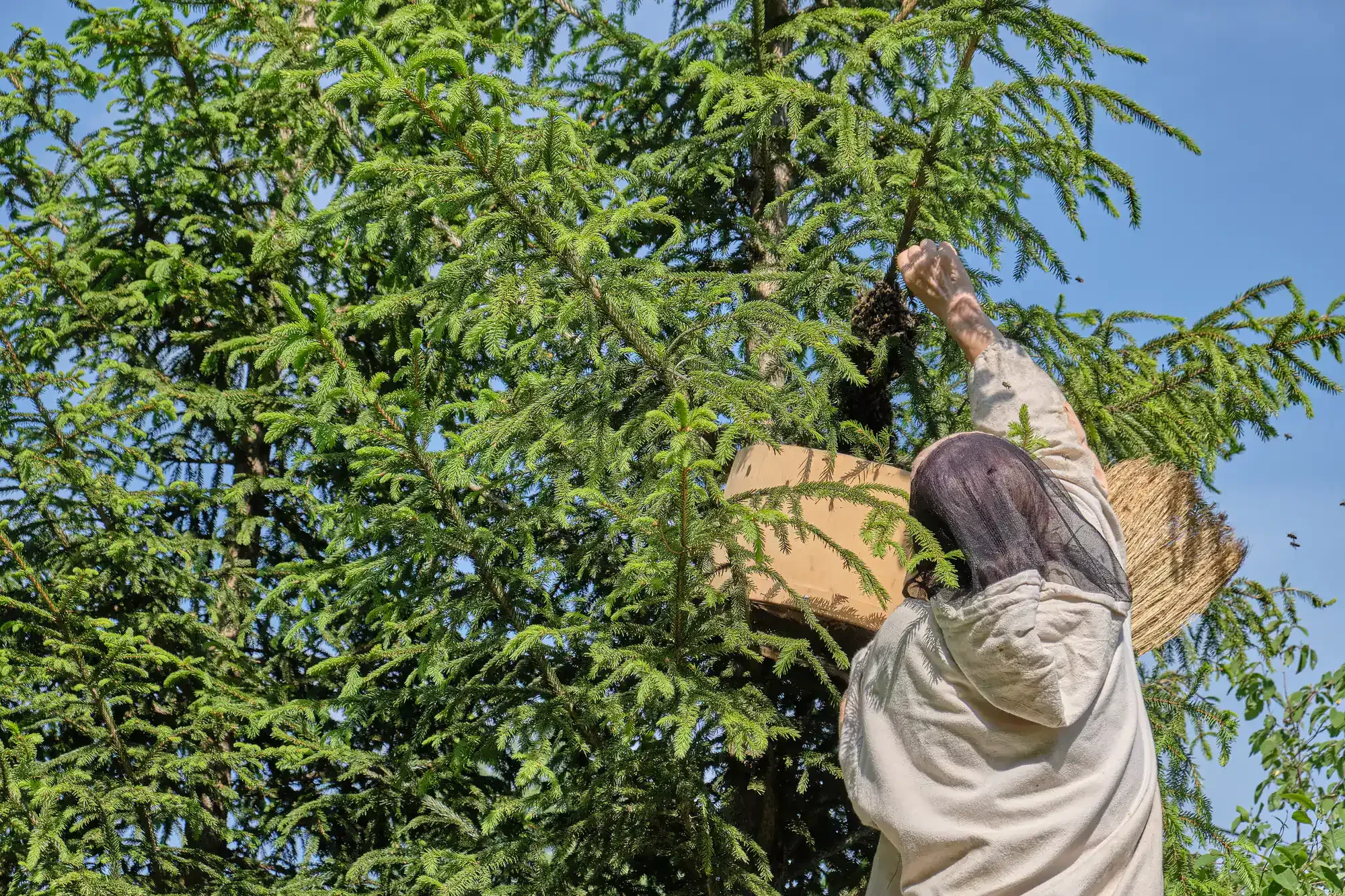
The short answer is that all active wasp nests carry risk, but the level of danger depends on a few factors: the species, the size of the colony, and where the nest is located relative to regular foot traffic. Yellow jackets are the most aggressive of the common stinging insects in northern Oakland County, especially in late summer when their colony is at full size and natural food sources start to decline. A ground nest near a play area, a path to the garage, or anywhere kids or pets move through regularly is a high-priority situation.
Paper wasps and bald-faced hornets are generally less aggressive unless the nest is disturbed, but “disturbed” can mean something as simple as mowing nearby or opening a garage door repeatedly. On a wooded Jossman Acres lot where the nest might be in a tree, under a deck overhang, or tucked into a garage eave, you may not even realize you’re that close to it until someone gets stung. If you’re seeing consistent wasp activity around a specific area of your property, that’s enough reason to have it looked at — you don’t need to find the nest yourself to make the call.
Yes, it matters — not because the end goal changes, but because the nesting behavior, colony size, and treatment approach are different for each. Yellow jackets are the ones most Jossman Acres homeowners end up dealing with, and they’re also the most aggressive. They typically nest in the ground or inside wall voids, which makes them harder to spot and more likely to be disturbed accidentally. Their colonies can reach thousands of workers by late summer, and they don’t lose their stinger after one use the way honeybees do.
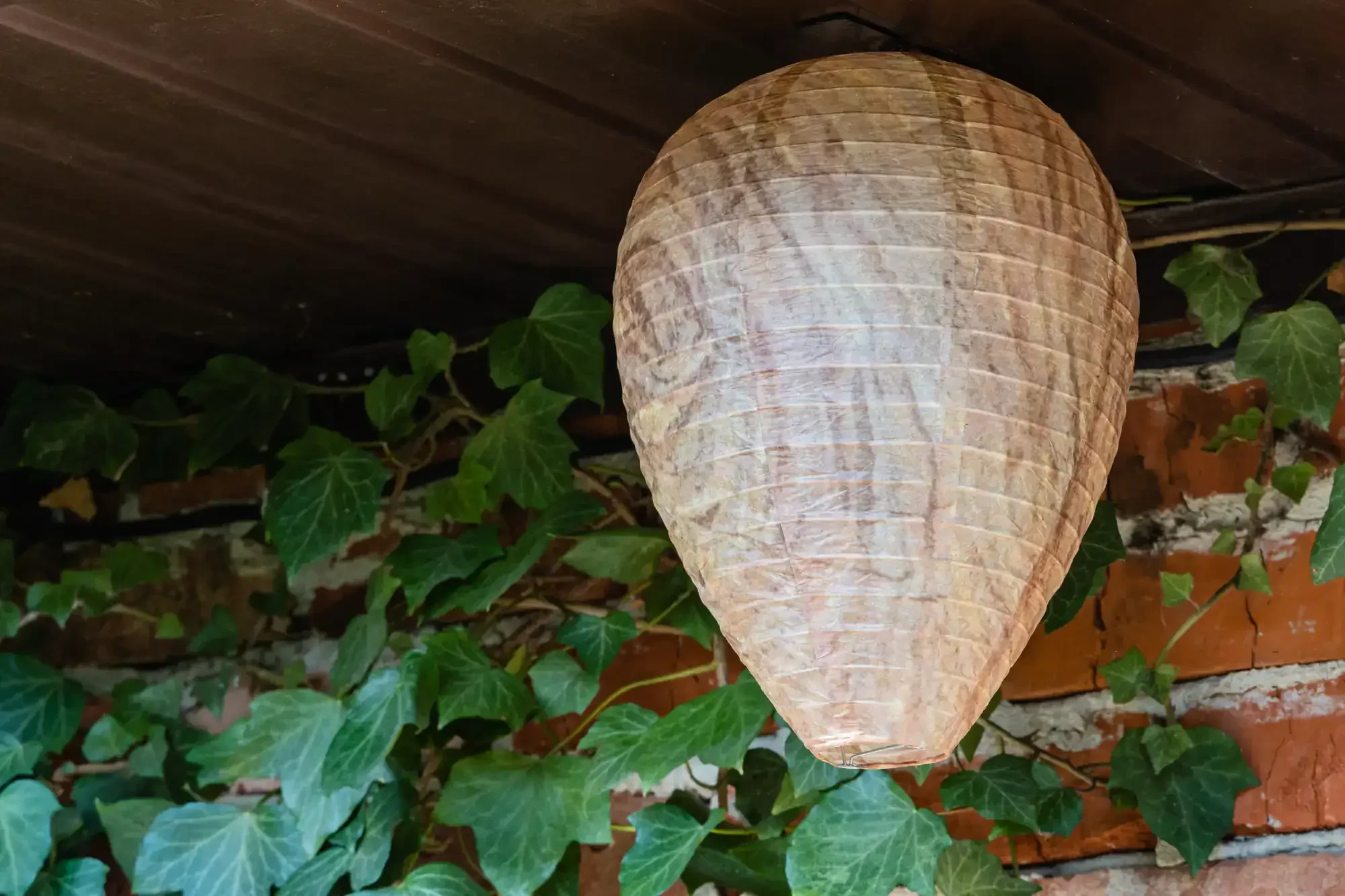
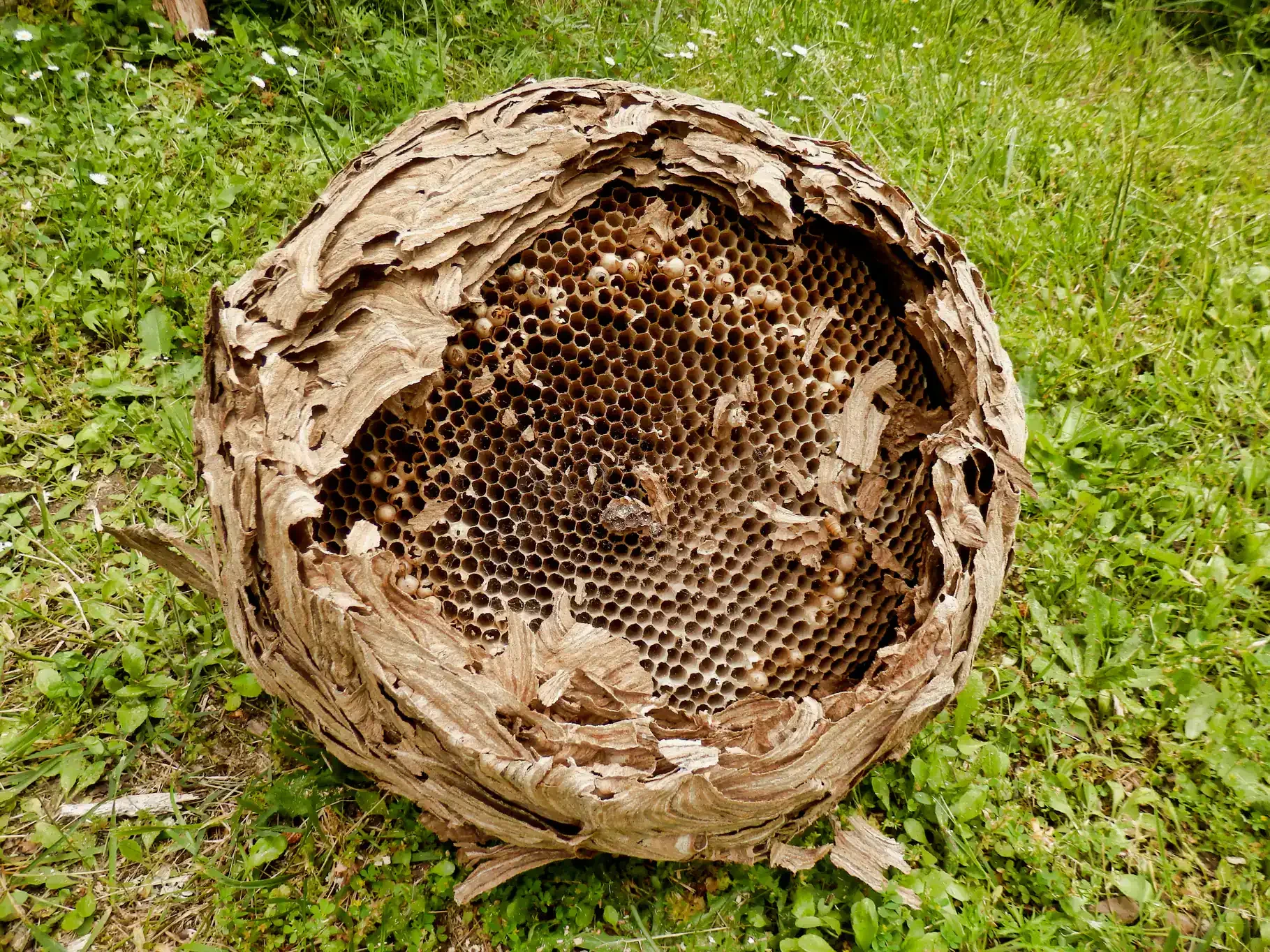
Paper wasps build the open, umbrella-shaped nests you’ll often see under eaves, deck railings, and porch ceilings. They’re less aggressive than yellow jackets but will sting repeatedly if they feel the nest is threatened. Bald-faced hornets — technically a yellow jacket species — build the large, gray, football-shaped paper nests you sometimes see hanging in trees or shrubs. They’re highly defensive and will respond aggressively to movement near the nest. Each of these requires a different treatment method, which is one reason why experience with Michigan’s full range of stinging insects matters more than a generic spray-and-go approach.
Late summer — specifically August and September — is when stinging insect problems peak in northern Oakland County. By that point in the season, yellow jacket colonies that started with a single queen in April have grown to thousands of workers. The colony’s behavior also shifts during this period: as natural food sources like insects and plant matter become scarcer, yellow jackets become more aggressive and more likely to forage near human activity, garbage, outdoor dining areas, and anything sweet or protein-rich.
For Jossman Acres homeowners specifically, the wooded setting means queens have plenty of protected overwintering sites around your property — in tree stumps, leaf piles, under decks, and in the soil at the wood line. That means new colonies start close to your home each spring. If you noticed wasp activity last fall, there’s a reasonable chance a new colony will establish in a similar area the following year. The ideal prevention window is early spring, when queens are just beginning to build — but if you’re already in mid-summer and seeing a nest, don’t wait. August and September nests are the most dangerous ones to leave alone.
This is one of the most common questions we get, and it’s a fair one — especially in a neighborhood like Jossman Acres where families specifically chose this community for the outdoor space. The answer depends on the treatment method used and the location of the nest, but in most cases, treated areas are safe for children and pets to re-enter within a few hours after the application has dried completely.
Your technician will give you a specific re-entry window based on what we applied and where. For ground nests treated in the yard, the guidance is typically to keep kids and pets away from the treated area for a set period and to avoid disturbing the nest site for at least 24 to 48 hours while the remaining colony members are eliminated. For aerial nests on structures, re-entry to the surrounding area is usually cleared more quickly. The key thing to know is that you’ll get a clear, direct answer before the technician leaves — not a vague “give it a little while.” If wasps are still active in the area after the treatment window has passed, that’s when you call us back.
The cost varies based on the type of nest, how accessible it is, and the size of the infestation. For a straightforward aerial nest — paper wasps under an eave or a small hornet nest in a shrub — professional removal typically runs in the range of $150 to $350. Yellow jacket ground nest removal is generally more involved and tends to run higher, often in the $300 to $500 range or more depending on the depth and complexity of the nest and whether multiple colonies are present.
For Jossman Acres properties with larger wooded lots, it’s worth having the full property assessed rather than treating just the one nest you’ve found. Acreage properties with natural ground cover and tree line access often have more than one active nest site, and addressing them together is more cost-effective than separate service calls. We match reasonable competitors’ rates, so if you’ve already gotten a quote from another licensed provider, bring it up when you call. Discounts are also available for seniors, veterans, and first responders — which applies to a meaningful number of households in the Springfield Township area.
Store-bought wasp sprays can work on small, accessible aerial nests — but they have real limitations that matter on a property like yours. They don’t reach ground nests effectively, they don’t eliminate the full colony in wall void infestations, and they don’t include any kind of follow-up if the problem persists. More importantly, attempting to treat an active nest without protective equipment and proper application technique puts you at serious risk, particularly with yellow jackets, which swarm and sting repeatedly when they sense a threat to the colony.
On a wooded Jossman Acres lot where ground nests can be hidden in the tree line or under natural ground cover, the risk of stumbling into a nest during a DIY attempt is real. Yellow jacket ground nests in particular are easy to disturb accidentally, and a disturbed colony of several thousand workers responds fast. Professional removal means the colony is fully treated, the nest is physically removed where possible, entry points are sealed, and you have a clear answer on what to do if activity continues. The cost of doing it right the first time is almost always less than the cost — financial or physical — of a treatment that didn’t work.
Useful Links