
Hear from Our Customers
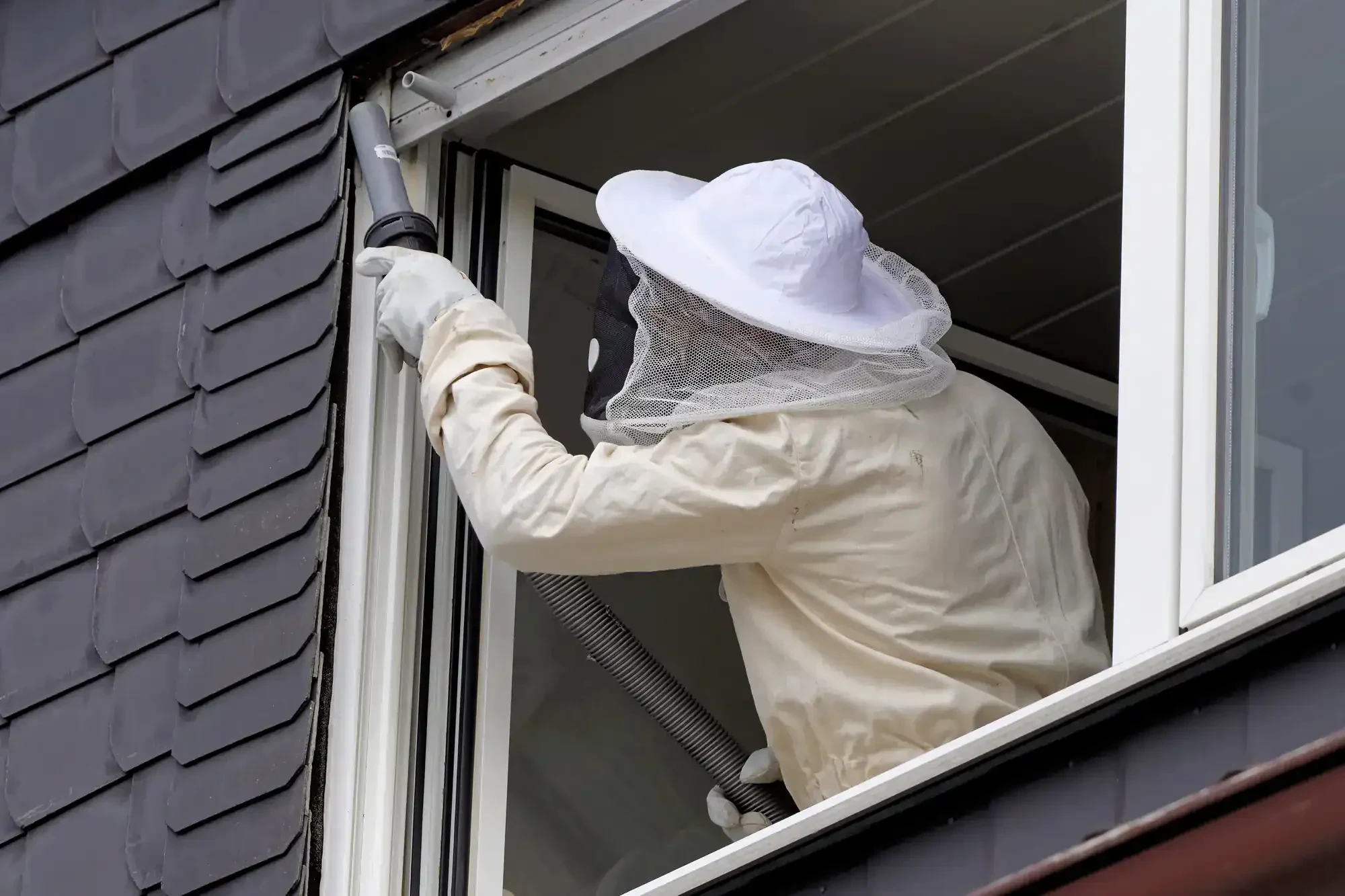
When a wasp nest gets handled properly, you stop planning your day around it. No more checking before you open the back door. No more keeping the kids away from the yard. No more hoping the problem fixes itself before school starts. That’s what a real solution looks like — and it’s what you should expect from the first call.
Mount Morris has a lot of older homes — ranch houses and bungalows built in the 40s, 50s, and 60s — and that housing stock creates real vulnerability. Aging fascia boards, gaps in soffits, deteriorating trim around windows — these are exactly the entry points yellow jackets and paper wasps exploit to get inside wall voids and attic spaces. A nest you can see under the eave is one thing. A colony that’s set up inside the wall of your home is another situation entirely.
The area near C.S. Mott Lake and the Flint River corridor also brings consistent wasp pressure through late summer. Naturalized vegetation along the water creates ideal nesting habitat, and those populations push into residential yards as colonies grow. By August, a yellow jacket colony that started with one queen in April can hold thousands of workers — and they get noticeably more aggressive as the season turns. If your family is using Batterbee Park, spending time in the backyard, or just walking to the car, that’s a real exposure risk. Getting ahead of it matters.
We founded First Choice Pest Control on May 31, 2005 — which means two decades of treating homes in Mount Morris and across Genesee County, including the older neighborhoods that make up most of the area. Roger Chinault leads the company and brings 26 years of hands-on pest control experience to every job. This isn’t a franchise where you get a different technician every season. It’s a family-owned business where the same technician comes back year after year, learns your property, and knows your history.
We’re MDARD-licensed, fully insured, and trained in Integrated Pest Management — which means treatments are targeted, not just thorough. No binding contracts, ever. If the wasps come back, so does our team. We’ve earned recognition from Angie’s List and HomeAdvisor, and we offer discounts for seniors, veterans, and first responders — a genuine acknowledgment of the people who make communities like Mount Morris run.
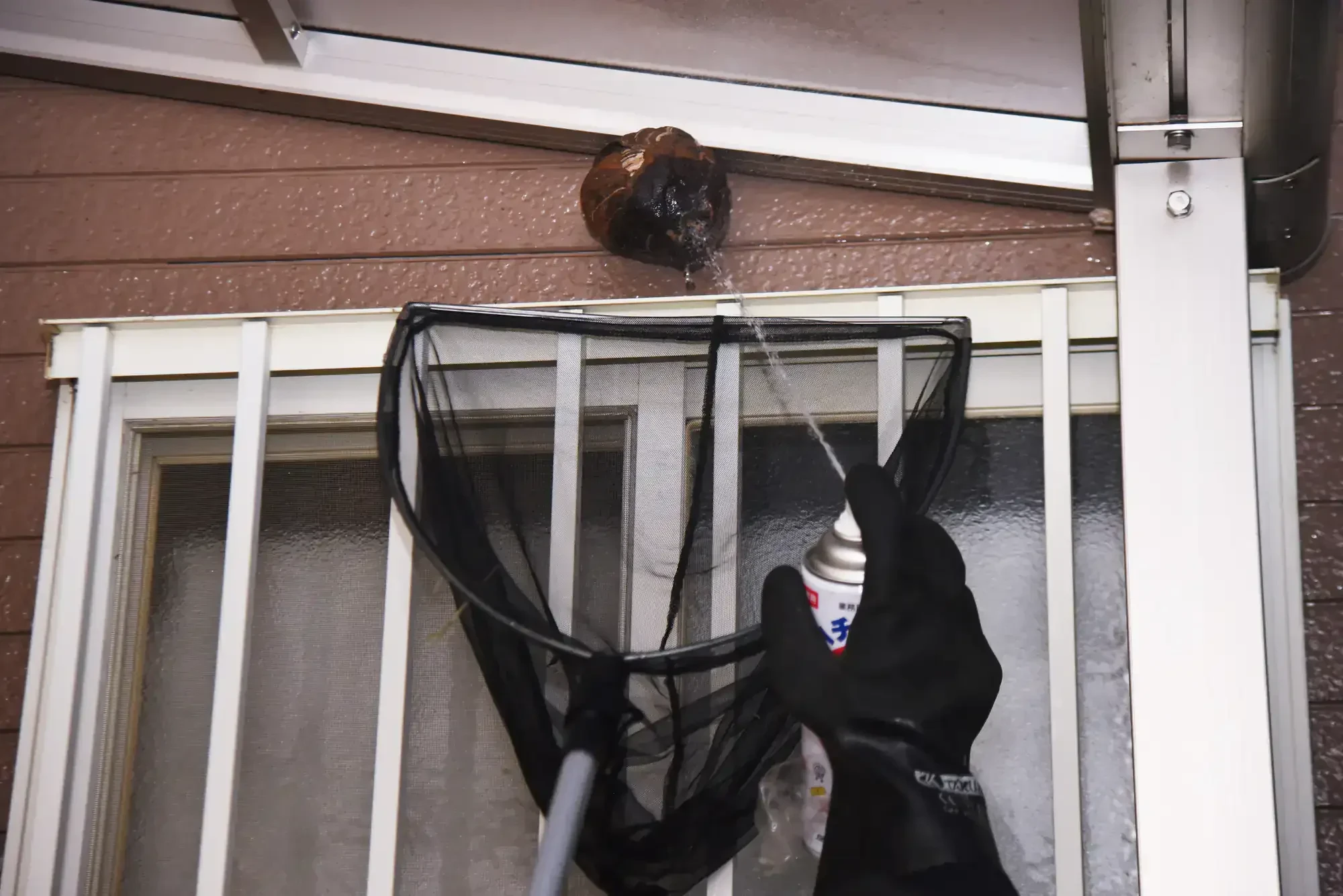
It starts with a call. You describe what you’re seeing — where the nest is, how much activity there is, whether anyone’s been stung. That information helps us determine what species you’re dealing with and how the treatment needs to be approached. Paper wasps under an eave are handled differently than yellow jackets in a ground nest or a colony that’s gotten into a wall void. The approach matters, and it gets figured out before anyone shows up.
When our technician arrives, we do a full assessment of your property — not just the visible nest. In Mount Morris’s older homes, that means checking the roofline, soffits, foundation gaps, and any deteriorated wood trim that could be hiding secondary nesting activity. Genesee County’s peak wasp season runs hard from late July through September, and by that point a colony can be far larger than what’s visible from the outside. The treatment targets the colony at the source, not just the surface.
After treatment, we remove the nest structure and address entry points so the same spot doesn’t become a problem again next season. You’ll get a clear answer on when it’s safe for kids and pets to be back in the area — because that’s always one of the first questions, and it deserves a straight answer, not a vague “give it a few hours.”
Ready to get started?
Wasp nest removal with First Choice isn’t a spray-and-leave transaction. The job includes a full property inspection, colony treatment at the source, physical nest removal after treatment is complete, and entry point assessment to reduce the chance of re-nesting. If there are multiple nests — which is more common than most people expect, especially on older Mount Morris properties with lots of wood trim and structural gaps — we address all of them in the same visit.
Yellow jacket nest removal in Mount Morris often involves ground nests, which are a different challenge than aerial nests. Yellow jackets that have burrowed into the soil near a foundation, under a deck, or along the yard’s edge are harder to detect and significantly more aggressive when disturbed. These aren’t situations for a hardware-store spray can — especially when the nest entrance is near a door, a path, or anywhere kids or pets move through regularly. We handle both aerial and ground nests, and the treatment is matched to the species and nest location every time.
Pricing is straightforward and competitive. We match reasonable competitor rates, so you’re not overpaying for Genesee County’s most experienced local team. Discounts apply for seniors, veterans, and first responders — and there are no binding contracts attached to any service. You get the work done, you get the result, and that’s the end of it.
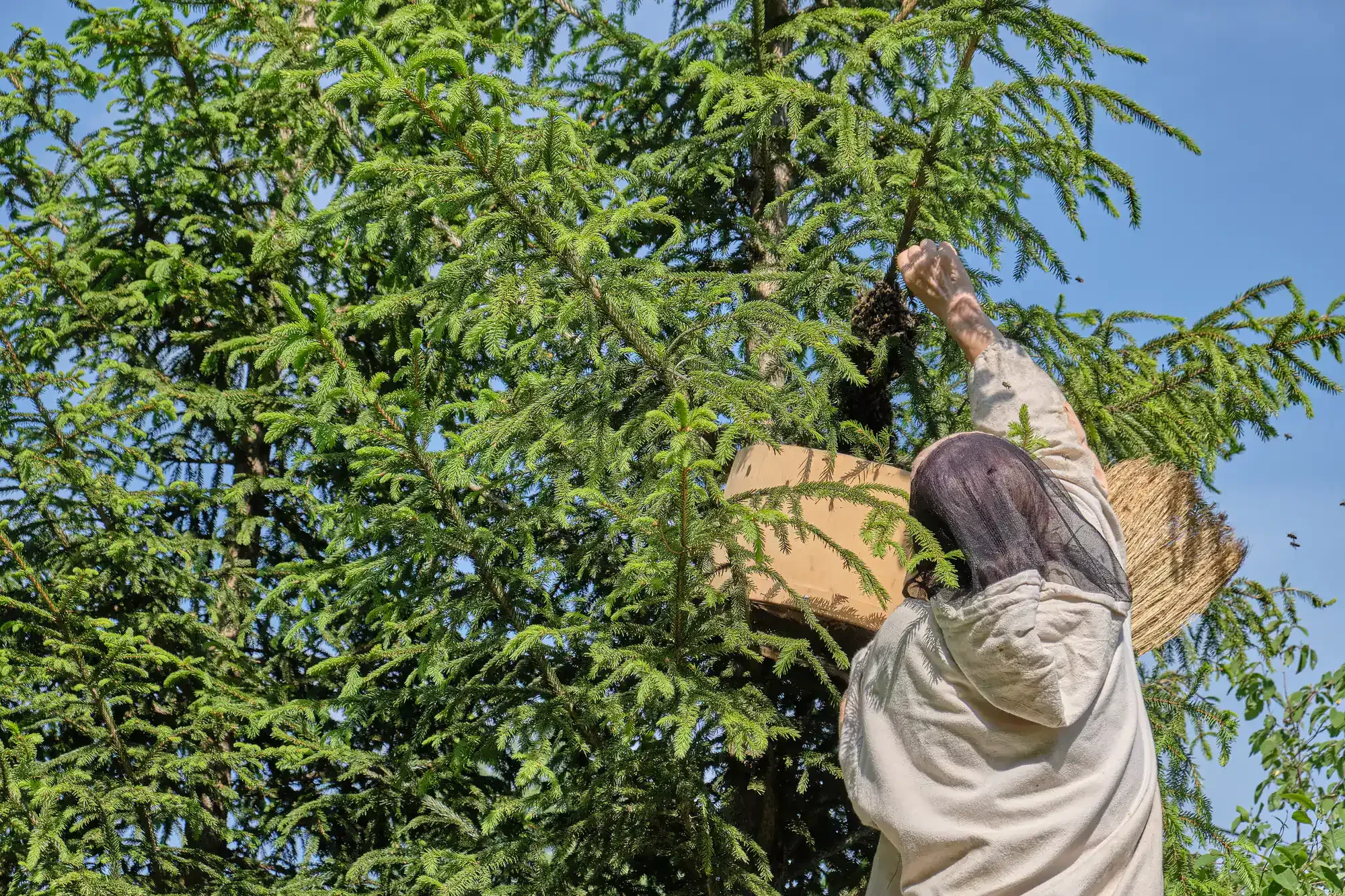
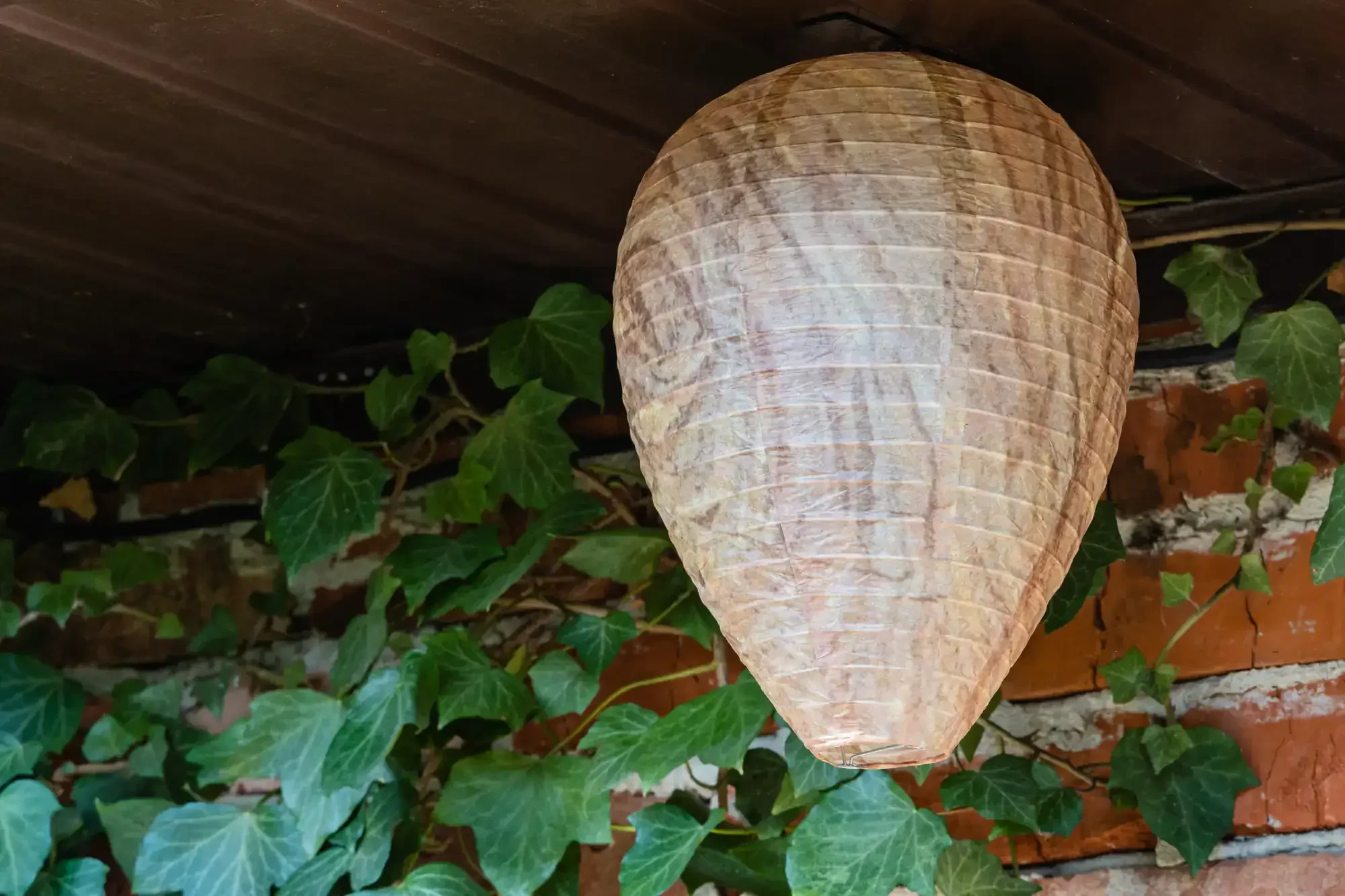
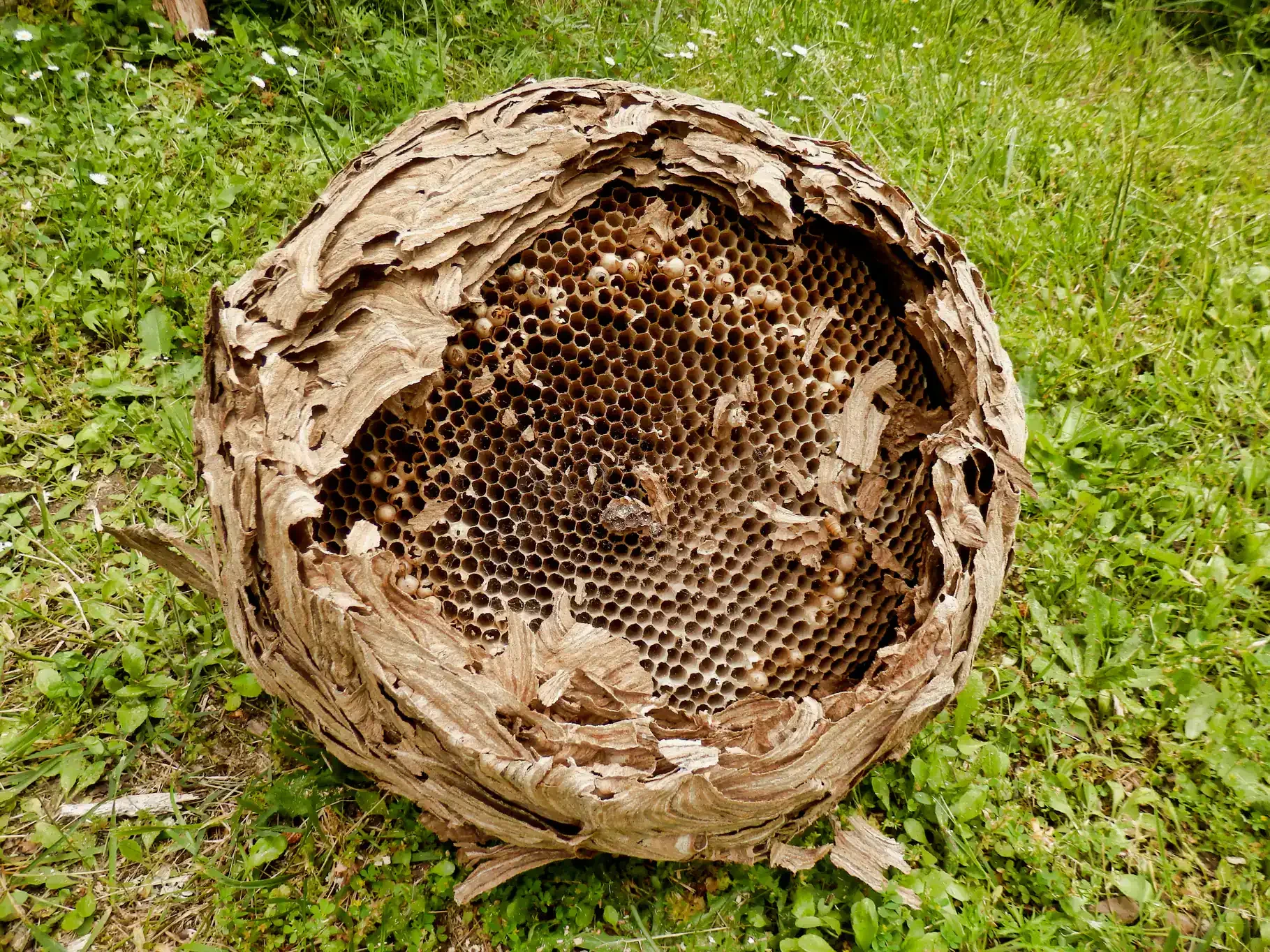
The most common stinging insects in the Mount Morris area are yellow jackets, paper wasps, and bald-faced hornets. Yellow jackets are the most aggressive of the three and the most likely to cause a serious problem. They tend to nest in the ground, inside wall voids, or in enclosed spaces like the gap behind your siding — and they’re often not discovered until someone gets too close. Paper wasps build the open, umbrella-shaped nests you typically see under eaves, on deck railings, or around door frames. Bald-faced hornets build the large, gray, football-shaped aerial nests in trees or on the sides of structures.
If you’re seeing a lot of wasp activity near a specific spot but can’t locate a visible nest, there’s a good chance it’s a yellow jacket colony in the ground or inside a wall — especially in Mount Morris’s older housing stock where structural gaps are common. A professional inspection will identify the species and nesting location before any treatment begins, which is the only way to make sure the right approach is used.
This is one of the first questions people ask, and it deserves a real answer. After treatment, our technician will give you a specific re-entry window based on the product used, the nest location, and the treatment method — not a vague estimate. For most exterior treatments, that window is relatively short, typically a few hours. For treatments inside a wall void or attic space, there may be additional ventilation considerations before the area is fully cleared.
If you have pets, let our technician know before the job starts. Treatment products and application methods can be adjusted based on what’s on your property. Children and pets should stay clear of the treated area until our technician confirms it’s safe — and that confirmation is part of the job, not an afterthought. Our IPM-trained approach means the least-toxic effective treatment is used for the specific situation, which matters especially for households with young kids or animals that spend time in the yard.
That’s not a coincidence — it’s the natural cycle of how wasp colonies develop in Michigan’s climate. A yellow jacket colony starts in spring with a single queen and a handful of workers. By midsummer, the colony is growing fast. By August and September, it can hold anywhere from 5,000 to 15,000 workers, and the colony’s behavior shifts. Natural food sources start declining, and workers become significantly more defensive and aggressive as they compete for what’s available.
For Mount Morris families, this timing lines up with some of the most active outdoor weeks of the year — late summer cookouts, kids playing before school starts, activity around Batterbee Park and C.S. Mott Lake. That overlap between peak colony size and peak outdoor activity is exactly why late summer is when most stings happen and when most people finally call for help. The better move is to address a nest when it’s first spotted in June or July, when the colony is smaller and treatment is simpler. But if you’re already in August, don’t wait any longer.
You can try, and a lot of people do — usually once. The problem is that store-bought aerosol sprays are designed to knock down the wasps you can see at the nest entrance. They’re not built to reach deep into a ground nest, penetrate a wall void, or eliminate a colony that’s already spread through a structural cavity. If you don’t get the queen and the core of the colony, the nest rebuilds. You also don’t know what you’re spraying into — in Mount Morris’s older homes, a nest inside a wall can be larger and more established than anything visible from the outside.
There’s also a real safety risk. Yellow jackets in particular respond to perceived threats by mobilizing large numbers of workers almost immediately. If you spray and don’t get full colony elimination on the first attempt, you’re dealing with an agitated, defensive colony that now associates that location with a threat. A licensed technician has the protective equipment, the right product formulations, and the application method to do this without putting themselves or your family at risk. One professional treatment is almost always less expensive — and less stressful — than two or three failed DIY attempts followed by a professional call anyway.
Wasp nest removal pricing depends on the species, the nest location, and the size of the colony. A visible paper wasp nest on an exterior surface is a more straightforward job than a yellow jacket colony that’s established itself inside a wall void or deep in the ground near a foundation. Nationally, professional wasp nest removal averages between $375 and $525, with yellow jacket removal running higher — often $600 to $725 — due to the additional complexity of ground and structural nests.
We match reasonable competitor rates, so if you’ve gotten a quote from another licensed provider in Genesee County, bring it up. The goal is to make sure you’re not paying more than you should for work that’s done right. There are no hidden fees, no binding contracts, and no upsell pressure. Seniors, veterans, and first responders receive a discount — something worth mentioning when you call. The honest framing here is simple: one professional treatment done correctly is almost always less expensive than repeated DIY attempts plus the cost of dealing with structural damage from an untreated colony.
Yes — Mount Morris is part of our core Genesee County service area. We’re headquartered in Swartz Creek, roughly 15 miles south of Mount Morris via I-475, and have been serving Genesee County homeowners and businesses since 2005. That’s 20 years of treating homes in this county — including the older ranch homes and bungalows that make up most of the Mount Morris housing stock, and properties near the Flint River corridor where late-summer wasp pressure tends to run high.
You won’t get a technician dispatched from a regional hub hours away or a rotating seasonal worker who’s never seen your property before. We assign the same technician to each account year after year, which means the person who treats your home this summer will know your yard, your entry points, and your history the next time they come out. For a community like Mount Morris — where trust in who you’re letting onto your property matters — that consistency is worth something real.
Useful Links