
Hear from Our Customers
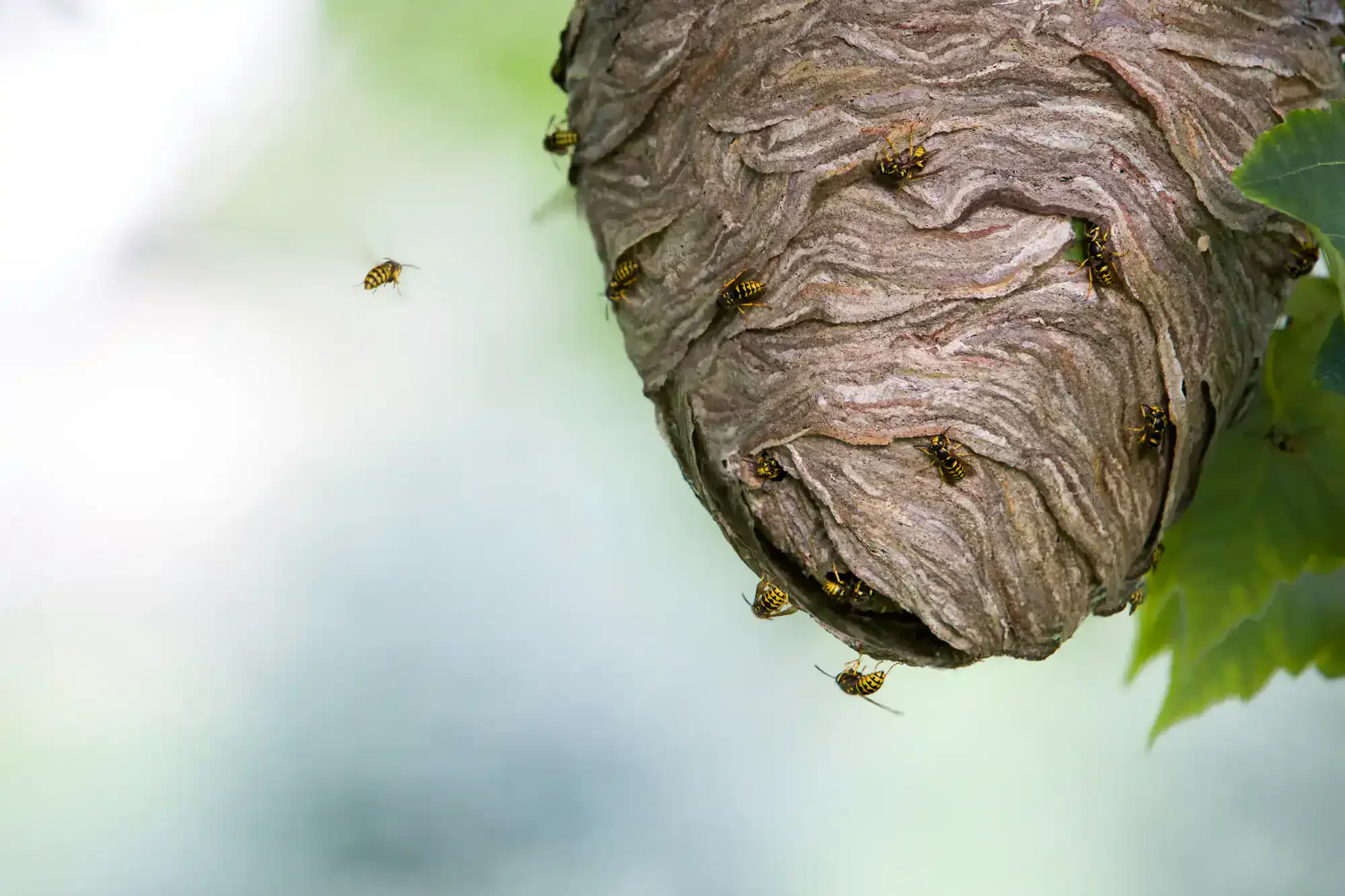
By late August in Genesee County, a yellow jacket colony that started with one queen in April can have thousands of workers — and every single one of them can sting more than once. That’s what happens when a colony reaches full size in Michigan’s warm summer months, right when your kids are heading back to Elizabeth Ann Johnson Memorial High School and you’re trying to squeeze the last cookouts out of the season.
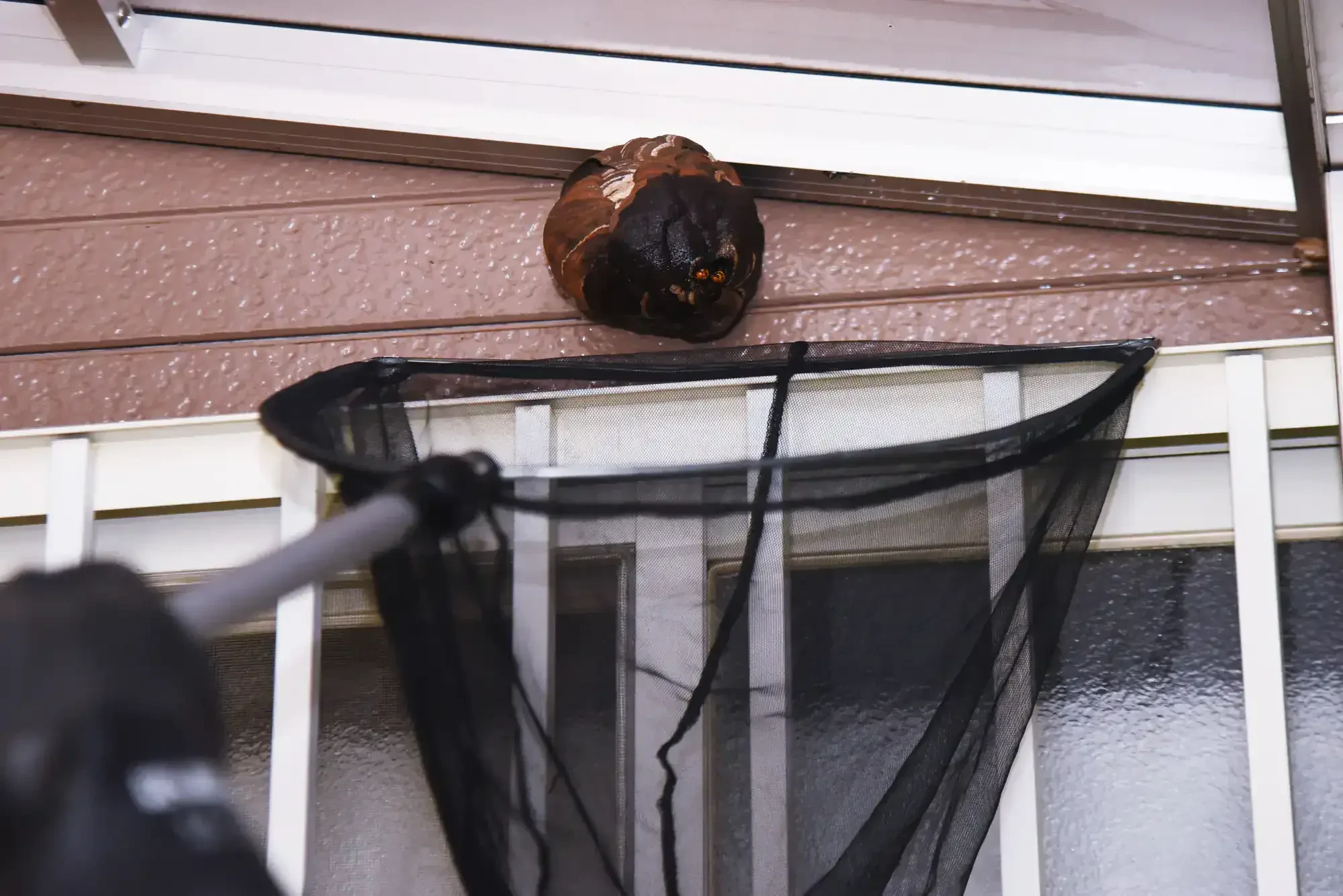
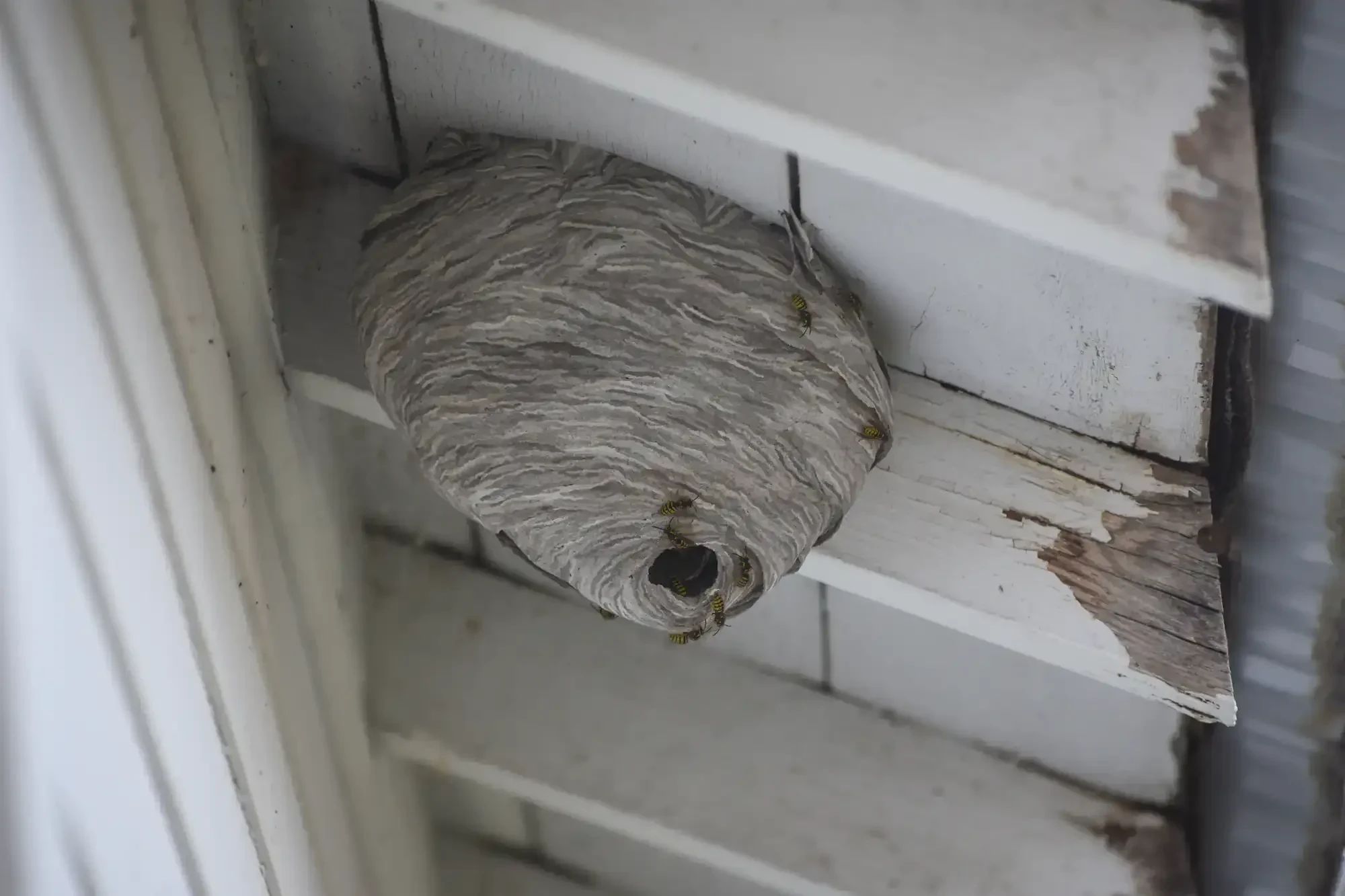
The older housing stock throughout Mount Morris gives yellow jackets exactly what they need: gaps in aging soffits, loose fascia boards, spaces behind siding, and attic voids that nobody checks until there’s a problem. Once they’re inside a wall or an eave, a can of store-bought spray doesn’t reach the nest — it just agitates the colony and pushes them deeper into your home’s structure.
What you get after professional yellow jacket nest removal is simple: you get your property back. Kids playing outside without fear. Dogs in the yard without incident. A porch you can actually sit on. Everything else is just the work it takes to get there.
We’ve been serving Mount Morris and the surrounding Genesee County area since May 31, 2005. That’s 20 years of showing up for homeowners, landlords, and businesses throughout this part of Michigan — not as a franchise location reading from a corporate script, but as a family-owned operation that built its reputation one job at a time.
Roger Chinault founded this company and brings 26 years of personal, hands-on experience to every call. When you book with us, you get the same technician each time — someone who knows your property, your neighborhood, and the specific pest challenges that come with living in Mount Morris’s established residential areas.
We hold MDARD Pesticide Application Business License #250081, have completed Integrated Pest Management training, and carry awards from both Angie’s List and HomeAdvisor — with a 4.7 out of 5 rating on Angi from verified customers. No binding contracts. No part-time seasonal workers. We offer discounts for seniors, veterans, and first responders.
It starts with a call. We respond quickly — because in a high-aggression yellow jacket situation, waiting costs you. When our technician arrives at your Mount Morris property, the first step is identification. Not every stinging insect is a yellow jacket, and not every yellow jacket nests the same way. The German Yellowjacket — the species most commonly found in the wall voids and attics of Genesee County’s older homes — behaves very differently from a ground-nesting Eastern Yellowjacket. Getting the species right determines the entire treatment approach.
Once the nest location and species are confirmed, we apply the appropriate treatment — whether that’s insecticide dust injected into a wall void, a pyrethrum aerosol for accessible aerial nests, or targeted ground treatment for colonies nesting in your yard. The goal is to eliminate the colony at the source, not just knock down the workers you can see. For wall-void and attic nests in Mount Morris, where homes with aging construction can have multiple entry points, this matters especially.
After treatment, you’ll get a clear explanation of what was found, what was applied, when it’s safe to resume normal outdoor activity, and what to watch for going forward. The work is backed by a 1-year service guarantee — if yellow jacket activity returns within the guarantee period, we come back at no additional charge.
Ready to get started?
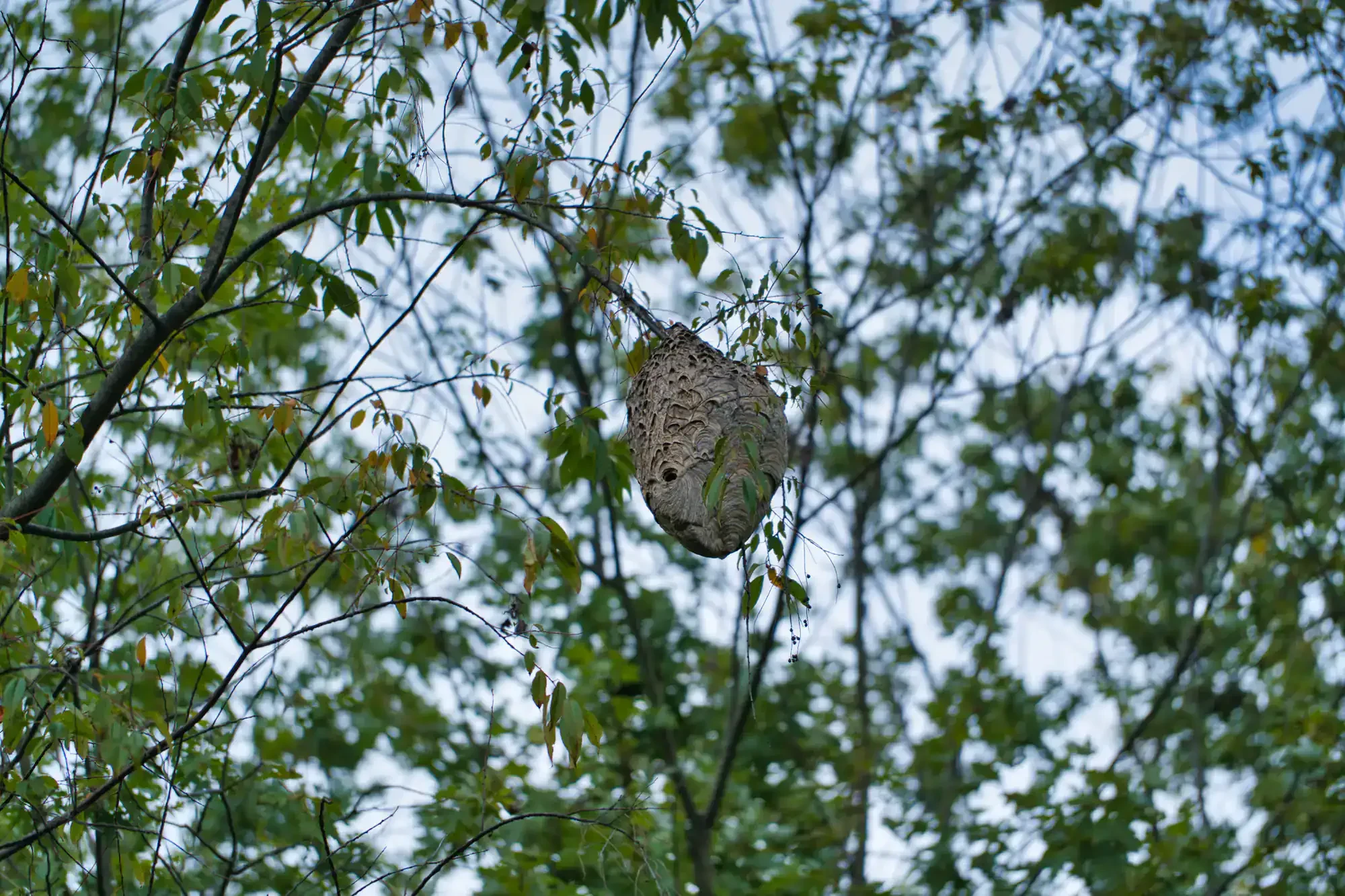
Yellow jackets in Mount Morris don’t pick just one spot. Ground nests show up in yards, under decks, and along fence lines. Aerial nests appear under eaves and in shrubs. And the ones that cause the most serious problems — the wall-void and attic colonies — are the ones you often don’t find until the colony is already thousands strong and workers are coming through gaps in your drywall or interior trim.
We handle all of it. Attic yellow jacket removal in Mount Morris requires a different approach than a visible outdoor nest — it means getting the treatment into the cavity where the colony is actually living, not just spraying the entry point and hoping for the best. For rental properties or owner-occupied homes throughout Mount Morris’s established neighborhoods, the process is adapted to the structure, the species, and the specific conditions of your property.
Every job is treated as its own situation. We don’t run cookie-cutter programs — your home gets assessed on its own terms. And if you’ve received a quote from another provider in the area, bring it. We’ll match any reasonable competitor’s rate, so you don’t have to trade quality for price.
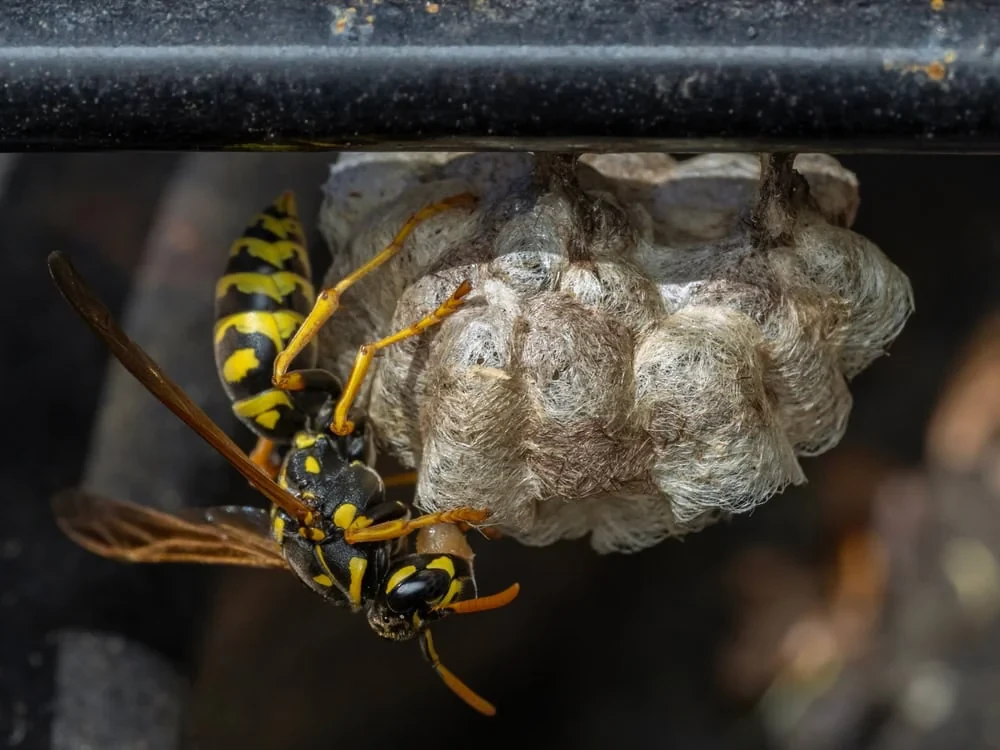
The most common signs are workers appearing inside the house — coming through electrical outlets, gaps around window frames, or cracks in interior walls — combined with a low buzzing sound from within the wall cavity. In Mount Morris’s older residential housing stock, where soffits and fascia boards have had years of weathering, entry points are common and easy to miss from the outside.
If you’re seeing yellow jackets consistently in one area of your yard or on one side of your house, that’s worth paying attention to even before you spot an interior entry point. Wall-void colonies in Michigan typically begin establishing in late spring and can grow to several thousand workers by August. The longer a wall-void nest goes untreated, the more comb is built inside the structure — and in some cases, that comb can absorb moisture and cause damage to insulation and drywall long after the colony is gone. Early treatment is always the better call.
For a small, visible aerial nest that you can treat directly and completely, a store-bought spray can work. The problem is that most of the calls we get in Mount Morris are not that situation. They’re wall-void nests, ground nests under a deck, or attic colonies where the entry point is accessible but the nest itself is not. When you spray into a wall void or a partially accessible ground nest, you agitate the colony without eliminating it. Workers scatter, aggression spikes, and the colony often relocates deeper into the structure — making professional treatment harder and more involved than it would have been before the DIY attempt.
There’s also the question of timing. By late summer, when most homeowners finally decide to act, yellow jacket colonies are at their largest and most defensive. A failed DIY attempt at that stage can trigger a mass-stinging event that puts people at real risk — especially if anyone in your household has an undiagnosed allergy. If you’re not certain you can treat the entire nest in a single application, calling a professional first is the safer and usually the cheaper long-term decision.
In Genesee County, yellow jacket queens emerge from overwintering sites in late March or early April and begin building new nests. Through May and June, colonies are small and relatively low-risk — you might not even know they’re there. By July, worker populations are growing fast. August and September are when things get serious: colonies hit peak size, food sources get competitive, and workers shift from hunting insects to aggressively seeking sugary foods. That’s when backyard cookouts become a problem, and that’s when the emergency calls come in.
The best time to call is the moment you notice consistent yellow jacket activity near your home — not after you’ve waited two months to see if it goes away on its own. A colony treated in June is a fraction of the size and a fraction of the risk of the same colony treated in late August. Michigan’s cold winters do kill active colonies, but the queens survive and return to the same general area the following spring. If yellow jackets nested in or near your Mount Morris property this year, there’s a reasonable chance they’ll be back next year without some form of prevention or exclusion work.
Yellow jacket exterminator services nationally average around $725, with wall-void and attic treatments typically ranging from $500 to $1,300 depending on nest size, location, and how accessible the colony is. In Mount Morris, where homes tend to be older and wall-void access can be more complex, the specifics of your property matter — a ground nest in an open yard is a different job than a colony that’s been building comb inside an attic for three months.
What’s worth keeping in mind is the cost of not treating it. A severe allergic reaction requiring emergency care can easily run $1,000 or more out of pocket. Structural damage from a wall-void colony — saturated insulation, damaged drywall, compromised framing — can cost several thousand dollars to repair after the fact. We also offer price matching for reasonable competitor quotes, so if you’ve already gotten a price from another provider in the Genesee County area, you don’t have to choose between the lowest number and the most experienced team. Discounts are available for seniors, veterans, and first responders — ask when you call.
They can, and it’s worth understanding why. Professional treatment eliminates the active colony — the queen, the workers, and the comb. But it doesn’t automatically seal the entry points that let them in. In Mount Morris’s older residential housing, gaps in soffits, deteriorating caulking around windows, and spaces behind siding can remain as open invitations for a new queen the following spring. That’s why post-treatment exclusion work — sealing the entry points after the colony is eliminated — is an important part of a complete solution.
Our 1-year service guarantee covers you if yellow jacket activity returns within the guarantee period. If they come back, so do we — at no additional charge. Beyond the guarantee window, the best protection is addressing the structural vulnerabilities that made your home attractive in the first place. After treatment, your technician will walk you through what was found and what preventive steps make sense for your specific property, so you’re not just solving this year’s problem and setting up the same one for next year.
Yes — we offer discounts for seniors, veterans, and first responders. Mount Morris has a strong working-class and service-oriented community, and a lot of the people calling about yellow jacket problems are exactly the kind of neighbors who spent years giving to this area before worrying about their own back porch. The discount is a straightforward acknowledgment of that.
Beyond the discount programs, we also match reasonable competitor rates. If you’ve gotten a quote from another pest control provider in the Mount Morris or Genesee County area, bring it to the conversation. The goal is to make sure cost isn’t the reason someone puts off treating a yellow jacket nest that’s only going to get larger and more aggressive as summer goes on. Call, describe what you’re dealing with, and ask — the conversation costs nothing, and you’ll know exactly where you stand before anyone shows up at your door.
Useful Links