
Hear from Our Customers
You stop guessing where they’re coming from. You stop watching the corner of the soffit every time you walk to your car. You stop keeping the kids away from the back yard. That’s what real yellow jacket pest control near Fleming, MI actually delivers — not just a treatment, but the confidence that the problem is handled.
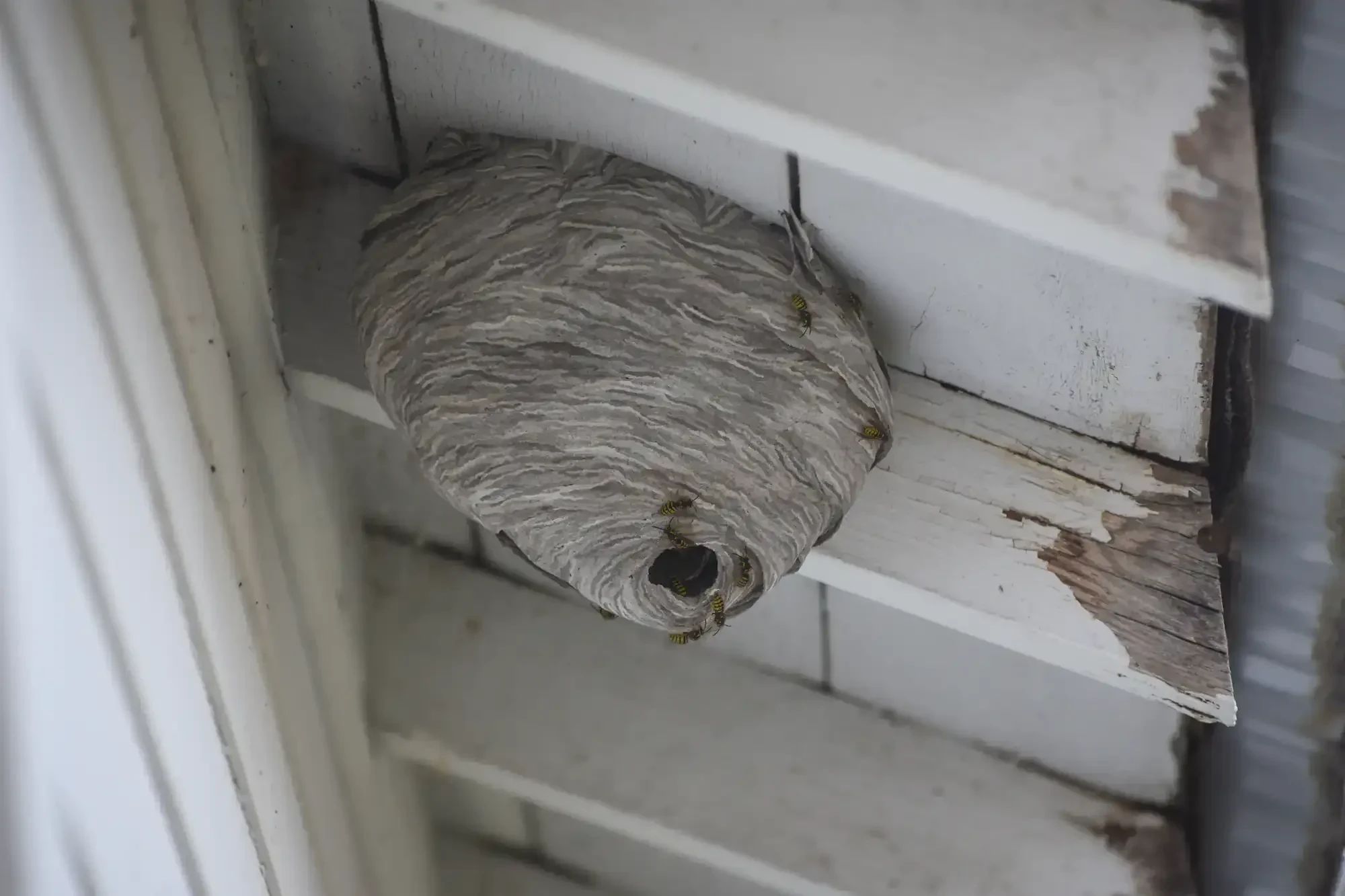
A lot of homes along the Fleming Road corridor were built in the late 1970s. That housing vintage matters more than most people realize. Nearly 50 years of Michigan winters, freeze-thaw cycles, and weathering have opened the gaps in soffits, siding, and chimney flashing that German Yellowjackets specifically look for when they’re searching for a void to nest in. If yellow jackets are getting into your walls or attic, the structure of your home is part of the reason — and treating the nest without understanding that means you’re solving half the problem.
The open fields and wooded margins around Fleming are equally relevant. Eastern Yellowjackets build ground nests in abandoned mammal burrows — and the rural landscape out here is full of them. You can mow right over one without seeing it. A dog can find it the hard way. When the colony is mature in August and September, a disturbed ground nest means thousands of workers responding instantly. That’s not a situation for trial and error.
First Choice Pest Control was founded on May 31, 2005 — which means this year marks 20 years of continuous service to Southeast Michigan homeowners, including those throughout Fleming and the surrounding Howell Township area. Roger Chinault, the founder, has 26 years of hands-on pest control experience and runs this as a family-owned, owner-operated business. His name is on every job. That’s not a marketing line — it’s just how this works.
We hold MDARD Pesticide Application Business License #250081, have completed Integrated Pest Management training, and have earned awards through both Angie’s List and HomeAdvisor. Our company carries a 4.7 out of 5 rating on Angi, built from real customer reviews — not manufactured testimonials.
Fleming homeowners, including those out along Grand River Avenue and the Fleming Road crossroads, have a specific kind of property that requires a specific kind of knowledge. Rural lots, older homes, agricultural surroundings — we’ve been working in this environment for two decades. You get the same technician year after year, someone who learns your property and doesn’t start from scratch every season.
It starts with a call. You describe what you’re seeing — where they’re entering, how long it’s been happening, whether you’ve tried anything already. That conversation matters because yellow jacket nest extermination near Fleming, MI isn’t one-size-fits-all. A German Yellowjacket colony inside a wall void requires a completely different approach than an Eastern Yellowjacket ground nest in a back field. Getting that wrong doesn’t just waste your money — it can make the infestation significantly worse.
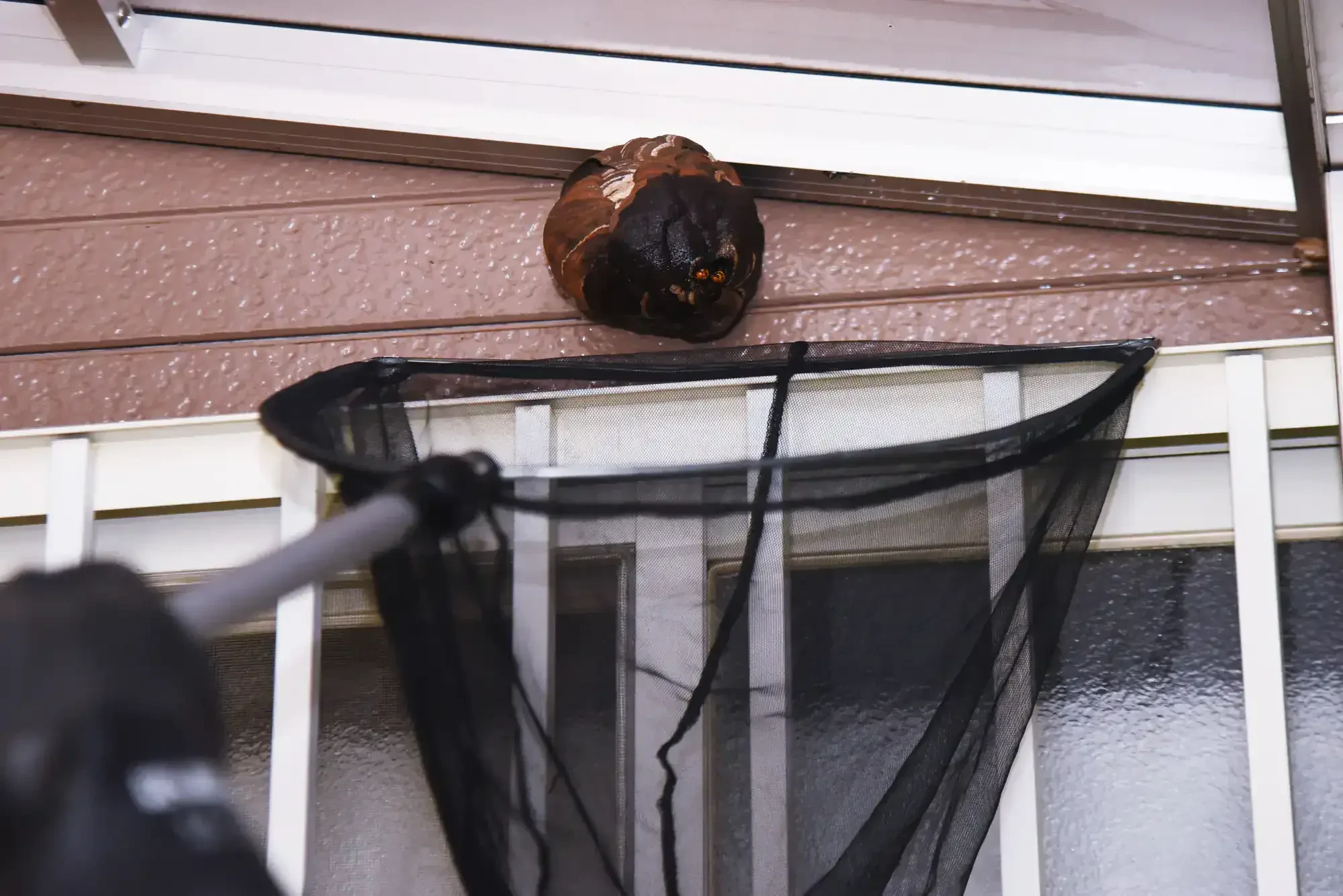
When our technician arrives, the first step is species identification and nest location. For homes along the Fleming Road corridor, that often means inspecting aging soffits, chimney gaps, and exterior trim on homes built in the 1970s and 80s — the exact structural vulnerabilities these insects exploit. For ground nests on rural properties, it means locating the colony entrance and confirming the full extent of the nest before any treatment begins. Timing matters too. Treatment is most effective in the early morning or evening hours when workers are inside the nest, and our technicians know how to work within that window safely.
After treatment, you’ll get a clear explanation of what was found, what was done, and what to watch for. If conditions on your property — a particular gap, a recurring entry point, a section of field that keeps attracting ground nesters — increase your risk of re-infestation, you’ll know about it before we leave. Every yellow jacket treatment is backed by a one-year service guarantee. If they come back within that period, so do we.
Ready to get started?
Yellow jacket pest control near Fleming, MI covers the full scope of what’s actually happening on your property — not just the most visible symptom. That means correct species identification before any product is applied, targeted treatment based on nest type and location, and post-treatment guidance specific to your home and land. If you have a wall-void or attic yellow jacket removal situation, the process includes locating all entry points — not just the primary one — because German Yellowjackets commonly use multiple access points in older structures, and missing even one means the problem continues.
For Fleming properties with rural acreage, attic yellow jacket removal and ground nest treatment are both part of our service scope. The Livingston County landscape — with its mix of older residential housing, open farmland, and wooded margins — creates conditions where both species can be active on the same property. We’re equipped to handle both. There are no rigid packages that force you into paying for services you don’t need. Your program is built around what’s actually on your property.
We also offer discounts for seniors, veterans, and first responders — and will match reasonable competitor rates from other licensed providers in the area. If you’ve already gotten a quote and want to compare, call and ask. You don’t have to choose between quality and a fair price.
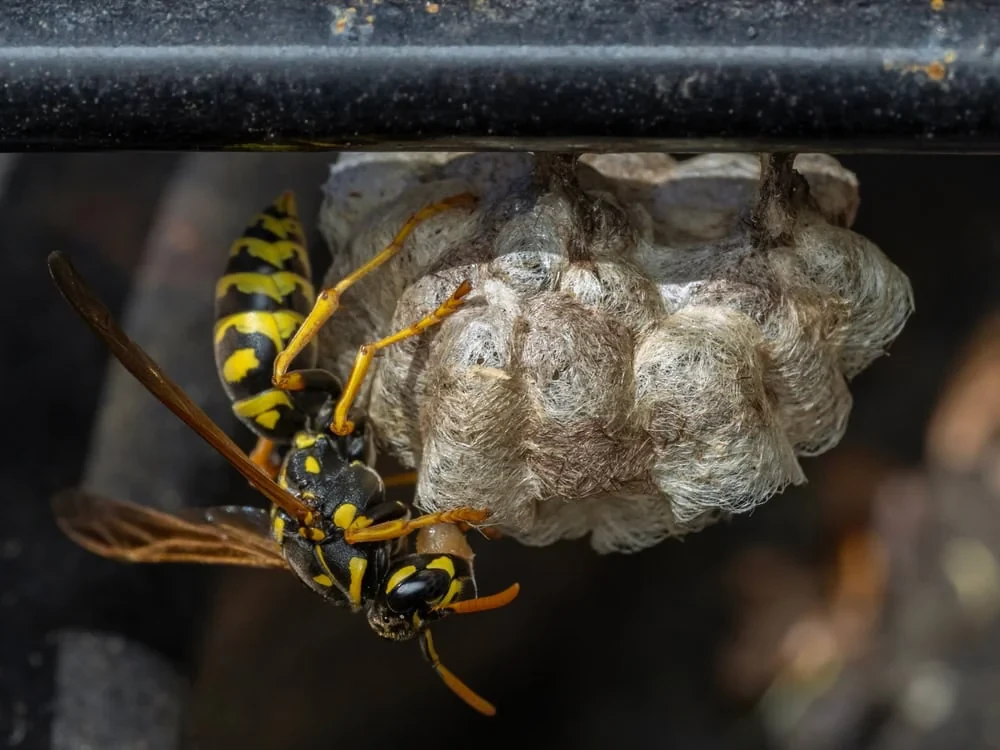
The two species you’re most likely dealing with near Fleming are the German Yellowjacket and the Eastern Yellowjacket. The German Yellowjacket is the one that moves indoors — it nests in wall voids, attics, crawlspaces, and enclosed cavities, and it specifically targets the kind of gaps and deteriorated entry points that show up in older homes. If your home was built in the 1970s or 80s, which describes a lot of the housing stock along the Fleming Road corridor, you have the structural profile that this species looks for.
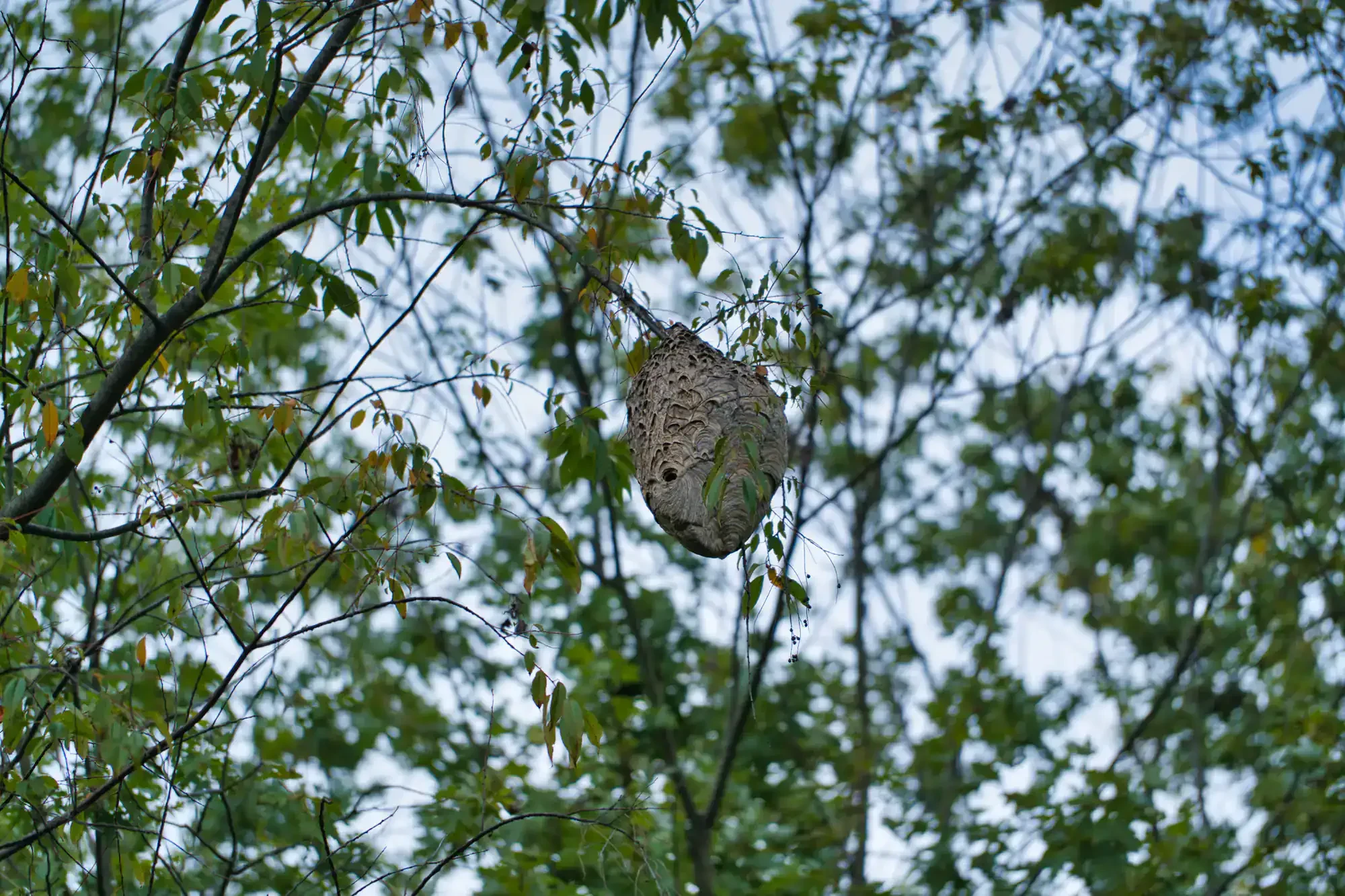
The Eastern Yellowjacket is your ground nester. It typically starts its colony in an abandoned mammal burrow — mole tunnels, groundhog dens, that kind of thing — and the rural, open-field landscape around Fleming is exactly the environment where these nests thrive. By late summer, a mature Eastern Yellowjacket ground colony can hold several thousand workers. Both species are aggressive when disturbed, and both require different treatment approaches. Knowing which one you’re dealing with before treatment begins is the difference between a resolved problem and a wasted service call.
The most common sign is a steady stream of yellow jackets entering and exiting a single point on your exterior — a gap in the soffit, a crack in the siding, a space around a chimney or utility penetration. If you’re seeing that activity consistently, especially in the same spot over several days, there’s almost certainly a colony established on the other side of that wall. You may also hear a faint buzzing or chewing sound inside the wall, particularly in a quiet room adjacent to an exterior surface.
In some cases, the first sign is yellow jackets appearing inside the house — coming through electrical outlets, light fixtures, or gaps around windows. That typically means the colony has grown large enough that workers are finding their way through interior wall cavities. At that stage, the nest is usually well-established and DIY treatment is genuinely risky. Applying store-bought spray into a wall void without knowing the full extent of the colony can drive workers deeper into the structure or cause them to chew through drywall to escape. For Fleming homeowners with older homes and aging exterior finishes, professional attic yellow jacket removal and wall-void treatment is the safer, more effective path.
For a small, exposed nest early in the season — maybe a golf ball-sized structure under a deck rail in May — some homeowners can manage it carefully with the right product and timing. But by the time most people near Fleming are calling about a yellow jacket problem, it’s late summer, and the colony is at its peak. A mature colony in August can contain anywhere from 1,000 to 5,000 workers. That’s not a situation where a can of wasp spray from the hardware store gives you a meaningful advantage.
Ground nests are particularly risky to treat without professional equipment and training. Because the colony is underground, you can’t see how large it is or how many entry points exist. Disturbing it without a complete treatment plan can trigger a mass defensive response. Wall-void and attic infestations carry a different risk — applying the wrong product or using it incorrectly can drive workers through interior walls and into your living space. Stinging insects send more than 500,000 people to emergency rooms in the United States every year, and for anyone with an unknown sensitivity to venom, a single sting event can become a medical emergency. Professional yellow jacket nest removal near Fleming, MI removes that risk from the equation.
Yellow jacket colonies in Livingston County follow a predictable seasonal pattern. Queens emerge from winter dormancy in late March or early April and begin building nests alone. Through May and June, the first worker generation hatches and takes over nest expansion. During this period, the colony is relatively small and yellow jackets are actually doing useful work — hunting caterpillars and other garden pests.
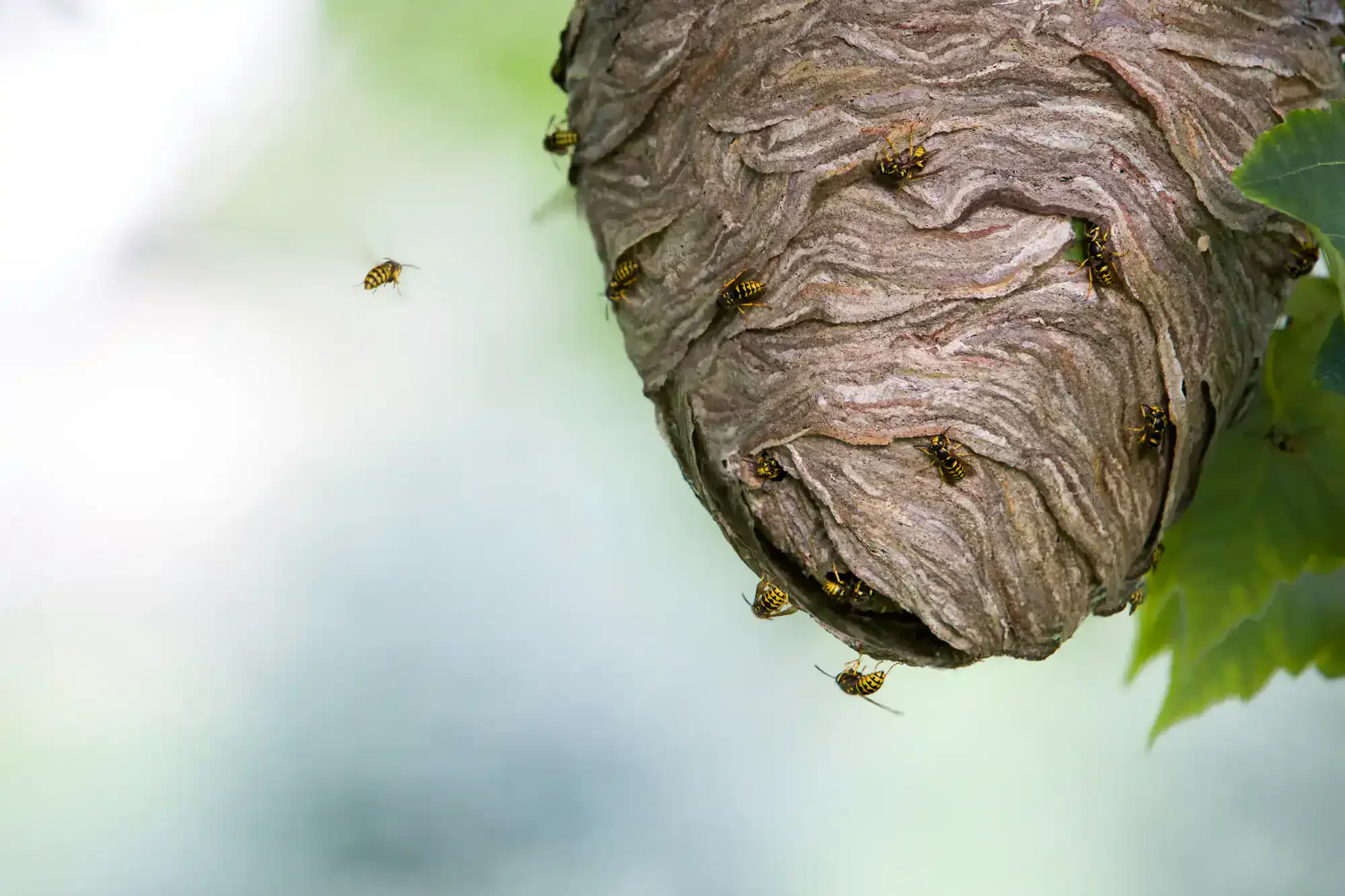
The danger window opens in August. By then, a colony can contain thousands of workers, and the behavioral pattern shifts. With fewer larvae to feed, workers stop hunting protein and start scavenging for sugar — which is why you suddenly find them around your grill, your soda can, and your outdoor dining area in late summer. They’re also significantly more aggressive during this period. Michigan State University Extension identifies August and September as peak yellow jacket activity months in Michigan, and that timing lines up with outdoor events, backyard gatherings, and the Livingston County Fair season — all the moments when an encounter is most likely. Colonies begin dying off in October with the first hard frost. If you’re dealing with a problem right now in late summer, the colony is at maximum size and aggression. Don’t wait.
Nationally, professional yellow jacket extermination averages around $725, with the range running from approximately $500 on the lower end to $1,300 or more for complex infestations — particularly wall-void and attic situations where access is limited and the colony has had time to grow. Where your specific job lands in that range depends on the species involved, the nest location, the size of the colony, and how accessible the treatment area is.
For Fleming homeowners, the relevant comparison isn’t just the cost of the service — it’s the cost of the alternatives. A single ER visit for a severe allergic reaction runs $1,000 or more. Structural damage from an untreated wall-void infestation — damaged insulation, stained drywall, honey and wax buildup that attracts other pests — can run into several thousand dollars in repairs. A professional treatment that resolves the problem completely, backed by a one-year guarantee, is a straightforward value calculation when you look at it that way. We’ll also match reasonable competitor rates from other licensed providers in the area, so if you’ve already gotten a quote, it’s worth a call before you decide.
Yes. We offer discounts for senior citizens, veterans, and first responders. Livingston County has a strong community of veterans and retired residents, and a meaningful number of Fleming and Howell Township households include active or retired first responders who serve the surrounding area. These discounts exist because Roger built this business with a genuine sense of who his neighbors are and what they’ve contributed — not as a checkbox on a marketing page.
If you or someone in your household qualifies, just mention it when you call. There’s no complicated verification process. Beyond the discount programs, we also offer price matching against reasonable competitor rates from other licensed pest control providers. If you’ve already gotten a quote from another company serving the Fleming or Howell Township area and want to see if we can match it, call and ask directly. The goal is to make sure you’re getting experienced, professional yellow jacket pest control near Fleming, MI at a price that makes sense for your situation — without having to sacrifice the quality of the work to get there.
Useful Links