
Hear from Our Customers
Lake Fenton residents don’t just have a backyard — they have a lifestyle built around the water. Boat launches, dock gatherings, Venetian Nights, July 4th at the point — all of it happens outside, exactly when yellow jacket colonies hit their peak of 1,000 to 5,000 workers in late July through September. A nest anywhere near your outdoor living space isn’t a minor inconvenience. It’s a real threat to your family, your guests, and every plan you’ve made for the season.
What most people don’t realize is that homes in Lake Fenton are particularly vulnerable to the worst kind of infestation. Most of the housing stock here was built around 1993, which means siding, soffits, and trim are now 25 to 35 years old. German Yellowjackets — the species most common in Michigan wall voids and attics — actively seek out those aging gaps and entry points. By the time you notice them, the colony is already established inside your walls. And with median home values pushing well past $400,000 here, that’s not just a pest problem. It’s a structural one.
Getting this handled correctly means your outdoor season stays intact, your home stays protected, and you don’t spend the summer wondering if the nest is getting bigger.
We founded First Choice Pest Control on May 31, 2005 — which means in 2025, we’re marking 20 years of serving Genesee County homeowners, including the waterfront communities around Lake Fenton. Roger Chinault leads the company with 26 years of hands-on pest control experience, and this is not a business that runs on rotating seasonal hires. The same technician comes back to your property year after year, which means they already know your home — the entry points, the problem areas, the history.
We hold MDARD Pesticide Application Business License #250081, we’ve completed Integrated Pest Management training, and we’ve earned recognition from both Angie’s List and HomeAdvisor. We’re based in Swartz Creek, about 10 to 12 miles from Lake Fenton, entirely within Genesee County. When you call us, you’re reaching a local team — not a dispatch center in another state routing a stranger to your door.
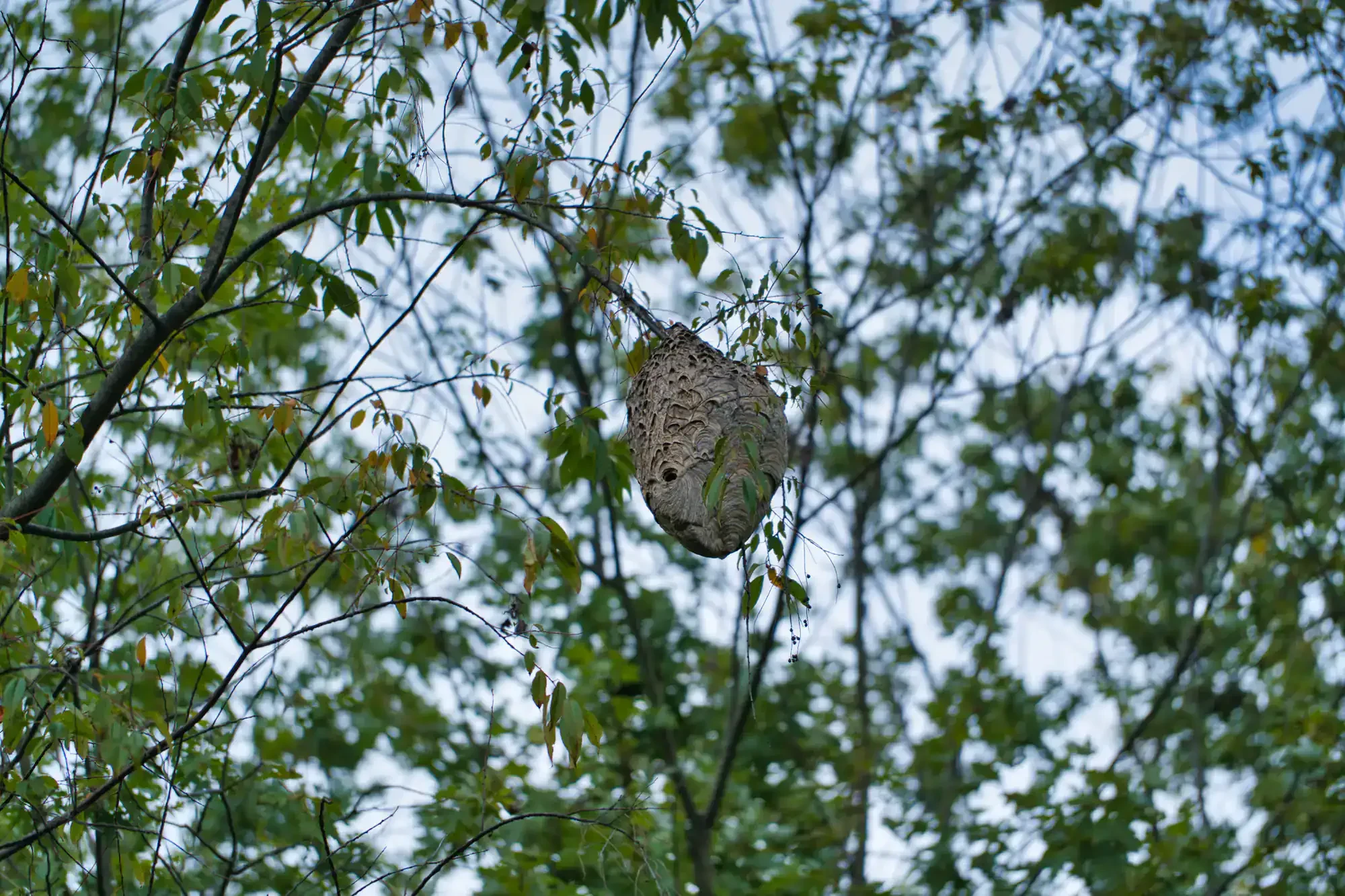
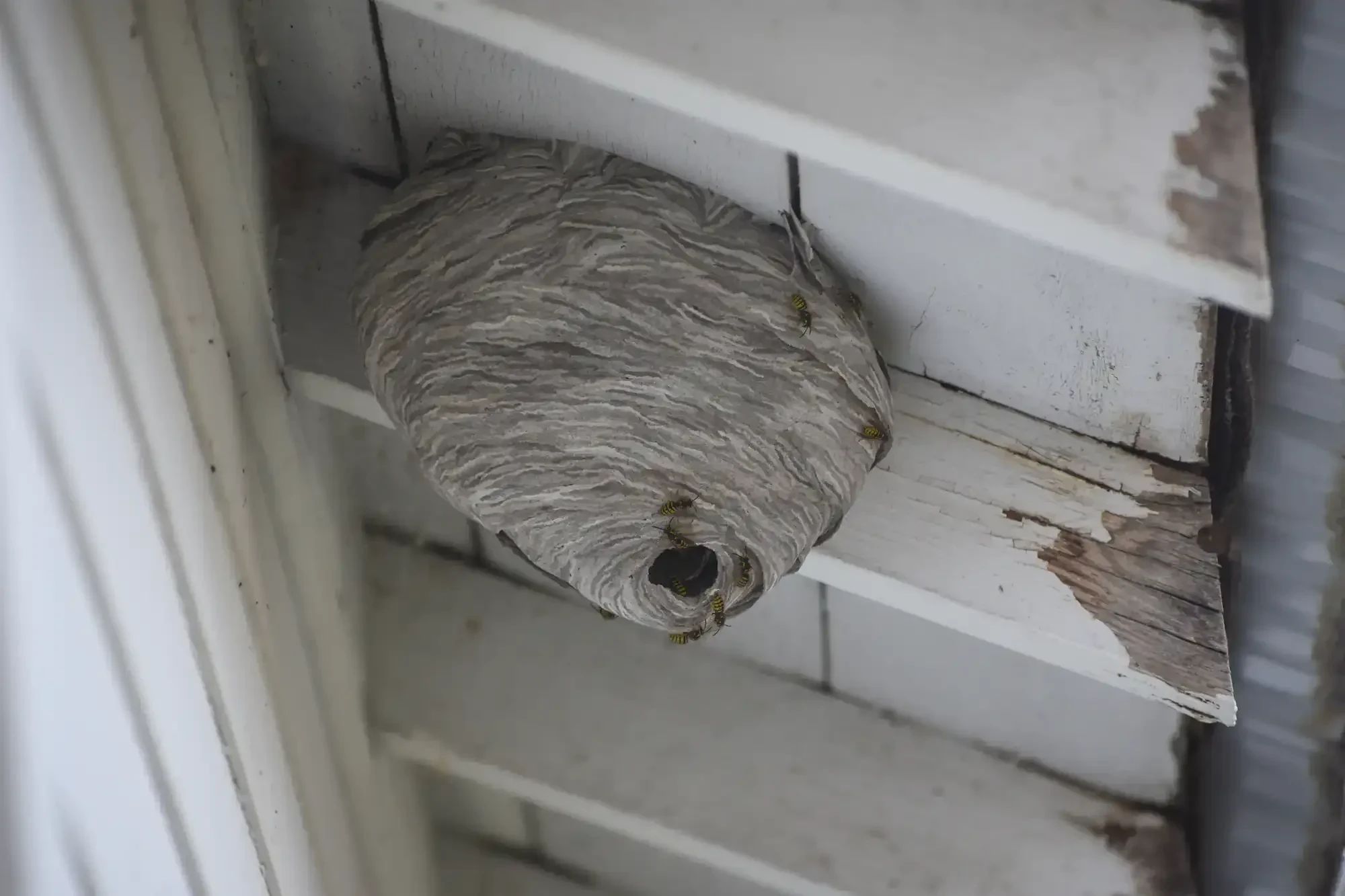
It starts with identifying exactly what you’re dealing with. Lake Fenton properties host two primary yellow jacket species, and they behave very differently. German Yellowjackets nest inside structures — wall voids, attics, boat house walls, enclosed soffits. Eastern Yellowjackets go underground, often in abandoned animal burrows tucked along naturalized shoreline landscaping or beneath lawn areas near the water. Treating the wrong nest type with the wrong approach doesn’t just fail — it makes the colony more aggressive and harder to reach.
Once we’ve confirmed the species and located the nest, we apply professional-grade treatment directly to the colony — not just the entry point. For wall voids and attic infestations, that means insecticide dust applied into the cavity so it reaches the entire colony, including the queen. For ground nests, we treat the tunnel system at the source. Over-the-counter sprays applied to the outside of an entry point push the colony deeper and increase the risk of a mass stinging event. That’s the mistake most DIY attempts make, and it’s why people end up calling us after trying to handle it themselves.
After treatment, we walk you through what to expect in the days that follow and what to watch for. If activity continues within the guarantee window, we come back — no additional charge. Given that Michigan’s yellow jacket danger window runs hard from late July through September, timing matters. The sooner this gets handled, the more of your summer you get back.
Ready to get started?
Every yellow jacket job we take on in Lake Fenton starts with a proper inspection — not a guess. We look at the full picture: where workers are entering, what type of structure or ground feature they’re using, which species we’re dealing with, and what access points may be contributing to the problem. For waterfront properties, that often means checking boat houses, dock storage structures, retaining walls, and the aging exterior features that are common in lakefront homes built in the late 1980s and 1990s.
Treatment is targeted and thorough. For structural infestations — wall voids, attics, enclosed soffits — we use professional-grade insecticide dust applied directly into the cavity, designed to work through the entire colony rather than just knocking down workers at the surface. For ground nests, we treat the tunnel network at the source. Both approaches are applied under MDARD License #250081, following Integrated Pest Management protocols that minimize unnecessary chemical exposure — which matters when you’re treating near a lake, near children, or near pets.
Every treatment comes with a 1-year service guarantee. If yellow jacket activity returns within that window, we come back and re-treat at no charge. We also offer price matching against reasonable competitor rates, and we have discounts available for seniors, veterans, and first responders — a meaningful number of whom call Lake Fenton home.
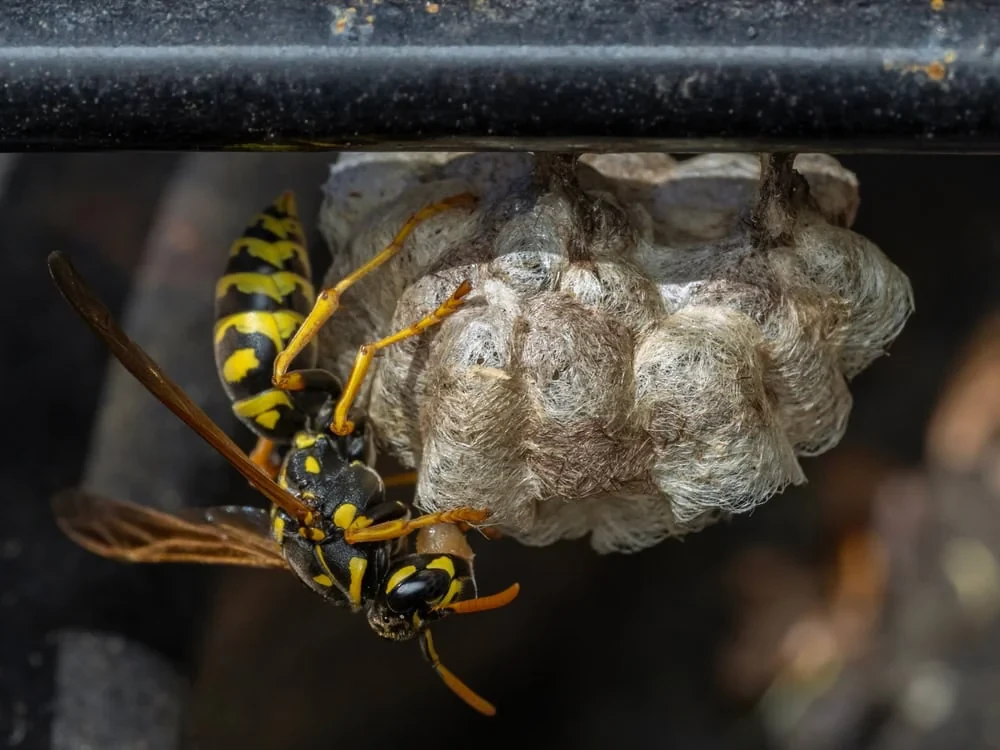
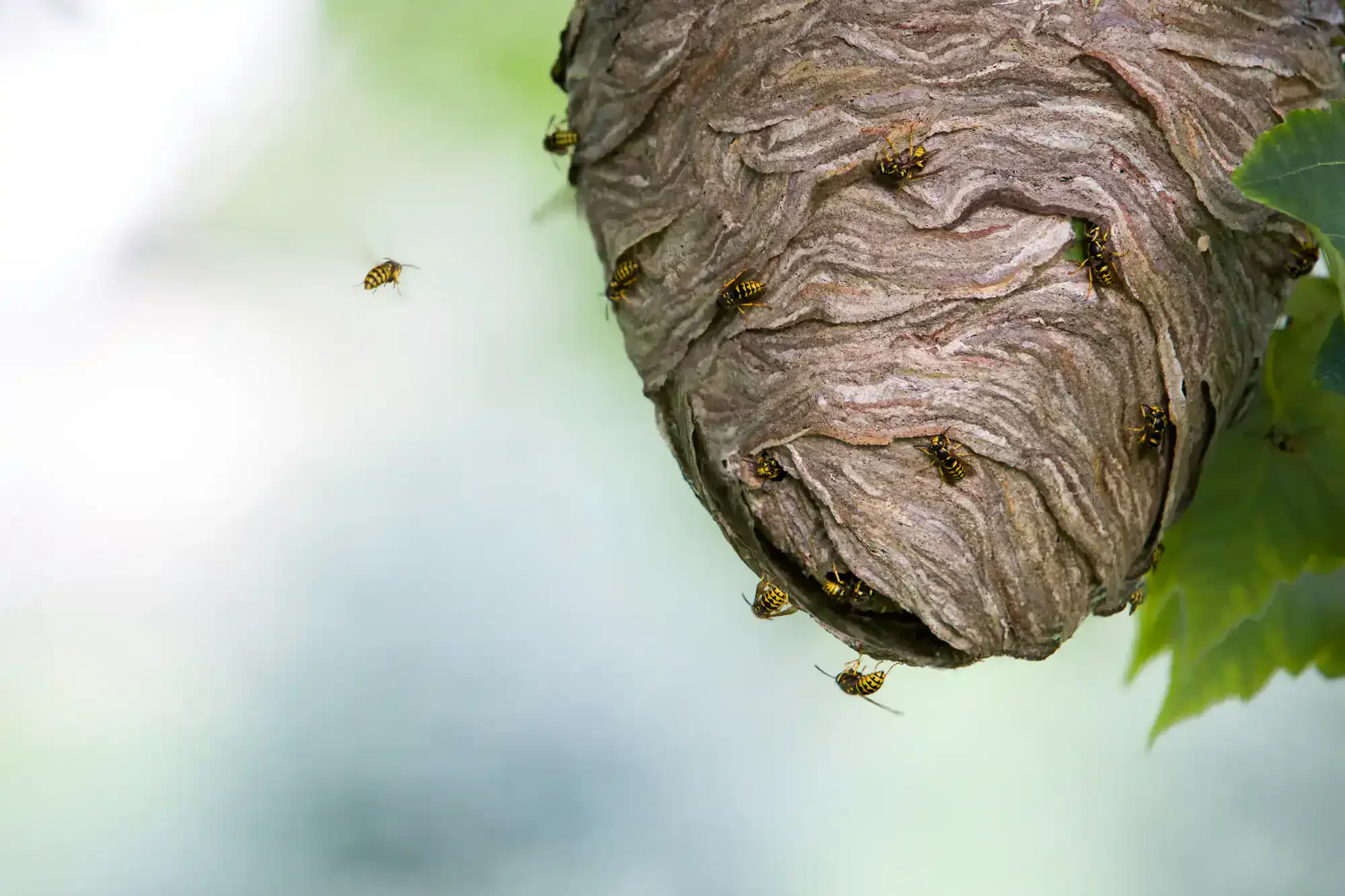
By August and into September, yellow jacket colonies have reached their maximum size — anywhere from 1,000 to 5,000 workers depending on the species and how long the nest has been established. At that point in the season, the colony shifts its focus from hunting insects to foraging for sugary foods and proteins. That’s exactly what’s present at every dock gathering, boat cooler, and outdoor dining table in Lake Fenton during peak summer.
The water-adjacent environment also plays a role. Lakefront properties tend to have more naturalized landscaping, wooded surroundings, and ground cover than inland homes — all of which provide ideal nesting habitat for Eastern Yellowjackets. When a ground nest is established along a shoreline path or beneath a lawn area near the water, foot traffic from people heading to and from the dock can disturb the colony repeatedly throughout the day. That repeated disturbance, combined with late-summer food-seeking behavior, is why yellow jacket encounters near docks escalate so quickly this time of year.
What looks like a simple fix — spraying the entry point with a can of wasp spray — almost always makes the situation worse when you’re dealing with a structural infestation. German Yellowjackets, which are the species most likely to be nesting in your walls or attic, respond to a surface-level spray by retreating deeper into the wall cavity. The colony doesn’t die. It relocates further inside your home, becomes more defensive, and may begin emerging through interior drywall or vents instead of the original entry point.
For ground nests, DIY treatment carries a different risk. Disturbing an Eastern Yellowjacket ground nest without proper protection and the right product application can trigger a mass stinging response from hundreds of workers in seconds. In a community like Lake Fenton where outdoor activities bring children, guests, and pets into close proximity with yards and landscaping regularly, that’s a serious safety concern. Professional treatment reaches the entire colony — including the queen — which is the only way to actually resolve the infestation rather than temporarily displace it.
The most common sign is a consistent line of yellow jacket traffic entering and exiting a single point on your home’s exterior — a gap in siding, a crack near a soffit, a space around a window frame or eave. If you’re seeing workers going in and out of the same spot repeatedly, especially in the morning and early afternoon, there’s a strong chance the nest is inside the structure rather than nearby.
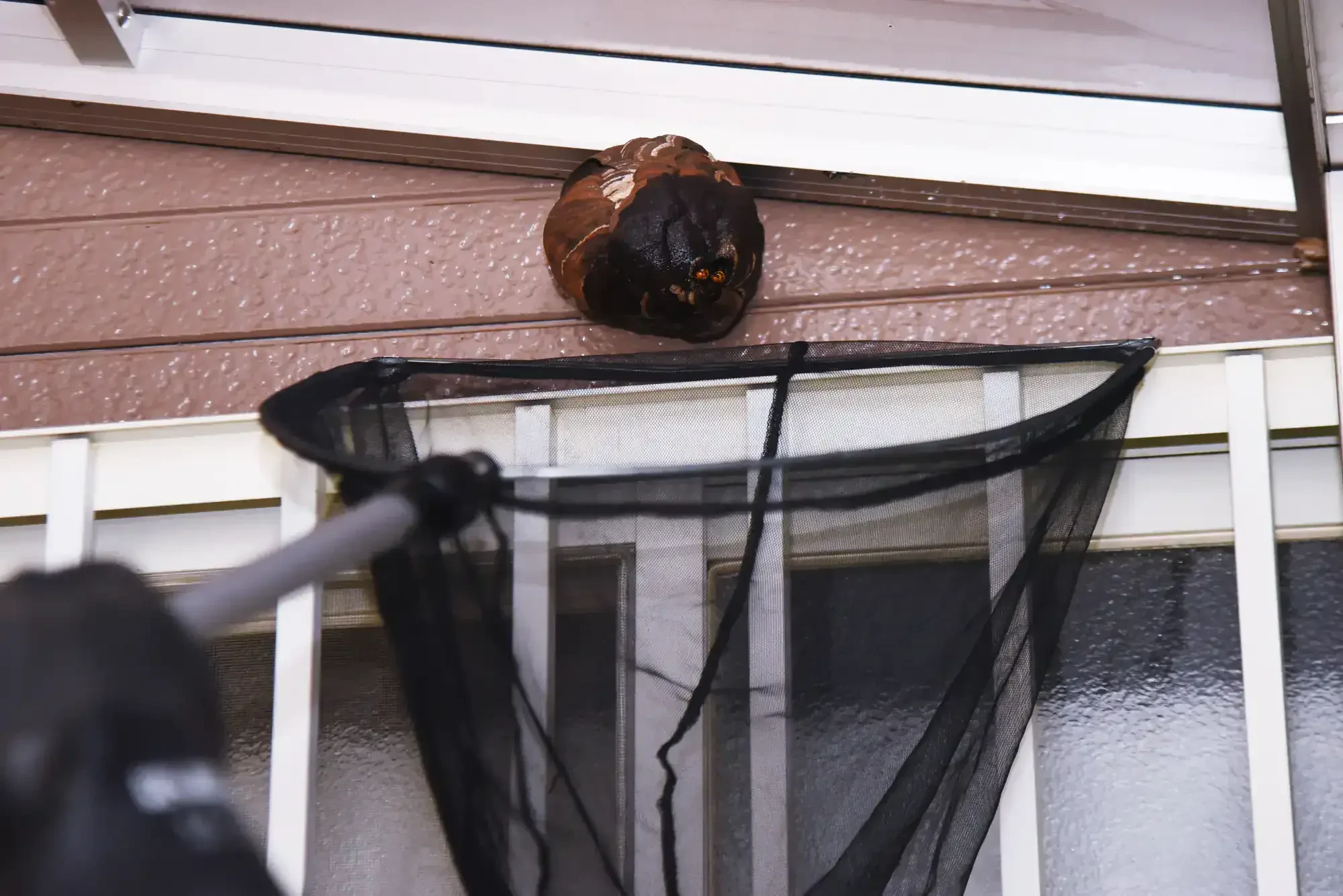
In Lake Fenton, this is especially common in homes built in the late 1980s and 1990s, which now have aging exterior materials that develop small gaps over time. German Yellowjackets are very good at finding those openings. In more advanced infestations, you may also hear a faint buzzing or chewing sound from inside a wall, or notice workers appearing near interior vents, light fixtures, or electrical outlets — which means the colony has grown large enough to be pressing against interior surfaces. At that stage, the nest can be the size of a basketball or larger. The sooner it’s identified and treated, the less structural involvement there is to deal with afterward.
Yes — when it’s done correctly and by a licensed professional following Integrated Pest Management protocols. We hold MDARD Pesticide Application Business License #250081, and our treatment approach is specifically designed to be targeted rather than broadcast. That means we’re applying product directly to the nest or entry point, not spraying broadly across your yard or near the water’s edge.
For ground nests located near shoreline landscaping or naturalized areas close to the lake, the application method matters significantly. We use products and techniques that minimize runoff risk and keep treatment contained to the nest site. Michigan does not require a separate municipal permit for residential pest control treatment in unincorporated Fenton Township, but all applications are conducted in compliance with MDARD regulations, which govern how, where, and what products can be applied near water bodies. If you have specific concerns about proximity to the lake or a particular area of your property, that’s exactly the kind of thing we assess during the inspection before any treatment begins.
Cost varies depending on the type of infestation and where the nest is located. A straightforward ground nest or accessible aerial nest on the exterior of your property is generally on the lower end of the range. Wall-void and attic infestations require more involved treatment — accessing the cavity, applying product through the structure, and in some cases multiple visits — and are priced accordingly. Nationally, yellow jacket extermination averages around $725, with structural infestations commonly running between $500 and $1,300.
The more useful way to think about cost is relative to what you’re protecting. A wall-void infestation that goes untreated can result in drywall damage, compromised insulation, and secondary pest issues — repairs that routinely run several thousand dollars. An emergency room visit for anaphylaxis from a yellow jacket sting costs far more than any professional treatment. For a Lake Fenton property worth $400,000 or more, professional extermination is straightforward math. We also offer price matching against reasonable competitor rates, so if you’ve received another quote, ask us about it before you decide.
The colony itself will die off by late fall — only fertilized queens survive Michigan winters, and they do so by overwintering in protected spots outside the nest. So the immediate threat goes away. But leaving a dead nest inside your wall or attic creates a different set of problems that most homeowners don’t anticipate.
Dead nest material — the comb, the dead workers, the remaining food stores — attracts secondary pests. Rodents are drawn to it. Flesh flies and other scavengers will work through it. And the entry point that the yellow jackets used to access your wall is still open. That gap is exactly where next spring’s queen will look for a place to start a new colony. In Lake Fenton’s older housing stock, where exterior materials have been weathering for 25 to 35 years, those entry points don’t seal themselves. Treating the nest in season and sealing the entry point afterward is the complete solution. Waiting until winter and hoping the problem resolves on its own almost always leads to a repeat infestation in the same location the following year.
Useful Links