
Hear from Our Customers
Yellow jacket colonies in Metamora don’t stay small. By the time most homeowners notice them — usually after someone gets stung — the nest already holds thousands of workers and the colony is running at full aggression. That’s not a DIY situation. That’s a licensed technician with the right product, the right approach, and the knowledge to treat it without making it worse.
Metamora’s landscape makes this more complicated than it sounds. The rolling hills, wooded trail margins, and open pastures around the township are exactly where Eastern Yellowjackets build underground colonies — often in abandoned animal burrows that are invisible until you’re standing on top of one. If you have horses, dogs, or kids using those trails and paddocks, the risk isn’t just a bad afternoon. It’s a real safety problem.
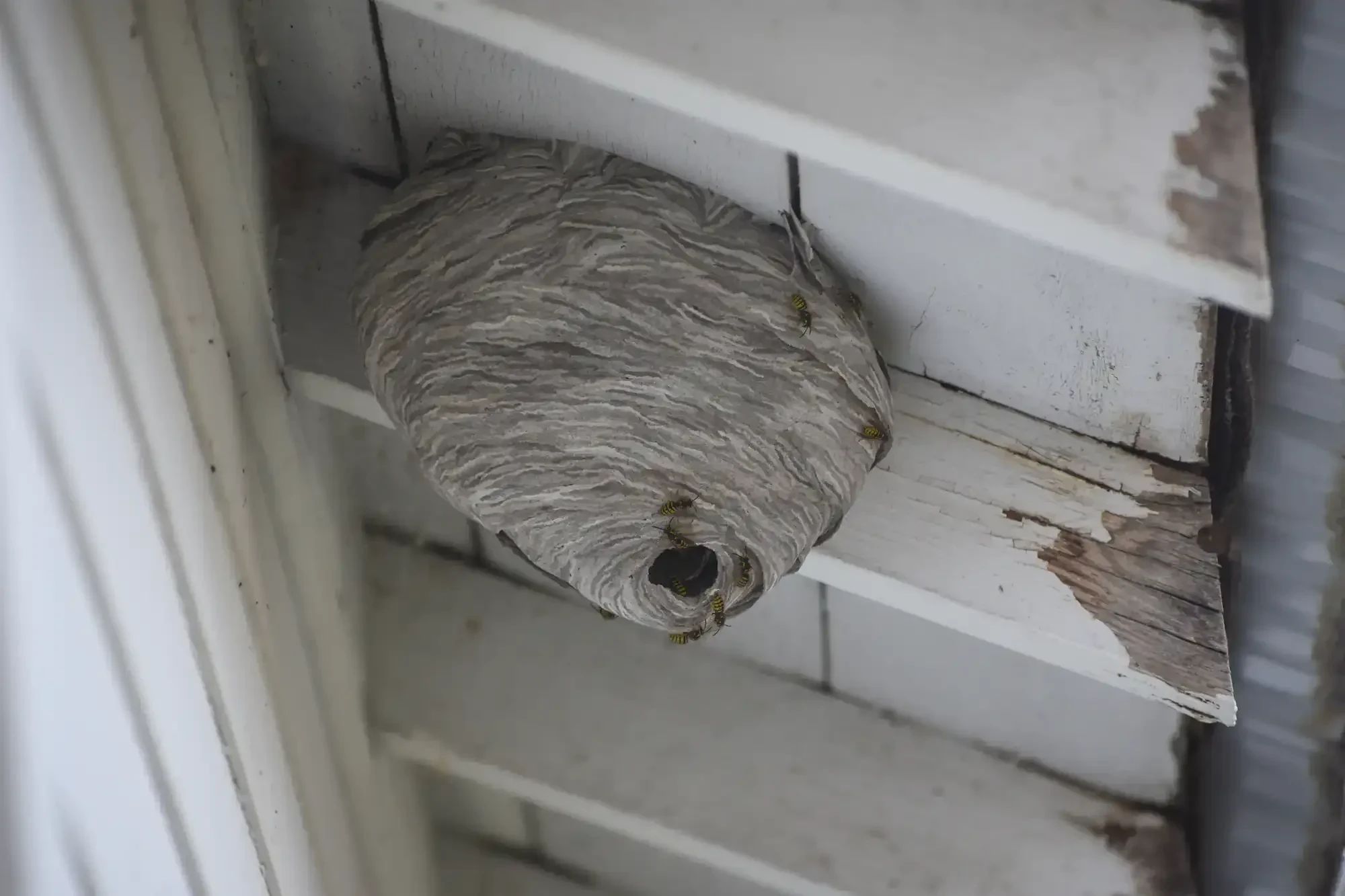
The older homes in and around the Metamora Crossroads Historic District carry a different risk entirely. German Yellowjackets love the aged wood siding, soffit gaps, and structural voids that come with 19th and early 20th century construction. A colony in a wall void will keep expanding through late summer, chewing through plaster and historic woodwork as it grows. Getting it treated correctly — and early enough — protects both the people inside and the structure itself.
We’ve been serving Southeast Michigan since May 31, 2005 — that’s 20 years of treating the wooded, rural, and historically rich properties that define Lapeer County and Metamora. Our founder, Roger Chinault, brings 26 years of personal, hands-on pest management experience to every job. He’s not managing a team from an office. He’s the one who knows the difference between a German Yellowjacket colony in a wall void and an Eastern Yellowjacket colony in a ground burrow — and exactly what each one requires.
What makes us different in a market like Metamora is consistency. You get the same technician year after year — someone who learns your property, understands its quirks, and doesn’t need to be walked through the history of your barn or your back acreage every spring. We hold MDARD Pesticide Application Business License #250081, carry Integrated Pest Management certification, and back every yellow jacket treatment with a one-year service guarantee. No binding contracts. No rotating crew of seasonal hires. Just a licensed professional who shows up, does the job right, and stands behind it.
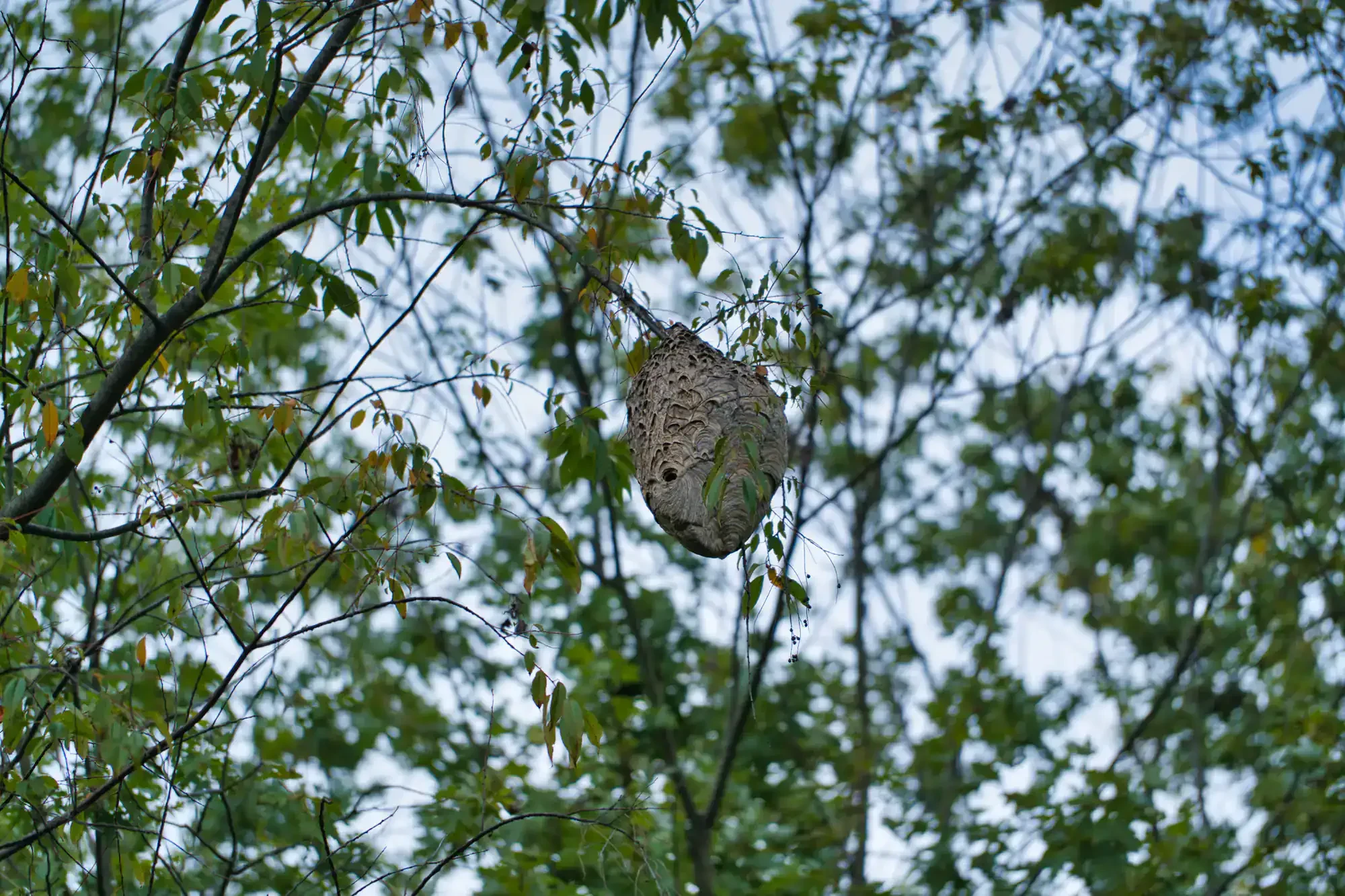
It starts with identification, and that step matters more than most people realize. Metamora’s rural landscape means genuine encounters with honeybees, bumblebees, paper wasps, and bald-faced hornets are common alongside yellow jackets. Treating the wrong species with the wrong method wastes your money at best and destroys a beneficial pollinator population at worst. Our IPM certification requires correct species identification before any treatment begins — that’s not standard practice across the industry, and it’s one of the reasons the outcomes are different.
Once the species and nest location are confirmed, treatment is targeted and deliberate. Ground nests in open pasture or along wooded trail edges — the kind common on equestrian properties off Barber Road or Brocker Road — are treated differently than a German Yellowjacket colony that’s worked its way into the wall void of an older home near the Crossroads Historic District. We match the approach to the nest type, the location, and the structure involved. For historic properties, that means being careful about how entry points are accessed and sealed, so the treatment doesn’t create a secondary problem with aged woodwork or original siding.
After treatment, you’ll know exactly what was found, what was done, and what to watch for going forward. That post-treatment conversation isn’t an afterthought — it’s part of how we work. Late summer is peak yellow jacket season in Metamora, which means the window between finding a nest and the colony reaching maximum size is shorter than most people expect. The sooner you call, the more straightforward the job.
Ready to get started?
We handle yellow jacket nest removal across the full range of property types you’ll find in and around Metamora — residential homes, equestrian properties, historic structures, agricultural outbuildings, and commercial buildings along the M-24 corridor. Whether the nest is in the ground near a paddock fence, inside a barn wall, tucked into an attic soffit, or buried in the wall cavity of an older home in the village, the treatment is built around what’s actually there — not a generic package applied the same way regardless of conditions.
For Metamora homeowners specifically, attic yellow jacket removal and wall void treatment require a careful hand. The building stock here skews older, and a technician who isn’t paying attention to the structure can cause more damage than the nest itself. Our approach protects the integrity of the property while eliminating the colony — and the one-year service guarantee means if activity returns within the guarantee period, we come back and re-treat at no additional charge.
We also offer price matching for reasonable competitor rates, so you’re not paying a premium to get licensed, experienced, and guaranteed service. Seniors, veterans, and first responders receive discounts — a straightforward acknowledgment of the people who make up and serve this community. If you’ve seen a quote from another provider, call and ask. Chances are, we can match it and bring considerably more to the job.
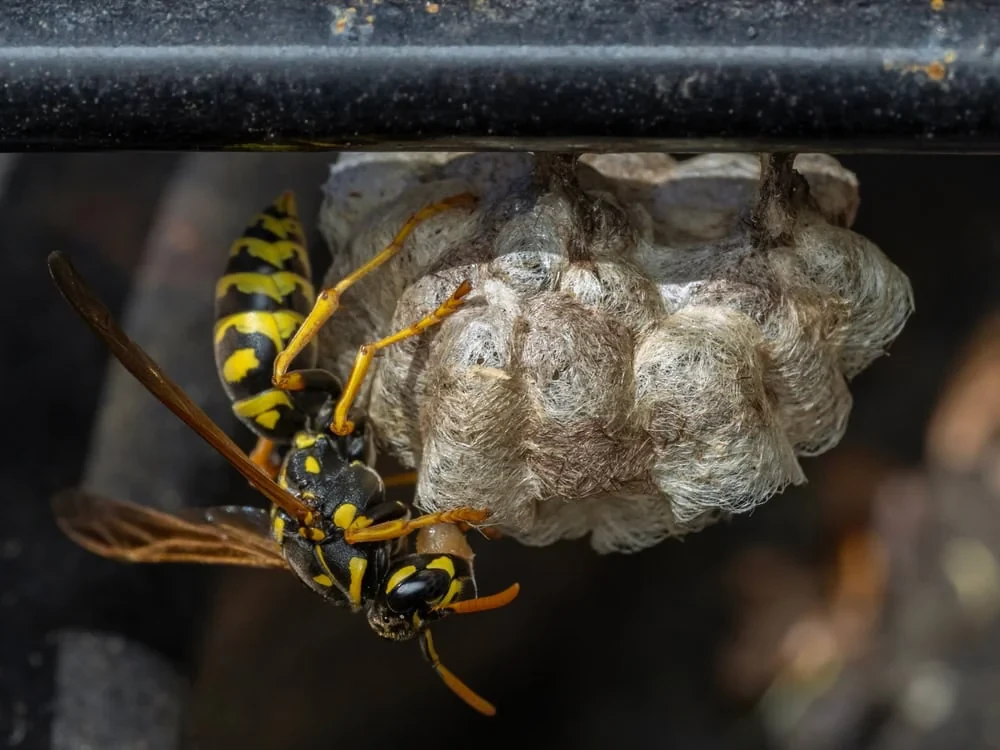
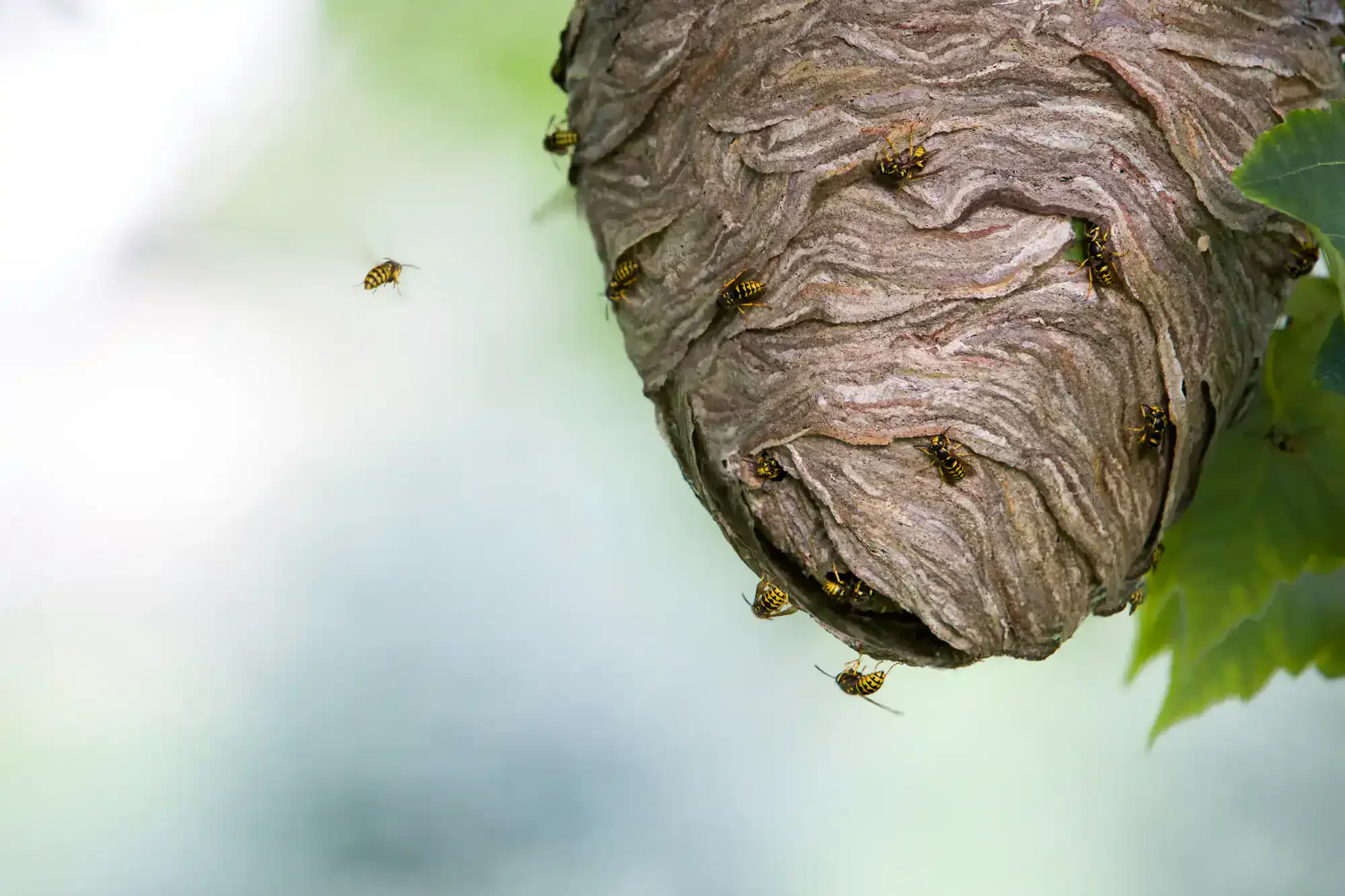
Yellow jackets are frequently confused with honeybees, paper wasps, and bald-faced hornets — and in a rural area like Metamora, you’re likely to encounter all of them. The key visual difference is that yellow jackets have a smooth, bright yellow-and-black banded abdomen with no visible hair. They’re sleek, fast, and aggressive when disturbed. Honeybees are rounder, fuzzier, and far less reactive. Paper wasps have a more slender, dangling-leg profile when flying.
Behavior is also a strong indicator. If you’re seeing insects flying in and out of a hole in the ground, a gap in your siding, or a void in your barn wall — especially in late summer — yellow jackets are the most likely culprit. Ground nests are extremely common on Metamora’s rural properties, particularly in areas with wooded margins, open pasture, and disturbed soil from grazing or hoof traffic. If you’re not sure, don’t probe the area. Call for a proper identification before anyone gets hurt.
Nationally, yellow jacket exterminator services average around $725, with most jobs falling somewhere between $500 and $1,300 depending on nest size, location, and accessibility. In the Metamora area, the specific factors that affect cost include whether the nest is in the ground, inside a structural void, or in an outbuilding — and how accessible the treatment site is on a rural property.
A ground nest in an open pasture is generally more straightforward to treat than a German Yellowjacket colony that’s been expanding inside a wall void of an older home since early summer. Attic yellow jacket removal and wall void treatment on historic structures take more care and time, which affects the job scope. We offer price matching for reasonable competitor rates, so if you’ve already gotten a quote, it’s worth a call. The one-year service guarantee is included — if yellow jacket activity returns within the guarantee period, we come back at no additional charge.
In Michigan, yellow jacket colonies start building in late spring after the queen emerges from overwintering, but the real danger window is August and September. By late summer, a colony that started with a handful of workers in April can hold anywhere from 1,000 to 5,000 individuals — and as natural food sources decline, yellow jackets become significantly more aggressive and more likely to sting without obvious provocation.
For Metamora specifically, this timing overlaps directly with the community’s most active outdoor season. The annual Country Days and Hot Air Balloon Festival runs in late August at Harmer Park and Oak Street — exactly when yellow jacket colonies are at their largest and most defensive. The free Thursday evening concerts at Harmer Park run through late August as well. If you have a nest on your property and you’re planning any kind of outdoor activity, don’t wait until after the event to deal with it. Late summer treatment is effective, but earlier is always easier.
Yes — and this is a concern that’s particularly relevant for Metamora homeowners with older properties. German Yellowjackets, which commonly nest in wall voids, attics, and enclosed structural cavities, will chew through wood, plaster, and insulation as the colony expands. In a home built in the 1800s or early 1900s — the kind of construction common in and around the Metamora Crossroads Historic District — that means the colony can work through original plaster, lath, and aged wood framing before you ever see evidence of it on the interior.
The longer a wall void nest goes untreated, the larger the colony gets and the more material it destroys in the process. In some cases, the nest itself absorbs moisture and causes secondary damage to the surrounding structure after the colony dies off in fall. Getting the nest treated while it’s active, sealing the entry point correctly, and removing the nest material where accessible is the right sequence — and it requires someone who knows how to work carefully on older Metamora structures without causing additional damage.
This is one of the more important questions for Metamora’s equestrian community, and the honest answer is: it depends on the product used, the application method, and the timing. A licensed pest control technician with IPM training will select products and application methods that are appropriate for the specific nest location and the surrounding environment — including proximity to horses, livestock, and dogs.
What you want to avoid is any untrained application near animals, particularly in enclosed spaces like barns or run-in sheds where product can concentrate. Horses are especially vulnerable to yellow jacket attacks because they can’t communicate pain or retreat safely from an enclosed area. A single disturbed ground nest near a paddock fence can trigger a mass sting response that causes a horse to panic and injure itself or a rider. Treating nests on equestrian properties before they reach late-summer peak size is the safest approach. We have experience with rural and agricultural property types across Lapeer County — this isn’t a situation that requires a workaround, just a technician who knows what they’re doing.
We offer discounts for seniors, veterans, and first responders. In a community like Metamora — where many longtime residents have deep roots, where the Metamora Hunt Club has been part of the fabric of this township since 1928, and where the people who keep this community running deserve straightforward acknowledgment — those discounts are applied without a lot of red tape. Mention it when you call and ask what’s currently available.
We also offer price matching for reasonable competitor rates. If you’ve already gotten a quote from another provider in the Lapeer County area, bring it to the conversation. The goal isn’t to be the cheapest option — it’s to make sure cost isn’t the reason someone chooses a less qualified provider for a job that genuinely matters. The one-year service guarantee, MDARD licensing, and 20 years of regional experience come with every job regardless of what you pay.
Useful Links