
Hear from Our Customers
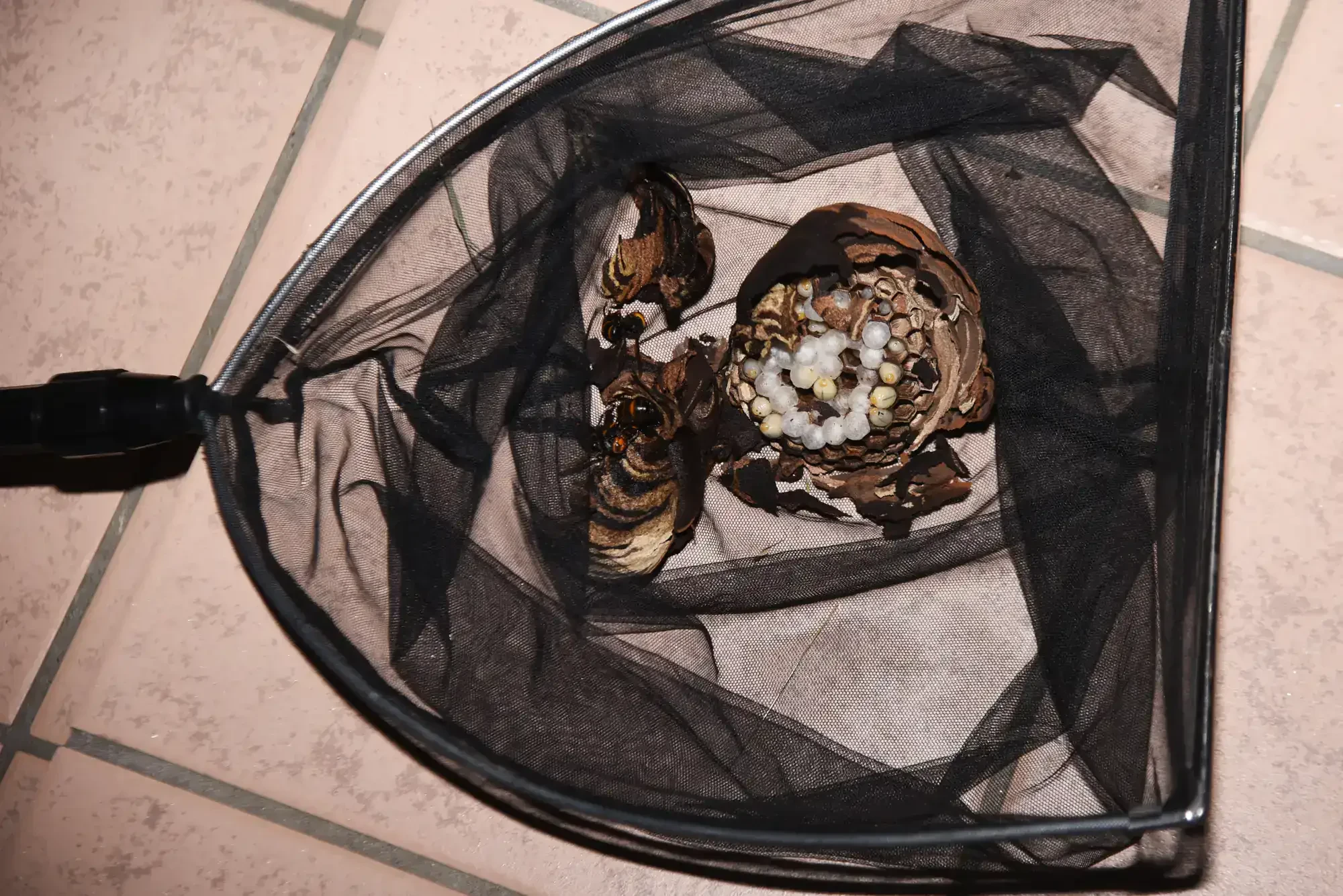
A hornet nest near the back door isn’t just an inconvenience — it’s a real threat, especially if anyone in your household is allergic. The CDC records an average of 62 deaths per year in the U.S. from hornet, wasp, and bee stings. That number matters when you’re watching your kids play in the yard and you can hear a colony buzzing behind the soffit.
Columbiaville’s older housing stock creates exactly the kind of access points hornets exploit — weathered eaves, aging wooden soffits, gaps around rooflines, and outbuildings that don’t get inspected until something moves in. A bald-faced hornet colony can reach 400 to 700 workers at peak late-summer population. By the time most homeowners notice the problem, the colony is already large, defensive, and not going anywhere on its own.
When we remove hornets professionally in Columbiaville, MI, you get your outdoor space back. The porch. The yard. The shed. The back door you’ve been avoiding for two weeks. You stop worrying about who’s going to get stung next and start using your property the way you’re supposed to.
We founded First Choice Pest Control on May 31, 2005 — which means 2025 marks 20 years of family-owned pest control service across southeast Michigan, including Columbiaville and the surrounding Lapeer County area. Roger, who leads the company, has 26 years of hands-on pest control experience. That’s not a number pulled from a bio — it’s the difference between someone who’s read about hornet behavior and someone who’s treated thousands of nests in Michigan homes across every season.
What sets us apart isn’t a list of services — it’s how we operate. You get the same technician assigned to your property year after year. Not a seasonal hire. Not whoever’s available. The same trained professional who will know your home, your lot, and your history the next time you call. That matters in a community like Columbiaville, where properties along the Flint River corridor tend to have wooded perimeters, older structures, and the kind of recurring pest pressure that requires someone who actually remembers what they found last time.
We hold Michigan Pesticide Application Business License #250081, are IPM-trained through MDARD, and have earned awards from Angie’s List and HomeAdvisor. We serve both residential and commercial customers across Lapeer County and the surrounding region.
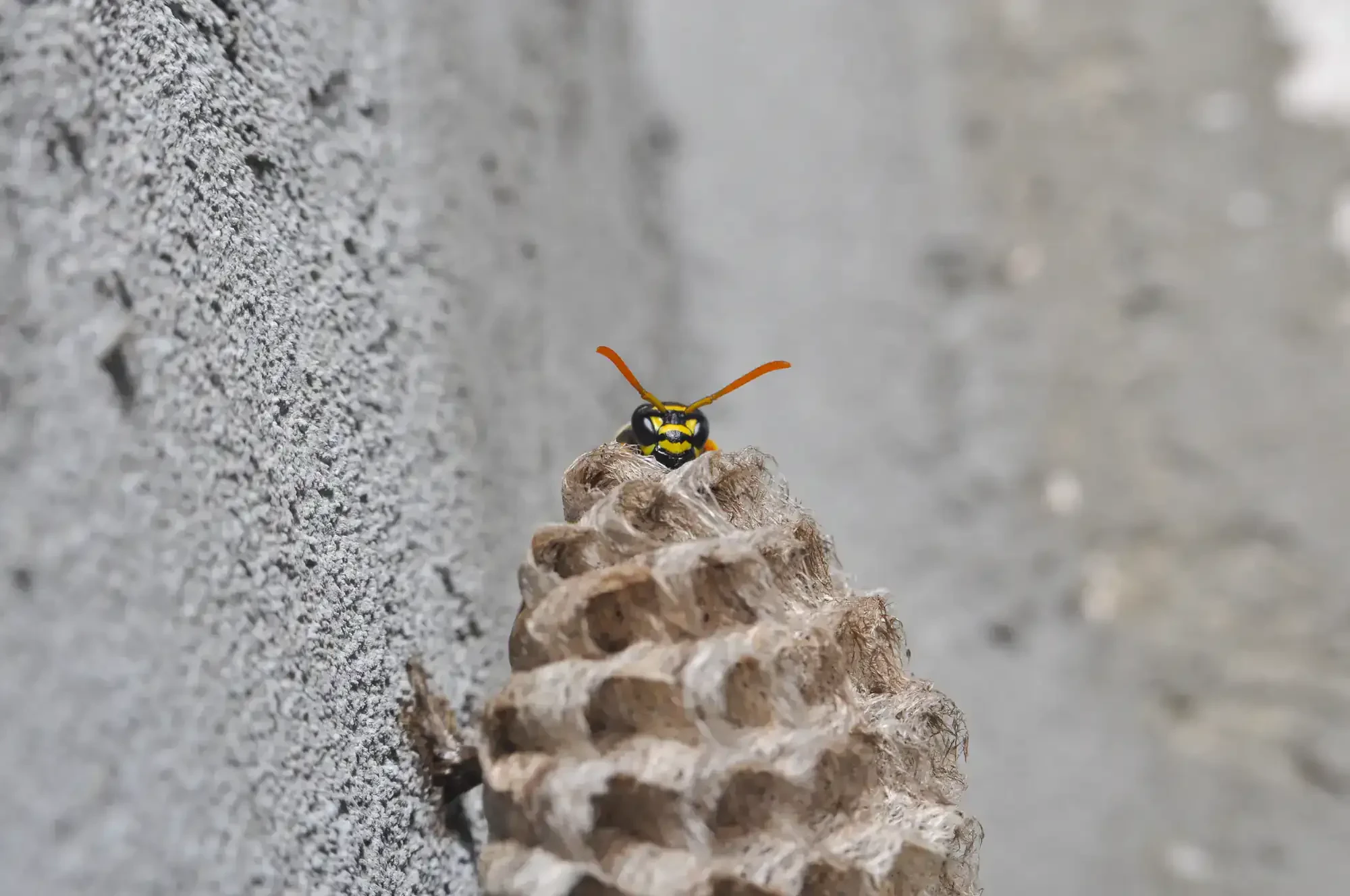
It starts with a proper inspection. Before anything is treated, our technician identifies the species, locates all active nesting sites, and assesses the size and stage of the colony. This step matters more than most people realize — bald-faced hornets nesting in a tree branch require a different approach than a colony that’s established inside a wall void behind your drywall. Treating the wrong way doesn’t just fail; it can drive hornets deeper into the structure.
Once the nest is located and the situation is fully understood, we apply treatment using the appropriate method for the specific scenario. Aerial nests under eaves or overhangs are treated directly. Wall void nests — common in Columbiaville’s older homes — require a dust treatment injected into the void, which reaches the colony without opening walls. In Lapeer County’s wooded, rural environment, nests in outbuildings, under dock structures near Miller Lake, or in tree branches at the edge of a wooded lot each call for a specific approach, not a one-size-fits-all spray.
After treatment, our technician walks you through what to expect over the next 24 to 72 hours and what preventive steps reduce the chance of a new colony establishing in the same location next season. If the problem isn’t fully resolved, we come back — no additional charge.
Ready to get started?
Our hornet removal service in Columbiaville, MI covers the full scope of the problem — not just the visible nest. We inspect every active nesting site on the property, including locations homeowners commonly miss: the gap behind the fascia board, the void inside the shed wall, the branch overhang at the back of a wooded lot. In a community where properties tend to sit on larger, tree-lined parcels near the Flint River, that thoroughness is the difference between a resolved problem and a recurring one.
Our treatment is targeted and IPM-based — meaning the right product, in the right amount, in the right location. For families with children playing in rural yards, pets roaming larger lots, or properties adjacent to Holloway Reservoir, that approach matters. You’re not getting a blanket chemical application across your property. You’re getting a precise treatment designed around your specific situation.
We offer flat-rate, upfront pricing. You’ll know the cost before any work begins. If you’ve received a reasonable quote from another Lapeer County provider, we’ll match it. We also offer discounts for seniors, veterans, and first responders — because a significant portion of the Columbiaville community qualifies, and that’s not something to bury in fine print. We serve both residential and commercial customers across Columbiaville, Otter Lake, Marathon Township, and the surrounding Lapeer County area.
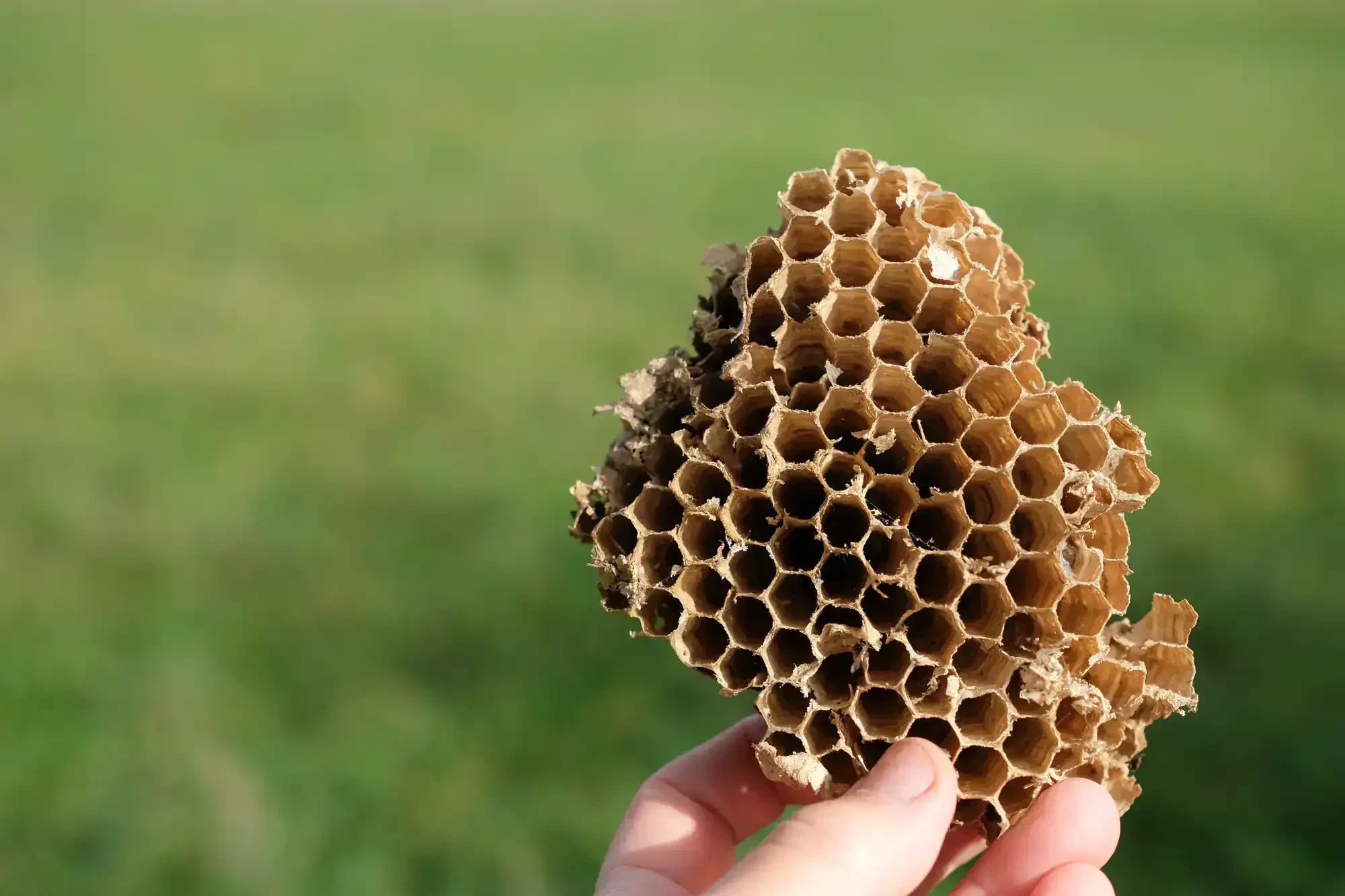
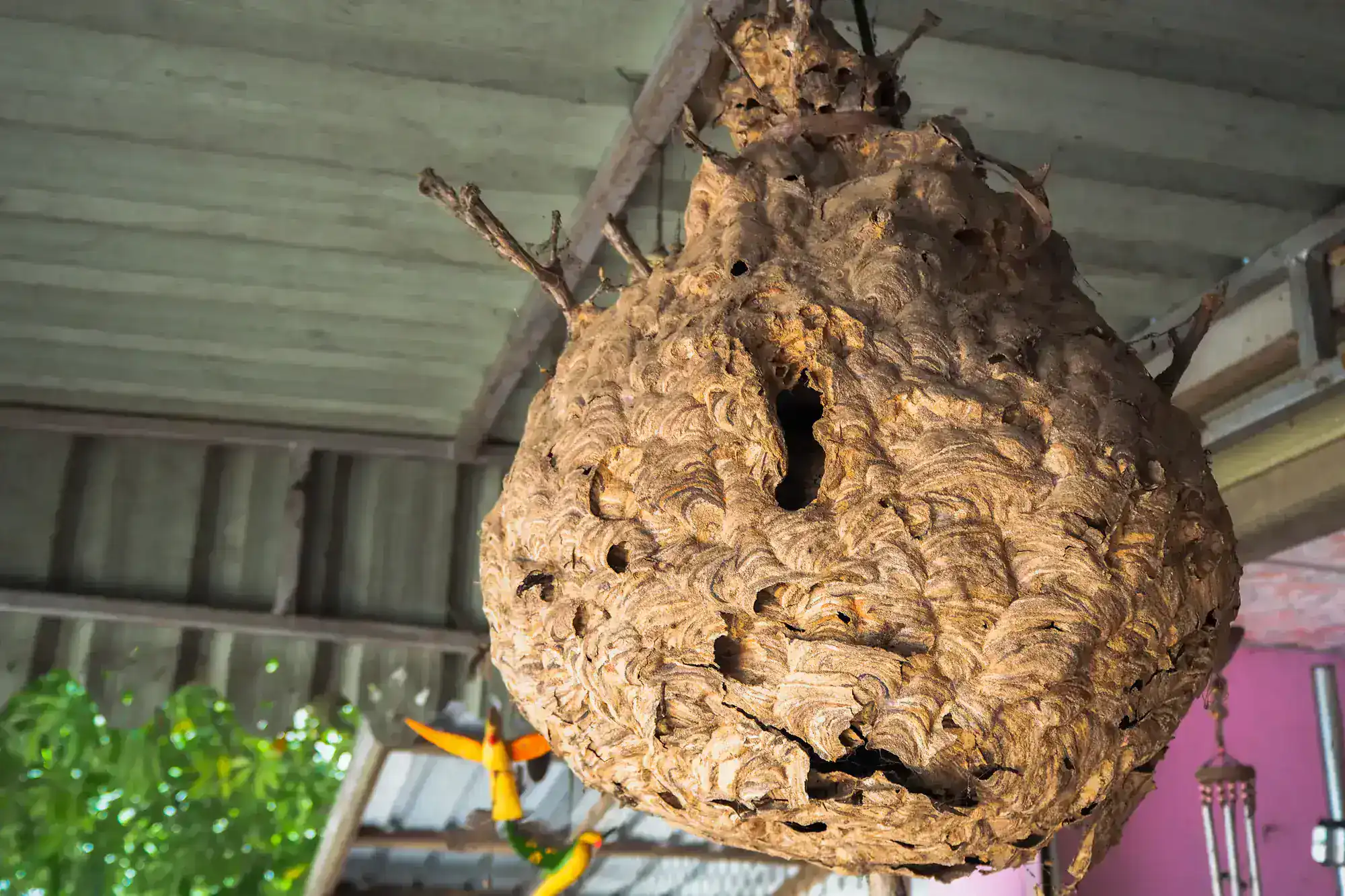
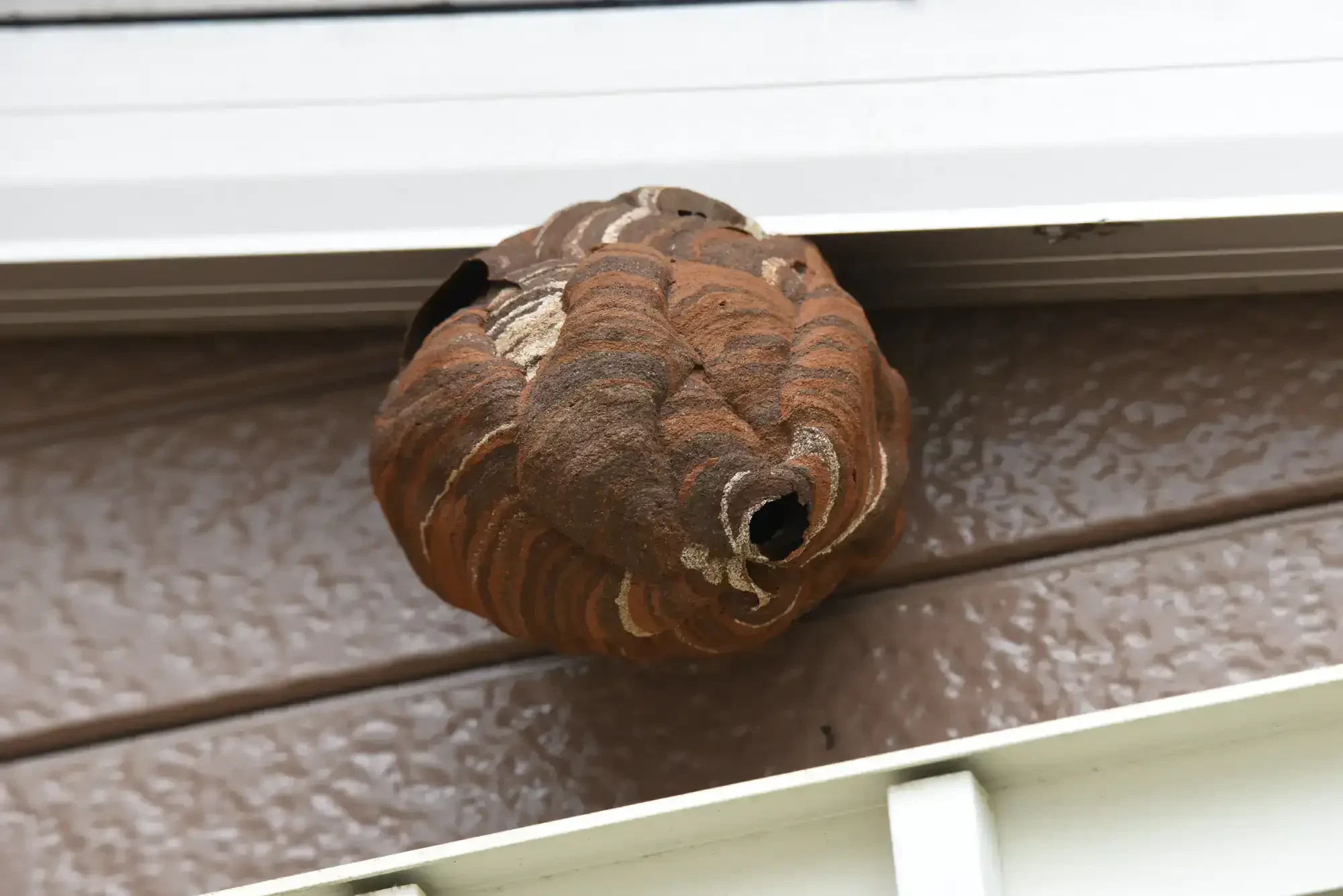
Bald-faced hornets are one of the most common stinging insects in Lapeer County and across rural Michigan. They’re technically a type of yellowjacket — large, black-and-white in coloring, and highly aggressive when their nest is disturbed. Their nests are the gray, football-shaped paper structures you’ll typically find hanging from tree branches, under eaves, on the soffits of older homes, or attached to outbuildings. In Columbiaville’s wooded environment along the Flint River corridor, bald-faced hornets have no shortage of ideal nesting sites — tree canopy, older structures with weathered gaps, and rural outbuildings that don’t get checked regularly.
The easiest way to confirm what you’re dealing with is to watch the flight pattern. Bald-faced hornets fly in and out of a fixed entry point repeatedly. If you’re seeing that behavior near an eave, a soffit, or a spot on your exterior wall where there’s no visible nest, there’s a good chance the colony is already established inside a wall void — which is when professional hornet nest removal becomes essential, not optional.
Professional hornet removal in Columbiaville, MI generally runs between $300 and $700, depending on the nest location, size, and how accessible it is. Bald-faced hornet removal tends to fall toward the higher end of that range — averaging around $600 to $625 nationally — because their nests are often elevated, enclosed, and require more precise treatment than a simple exposed nest on a low branch.
One thing worth knowing: the cost goes up significantly the longer you wait. A small spring nest that might cost $200 to $300 to remove in May can easily become a late-summer colony requiring $600 or more by August, when the population peaks and the situation is more complex to treat safely. We offer flat-rate, upfront pricing with no hidden charges, and we’ll match a reasonable competitor’s quote if you’ve already received one. Given that Columbiaville homeowners often discover nests late — in outbuildings, along wooded lot edges, or in locations that aren’t checked regularly — calling early almost always saves money.
For a small, newly formed nest in an easy-to-reach location, some homeowners do attempt DIY removal — and occasionally it works. But there are two scenarios where that approach becomes genuinely dangerous, and both are common in Columbiaville. The first is a large, late-summer colony. A bald-faced hornet nest at peak population can hold 400 to 700 workers, all of which will defend the nest aggressively and sting repeatedly without a barbed stinger to stop them. Disturbing that colony without proper equipment and training is a real health risk, particularly for anyone with a sting allergy.
The second scenario is a wall void nest — which is far more common in Columbiaville’s older homes than most homeowners expect. Hardware store sprays can’t reach a colony inside a wall, and attempting to treat one often drives hornets deeper into the structure or pushes them through interior gaps into living spaces. Professional hornet removal uses a dust treatment injected directly into the void, which reaches the colony without tearing open walls. If you can hear buzzing from inside a wall but can’t see a nest outside, that’s the situation you’re dealing with — and it needs a licensed hornet exterminator, not a can of spray.
In Lapeer County and across Michigan, hornet season follows a predictable pattern. Fertilized queens emerge from winter hibernation in April and May and begin building new nests. At this stage, colonies are small, relatively non-aggressive, and the least expensive to remove. Most Columbiaville homeowners don’t catch nests at this point because they’re small and often tucked into sheltered spots — under an eave, behind a soffit, or in a tree at the back of a wooded lot.
By June and July, worker populations grow rapidly and nests expand fast. August and September are when the majority of emergency hornet removal calls happen across Michigan — the colony is at maximum size, workers are at peak aggression, and the problem has usually been building for months without being noticed. In Columbiaville’s rural environment, where properties have more wooded perimeter, more outbuildings, and more unmonitored areas than a typical suburban lot, late-season discoveries are especially common. The honest answer is: call as soon as you notice activity near the same spot repeatedly. Earlier is always safer, faster, and less expensive.
The treated colony won’t survive — professional hornet removal eliminates the active nest and the workers in it. But it’s worth understanding what happens after the season ends. Bald-faced hornet colonies die off in late fall. Only fertilized queens survive by hibernating in protected locations — often in wooded areas, under bark, or in structural voids. Those queens don’t return to the old nest (which is abandoned after the season), but they do tend to establish new colonies in the same general area the following spring, especially if the conditions that made your property attractive in the first place haven’t changed.
In Columbiaville, where properties sit on wooded lots near the Flint River and many homes have older eaves, soffits, and outbuildings with natural gaps, that recurring pressure is real. The preventive conversation — sealing entry points, addressing structural vulnerabilities, and monitoring in early spring — is part of what we cover at the end of every service call. The same technician returning to your property year after year means someone who already knows where the problem has been before and what to watch for next season.
Yes — we offer discounts for seniors, veterans, and first responders. In a community like Columbiaville, where a meaningful portion of the population has served in the military, works in emergency services, or is retired on a fixed income, those discounts reflect something straightforward: the people who’ve given the most to this community deserve fair pricing without having to negotiate for it. When you call to schedule hornet removal in Columbiaville, MI, just let our team know you qualify and we’ll apply the discount to your service.
Beyond the discounts, we also offer price matching for reasonable competitor rates. If you’ve already received a quote from another Lapeer County pest control provider and it’s a fair number, bring it to the conversation. We want to earn your business on the quality of the work — not by being the only option you didn’t bother to compare. Flat-rate, upfront pricing means you’ll know the full cost before any work begins, with no charges added after the fact.
Useful Links