
Hear from Our Customers
Hornets on a large rural lot aren’t just an annoyance — they’re a real hazard. A nest tucked under a barn eave or buried in a wall void doesn’t announce itself until someone gets too close. By the time most Fleming-area homeowners call, the colony has already been growing for weeks, sometimes months. That’s when things get dangerous fast.
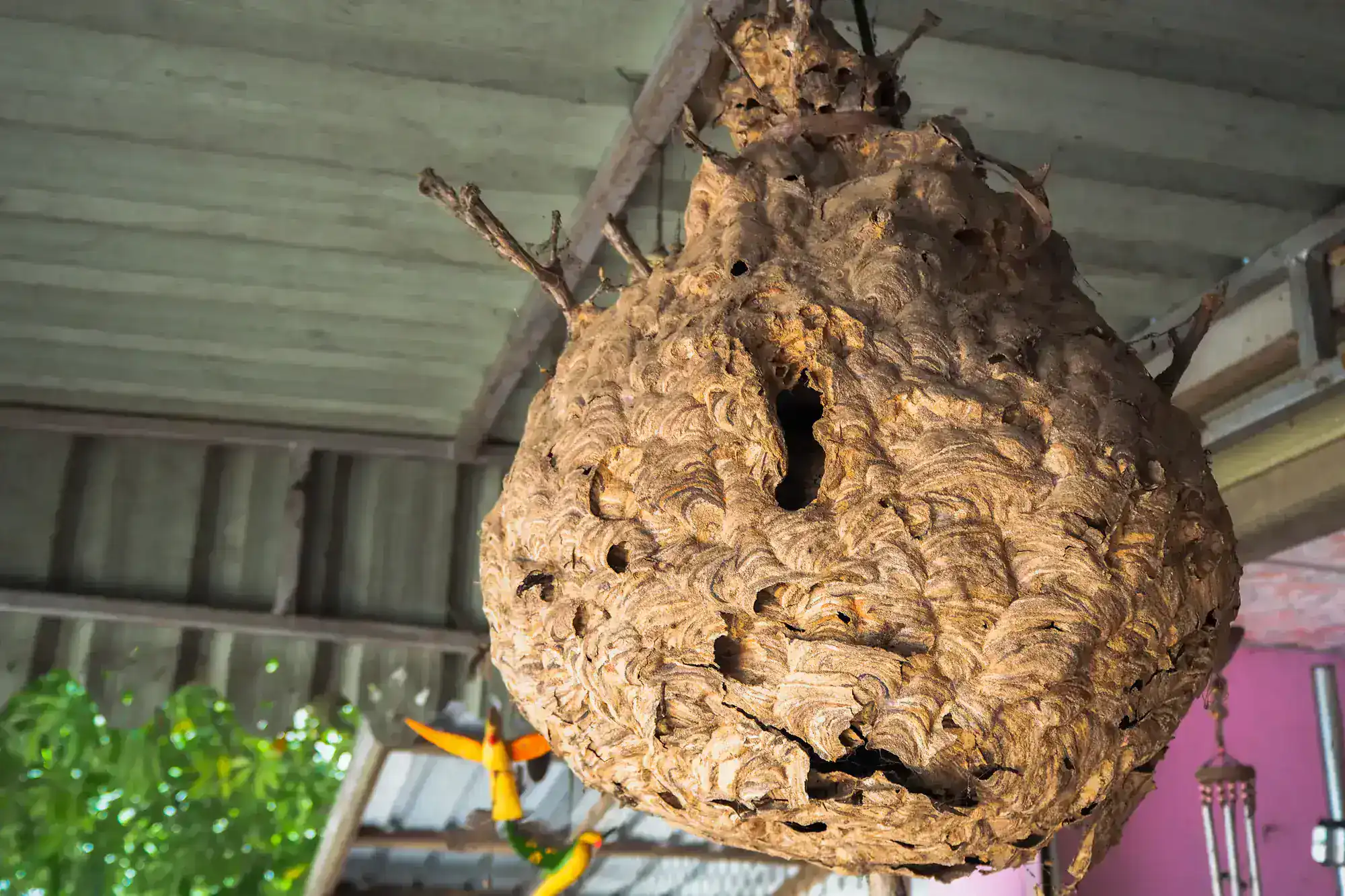
The properties out here in Fleming — older farmhouses, acreage builds, outbuildings with weathered siding and open eaves — are exactly the environments where hornets thrive. Bald-faced hornets build large enclosed paper nests in trees, shrubs, and overhangs. European hornets go inside: wall voids, hollow trees, attics. Both are aggressive when disturbed, and neither one responds well to a hardware store spray.
When the job is done correctly, you stop worrying every time your kids head out to the yard. You stop avoiding the shed. You get your property back — without a half-treated nest that forces a second call two weeks later. That’s what professional hornet removal in Fleming, MI actually looks like when it’s done by someone who knows what they’re doing.
We’ve been operating since May 31, 2005 — that’s twenty years of treating Michigan properties, including the rural acreage homes and farm-style builds that define Fleming and Howell Township. Owner Roger brings 26 years of hands-on experience to every job. This isn’t a franchise routing your call to whoever’s available. It’s a family-owned Michigan company where the same technician shows up year after year — someone who actually learns your property.
We hold Michigan Pesticide Application Business License #250081, IPM training certification recognized by the state, and awards from both Angie’s List and HomeAdvisor. We serve residential and commercial customers throughout southeast Michigan, including Livingston County. Flat-rate pricing, no binding contracts, and a straightforward guarantee back every job. Discounts are available for seniors, veterans, and first responders — because that matters in a community like this one.
It starts with a real assessment — not a quick glance and a spray. When a technician arrives at your Fleming-area property, we’re looking at the full picture: what species you’re dealing with, where the colony is located, how large it’s grown, and whether there are secondary nesting sites you haven’t noticed yet. On rural Livingston County properties with mature trees, multiple outbuildings, and wooded perimeter areas, that assessment step matters more than most people realize. Missing a satellite colony is how a problem comes back.
Once the nest location and species are confirmed, treatment is targeted and deliberate. For exposed nests on eaves, overhangs, or tree branches, a direct application eliminates the colony at the source. For wall void infestations — common in older farmhouses and barns throughout Fleming — professional-grade dust treatment reaches areas that sprays can’t, without driving the colony deeper into the structure. That distinction is exactly why DIY attempts on wall void nests so often make the situation worse before it gets better.
After treatment, you’ll know what was found, what was done, and what to watch for. If a follow-up visit is needed to confirm full elimination, that’s covered — no additional charge. Michigan’s pest season runs hard from late April through October, and the timing of your call genuinely affects the scope of the job. A nest caught in May costs less and takes less time than the same nest in August. That’s not a sales pitch — it’s just how hornet biology works.
Ready to get started?
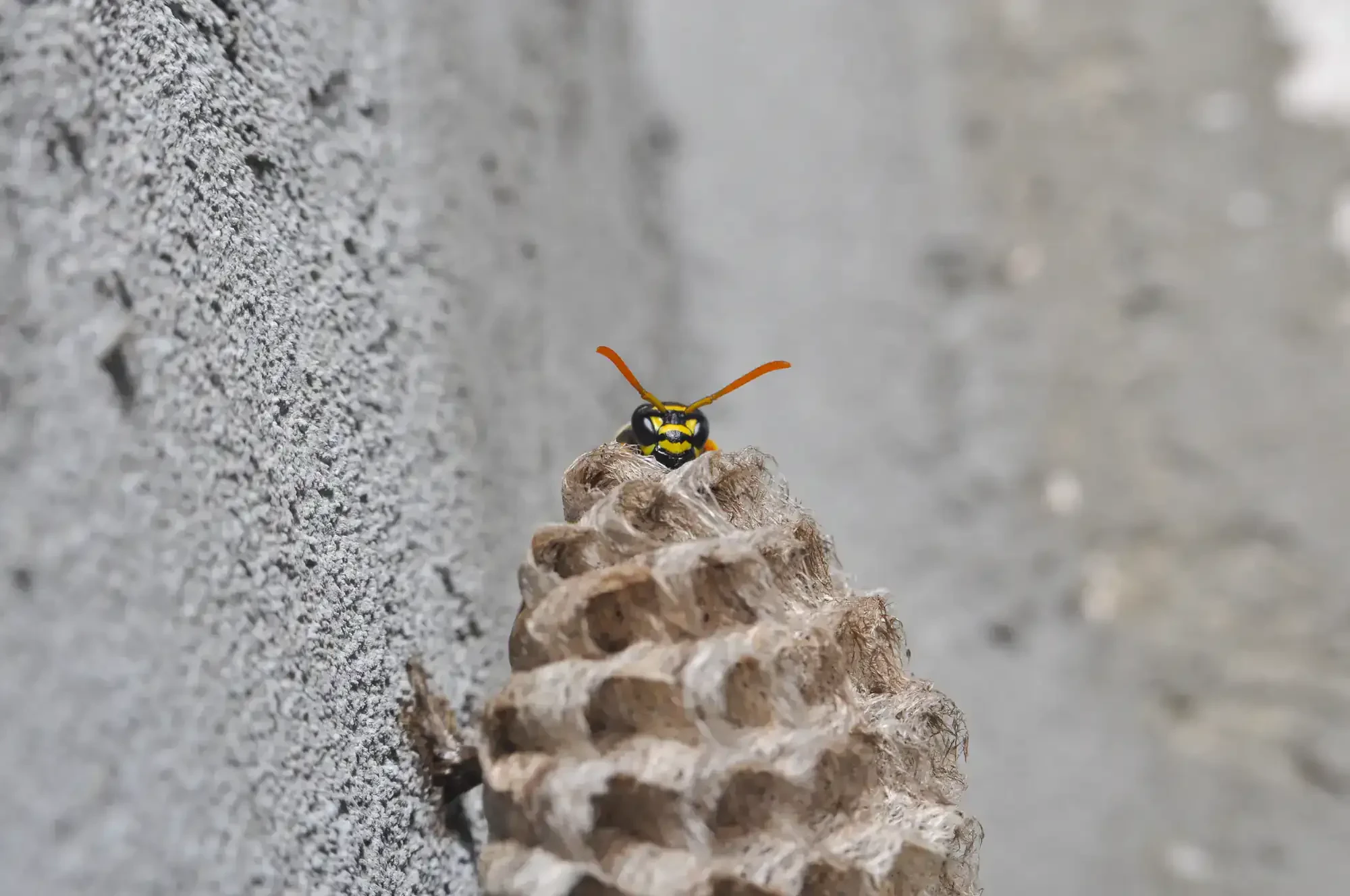
Hornet removal in Fleming, MI covers the full range of what shows up on rural Livingston County properties. Bald-faced hornets building enclosed paper nests in tree lines and on barn overhangs. European hornets nesting inside wall voids and hollow trees on older farmsteads. Yellow jackets in ground nests near garden beds and fence lines. Each one requires a different approach, and our technicians are trained to identify the species before choosing the treatment method — that’s what IPM certification actually means in practice.
Every service includes a thorough property assessment, targeted treatment using professional-grade products, and a follow-up guarantee. You’re not paying for a spray-and-leave visit. For properties in Fleming with multiple structures — a main house, a detached garage, a barn, a storage shed — the assessment covers the full scope of what’s on your land, not just the one nest you called about. Hornet colonies on rural acreage properties have more places to establish than most homeowners account for.
We also offer price matching against reasonable competitor quotes, so if you’ve already gotten a number from another local provider, bring it up when you call. Upfront, flat-rate pricing means you know the cost before anyone touches the nest. No hidden fees, no surprise add-ons, no contract required to get started.
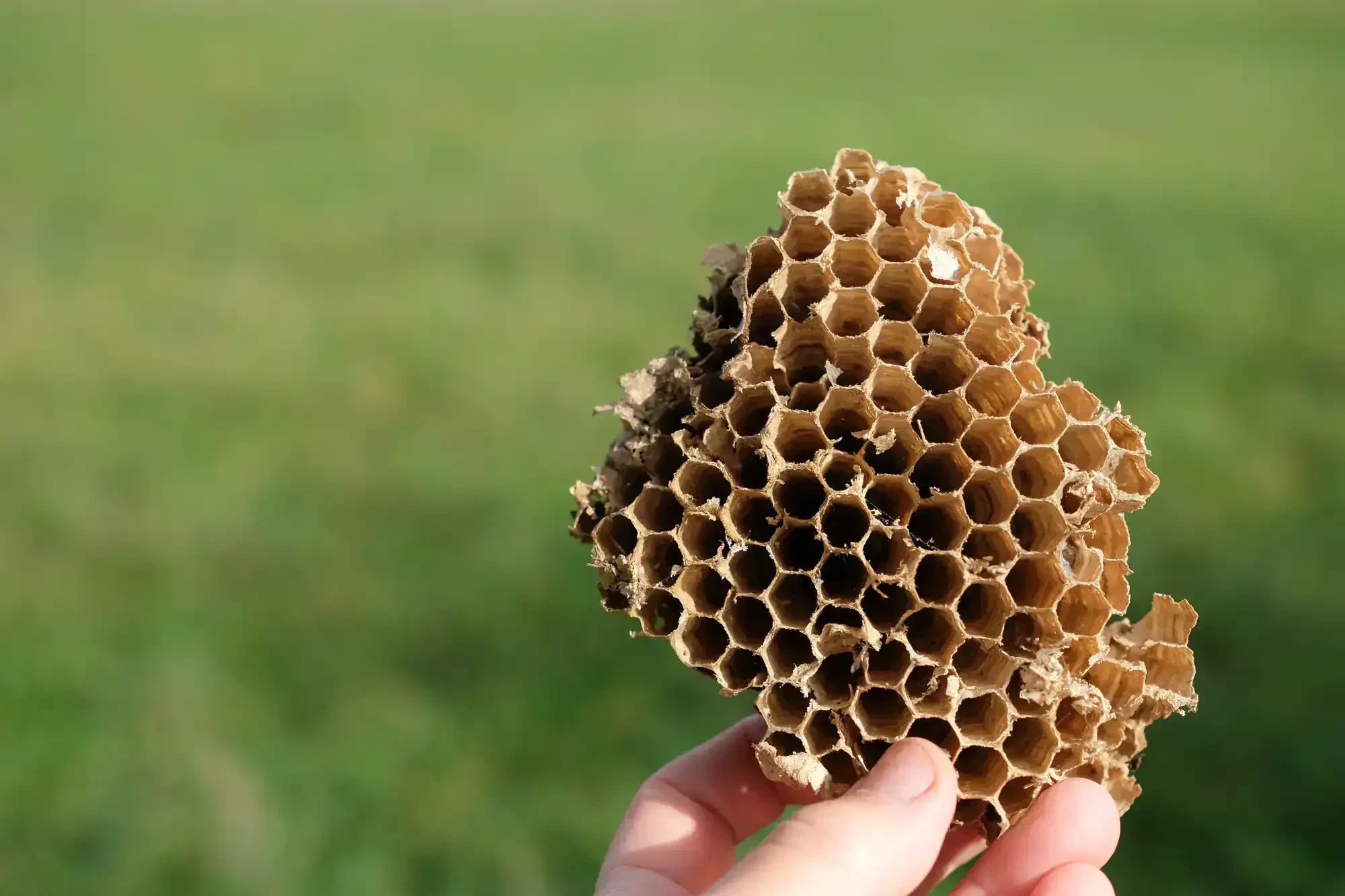
This is one of the most common questions from homeowners on older rural properties in Fleming — and it’s an important distinction because the treatment approach is completely different. If you’re hearing a low buzzing or crackling sound inside a wall, especially in an older farmhouse or outbuilding with wood framing, that’s a strong indicator of an interior wall void nest. You might also notice hornets entering and exiting through a small gap in the siding, around a window frame, or near a soffit — but not landing on any visible exterior nest structure.
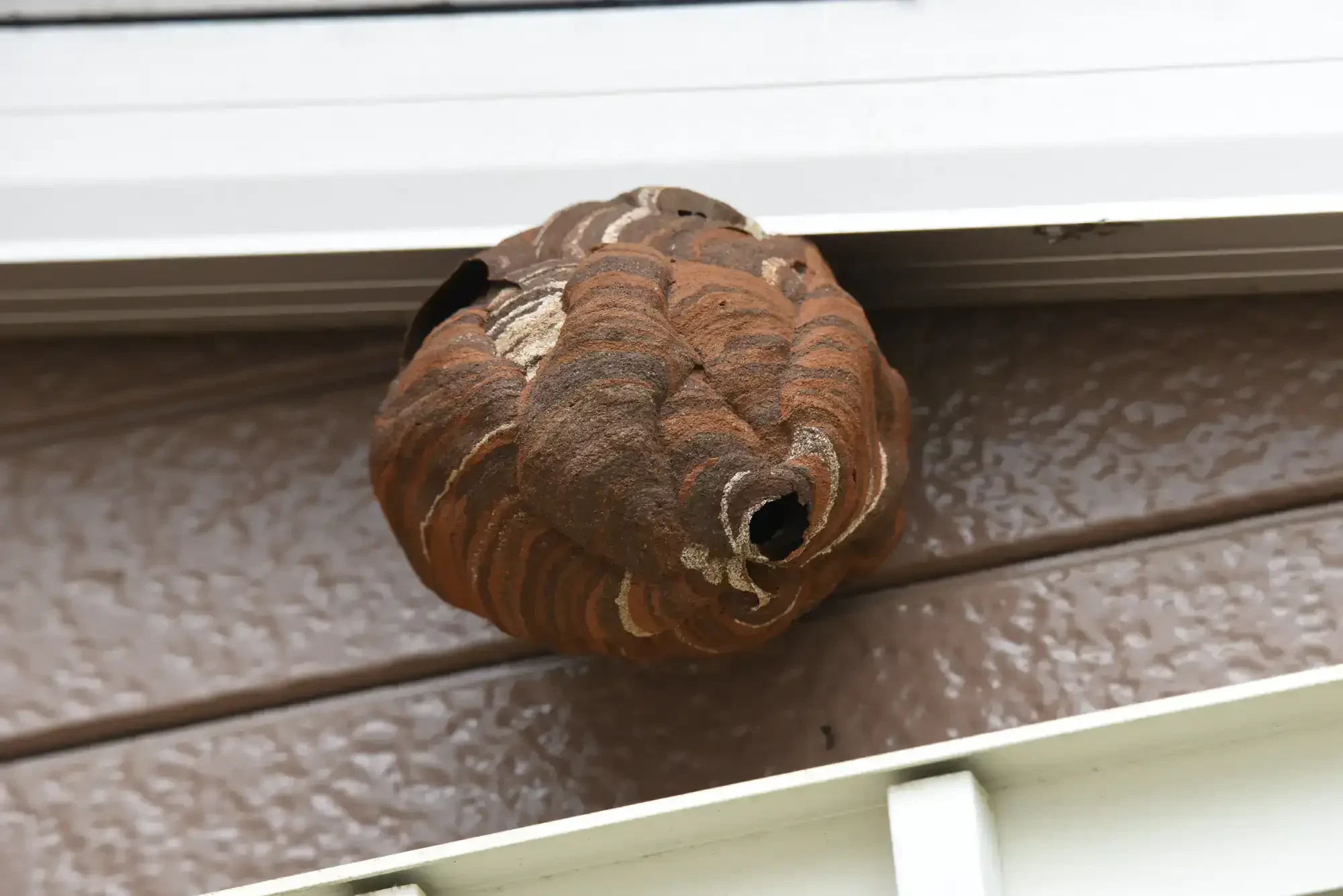
An exterior nest is usually visible: the classic gray, papery, football-shaped structure attached to an eave, tree branch, or overhang. Interior nests are hidden, which makes them more dangerous to treat incorrectly. Spraying into a wall void without the right product and technique can drive the colony deeper into the structure, or cause them to chew through interior drywall. Professional-grade dust treatment is the correct approach for wall void infestations — it reaches the colony without forcing displacement. If you’re not sure which situation you have, the safest call is to have a licensed technician assess it before attempting anything yourself.
Hornet removal costs vary based on species, nest location, accessibility, and colony size — all of which shift significantly depending on when you call. A small bald-faced hornet nest caught in May, when the colony is just getting established, is a much simpler job than the same nest in August when it’s grown to several hundred workers and is fully defended. Nationally, professional hornet removal ranges from $300 to $700, with more complex situations — like a large bald-faced hornet nest in a tree or a European hornet colony in a wall void — running higher.
For Fleming-area homeowners, the practical takeaway is that timing matters. The nest you noticed in June and decided to wait on will cost more to remove in August, and it will be more dangerous to treat. We offer flat-rate, upfront pricing — you’ll know the cost before treatment begins, with no hidden charges. If you’ve already gotten a quote from another Livingston County provider, we’ll match a reasonable competitor rate. Call early in the season if you can. It saves time, money, and a lot of stress.
For a small, newly established nest in an easy-to-reach location — say, a paper nest the size of a golf ball on a fence post in late April — a careful DIY approach with the right product isn’t unreasonable. But that’s a narrow window and a specific scenario. Most of the hornet situations that show up on Fleming-area properties don’t fit that description. A bald-faced hornet nest in a mature tree 15 feet off the ground, a European hornet colony inside a barn wall, or any nest that’s been growing since spring — those are not DIY jobs.
Bald-faced hornets are among the most aggressive stinging insects in Michigan. Unlike honeybees, they can sting multiple times, and they will pursue a perceived threat a significant distance from the nest. A colony at peak late-summer size can contain 400 to 700 workers. On rural acreage properties where you might be 10 minutes from the nearest urgent care, that’s not a risk worth taking. Professional removal exists for a reason.
The honest answer is: as early as possible. In Livingston County, overwintered hornet queens emerge in late April and begin building new nests immediately. A nest found in May might be the size of a baseball and contain a single queen plus a handful of workers — that’s a fast, low-cost treatment. The same nest in August could be the size of a basketball with several hundred workers and a fully established defensive perimeter. The biology is straightforward: colonies grow exponentially through the summer, and removal gets harder, more expensive, and more dangerous the longer you wait.
For Fleming-area homeowners with large lots, outbuildings, and wooded property edges, a spring walkthrough of your property — checking eaves, overhangs, tree lines, and barn soffits — is genuinely worth doing. You’re much more likely to catch a nest early when you’re looking for it than when you stumble across it mid-summer. If you find activity but aren’t sure whether it’s a hornet nest or something else, a quick call to a licensed hornet exterminator in Fleming, MI is the right move before the colony has another month to grow.
They can, and on rural Livingston County properties, it’s a common pattern. Here’s why: hornet colonies die off each fall as temperatures drop, but fertilized queens survive by overwintering in protected spots — under tree bark, inside wall voids, beneath loose siding, and in other sheltered areas that are abundant on older farmhouses and outbuildings throughout Fleming. In spring, those queens emerge and often return to familiar territory. They don’t reuse the old nest itself, but they frequently establish a new one in the same general location — the same tree, the same barn eave, the same section of fence line.
Removing the old nest after the colony has died in late fall is safe and straightforward, but it doesn’t prevent a new queen from choosing the same spot next season. Preventive treatment in early spring — before a new colony establishes — is the most effective way to break the cycle on properties that have had recurring hornet problems. If you’ve dealt with hornets in the same spot two or three years running, that’s not bad luck. It’s a pattern worth addressing proactively with a licensed hornet pest control professional rather than waiting for the problem to show up again.
Yes. We offer discounts for seniors, veterans, and first responders — and that applies to customers in Fleming and throughout Livingston County. It’s worth mentioning when you call to schedule service so it can be applied to your quote upfront.
It’s a community where a lot of people have served, worked in public safety, or spent decades maintaining properties they’ve owned for years. Offering a discount to those customers isn’t a promotional checkbox — it’s a reflection of who we are as a company. Roger has been running this business for twenty years, and the people who’ve given the most to their communities deserve straightforward, honest service at a fair price. If you’re a veteran, a first responder, or a senior homeowner dealing with a hornet problem on your Fleming property, call and ask about the discount before your appointment is booked. It’s a simple conversation, and it’s there for you.
Useful Links