
Hear from Our Customers
You stop avoiding parts of your own land. That corner of the barn, the trail that cuts through the back of your lot, the eave above your garage door — you reclaim all of it. That matters a lot more when you’re managing a multi-acre property in Lapeer County than it does on a standard suburban lot where the nest is just annoying. Out here in Metamora, a hornet nest near a paddock or along a riding trail is a liability.
The heavily wooded properties that define Metamora — whether you’re in Metamora Woods, on an estate near Hunter’s Creek, or on a farm off Lapeer Road — give hornets plenty of places to build without you noticing until the colony is already large. Mature trees, wooden outbuildings, old fence lines, barn rafters, and the eaves of historic wood-frame structures are all prime nesting spots. By late summer, what started as a golf ball-sized nest in April can hold several hundred workers, and they are not subtle about defending it.
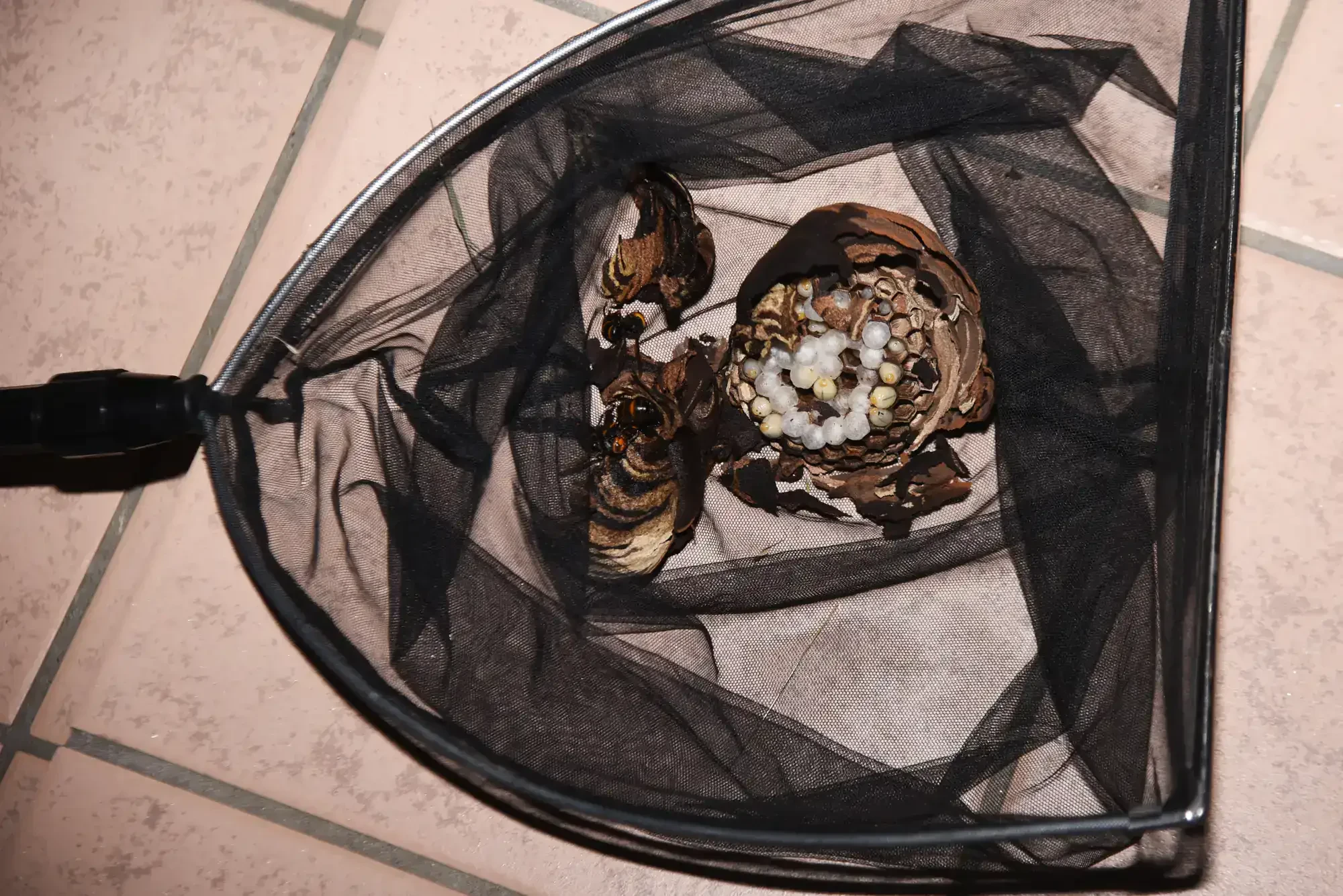
Professional removal means the nest is treated correctly the first time — using the right method for the specific location, whether that’s dust treatment for a wall void, foam for a structure cavity, or direct aerosol for an exposed aerial nest. You’re not guessing, and you’re not spraying something off a shelf and hoping. The problem gets solved, and if it doesn’t, we come back at no additional charge.
We’ve been serving Southeast Michigan since May 31, 2005 — that’s twenty years of showing up, doing the work, and standing behind it. Roger, who leads the company, brings 26 years of hands-on pest control experience to every job. We’re not a franchise that opened a branch in Lapeer County last season. We’re a family-owned business with a real track record and a 4.7-star Google rating built on repeat customers from Metamora and the surrounding communities, not one-time transactions.
One thing that sets us apart from most companies working this area: you get the same technician every time. Your technician learns your property — where nests have appeared before, which structures are most exposed, which areas see the most activity in late summer. For a Metamora property with a main house, outbuildings, a barn, and wooded acreage, that continuity is worth a lot. We also hold Michigan Pesticide Application Business License #250081 and IPM training certification from MDARD — the state’s standard for responsible, targeted pest management.
It starts with a proper inspection. Hornets don’t always nest where you can easily see them, and Metamora properties give them a lot of options — tree lines, barn eaves, wall voids in older structures, hollow fence posts, and the underside of dock overhangs at lakefront properties like those around Lake Metamora. Before any treatment happens, your technician identifies the species, locates the nest, and assesses what’s around it — horses, outbuildings, children’s play areas, whatever matters on your specific property.
Treatment method depends on where the nest is. An exposed aerial nest in a tree or on a structure gets a direct aerosol application. A nest inside a wall void — common in older wood-frame homes and historic structures in the Metamora Crossroads area — gets a targeted dust treatment injected through a small entry point, which doesn’t require opening the wall. Nests in structural cavities like barn rafters or attic spaces typically get foam. The right tool for the right situation, not a one-size approach.
After treatment, your technician walks you through what to expect over the next 24 to 72 hours as remaining workers return to the nest and the colony collapses. If activity persists beyond that window, we return at no additional cost. Lapeer County’s warm, humid summers mean hornet season runs hard from June through September — if you’re seeing activity now, earlier in the season is always better than waiting.
Ready to get started?
Most pest control companies are set up for a standard residential lot. Metamora is not a standard residential community. When your property includes a barn, run-in sheds, wooden fencing, mature hardwoods, and multiple outbuildings, hornet removal requires more than a single spray on one visible nest. We inspect the full property — not just the nest you called about — because on acreage like this, one treated nest and three unnoticed ones is not a solved problem.
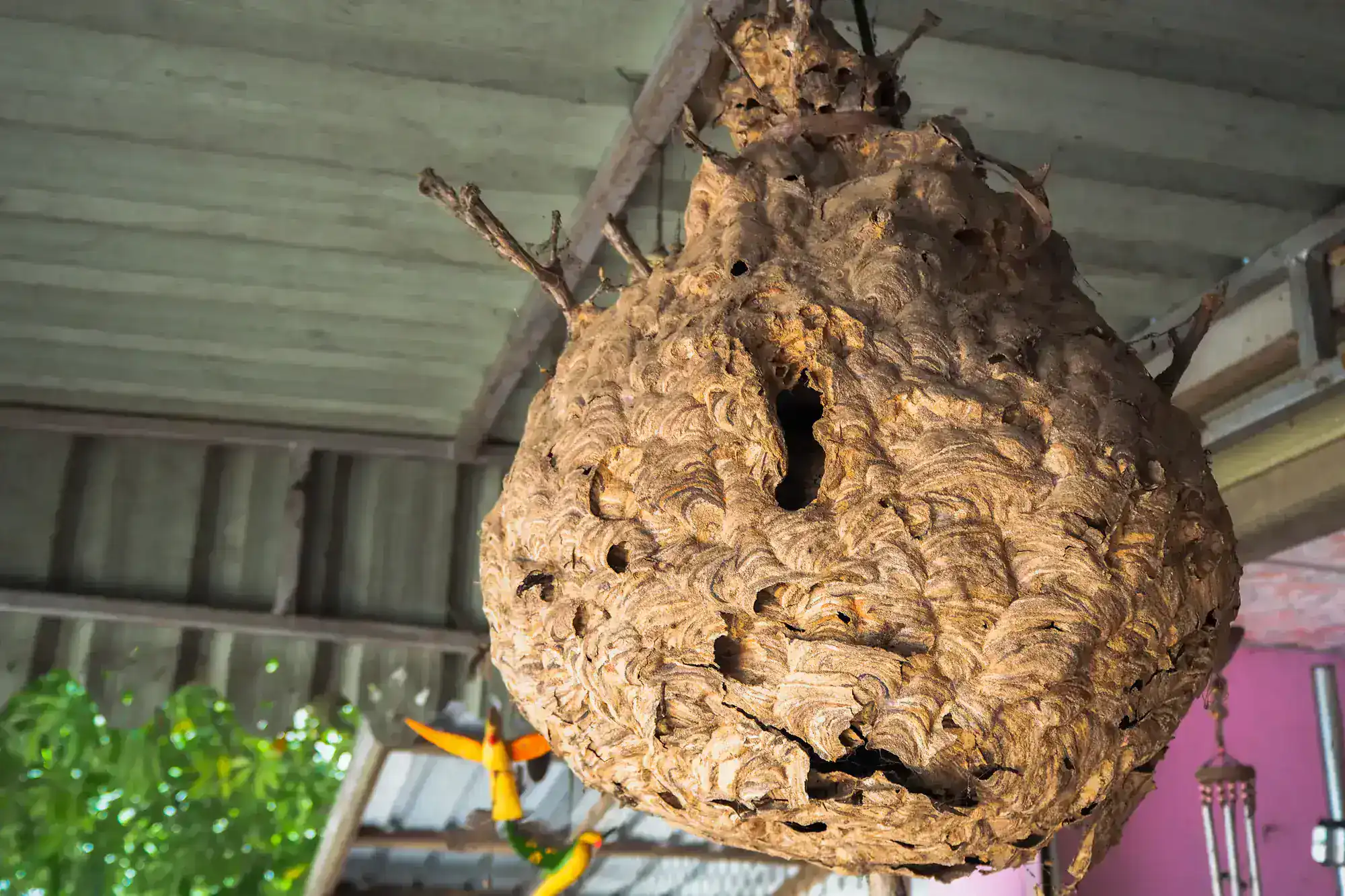
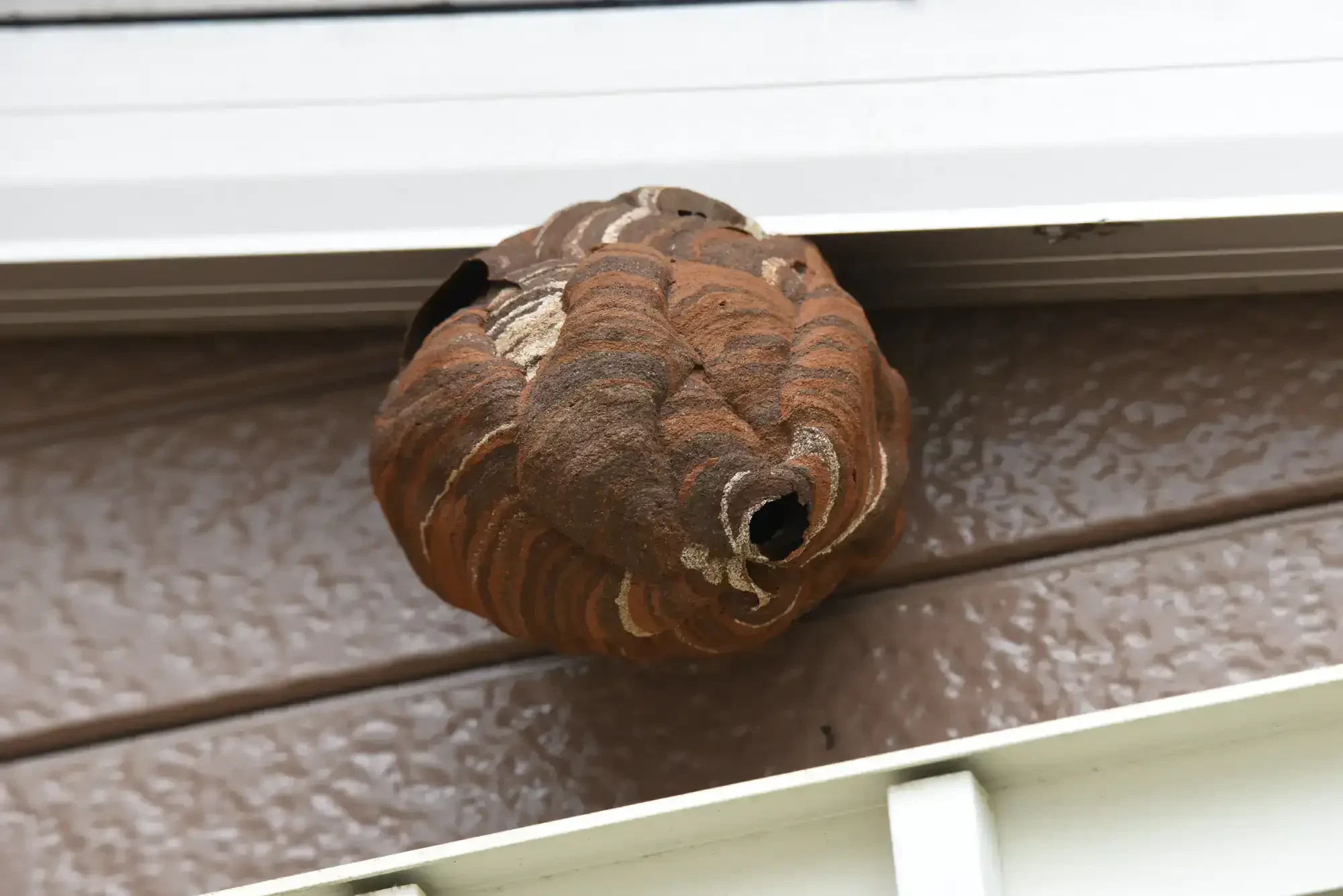
The two hornet species most common in Lapeer County are bald-faced hornets and European hornets. Bald-faced hornets build the large, enclosed paper nests you typically see hanging from tree branches or attached to eaves — they’re aggressive when disturbed and at peak population by late summer. European hornets are the only true hornet in North America, they nest in hollow trees and wall voids, and they’re active at night, which means you may not even realize you have them until a wall void colony is well-established. Both require professional treatment, and both are common on the type of wooded, rural properties that define Metamora Township.
We also offer discounts for seniors, veterans, and first responders, flat-rate upfront pricing, and price matching for reasonable competitor quotes. If you’ve already gotten a quote from another local company, bring it. The goal is to make sure you’re getting the right service at a fair price — and that the job is backed by a real guarantee.
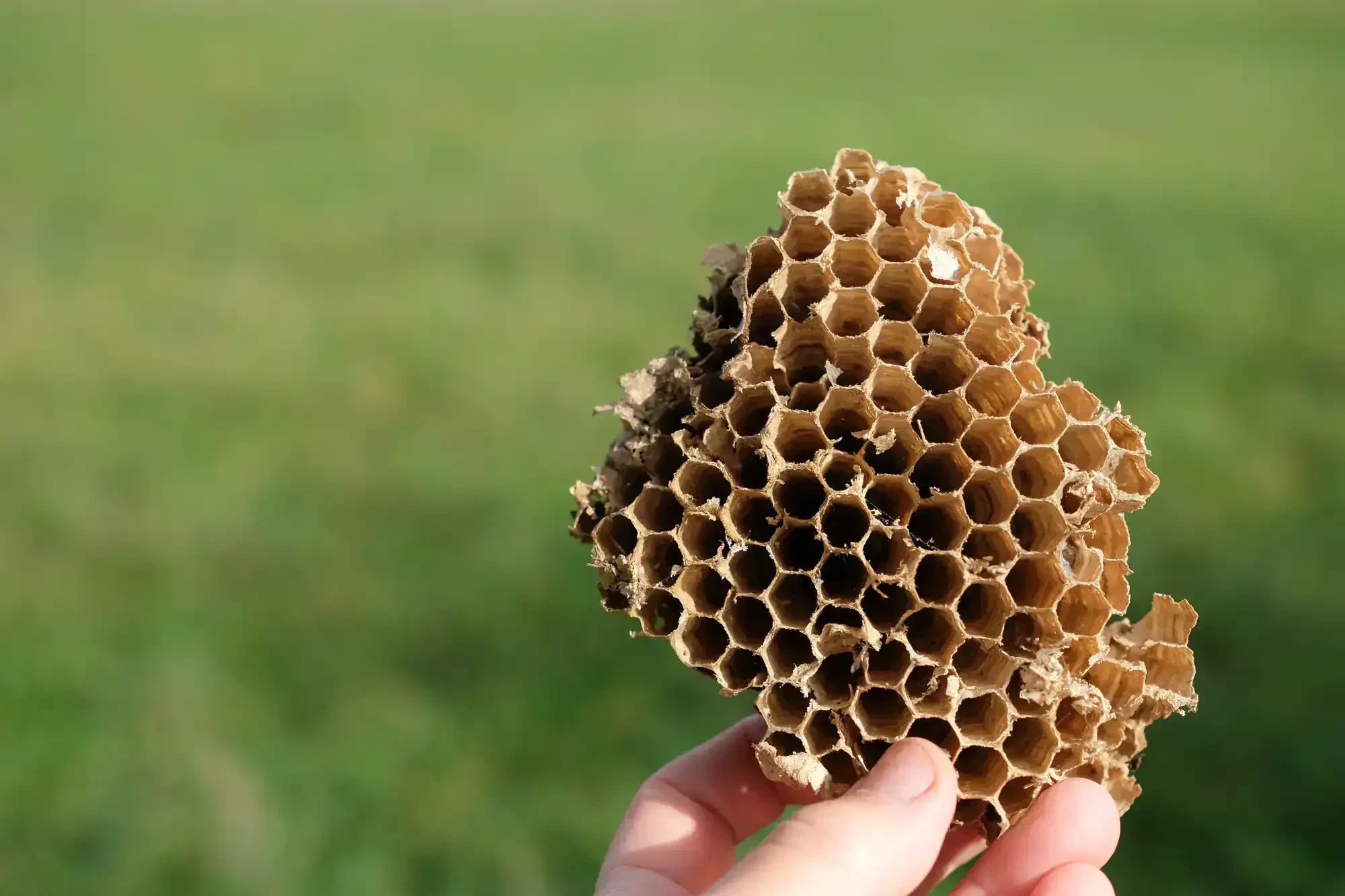
Yes, but it has to be done correctly, and timing matters. Horses are highly reactive to stinging insects — a disturbed colony near a paddock or barn can cause a horse to bolt, which is a serious safety risk for the animal and anyone nearby. Professional hornet removal near livestock areas uses targeted treatment methods that minimize chemical dispersion, and your technician will advise you on a safe window to keep animals clear of the treatment zone, typically 24 to 48 hours depending on the product used and the proximity to feeding or water areas.
For Metamora horse farms and equestrian properties, this is especially relevant during late summer, when the Metamora Hunt’s fox hunt season begins and horses and riders are moving through wooded terrain on Wednesdays and Saturdays. A nest along a frequently used trail that hasn’t been addressed by August is a real hazard. The right move is to have it treated before the season picks up, not after someone or something gets stung.
Wall void infestations have a few telltale signs. You’ll typically hear a low buzzing or scratching sound inside the wall, especially in the evening when European hornets — which are nocturnal — are most active. You might also notice hornets entering and exiting through a small gap in your siding, soffit, or trim rather than flying to and from an obvious external nest. If you’re seeing consistent traffic in and out of a specific spot on your exterior but can’t find a visible nest, there’s a good chance it’s inside the wall.
This is particularly common in older homes and historic structures around the Metamora Crossroads area, where original wood siding, aging trim, and gaps in older construction give hornets easy entry points. Wall void infestations require dust treatment injected through small openings — not surface spraying — and should be handled by a licensed professional. Attempting DIY treatment on a wall void often drives the colony deeper into the structure or pushes hornets through interior gaps into your living space, which makes the problem significantly worse.
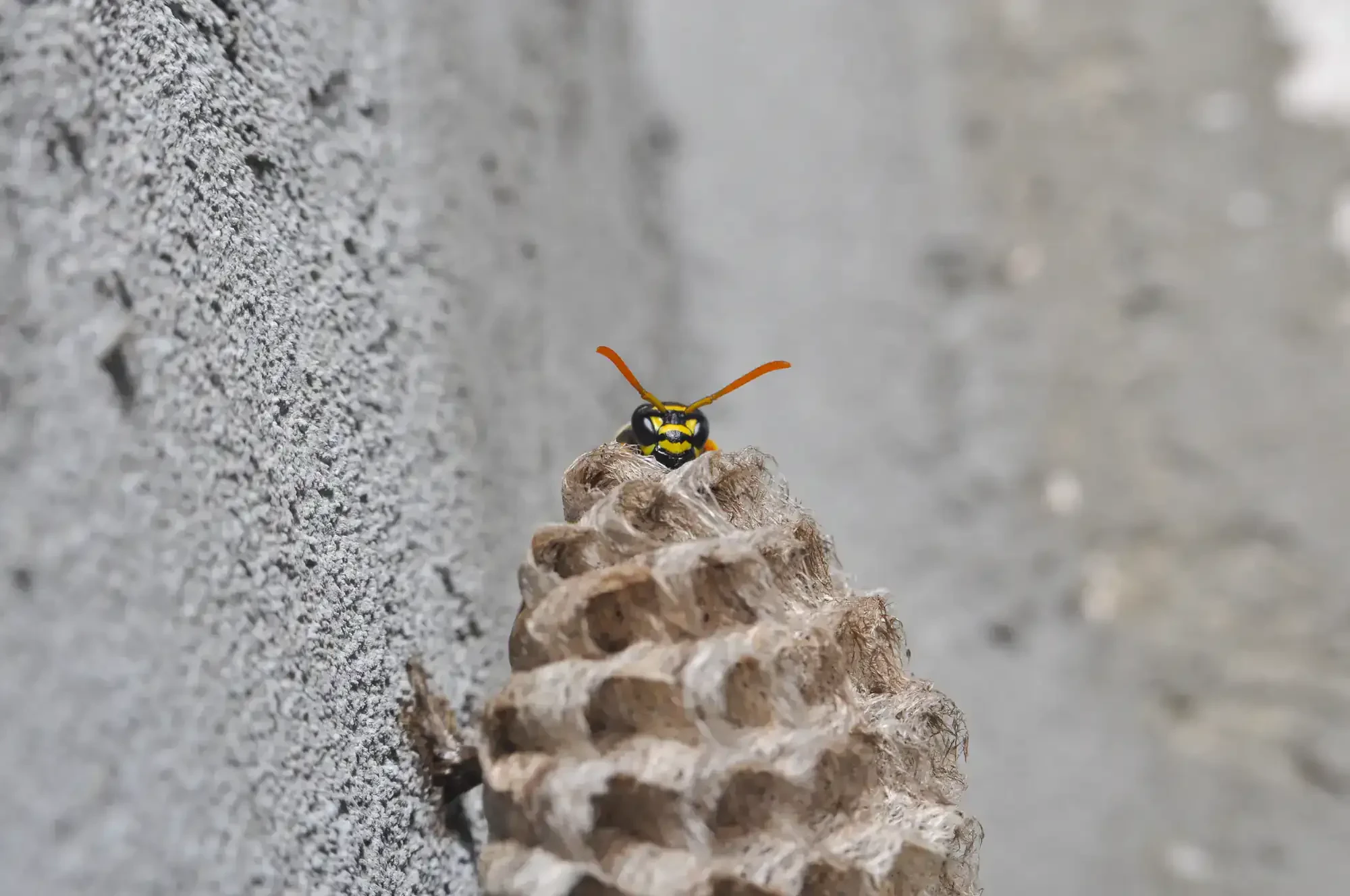
The honest answer is: as early as you find it. In Lapeer County, hornet queens emerge from hibernation in April or May and start building new nests immediately. At that stage, the colony might have a dozen workers and a nest the size of a tennis ball. Treatment at that point is straightforward, lower risk, and typically less expensive than treating a full-size late-summer colony.
By July and August, a bald-faced hornet colony can hold 100 to 700 workers, and they are actively defending the nest. That’s when most Metamora residents call — after the nest has been growing undetected in a tree line, barn rafter, or under an eave for months. It’s still very much treatable at that stage, but the job is more involved. If you spot activity early in the season, don’t wait to see how big it gets. The colony will not go away on its own, and it will not get smaller.
Yes, it does. Bald-faced hornets build the large, papery enclosed nests you typically see hanging from tree branches or attached to eaves and overhangs. They’re aggressive when the nest is disturbed and are among the most defensively reactive stinging insects in Michigan. European hornets are larger, nest in hollow trees and wall voids, and are active at night — they’re often confused with large yellow jackets but require different treatment because of where they nest.
Yellow jackets, by contrast, frequently nest underground or inside wall voids and are responsible for the majority of sting incidents in Michigan because people accidentally step on or disturb their nests without realizing they’re there. Each species has behavioral patterns and nest locations that influence which treatment method works best. A licensed, IPM-trained technician identifies the species before treating — not after — because applying the wrong method to the wrong nest can scatter the colony rather than eliminate it.
For a small, newly established nest in an easy-to-reach location, a store-bought aerosol can work — but there are real limitations. Most consumer products require you to be within a few feet of the nest to be effective, which puts you in the defensive zone of a colony that will respond immediately if it feels threatened. For a late-summer colony at peak size, that’s a significant personal risk, and partial treatment that doesn’t eliminate the queen just agitates the remaining workers without solving the problem.
On Metamora properties with elevated nests in mature trees, nests inside barn structures, or infestations in wall voids, consumer sprays aren’t the right tool regardless of timing. You can’t reach a nest 20 feet up in an oak tree safely with a hardware store can, and spraying the exterior entry point of a wall void infestation does nothing to address the colony inside. Professional treatment uses the right application method for the specific nest location — which is what actually ends the problem rather than temporarily displacing it.
Yes. We offer discounts for seniors, veterans, and first responders. Metamora Township skews older — the median age in the township is in the upper 40s — and a meaningful portion of residents here have military or first responder backgrounds. These discounts are a straightforward way of recognizing that, and they apply to hornet removal along with other pest control services.
When you call to schedule, just mention which discount applies to you and it’ll be factored into your quote. We also offer flat-rate upfront pricing and price matching for reasonable competitor quotes, so if you’ve already gotten a number from another company in the Lapeer County area, you’re welcome to bring it. The goal is to make sure the price is fair and the job is done right — and that you know exactly what you’re paying before anyone shows up at your property.
Useful Links