
Hear from Our Customers
When a wasp nest is close to where you live — near the back door, under the deck, inside a wall — it stops being an inconvenience and starts being a real safety issue. The goal isn’t just to knock the nest down. It’s to eliminate the colony, treat the source, and make sure you’re not dealing with the same problem again in six weeks.
Durand’s housing stock is one of the oldest in Shiawassee County. Pre-war homes come with the kind of structural gaps — aging eave boards, deteriorating siding seams, uninsulated wall cavities — that give German yellowjackets exactly what they’re looking for. When a colony gets inside a wall void, a hardware store spray won’t reach it. You need treatment that penetrates where the nest actually is, not just where you can see activity.
The agricultural land surrounding Vernon Township also creates a different kind of problem: ground nests. Eastern yellowjackets build underground in abandoned animal burrows — the kind that are common along fence lines, garden edges, and wooded lot boundaries. If you’ve got a larger lot or back up to open land, that’s a real exposure. We provide professional yellow jacket nest removal in Durand, MI by identifying what you’re dealing with, treating it correctly, and making sure your outdoor space is actually usable again.
We’ve been serving Shiawassee County since May 31, 2005 — that’s twenty years of Mid-Michigan pest seasons, twenty years of learning exactly how wasp pressure builds in communities like Durand. This isn’t a national call center routing your job to whoever’s available. We’re a family-owned company where Roger, the founder, brings 26 years of hands-on experience to every service decision.
One thing that sets us apart: you get the same technician every time. Not a rotating crew, not a seasonal hire filling in for the summer — the same trained professional who knows your Durand property. For homeowners dealing with recurring infestations in older homes near the rail district or out on the Vernon Township fringe, that continuity matters. You’re not re-explaining your situation every time you call.
We’re licensed through MDARD, recognized by Angie’s List and HomeAdvisor, and trained in Integrated Pest Management — which means the treatment is targeted, not a broad chemical sweep. Discounts are available for seniors, veterans, and first responders, because the people who built and protect this community deserve straightforward pricing.
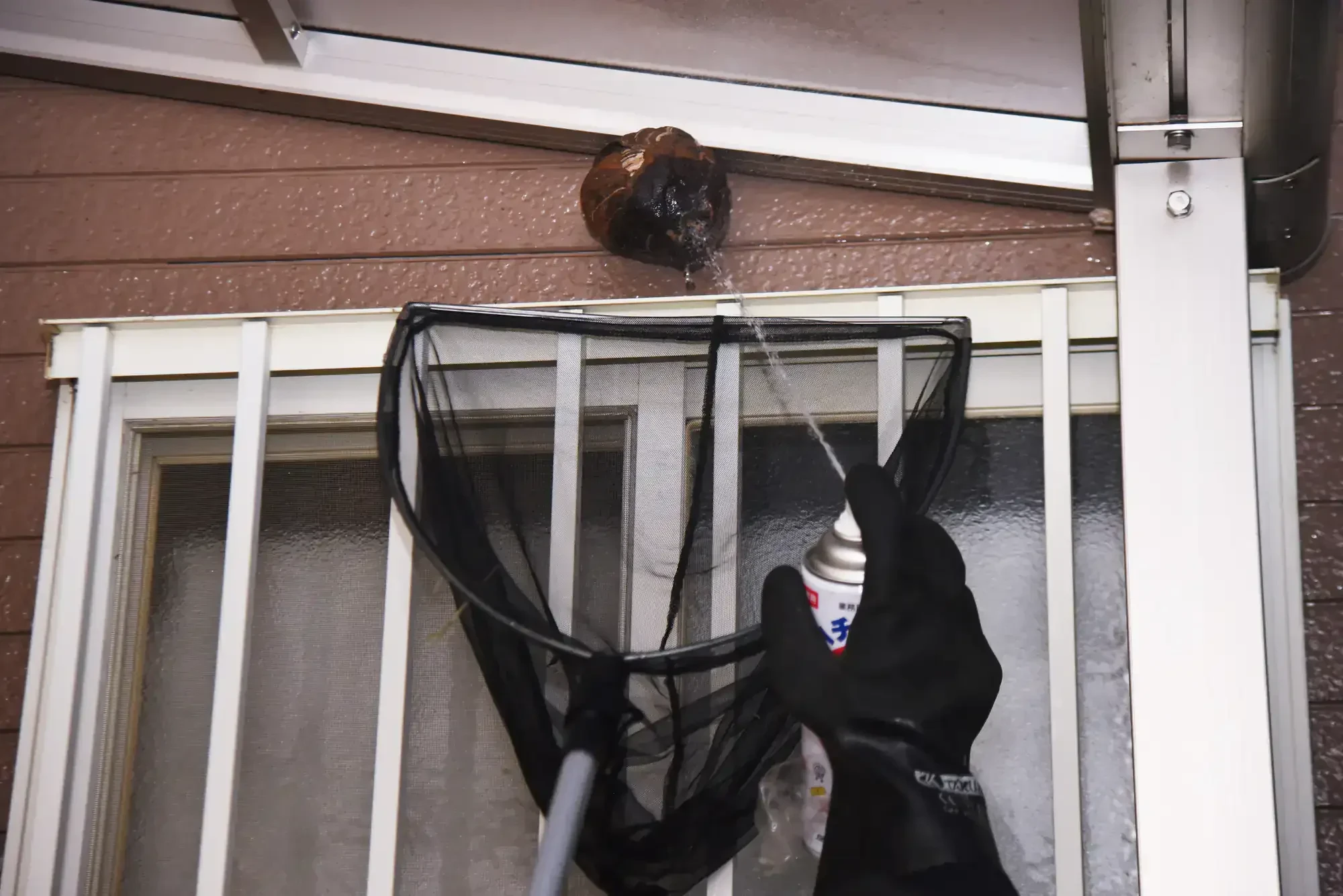
It starts with an assessment. Before any treatment happens, our technician identifies what species you’re dealing with, where the nest is located, and how accessible it is. That distinction matters more than most people realize — a bald-faced hornet nest hanging from a tree eave is a completely different job than a German yellowjacket colony inside a wall void of a 1940s Durand home. The treatment approach changes based on what’s actually there.
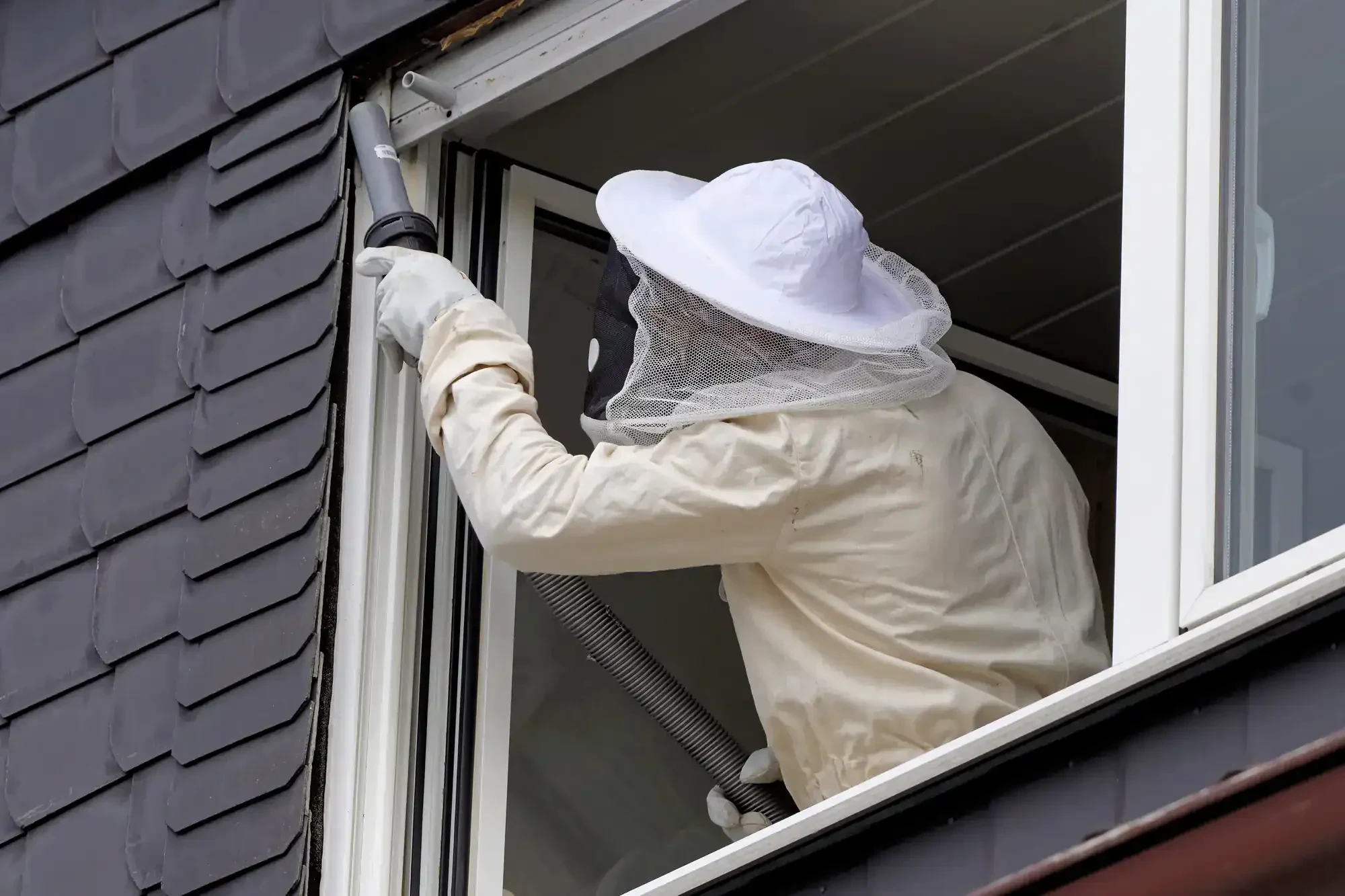
Once the nest is located and the species confirmed, we apply treatment using professional-grade products that reach the colony — not just the surface. For in-wall or structural infestations common in Durand’s older housing stock, that means getting the product into the void where the nest lives, not spraying around the entry point and hoping for the best. For ground nests out on larger lots near Vernon Township’s agricultural edges, it means treating the burrow entrance and the surrounding soil so the colony can’t simply relocate a few feet over.
After treatment, you’ll get clear guidance on when it’s safe for your family and pets to return to the area. If wasp activity continues after the treatment window, we come back. No runaround. Michigan’s wasp season peaks hard in August and September, so if you’re seeing heavy activity right now, sooner is always better than waiting.
Ready to get started?
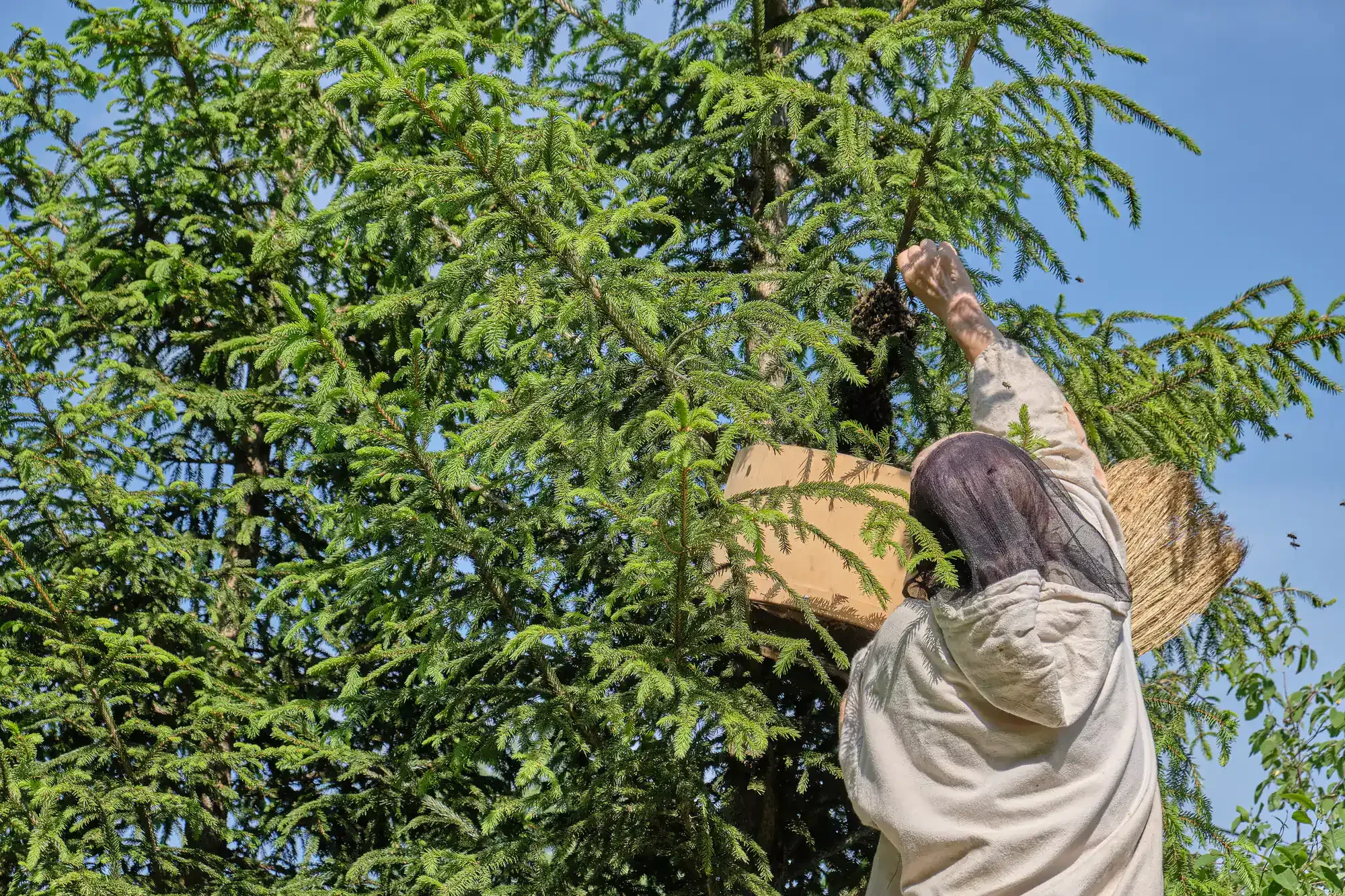
We handle wasp nest removal in Durand, MI for both residential and commercial properties. That includes paper wasp nests under eaves, yellow jacket ground nests in yards and garden borders, bald-faced hornet nests in trees and on structures, and European hornet colonies in hollow wood — the kind of nesting habitat that’s common near the weathered infrastructure along Durand’s rail corridor and in the older outbuildings scattered across Vernon Township.
For homeowners, the most common scenario is a nest that’s either visible and near a high-traffic area or hidden inside the structure itself. Both get treated. The goal is full colony elimination — eggs, larvae, and adult workers — so the nest doesn’t simply regenerate after a surface spray. For commercial properties along Saginaw Street or anywhere customers and employees are moving in and out of a building, a visible wasp problem near an entrance isn’t just a nuisance. It’s a liability.
There are no binding contracts. If you need a one-time wasp removal in Durand, that’s exactly what you get. If you want ongoing seasonal pest management, that’s available too — on your terms. We also price-match reasonable competitor rates, so if you’ve already gotten a quote from another Shiawassee County provider, bring it. The service will stand on its own.
This is one of the most common calls we get from Durand homeowners, and it almost always comes down to the age of the home. Pre-war construction — which makes up a significant portion of Durand’s residential housing — has had decades to develop the kind of gaps, cracks, and deteriorated seals that wasps use as entry points. German yellowjackets in particular are drawn to wall voids, attic spaces, and crawlspaces. Once a queen establishes a colony inside your structure, workers can number in the hundreds to thousands by late summer, and they will find their way through electrical outlets, light fixtures, and interior wall gaps.
The problem with DIY sprays in this situation is that they treat the entry point, not the nest. The colony is deeper in the wall, often unreachable without professional-grade application equipment. Our trained technicians can identify the nest location, apply treatment into the void directly, and seal the entry point after the colony is eliminated. If you’re seeing wasps inside your home, that’s not a situation to wait on — it typically gets worse, not better, as the season progresses.
Cost varies depending on the type of nest, how accessible it is, and whether it’s a surface nest or a structural infestation. A visible paper wasp nest under an eave is a simpler job than a yellow jacket colony buried in a wall void or a ground nest in a backyard that backs up to agricultural land. Generally speaking, most residential wasp nest removal jobs in Durand fall somewhere in the range of $150 to $400, with more complex structural or ground-nest situations running higher.
What’s worth knowing is that we price-match reasonable competitor rates in Shiawassee County. So if you’ve already gotten a quote from another local provider, you don’t have to choose between price and experience. Seniors, veterans, and first responders also receive discounts — and in a community like Durand, those aren’t afterthoughts. There are no hidden fees and no contracts attached to a one-time removal. You pay for what you need, the job gets done, and that’s it.
Yes — but there’s a specific window you need to respect, and our technician will walk you through it based on the products used and where the treatment was applied. For most exterior nest treatments, the treated area is safe for children and pets once the application has dried, which typically takes anywhere from 30 minutes to a few hours depending on conditions. For in-wall or structural treatments, the guidance may be slightly different.
Our technicians are trained in Integrated Pest Management, which means the approach is targeted — the right product, applied in the right place, in the right amount. It’s not a broad chemical application across your entire yard. If you have specific concerns about product safety around young children or pets with sensitivities, ask your technician directly before they begin. You’ll get a straight answer, not a scripted reassurance. Re-entry timing will always be communicated clearly before the technician leaves your property.
The four species that show up most frequently in and around Durand are German yellowjackets, Eastern yellowjackets, bald-faced hornets, and paper wasps. German yellowjackets are the most problematic for homeowners with older structures — they specifically target wall voids, attics, and crawlspaces, making them the species most likely to end up inside your home. Eastern yellowjackets are the ground-nesters, and they’re especially common on properties with larger lots or proximity to the agricultural land surrounding Vernon Township.
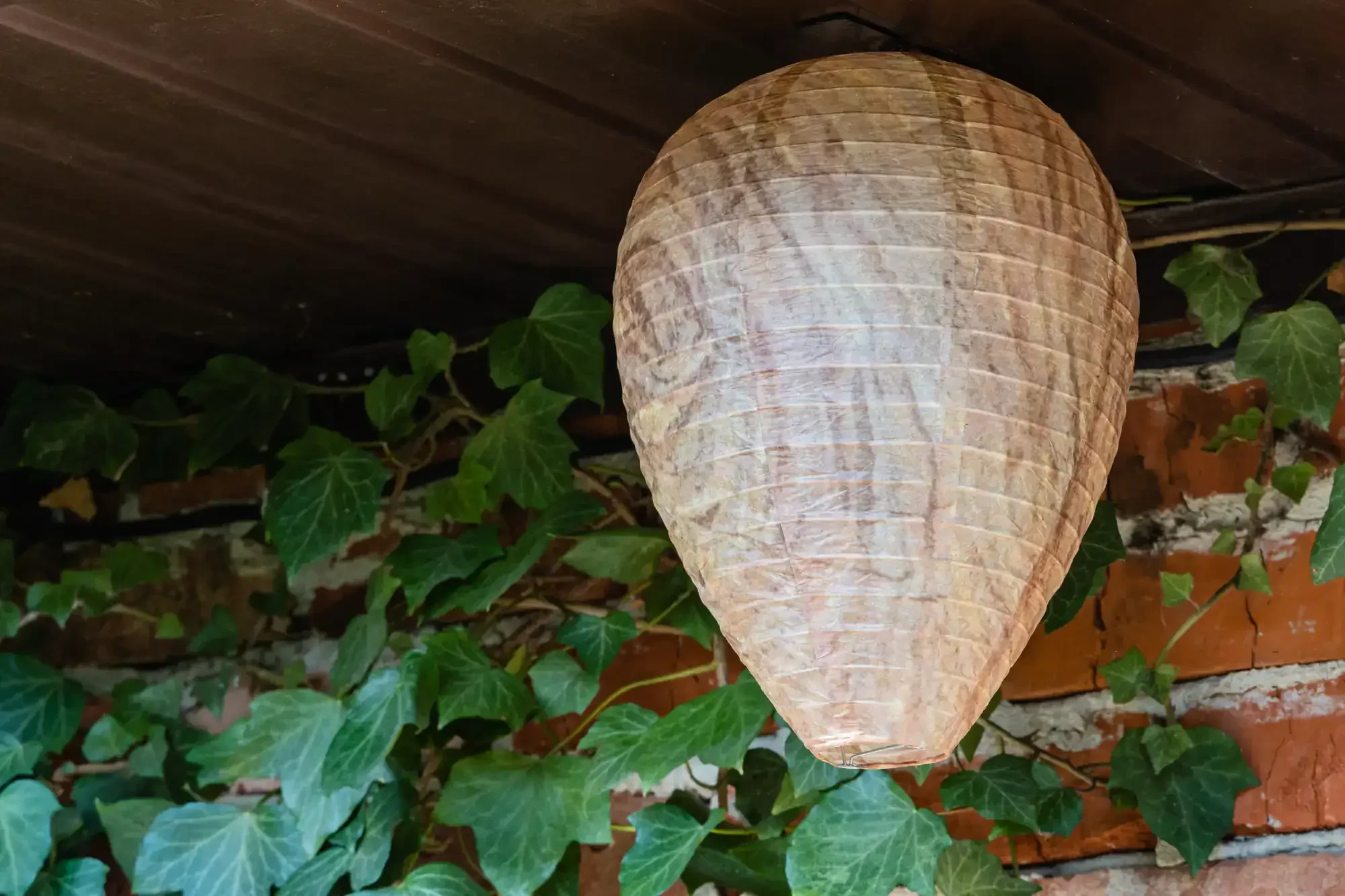
Bald-faced hornets build the large, papery aerial nests you might see hanging from tree branches or under roof overhangs — they’re aggressive when disturbed and the nests can house several hundred workers by late summer. Paper wasps are the most common and least aggressive of the group, typically building small open-comb nests under eaves, in door frames, or on outdoor furniture. All four species are active in Michigan from late spring through early fall, with August and September being the peak danger window as colonies reach maximum size and food competition increases.
For a small, accessible paper wasp nest early in the season — before the colony has grown — some homeowners handle it themselves without major incident. But there are a few situations where DIY removal is genuinely risky and often makes the problem worse. If the nest is inside a wall, under the foundation, or in a ground burrow, a store-bought spray is unlikely to reach the colony. You’ll agitate the workers without eliminating the nest, which typically results in a more aggressive colony and no real progress.
Bald-faced hornets and large yellow jacket colonies are also a different level of risk than a small paper wasp nest. A colony of 1,000-plus workers responding to a perceived threat — especially in August when they’re already more aggressive — is not a situation most people are equipped to handle safely without protective gear and the right products. If you’ve already tried spraying and the wasps are still active, that’s a strong signal the nest wasn’t reached. At that point, professional wasp removal in Durand, MI is the faster and safer path forward.
They can, and in Durand’s older housing stock, it’s more common than people expect. Here’s what actually happens: the workers in a colony die off after the first hard frost, but the queens survive by overwintering in protected sites — and wall voids, attic insulation, and the structural cavities common in pre-war Durand homes are exactly the kind of protected sites queens seek out. A queen that overwinters inside your home may emerge in spring and begin building a new colony in or near the same location where the previous nest was.
The nest material itself doesn’t attract new colonies — wasps don’t reuse old nests — but a favorable nesting site will attract new queens year after year if the entry points aren’t addressed. After treatment, sealing the gaps and entry points that allowed access in the first place is the step that actually breaks the cycle. That’s something our technician can identify during the service visit. If you’ve had wasps in the same area of your home for two or more consecutive seasons, it’s worth treating the problem and addressing the structural entry point at the same time rather than just treating the active colony and waiting to see what happens next spring.
Useful Links