
Hear from Our Customers
You didn’t move to Argentine to spend August worrying about a nest near the dock. When yellow jackets take over a corner of your property — whether it’s a ground nest tucked into the wooded edge of your yard or something buzzing inside the wall of an older lakefront cottage — the outdoor life you built here gets put on hold. That’s not a small thing.
The good news is that a properly treated nest is a resolved nest. After we handle it, you’re not managing the situation anymore. No more routing the kids around the back corner of the yard. No more swatting at things during a cookout. No more wondering if that gap in the soffit is going to turn into a bigger problem by September.
Argentine’s older housing stock — particularly the pre-2000 cottages and homes around Lobdell Lake — tends to have more structural entry points than newer construction. Loose soffits, aging siding, chimney gaps. These are the exact spots German Yellowjackets look for when they’re building inside walls. Catching it early and treating it correctly means you’re not looking at drywall damage or insulation problems down the road. That’s the outcome that matters — not just the nest gone, but the property protected.
We were founded on May 31, 2005, and have been serving Genesee County — including Argentine Township — ever since. That’s two decades of learning the specific pest pressures, housing conditions, and seasonal patterns of communities like yours. Roger Chinault, who leads the company, has 26 years of hands-on experience. He’s not managing from a distance — he’s in the work.
What makes a real difference for Argentine homeowners is that we keep the same technician coming back to your property year after year. You don’t have to re-explain your situation to someone new every season. Your technician already knows your property — where the wooded margins are, where the older entry points are, what’s been treated before. That continuity matters when you’re protecting a home you’ve invested in.
We hold MDARD Pesticide Application Business License #250081, have completed Integrated Pest Management training, and have earned recognition from both Angie’s List and HomeAdvisor. No contracts. No rotating strangers. Just consistent, licensed, professional service from a company that actually knows Argentine.
It starts with a call — and we’re known for calling back fast, often within minutes. From there, a licensed technician schedules a visit that works for your timeline. When they arrive, the first thing they do is identify exactly what you’re dealing with. That step matters more than most people realize.
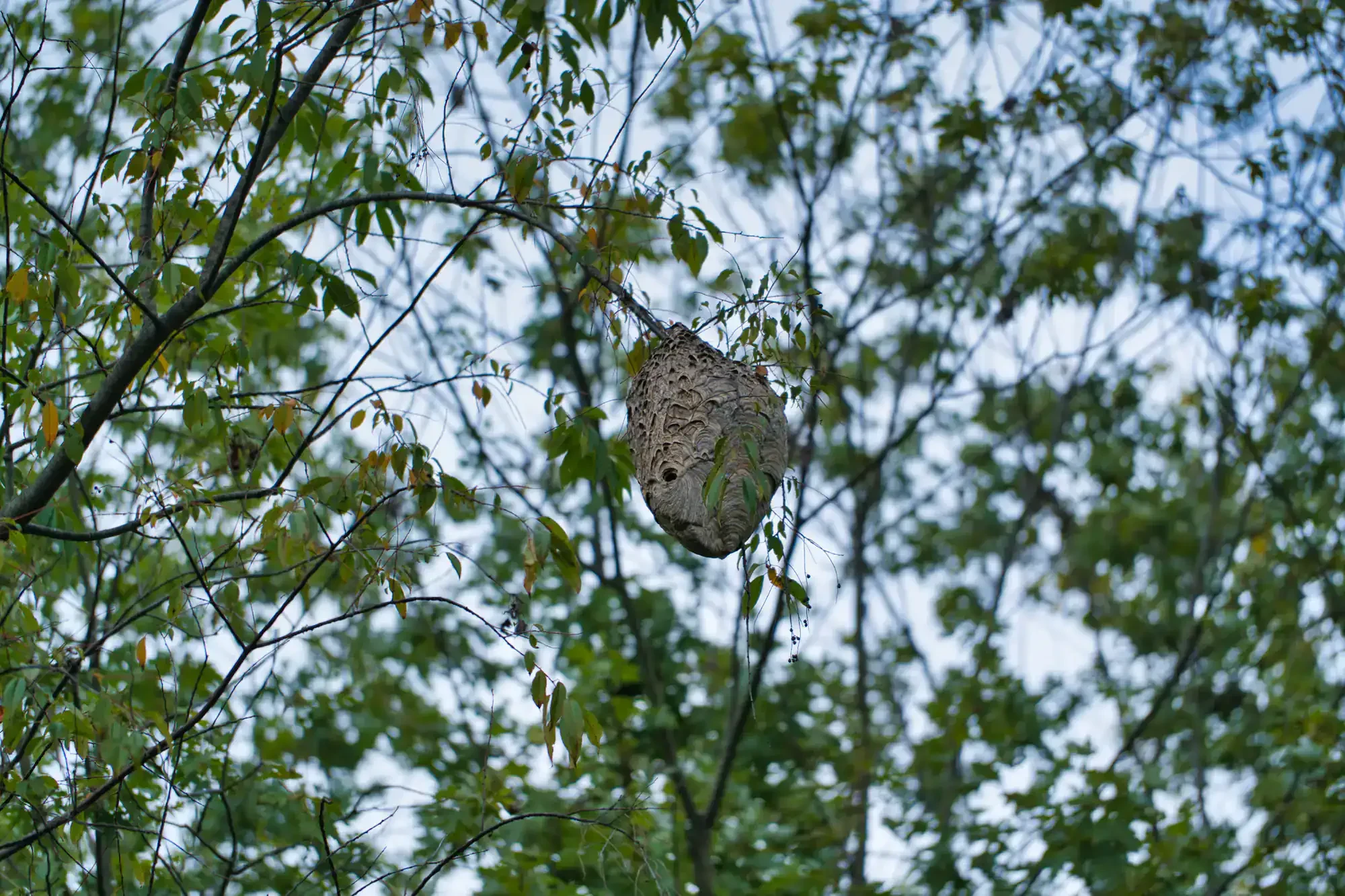
Michigan has two yellow jacket species that show up regularly in Argentine: the German Yellowjacket, which nests inside wall voids, attics, and enclosed structural spaces, and the Eastern Yellowjacket, which burrows underground — often in the abandoned rodent tunnels common along wooded property edges throughout Argentine Township. These two species require different treatment approaches entirely. Treating the wrong one the wrong way doesn’t just fail — it makes the colony angrier and harder to eliminate.
Once the species and nest location are confirmed, treatment is applied precisely — typically at night when workers are inside the nest, using insecticide dust or aerosol that workers carry back through the colony. For wall-void and attic nests, this method reaches the queen rather than just the entry point. After treatment, you’ll get clear guidance on when it’s safe to return to treated areas, and what structural repairs or preventive steps will help keep next year’s queens from finding the same entry points. The work is backed by a 1-year service guarantee — if yellow jacket activity returns within the guarantee period, we come back at no additional charge.
Ready to get started?
Yellow jacket nest removal in Argentine isn’t one-size-fits-all — and we don’t treat it that way. The service is built around your specific situation: the species present, the nest location, the structure of your home, and the time of season. An attic yellow jacket removal in an older Silver Lake Road cottage is a different job than a ground nest in a wooded backyard off Argentine Road, and the treatment reflects that.
For Genesee County homeowners, late summer is when things escalate quickly. By August, a mature colony can hold anywhere from 1,000 to 5,000 workers — all of them capable of stinging repeatedly, all of them aggressively foraging for the sugary food and drinks that show up at every lakeside gathering on Lobdell Lake. That’s not the time to experiment with store-bought spray. Wall-void and attic nests especially require professional treatment to reach the queen — surface sprays typically drive the colony deeper into the structure and increase aggression without resolving the problem.
We serve both residential and commercial customers throughout Argentine Township and the surrounding Genesee County area. Seniors, veterans, and first responders receive discounts — ask when you call. If you’ve seen a competitor’s price, we offer price matching for reasonable rates. You get 20 years of experience, a licensed technician, and a 1-year guarantee — without paying more for it.
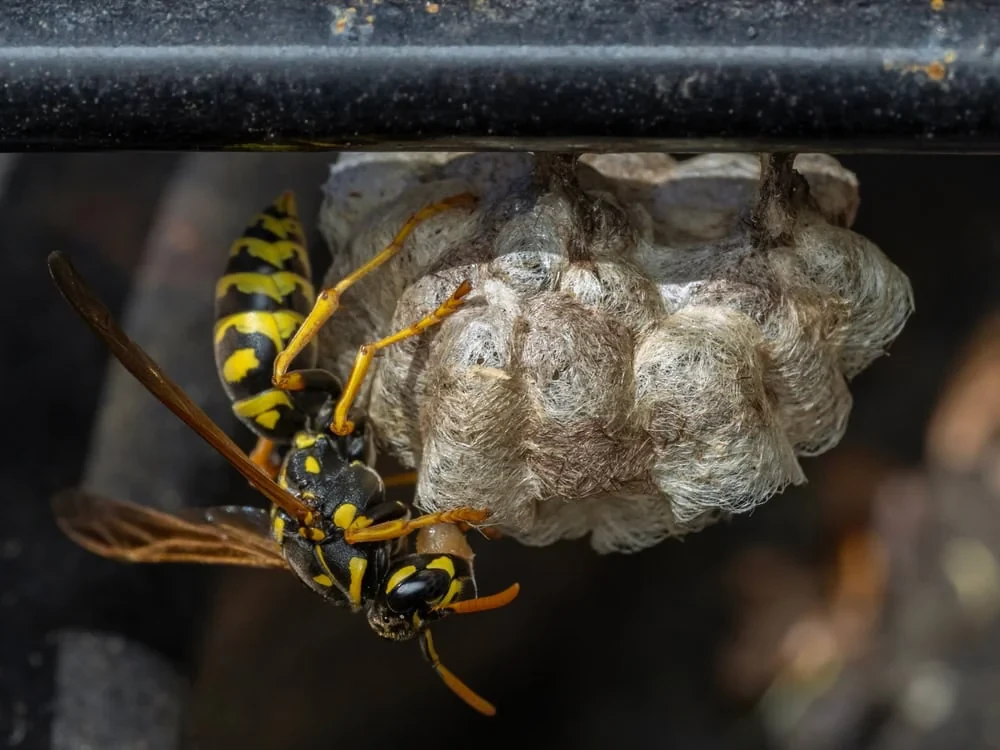
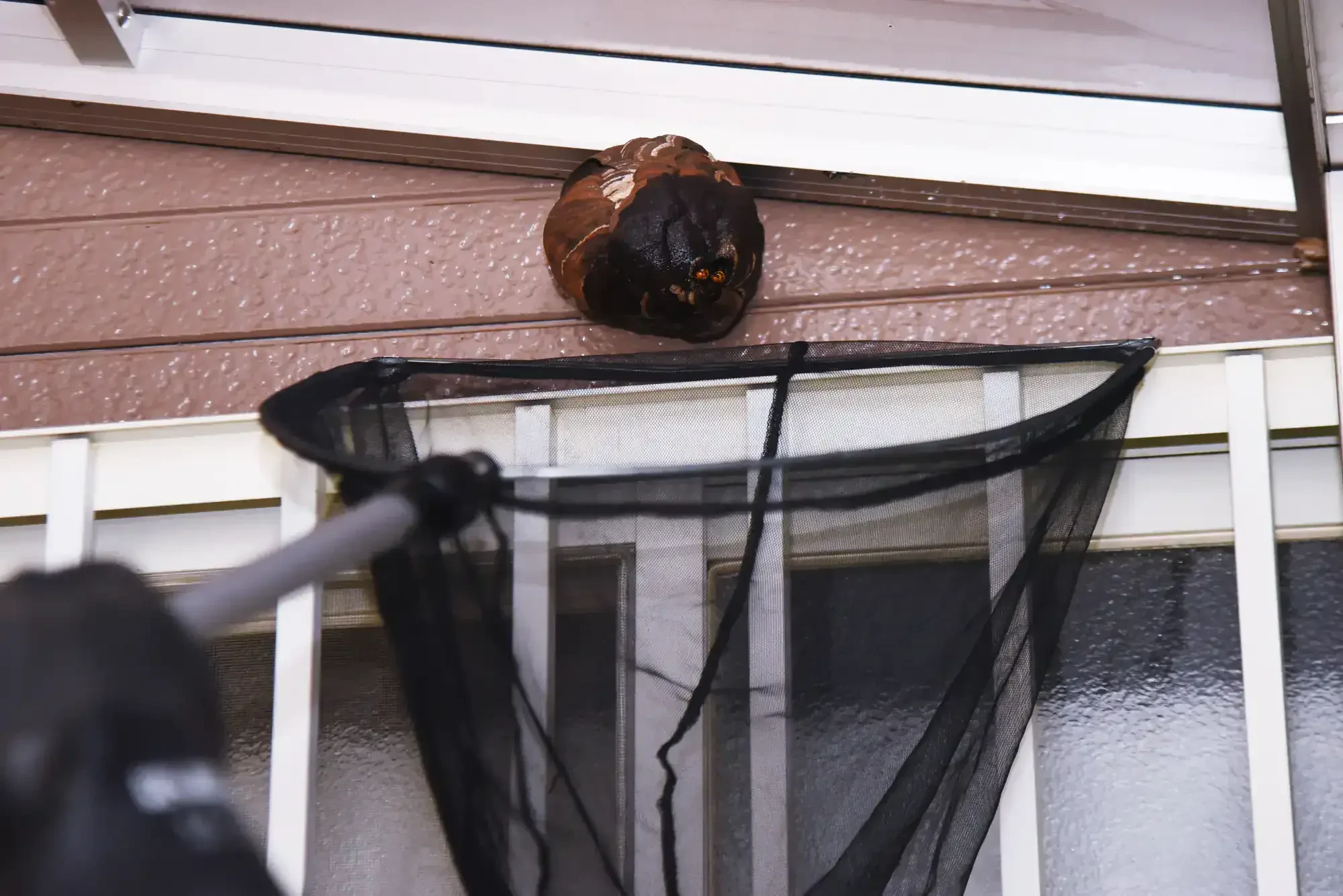
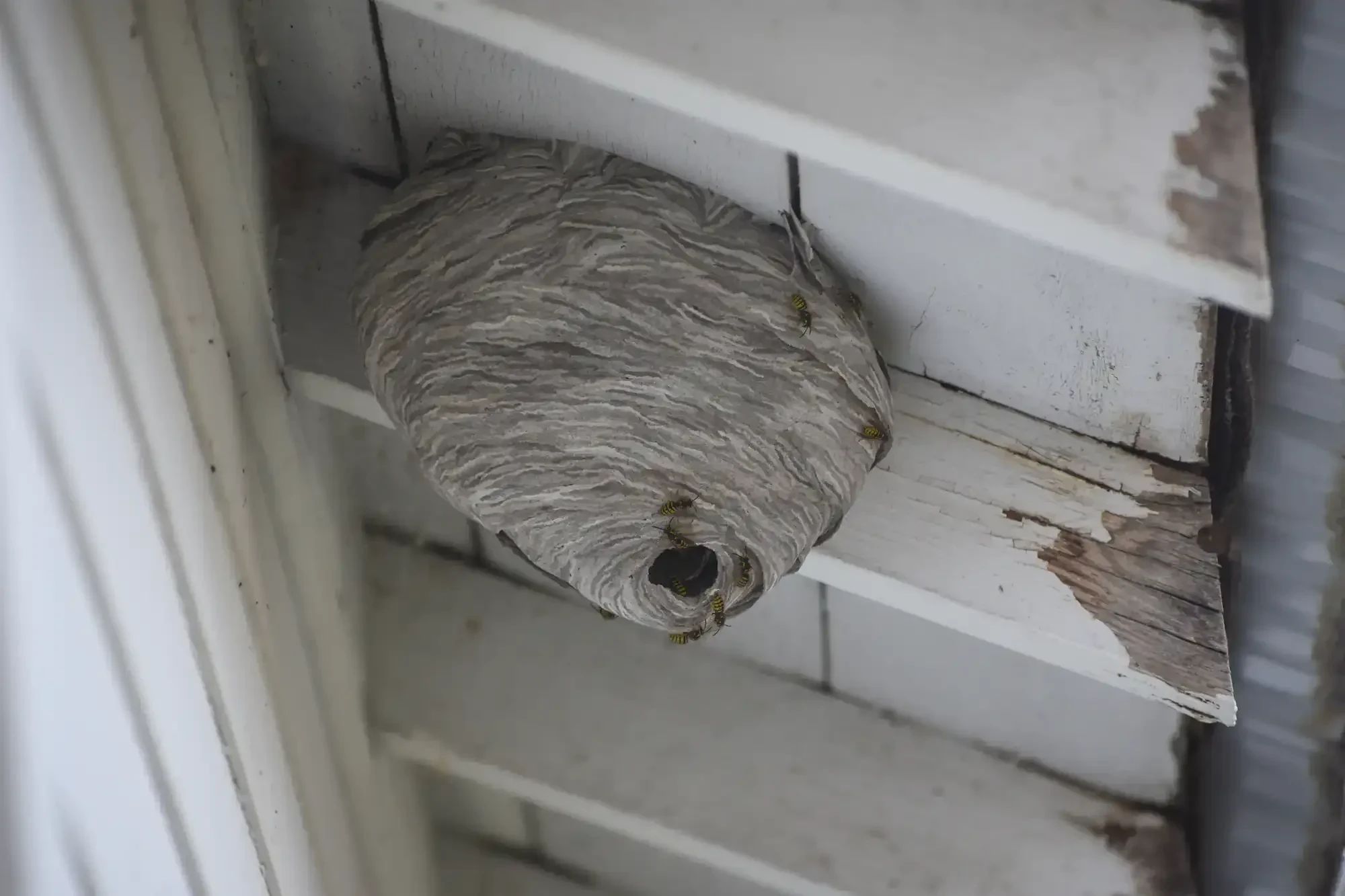
The most common sign is a steady stream of yellow jackets entering and exiting a single point on your home’s exterior — a gap in the siding, a soffit joint, a space around a window frame, or a chimney gap. You might also hear a faint buzzing or chewing sound from inside the wall, especially in quieter rooms. In older homes around Lobdell Lake, these entry points are often pre-existing structural gaps that a queen found in early spring when she was scouting for a nesting site.
What makes wall-void nests particularly important to address quickly is what happens when they’re left untreated. As the colony grows through summer, workers can chew through drywall to expand the nesting space. By late August, when colonies reach peak size, the pressure inside the wall can push workers through interior surfaces. If you’re seeing yellow jackets coming in through an interior wall or ceiling, that’s a sign the nest has been there for a while and has grown significantly. A licensed technician can confirm the nest location and treat it correctly before that stage.
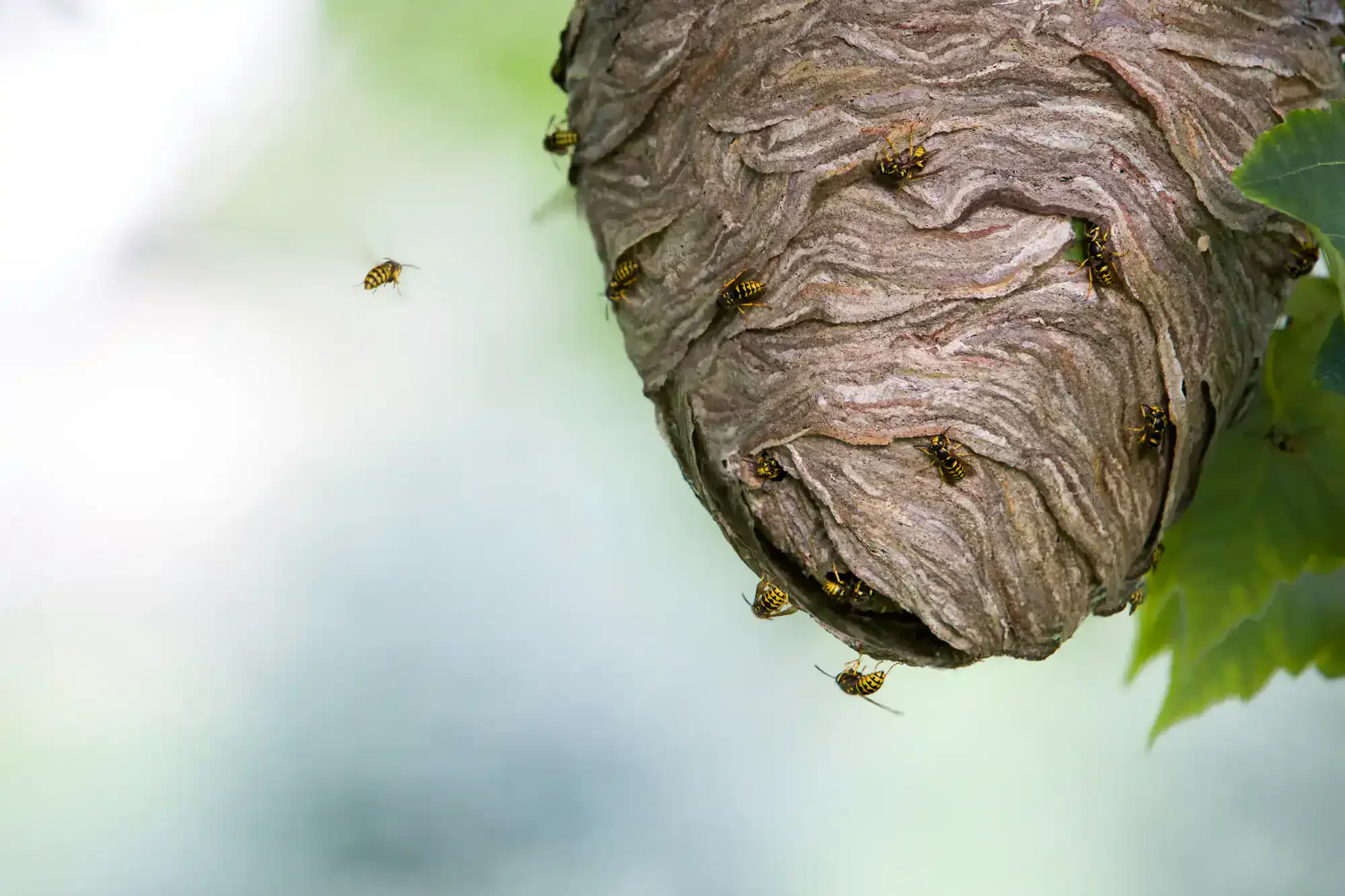
Store-bought aerosol sprays are designed for exposed nests — the kind hanging from a tree branch or under an eave where you can saturate the nest directly. When you spray into a wall void or ground burrow, you’re hitting the entry point but not the nest itself. The colony doesn’t die — it retreats deeper and releases alarm pheromones that put every worker in the colony on high alert.
The result is a more aggressive colony that’s now harder to reach. For ground nests in Argentine’s wooded yards, the colony may simply relocate the entrance a few feet away. For wall-void nests, the workers may find new interior exit points — sometimes into the living space of the home. Professional treatment uses insecticide dust or aerosol applied at night, when workers are clustered inside the nest, in a concentration and method that gets carried through the colony back to the queen. That’s what actually resolves the problem rather than just moving it around.
The peak danger window in Argentine is August through mid-September — and it lines up almost exactly with the height of lake season on Lobdell Lake. That’s not a coincidence; it’s just the biology. Yellow jacket colonies spend spring and early summer growing. By late summer, a single colony can hold 1,000 to 5,000 workers, and the colony’s food needs shift from hunting insects to foraging for sugars. That means they’re drawn to everything at an outdoor gathering — open drinks, food on the grill, fruit, garbage near the dock.
Argentine’s outdoor lifestyle puts residents directly in that path. Lakeside cookouts, dock parties, kids and dogs running through wooded yards — all of it happens during the exact window when yellow jackets are at their most numerous and aggressive. A nest that seemed manageable in June becomes a genuine hazard by August. If you’ve noticed yellow jacket activity on your property and you’re planning to use your outdoor space through the rest of the season, the earlier you have it treated, the better. Waiting until the colony is at full size makes the job harder and the risk higher.
It depends on the nest size, the location, and whether you can safely apply treatment at the right time and in the right way. Small, newly established ground nests found early in the season — before the colony has grown — are sometimes manageable with the right product applied correctly at night. The problem is that most homeowners don’t find ground nests until they’re well-established, often after someone steps near the entrance and gets stung.
In Argentine’s wooded, rural landscape, ground nests are frequently located in abandoned rodent burrows along wooded property edges — spots that are easy to stumble across accidentally. By the time you find it, the colony may already be several hundred workers strong. Applying treatment incorrectly at that stage — wrong product, wrong time of day, wrong application method — puts you at real risk of triggering a mass defensive response. Stinging insects send more than 500,000 people to emergency rooms annually in the United States, and between 0.5% and 4% of the population has a severe allergic reaction to venom. For an established ground nest, especially one near areas where children or pets spend time, professional treatment is the safer and more reliable option.
Yellow jacket exterminator costs vary depending on the nest type, location, and size of the colony. Nationally, professional yellow jacket removal averages around $725, with wall-void and attic nests typically ranging from $500 to $1,300 because they require more targeted treatment to reach the queen inside the structure. Ground nests are generally on the lower end of that range when treated early in the season.
For Argentine homeowners, the more useful comparison is cost versus consequence. An emergency room visit for a severe sting reaction runs $1,000 or more without insurance. Drywall and insulation repair from an untreated wall-void nest — where the colony has chewed through to expand its space — can run $2,000 to $10,000 depending on the extent of the damage. Professional treatment, backed by a 1-year service guarantee, is the option that resolves the problem completely rather than delaying it. We also offer price matching for reasonable competitor rates, so if you’ve gotten another quote from a Genesee County provider, bring it up when you call.
Yes — we offer discounts for seniors, veterans, and first responders. Argentine Township has a real community character to it, and the people who’ve spent their careers serving others — in uniform, in emergency response, or simply in the years they’ve put in — deserve straightforward, honest service at a fair price. These discounts aren’t a footnote; they’re part of how we operate as a family-owned, locally-rooted company.
When you call to schedule service, just mention your status and ask about the applicable discount. The rest of the process is the same: a licensed technician comes to your Argentine property, identifies the nest correctly, treats it with the right method for the species and location, and backs the work with a 1-year service guarantee. No contracts, no pressure, no rotating technicians who don’t know your property. Just consistent, professional service from a company that has been doing this in Genesee County for 20 years.
Useful Links