
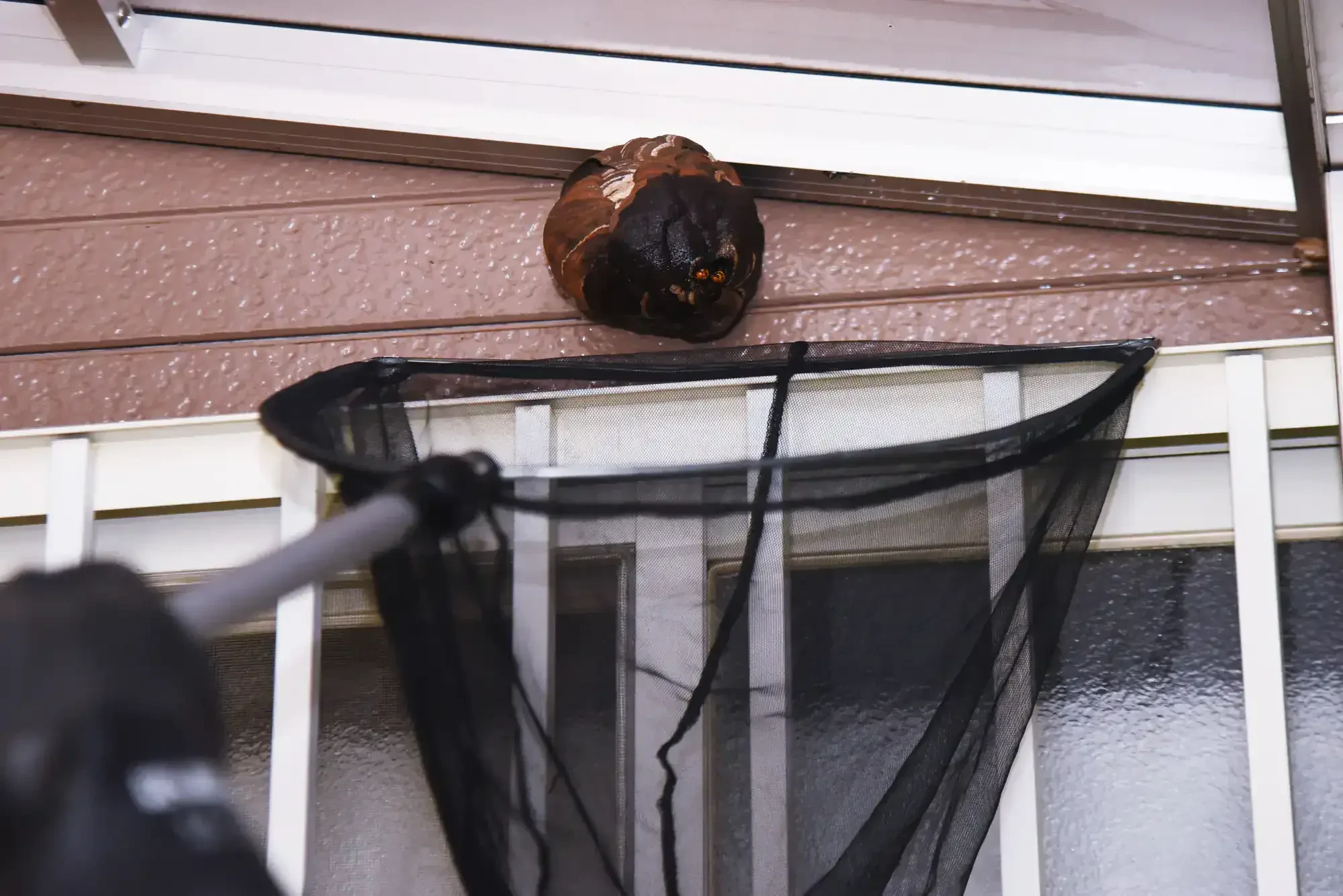
Hear from Our Customers
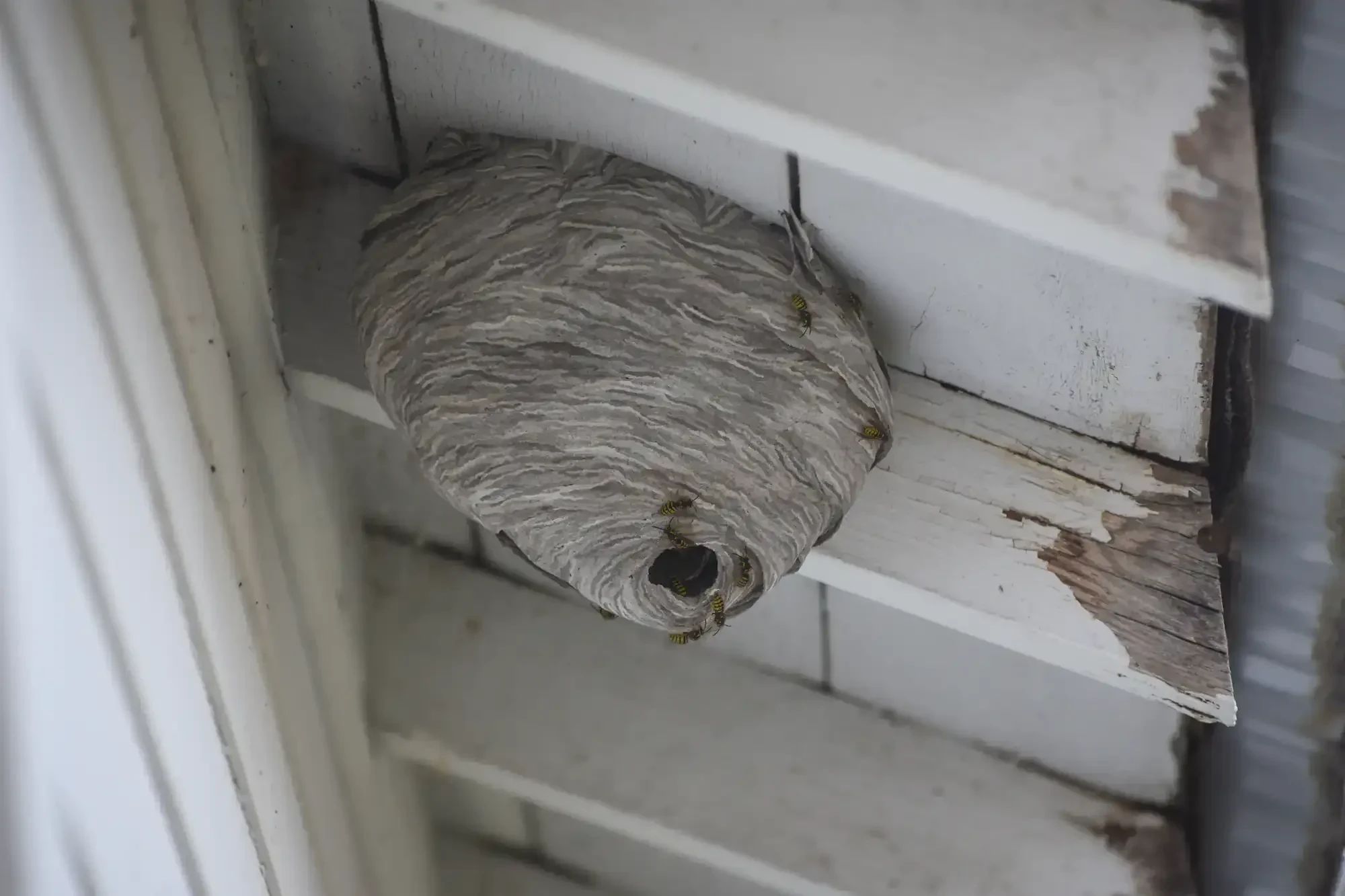
By August in Shiawassee County, a yellow jacket colony can hold anywhere from 1,000 to 5,000 workers. That’s not a problem you spray once from a hardware store can and walk away from — especially when the nest is underground in a pasture you’re still working, or tucked inside the wall of a home that’s been standing since the 1890s. Getting it wrong doesn’t just waste your money. It makes them more aggressive.
When the nest is gone — actually gone, not just temporarily quieted — you get your property back. Kids can play in the yard without you watching every step. You can mow along the fence line without bracing for an eruption from the ground. You can open the barn, work the field, sit on the porch in the evening, and stop mentally mapping where you think the nest might be.
For Byron homeowners in older village homes on streets like Church or Saginaw, there’s another layer to this. A yellow jacket colony inside a wall void doesn’t stay put. It expands. Workers chew through insulation and drywall as the colony grows, and an untreated infestation can cause real structural damage before you even realize how far it’s spread. Getting it handled quickly isn’t just about comfort — it protects the home itself.
We’ve been serving Byron and the surrounding Shiawassee County area since May 31, 2005 — which means in 2025, we’re marking 20 years of doing this work right. Roger Chinault, who founded First Choice Pest Control and leads it today, brings 26 years of personal, hands-on pest control experience to every job. That’s not a credential on a wall. That’s knowing exactly what you’re looking at when you find a ground nest in a Burns Township field versus a German Yellowjacket colony that’s worked its way into a wall cavity of a century-old Byron village home.
We’re family-owned, fully licensed under MDARD Pesticide Application Business License #250081, and IPM-certified — meaning treatment decisions start with correct identification, not just whatever’s in the truck. We hold a 4.7 out of 5 rating on Angi from verified customers, and have earned awards from both Angie’s List and HomeAdvisor. Seniors, veterans, and first responders receive discounts, and if a reasonable competitor quotes you less, we’ll match it.
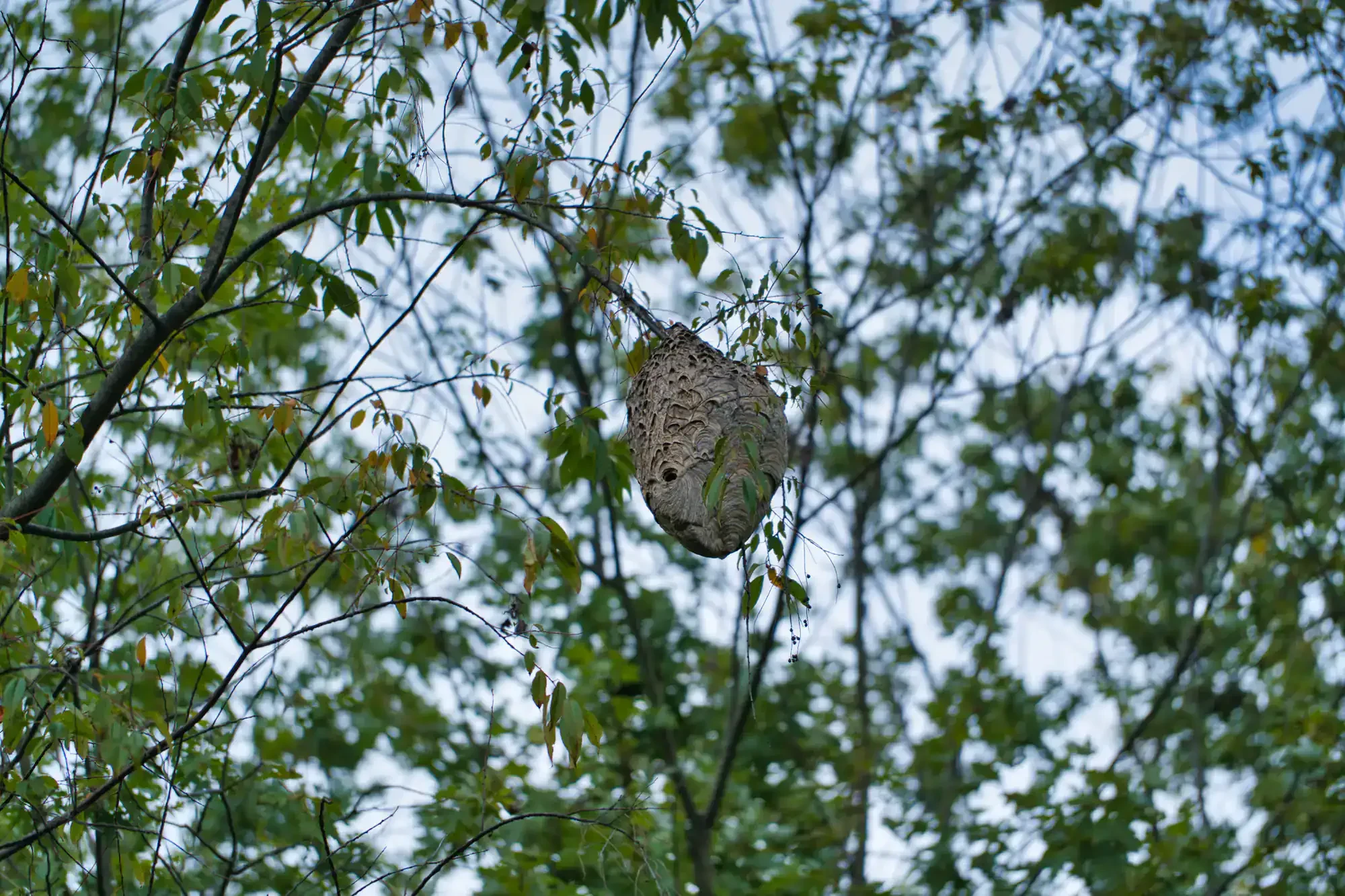
It starts with a real inspection. Not a glance at the entry point and a quick spray — an actual assessment of where the nest is, how large it likely is, and what species you’re dealing with. That last part matters more than most people realize. Eastern Yellowjackets build underground in farm fields and rural properties throughout Burns Township. German Yellowjackets colonize wall voids and attics in older structures. The treatment approach for each is different, and using the wrong one doesn’t solve the problem — it moves it.
Once the nest is identified, we apply treatment directly and precisely. For ground nests, that means getting product into the colony where workers actually live, not just at the surface entrance. For wall-void and attic infestations — common in Byron’s older village homes — it means targeted dust or aerosol treatment that reaches the nest without driving the colony deeper into your walls or increasing aggression. Timing matters too. Late summer in Shiawassee County is peak activity, and colonies at full size respond differently than smaller spring nests.
After treatment, you’ll get clear guidance on what to watch for and how to close off the entry points that made your home or outbuilding a target in the first place. We back every job with a one-year service guarantee. If they come back within that window, so does your technician — no additional charge, no runaround.
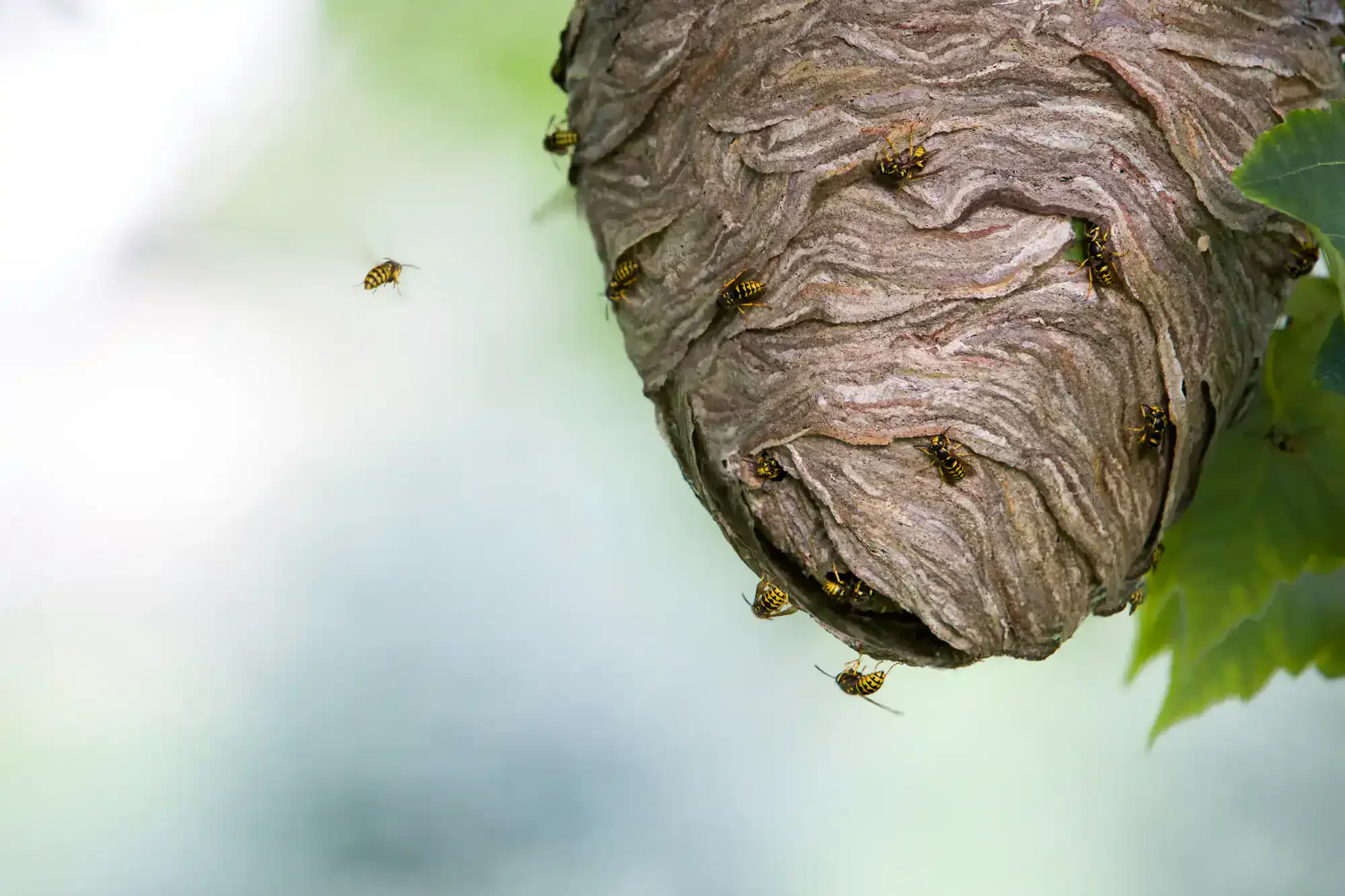
Ready to get started?
Yellow jacket pest control in Byron isn’t one-size-fits-all, and we don’t treat it that way. Our service covers ground nests in rural acreage properties and farm fields throughout Burns Township, wall-void and attic yellow jacket removal in older Byron village homes, nest removal from agricultural outbuildings and barns, and structural entry point assessment to reduce the chance of re-infestation the following spring.
For Byron residents dealing with attic yellow jacket removal specifically, older homes along the village’s historic streets present a particular challenge. Deteriorating soffits, aging fascia boards, chimney gaps, and worn wood siding are common entry points that a general handyman won’t catch — but our trained pest control technicians will. We identify those vulnerabilities during the inspection and flag them so you can address them before next season’s queens start scouting.
The Shiawassee River runs directly through Byron, and properties along or near that corridor tend to see elevated yellow jacket pressure due to the moist soil, wooded banks, and dense vegetation that make ideal nesting habitat. If your property is near the river — or backs up to any wooded edge in Burns Township — that’s worth mentioning when you call. We serve both residential and commercial customers, and the same level of care applies whether it’s a farmstead, a village home, or a business on Saginaw Street.
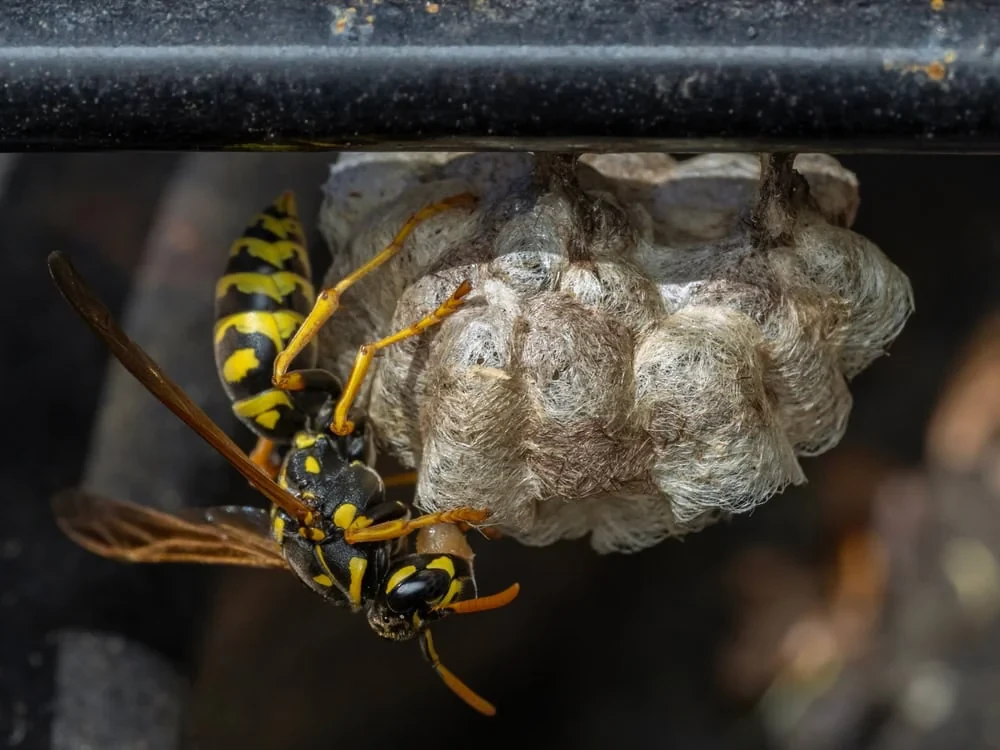
Yellow jackets don’t reuse old nests, but they do reuse old locations. A queen that successfully colonized a wall void or ground burrow on your Byron property last year left behind chemical signals — pheromones — that attract new queens the following spring. If the entry point was never sealed and the nest material was never removed, you’re essentially leaving a welcome sign out every year.
This is especially common in older Byron village homes where gaps in siding, soffits, and around chimney bases are easy to miss. The fix isn’t just treating the active colony — it’s identifying and closing those entry points after treatment so next spring’s queens have to look elsewhere. We walk you through that process after every job, and our one-year service guarantee means if a new colony establishes before you’ve had a chance to seal everything, you’re covered.
Store-bought sprays are designed to knock down what you can see at the entry point. They’re not built to reach the nest itself, which in a wall void or underground burrow can be several feet from where you’re spraying. What often happens is that workers at the entry point are killed, the colony senses a threat, and the remaining workers — sometimes thousands of them — become significantly more defensive. In some cases, they’ll chew a new exit point through an interior wall.
For ground nests in farm fields or rural properties throughout Burns Township, the problem is similar. The spray hits the surface entrance but doesn’t penetrate deep enough to reach the queen or the core of the colony. Without eliminating the queen, the colony recovers. Professional treatment uses products and application methods specifically designed to reach the nest where it lives — not just where it exits.
The peak danger window in Shiawassee County runs from late July through September. By August, a colony that started with a single queen in the spring can hold 1,000 to 5,000 workers. At the same time, the colony’s food focus shifts from hunting insects to scavenging sugary foods — which is why yellow jackets become so aggressive around garbage, outdoor meals, garden produce, and open beverages as summer winds down.
For Byron residents, this timing overlaps directly with the height of outdoor and agricultural activity — garden harvests, farm work, outdoor gatherings. That’s the worst possible combination. Ground nests in fields being mowed or tilled become a genuine hazard, and wall-void colonies in village homes are at their maximum size and most likely to break through interior surfaces. If you’re noticing yellow jacket activity increasing on your Byron property in July or August, don’t wait to see if it calms down. It won’t.
The most common signs of a wall-void colony are workers entering and exiting through a small gap in siding, around a window frame, or near a soffit — usually the same spot repeatedly. You may also hear a faint chewing or buzzing sound from inside the wall, particularly in older Byron homes where insulation is thin or deteriorating. In some cases, you’ll notice a soft spot or discoloration on an interior wall where the colony has been expanding and chewing through the structure.
Byron’s older village homes — many built in the late 1800s and early 1900s — have the kind of aging exterior features that make wall-void entry easy for German Yellowjackets. Loose fascia boards, worn wood siding, gaps around chimney bases, and older attic ventilation systems are all common entry points. If you’re seeing workers consistently entering the same spot on your home’s exterior, that’s enough reason to call. A professional inspection will confirm what’s happening inside the wall before any treatment begins.
Nationally, yellow jacket extermination averages around $725, but the actual cost depends on a few key factors: where the nest is located, how large the colony is, and how difficult it is to access. Ground nests on rural properties are typically more straightforward to treat than wall-void or attic infestations, which can run $500 to $1,300 depending on how deep inside the structure the colony has established and how many access points are needed.
It’s worth framing that cost against the alternatives. A single emergency room visit for an anaphylactic reaction costs far more. Drywall and insulation repair from an untreated wall-void colony that’s been expanding for months costs more. A second round of treatment after a failed DIY attempt costs more — in money, time, and aggravation. We offer price matching for reasonable competitor rates, so if you’ve gotten another quote, bring it up when you call. Seniors, veterans, and first responders also receive discounts, which matters in a community like Byron where those groups are well-represented.
Yes — and this is a more common call than most people expect from the Burns Township area. Agricultural outbuildings, equipment sheds, and working barns are frequent nesting sites for yellow jackets. They’ll colonize wall voids under rooflines, in structural cavities, and along the interior framing of older outbuildings. For farmers and rural property owners, this creates a real occupational safety issue — especially when workers or livestock are regularly in and around those spaces.
Treatment in agricultural settings follows the same identification-first approach we use for residential jobs. The species, nest location, and access points are all assessed before any product is applied. Timing and product selection account for the presence of animals and the working nature of the space. If you’re dealing with yellow jackets in a barn, a grain shed, or any other outbuilding on your Burns Township property, we handle it with the same care and precision as a residential job — because the stakes in a working agricultural environment are just as high.
Useful Links