
Hear from Our Customers
Out here in Cohoctah Township, yellow jacket problems don’t look the way they do in a suburb. Your property might be five acres or fifteen. You’ve got outbuildings, barn wood, old fence lines, and soil full of abandoned burrows from years of wildlife activity. That’s just the reality of living on rural land in Cohoctah Center, and it means yellow jackets have more places to set up than most homeowners ever realize. By the time someone gets stung, the colony is often months old and already numbering in the thousands.
When the nest is properly treated and eliminated, you get your yard back. You can walk the property, work the land, let the kids and dogs out, and not spend every August afternoon watching where you step. That matters on a rural parcel where being outside isn’t optional — it’s the whole point of living here.
The older housing stock throughout Cohoctah Center adds another layer to this. A farmhouse built in the 1950s or 1960s has gaps, aging soffits, and wall cavities that a German Yellowjacket queen finds in early spring before you even know she’s there. Getting rid of the active colony is step one. Knowing what let them in — and addressing it — is what keeps the problem from coming back the following season.
We were founded on May 31, 2005 — which means this year marks 20 years of serving homeowners and rural properties across this part of Michigan. Roger Chinault, who leads the company, has 26 years of hands-on experience in pest control. We’re not a franchise or a national brand routing calls through a call center. We’re a family-owned operation out of Swartz Creek that has been working rural Livingston County properties — including homes throughout Cohoctah Center and along the surrounding township roads — long enough to know exactly what yellow jacket pressure looks like here.
You’ll get the same technician back year after year. That’s intentional. A technician who knows your property, knows where the problem areas are, and doesn’t need to be briefed from scratch every visit is genuinely more effective. We hold MDARD Pesticide Application Business License #250081, carry full insurance, and have completed Integrated Pest Management training. We offer discounts for seniors, veterans, and first responders.
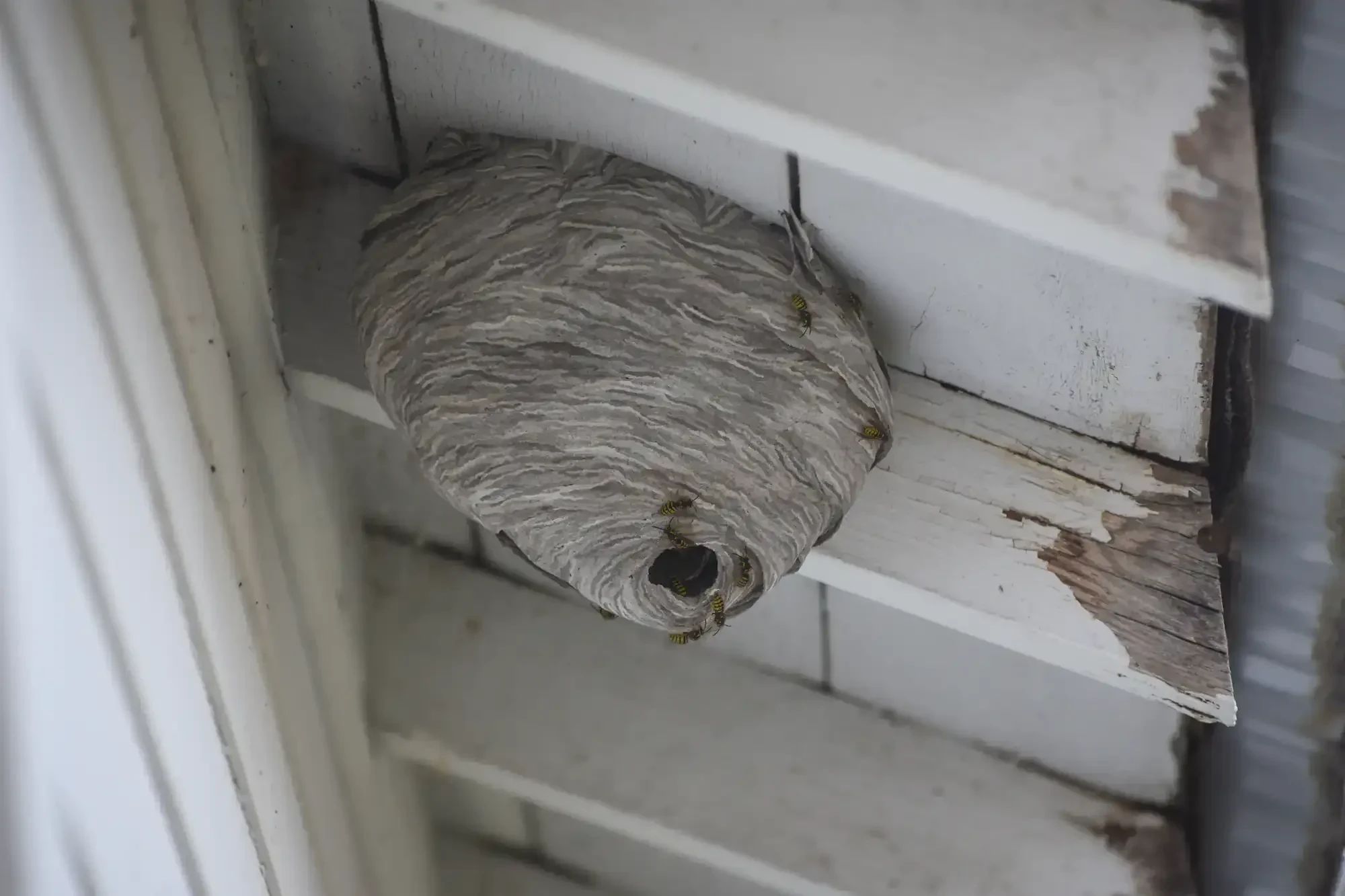
The first thing that happens is a proper inspection. Not a glance at the entry point and a quick spray — an actual assessment of the property to identify the species, locate the nest, and understand what you’re dealing with. That distinction matters more than most people realize. The German Yellowjacket, which is the species most likely nesting inside your walls or attic, requires a completely different treatment approach than the Eastern Yellowjacket nesting underground in an old burrow in your lawn or field. Treating one like the other is how DIY attempts fail and how inexperienced technicians leave colonies partially intact and angrier than before.
Once the nest is located and the species confirmed, treatment is timed deliberately. Wall-void and attic nests are treated at night, when the full colony is present and the workers are inside. This isn’t a detail — it’s the difference between a treatment that works and one that doesn’t. For ground nests on larger rural parcels, the surrounding area is assessed for additional colonies, because properties with abundant wildlife activity often host more than one.
After treatment, you’ll know what was done, what products were used, and when it’s safe to return to the treated area — including any areas near livestock or farm animals. No guessing, no vague timelines. If yellow jacket activity returns within the guarantee period, we come back and re-treat at no additional charge.
Ready to get started?
Our yellow jacket exterminator service covers the full scope of what rural Livingston County properties actually need. That starts with species identification — because the treatment plan for a wall-void German Yellowjacket infestation in an older Cohoctah Center farmhouse is not the same as the plan for a ground nest in a pasture or near an outbuilding. Getting that wrong wastes time and money and often makes the situation worse.
Our service includes a full property inspection, targeted nest treatment, and a one-year service guarantee. If the colony returns within that window, we come back — no additional charge, no runaround. For attic yellow jacket removal specifically, the process accounts for the structural realities of older rural homes: how the nest is accessed, where the entry points are, and what needs to be addressed to prevent re-entry the following spring when new queens start scouting.
We also offer price matching on reasonable competitor quotes. If you’ve already called around and have a quote from another licensed Livingston County provider, bring it. The goal is to make sure you’re not choosing between quality and cost. No binding contracts, no pressure — just straightforward service from a company that has been doing this work in this part of Michigan for two decades.
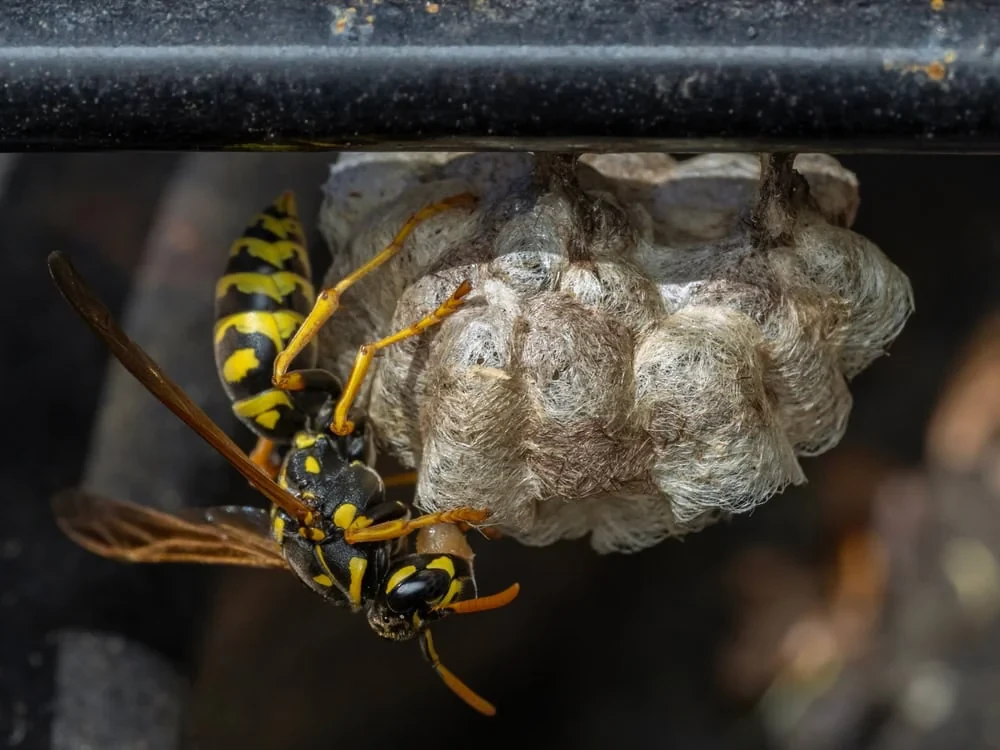
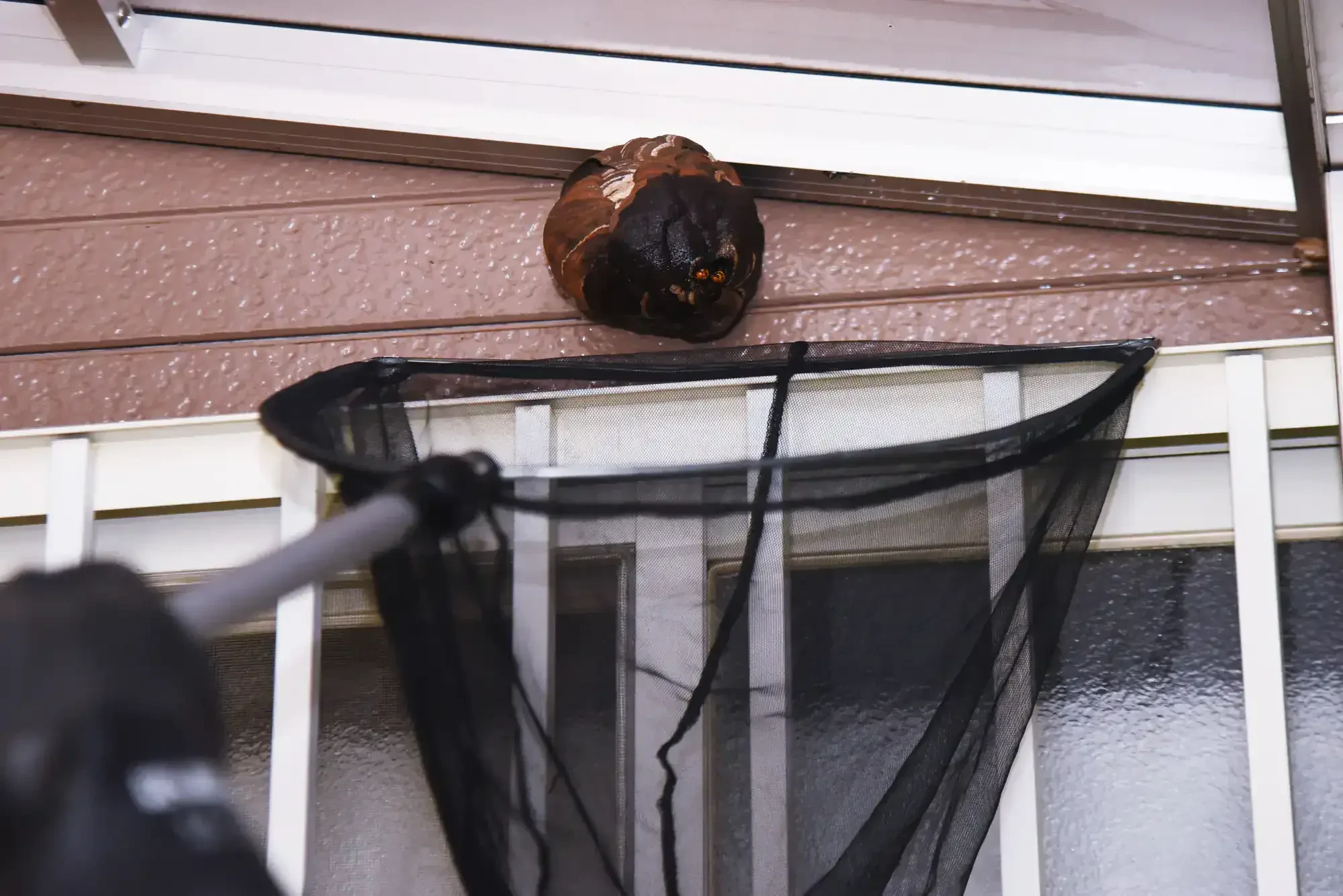
The most common sign is worker activity around a specific entry point on the exterior — a gap in the siding, a crack near the soffit, a loose piece of trim, or an opening around a utility penetration. You’ll notice yellow jackets going in and out of the same spot repeatedly, especially during the warmer parts of the day. If you’re hearing a faint chewing or buzzing sound from inside a wall, that’s the colony expanding its nest — they chew through drywall and insulation to create space.
In older farmhouses throughout Cohoctah Township, these entry points are common because aging exterior materials develop gaps over time that newer construction doesn’t have. What starts as a small crack in April becomes a fully established colony of several thousand workers by August. If you’re seeing yellow jackets inside the house — coming through an outlet, a light fixture, or a gap in the ceiling — the nest is almost certainly inside the wall or attic cavity, not outside. That’s when you call us, because spraying the exterior entry point without treating the nest itself drives the colony deeper into the structure.
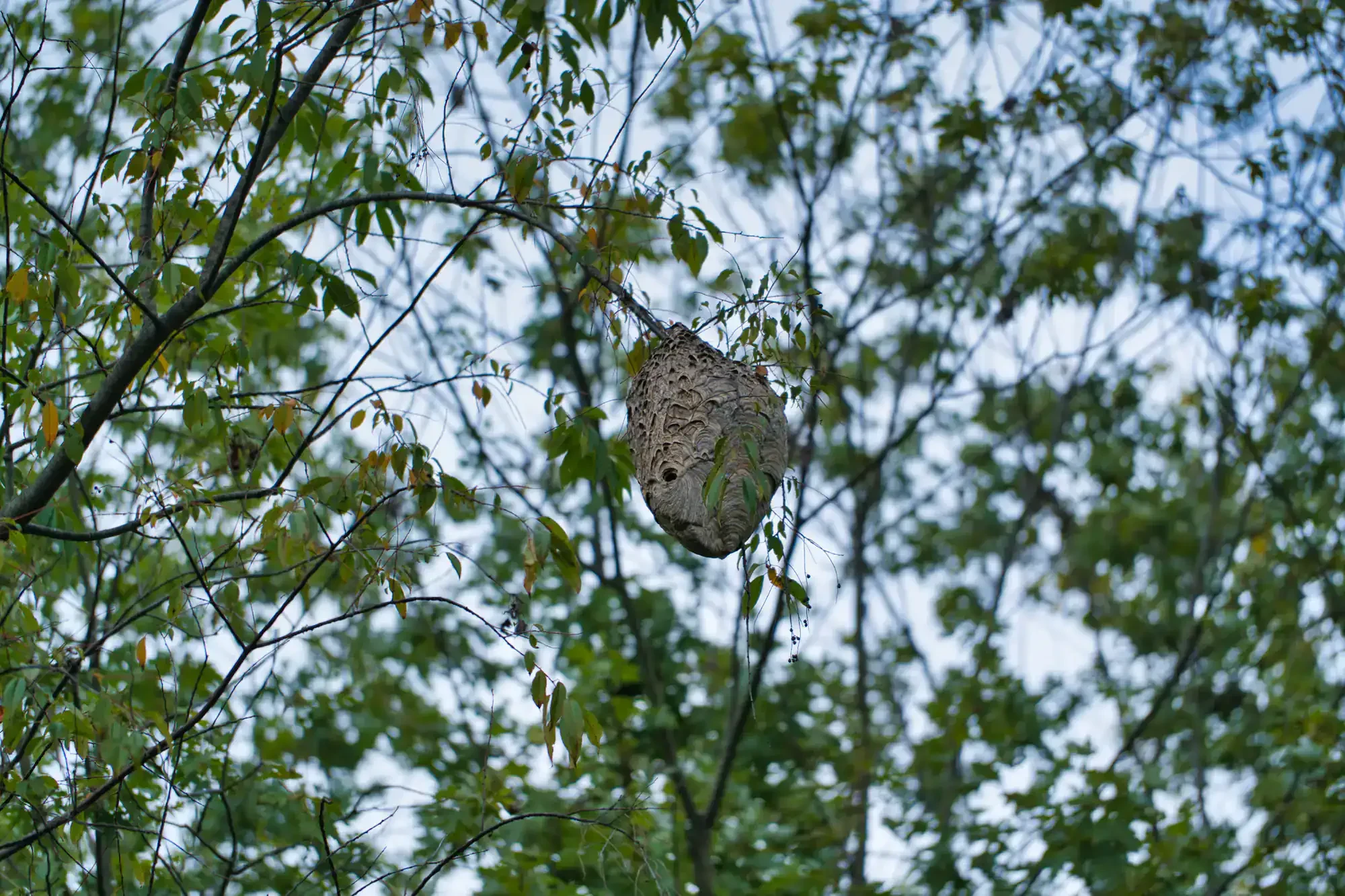
Yellow jackets are a type of wasp — so technically, every yellow jacket is a wasp, but not every wasp is a yellow jacket. The distinction that actually matters for treatment is species-level. In Cohoctah Center and the surrounding Livingston County area, the two species you’re most likely dealing with are the German Yellowjacket, which nests inside enclosed structures like wall voids, attics, and crawlspaces, and the Eastern Yellowjacket, which nests underground in abandoned animal burrows.
These two species require different treatment approaches. A ground nest needs to be treated at the entrance after dark, when foragers have returned and the colony is fully inside. A wall-void nest requires locating the nest cavity, treating it with the appropriate product, and sealing entry points after the colony is eliminated. Applying the wrong method — or using a hardware-store aerosol on a wall-void nest — often seals workers inside the living space or drives the colony to expand in a different direction. Correct identification before treatment is the single most important step in getting it right the first time.
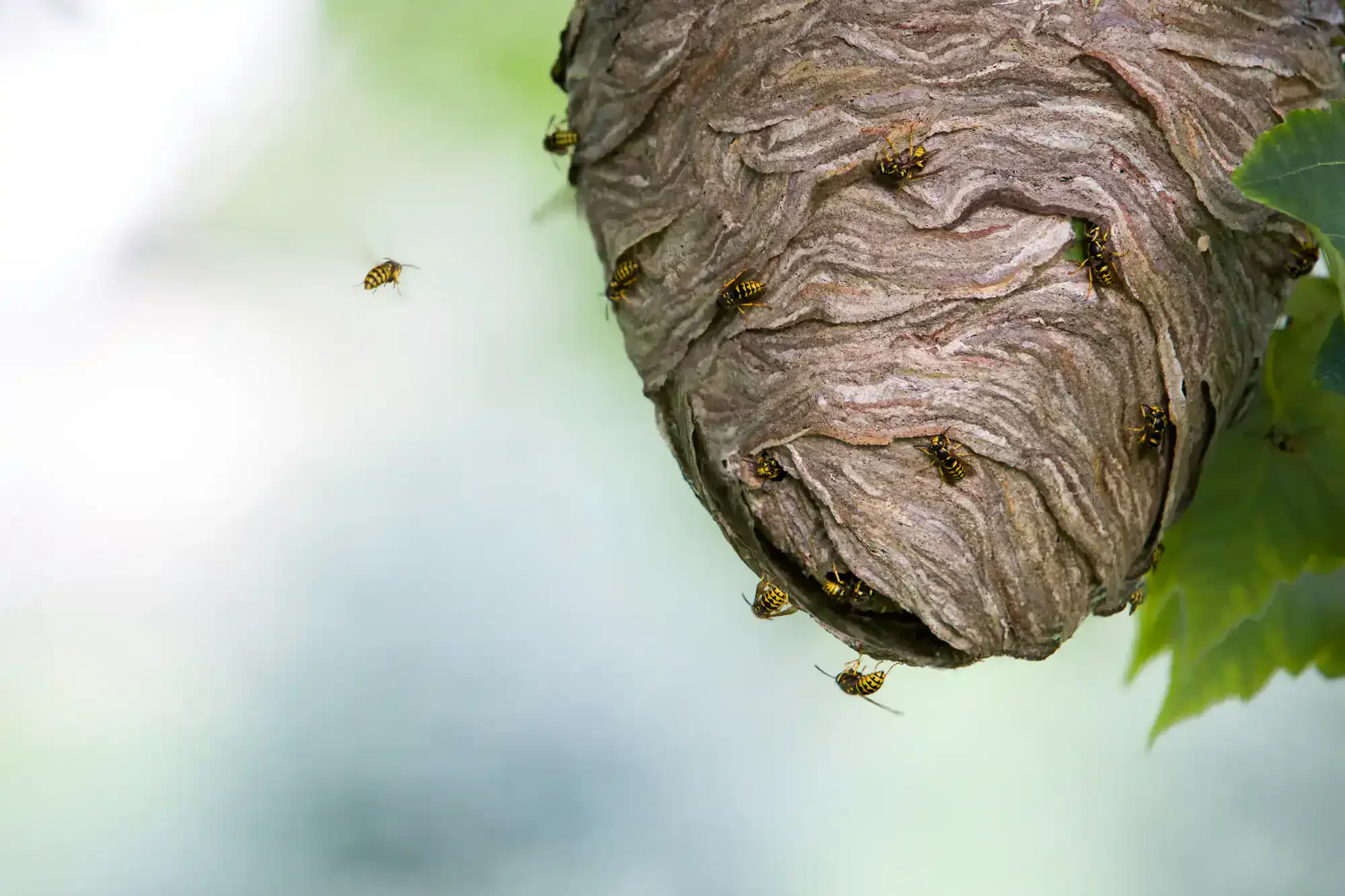
The honest answer is: it depends on the nest, and most people underestimate what they’re dealing with. A small, newly established nest in an accessible outdoor location, treated at night with the right product, can sometimes be handled without professional help. But by mid-August — which is when most Cohoctah Center residents discover they have a problem — the colony is no longer small. A mature yellow jacket colony can contain 1,000 to 5,000 workers, all capable of stinging repeatedly, and they respond to perceived threats aggressively.
On a rural property, the risk is compounded by the fact that nests are often in locations that are hard to access safely — inside a barn wall, under a shed floor, in a crawlspace, or in a burrow near the base of a fence line. Disturbing a nest without fully eliminating it creates a more aggressive colony that now associates human activity with a threat. If you or anyone in your household has a known or unknown bee or wasp venom allergy, the stakes are significantly higher. Between 0.5% and 4% of people have a severe allergic reaction to stings — and many don’t know it until it happens. For most rural property situations in Cohoctah Township, professional treatment is the straightforward call.
The most dangerous window runs from late July through September. That’s when colonies have reached their peak size and the workers shift their diet from protein — which they feed to larvae — to sugars and carbohydrates. That diet shift is why yellow jackets become so aggressive around outdoor food and drinks in late summer. They’re not being territorial for no reason; they’re food-stressed and foraging hard before the colony dies off in fall.
For Cohoctah Center specifically, that peak aggression period lands right in the middle of the busiest outdoor season — harvest prep, outdoor gatherings, kids and animals in large yards, and farm work that takes you across a lot of ground. The combination of abundant nesting habitat and peak colony size makes August and September the most common time for service calls in this area. That said, the best time to call is actually before that window — if you had a yellow jacket problem last year, or if you’re seeing early activity near a structure or in the lawn in May or June, getting ahead of it before the colony grows is always easier and less expensive than treating a fully mature nest in August.
This is a question a lot of homeowners don’t think to ask until after the treatment, and it’s a good one. Once the colony is eliminated, the physical nest remains inside the wall or attic cavity. Yellow jackets don’t remove it, and it doesn’t disappear on its own. In most cases, the nest material — which is made from chewed wood fiber — will dry out and compress over time without causing structural problems. The more immediate concern is what the dead nest attracts.
Abandoned yellow jacket nests are a known attractant for rodents, who will chew through walls to access the nest material and any remaining food stores. They also attract flesh flies and other secondary pests. The other critical step is sealing the entry points that the colony was using. If those gaps are left open, a new queen scouting for a nesting site the following spring will find a pre-built cavity and move right in. In the older farmhouses and rural structures common throughout Cohoctah Township, those entry points can be easy to miss if you’re not looking for them — which is why the inspection process matters as much as the treatment itself.
Yes. We offer discounts for seniors, veterans, and first responders. In a township like Cohoctah — where a significant portion of the population is over 50, where many residents have military backgrounds, and where the nearest emergency services are staffed by people who live and work in the same rural communities they protect — these discounts reflect who our customer base actually is.
Beyond the discounts, we also match reasonable competitor quotes. Livingston County has no shortage of pest control companies claiming to serve the area, but getting multiple quotes from providers willing to actually come out to a rural Cohoctah address takes time — and every week of delay in August means a larger, more aggressive colony. The price-match offer is there so you don’t have to trade quality for cost. You can call once, ask about the match, and move forward knowing you’re getting experienced, guaranteed work at a competitive rate.
Useful Links