
Hear from Our Customers
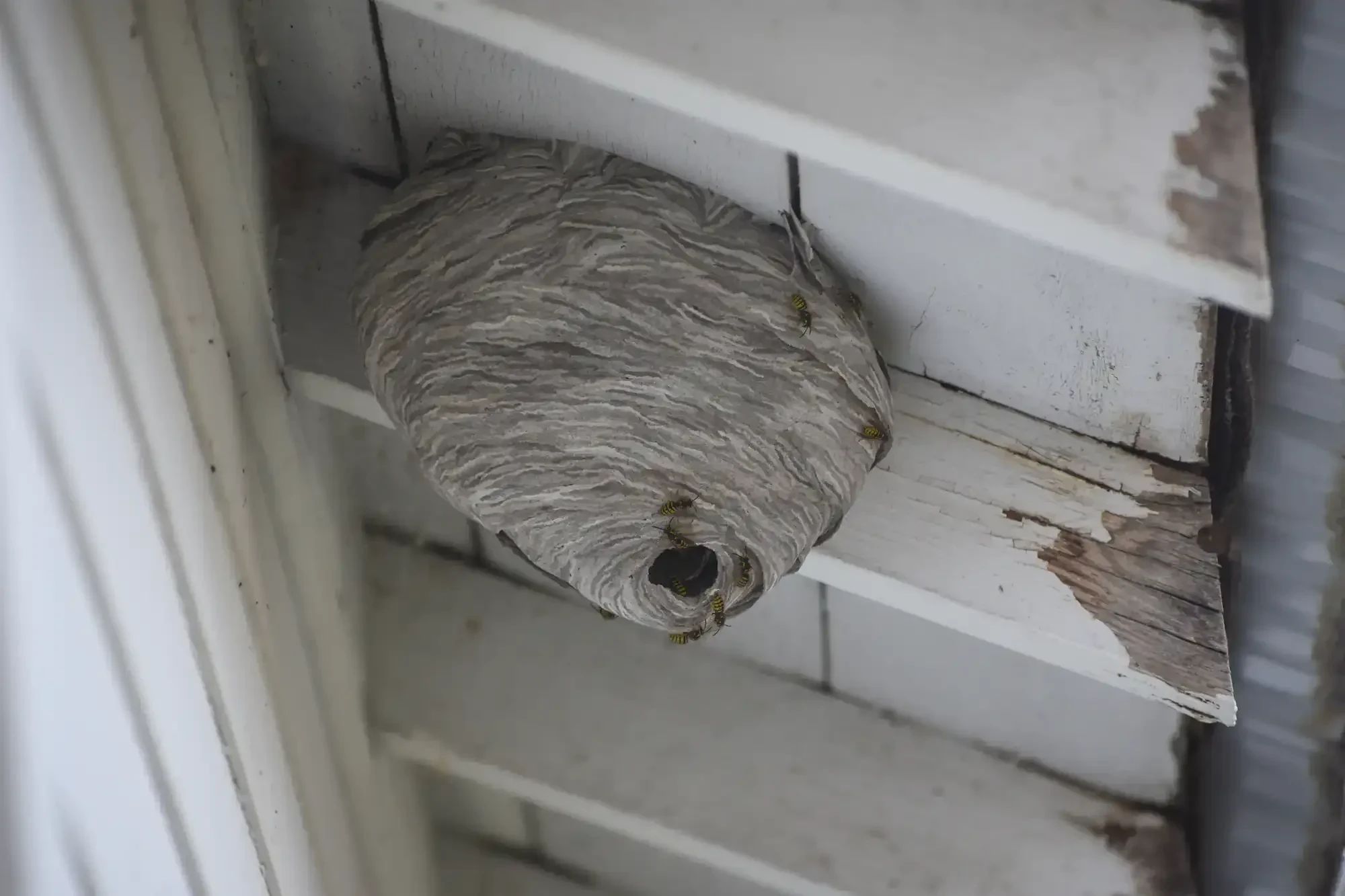
When yellow jackets are nesting in or around your home, everything changes. The backyard you used to enjoy becomes off-limits. The gap in your siding that looked minor is now an active colony with thousands of workers behind it. That’s not a problem you wait out — it gets worse every week through August, and by September those wasps are at their most aggressive.
Durand’s housing stock is some of the oldest in Michigan. A significant portion of homes in this area were built before World War II, which means aging soffits, worn siding joints, gaps around chimneys, and attic spaces that yellow jackets find before you do. The German Yellowjacket — the species most commonly found inside walls and attics — doesn’t need a large opening. It needs the kind of small, overlooked entry point that older Durand homes quietly offer year after year.
Once the nest is gone and the entry points are addressed, you get your home back. Kids play outside again. The back porch is usable. You’re not dreading mowing near the fence line or letting the dog out after dark. That’s what a proper yellow jacket extermination actually looks like — not just fewer wasps, but a property you can actually live on again.
We’ve been operating since May 31, 2005 — which means two full decades of working through Michigan summers, treating the kinds of infestations that older Shiawassee County homes produce, and building a reputation that holds up in communities where people actually talk to each other. In Durand, that matters. We’ve treated homes throughout the area, from properties along Main Street to rural acreage in Vernon Township.
Roger Chinault founded our company and brings 26 years of hands-on pest control experience to every job. We hold MDARD Pesticide Application Business License #250081 and are IPM-certified — which means treatment decisions are based on correct species identification, not guesswork. We’re already actively serving Durand and surrounding Shiawassee County communities including Owosso and Corunna, so this isn’t new territory. We know the roads, we know the housing stock, and we’ve seen what these infestations look like inside homes like yours.
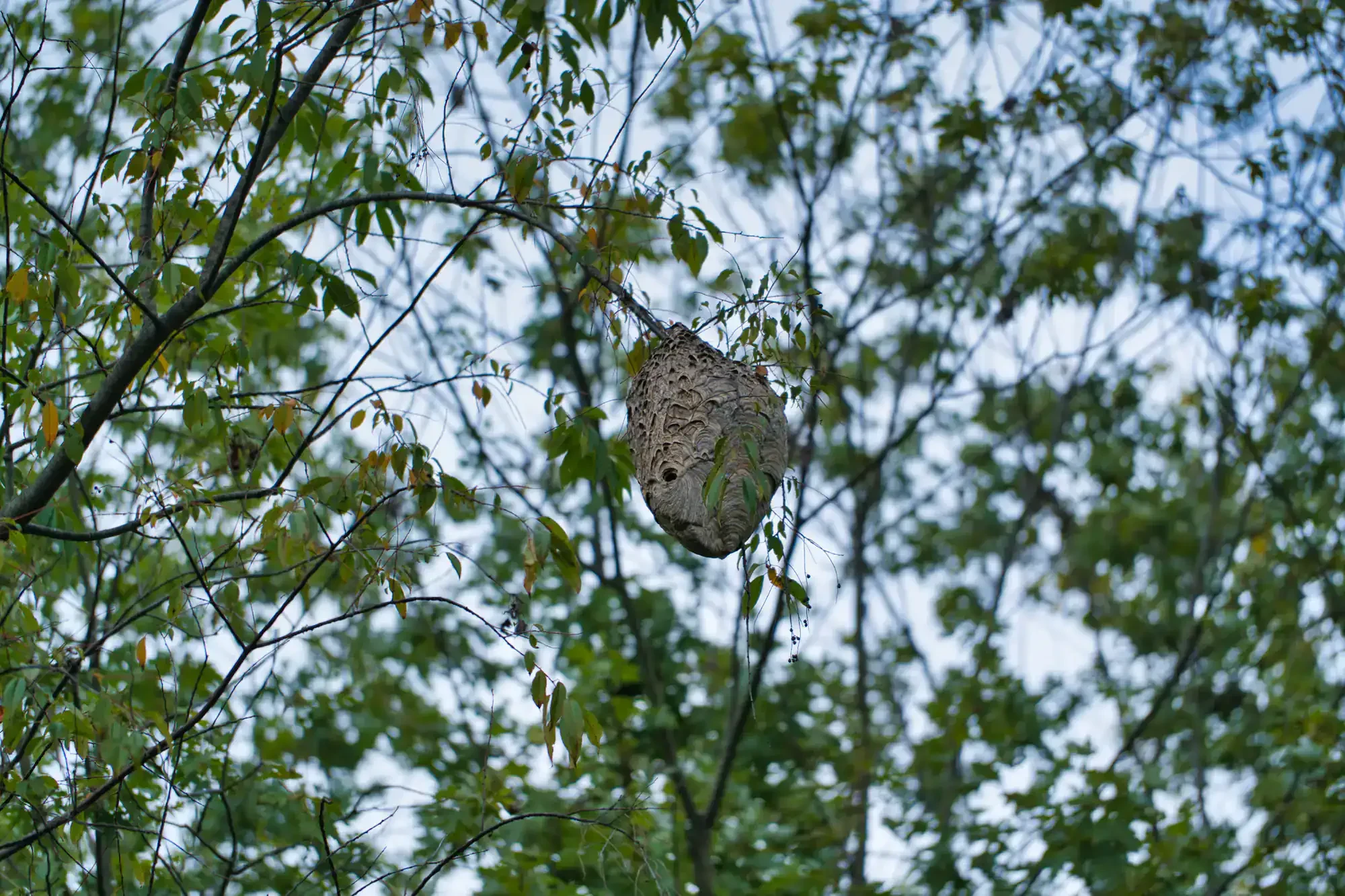
It starts with a call. We’re known for getting back to people fast — often within minutes — because when yellow jackets are involved, waiting a few days for a callback isn’t realistic. Once you connect, our technician gets a clear picture of what you’re dealing with: where the activity is, whether the nest appears to be in a wall, underground, or in an attic space, and how long it’s been active.
When our technician arrives, the first step is identification. Durand properties deal with two primary yellow jacket species, and they behave differently. The German Yellowjacket nests inside structures — wall voids, attics, crawlspaces — which is especially common in the pre-WWII homes that make up a large portion of Durand’s housing inventory. The Eastern Yellowjacket nests underground, often in abandoned rodent burrows, and is more prevalent on properties that border the agricultural land and wooded lots surrounding Vernon Township. Treating the wrong species the wrong way doesn’t just fail — it makes the colony more aggressive and harder to eliminate. Correct identification drives the entire treatment decision.
Treatment is applied directly and precisely. After the colony is eliminated, our technician walks you through what was done, what to watch for, and how to reduce the risk of a new queen finding the same entry point next spring. The whole process is backed by a 1-year service guarantee — if activity returns within that window, we come back at no additional charge.
Ready to get started?
This isn’t a spray-and-leave situation. Every yellow jacket extermination service through us includes proper species identification before any treatment is applied, targeted treatment to the nest location — whether that’s a wall void, attic space, or ground nest on your property — and a post-treatment walkthrough so you know exactly what was done and what to expect.
The 1-year service guarantee means you’re covered if the problem returns. We also offer price matching for reasonable competitor rates, so if you’ve already gotten a quote from another licensed company serving the Durand area, bring it. You shouldn’t have to choose between a fair price and a company that actually knows what it’s doing. And if you’re a senior, a veteran, or a first responder — groups that make up a meaningful portion of Durand’s community — ask about available discounts when you call.
One thing worth noting: we don’t rotate technicians. The same trained professional who treats your home this season is the one who comes back if there’s ever a follow-up. In a community like Durand, where you’re not just another account number, that consistency is something you’ll actually notice. All work is performed under MDARD Pesticide Application Business License #250081, with full IPM certification — meaning every treatment decision is grounded in science, not a one-size-fits-all approach.
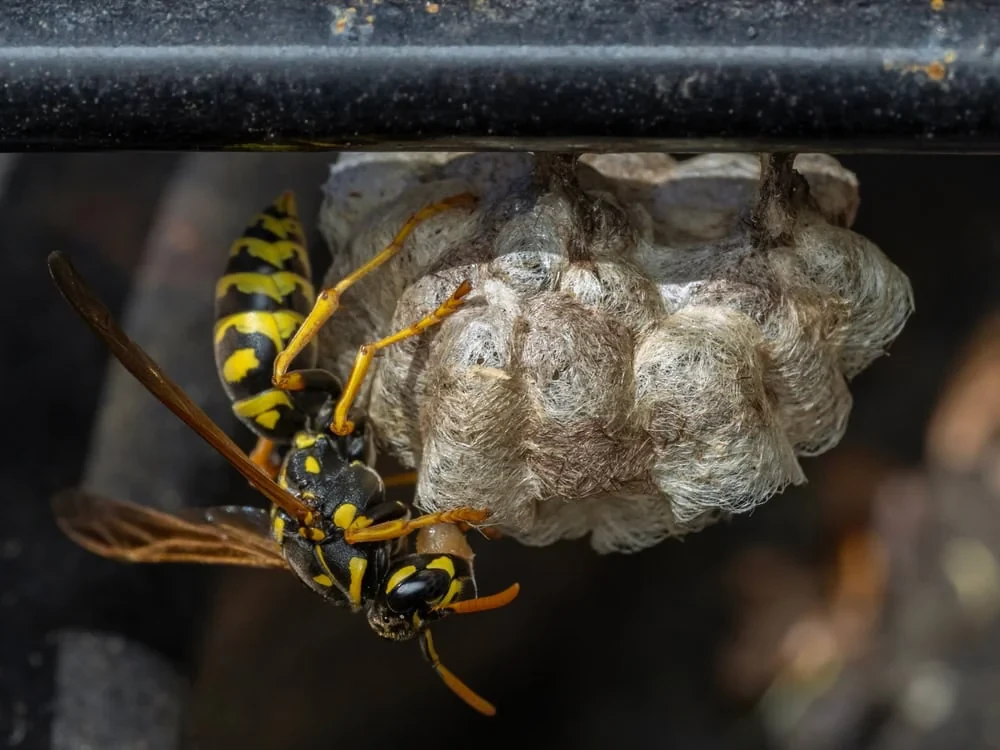
The most common sign is consistent wasp traffic near a single point on your home’s exterior — a gap in the siding, a crack around a window frame, a spot near the soffit or chimney where you keep seeing them enter and exit. If that activity is happening in the same location repeatedly, especially in the morning when the colony is most active, there’s a strong chance the nest is inside the wall cavity rather than attached to the outside of the structure.
In Durand specifically, this is a common scenario because of the age of the local housing stock. Homes built before World War II — which represent a large portion of properties in this area — often have small gaps and voids that developed over decades of settling, weathering, and aging materials. The German Yellowjacket is very good at finding those openings. If you’re also hearing a faint buzzing or crackling sound from inside a wall, or noticing wasps appearing inside the house near windows or light fixtures, that’s a strong indicator the nest is established in the wall void and needs professional treatment.
For a small, exposed nest early in the season, some homeowners manage it without incident. But for anything inside a wall, underground, or in an attic — or for any nest that’s been active for more than a few weeks — DIY treatment carries real risk. A mature yellow jacket colony by late summer can contain anywhere from 1,000 to 5,000 workers, all capable of stinging repeatedly. Unlike bees, yellow jackets don’t lose their stinger after one sting.
The bigger issue with DIY treatment on structural nests is what happens when it doesn’t fully work. Partially treated colonies don’t just die off — they relocate deeper into the wall cavity, become more defensive, and can start emerging inside the living space. Stinging insects send more than 500,000 people to emergency rooms annually across the U.S., and between 0.5% and 4% of people experience anaphylaxis from a sting — a reaction that can escalate quickly. If anyone in your household has a known allergy, or if you’re not certain of the nest location, calling a licensed exterminator is the straightforward answer.
Yellow jacket colonies in Michigan start small in spring when the queen emerges and begins building. By midsummer the colony is growing steadily, and by August it has reached peak population. That’s when the problems really start — not just because there are more wasps, but because their behavior changes. In late summer, yellow jackets shift from protein-based foraging to sugar-seeking, which is why they start crashing outdoor meals, diving into open drinks, and becoming noticeably more aggressive around people.
For Durand residents, this timing lines up directly with the outdoor season — backyard gatherings, the Railroad Festival at the Union Station, evenings on the porch. That’s exactly when a nest that went unnoticed all spring becomes an urgent problem. The good news is that Michigan winters kill off the entire colony — but they don’t seal the entry points. Without professional treatment and some attention to exclusion, a new queen will find the same gap in your siding or the same abandoned burrow in your yard next spring and start the cycle over.
Yes. We serve residential and commercial customers throughout the Durand area, including properties in Vernon Township and the surrounding rural stretches of Shiawassee County. This matters because ground-nesting yellow jackets — specifically the Eastern Yellowjacket — are significantly more common on rural and semi-rural properties. They nest in abandoned rodent burrows, and properties with wooded edges, open fields, or outbuildings tend to have more of those conditions than in-town lots.
If you’re on an acreage property outside the city limits, along one of the rural roads connecting Durand to Bancroft or Lennon, or on a farmstead in the surrounding townships, we cover your service area. The same licensed technician, the same treatment approach, and the same 1-year service guarantee apply regardless of whether your address is inside Durand proper or out in the county. When you call, just describe the property and the nest location as best you can — that helps our technician come prepared with the right equipment for a ground nest versus a structural one.
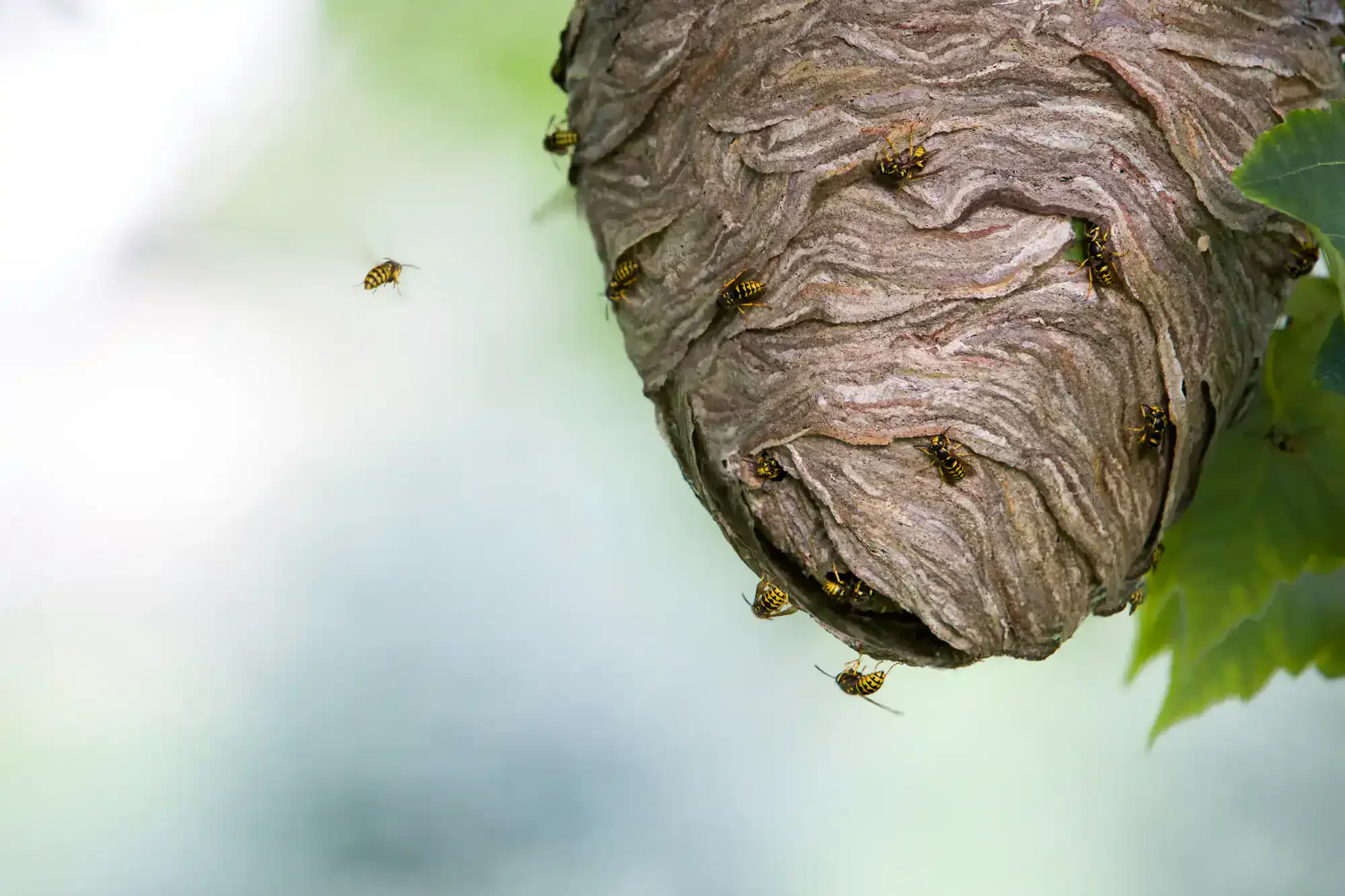
Yellow jackets are more aggressive than most stinging insects, and their nesting behavior makes them harder to treat without the right approach. Paper wasps, for example, build open, visible nests under eaves and are relatively easy to locate and treat. Yellow jackets almost always nest in concealed locations — inside wall voids, underground, or deep in attic insulation — which means you’re treating a colony you often can’t see directly.
They’re also more defensive of their nest than most species. Disturbing a yellow jacket colony without fully eliminating it — which is what happens with most partial DIY treatments — triggers an aggressive defensive response from thousands of workers at once. Honeybees, by contrast, are generally docile and protected under Michigan law, meaning a licensed pest control company will often refer a true honeybee situation to a beekeeper rather than exterminate. Yellow jackets carry no such protection and require direct, targeted extermination. Getting the species identification right before treatment is the difference between a resolved problem and a worse one.
We offer discounts for seniors, veterans, and first responders. In Durand — a community with a notably older population and a median age above 40 — the senior discount is one that a real portion of local homeowners will qualify for. If you’re a retiree living in one of Durand’s historic homes and you’ve been putting off calling about a yellow jacket problem because of cost concerns, that discount is worth asking about directly when you call.
The same goes for veterans and first responders. These aren’t afterthoughts — they reflect how we operate as a family-owned company that’s been part of this region for 20 years. Beyond the discounts, we also offer price matching for reasonable competitor rates. So if you’ve already gotten a quote from another licensed pest control company serving the Shiawassee County area, bring it to the conversation. The goal is to make sure cost isn’t the reason a yellow jacket problem goes unaddressed — because in a home as old as many in Durand, an untreated wall-void nest doesn’t stay contained for long.
Useful Links