Hear from Our Customers
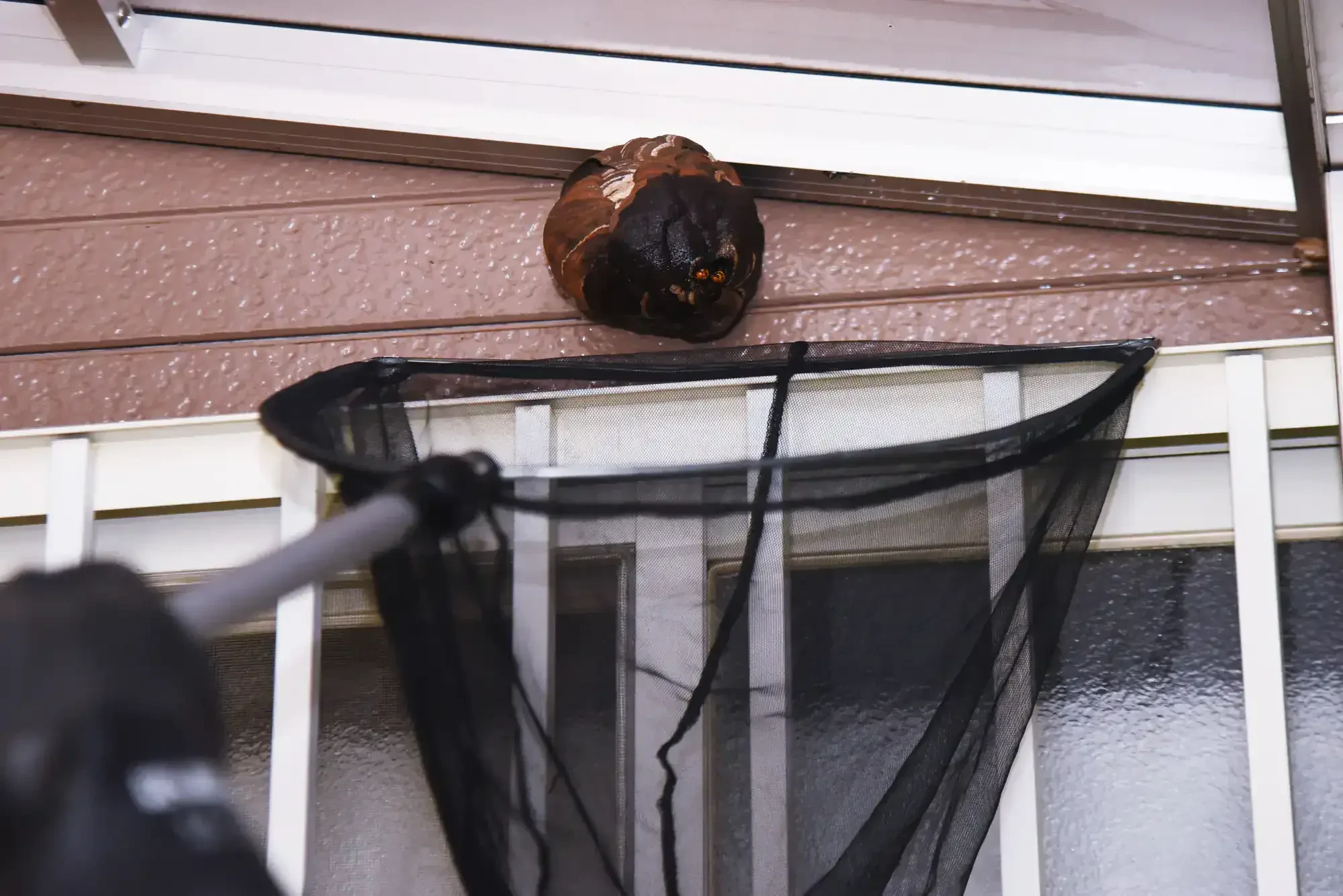
A yellow jacket problem doesn’t stay manageable for long. By late summer, a single colony can hold anywhere from 1,000 to 5,000 workers — all of them capable of stinging repeatedly, and all of them significantly more aggressive once they feel threatened. If you’ve already tried a store-bought spray, there’s a good chance you made it worse. Most DIY treatments don’t reach the queen, and the alarm response they trigger makes the remaining workers harder to deal with than before.
What changes after we handle professional yellow jacket nest removal is simple: you can use your property again. The yard, the wooded areas near the creek, the back porch — all of it becomes accessible without the anxiety of wondering where the nest is or who’s going to step on it first. Kids and pets can be outside without you holding your breath.
For Parshallville homeowners specifically, that matters more than it might in a suburban subdivision. Properties here tend to have real acreage, mature trees, and direct exposure to the kind of wooded, creek-adjacent terrain that ground-nesting yellow jackets actively seek out. And for homes along Parshallville Road with older siding or aging soffits, wall-void infestations are a structural concern — not just a nuisance. Getting it handled correctly the first time protects more than your comfort. It protects your home.
We’ve been operating in Southeast Michigan since May 31, 2005 — twenty years of showing up for homeowners across Livingston County, including the rural, creek-side properties that define Parshallville. Roger Chinault founded First Choice Pest Control and still brings 26 years of hands-on pest control experience to every job. This isn’t a call center that dispatches whoever’s available. When you reach out, you hear back fast — and the technician who comes to your property is a trained professional, not a seasonal hire.
We hold MDARD Pesticide Application Business License #250081 and have completed Integrated Pest Management training — credentials that reflect a standard most competitors don’t bother meeting. The same technician is assigned to your property year after year, which means they learn your home, your lot, your specific vulnerabilities. That kind of continuity is rare in this industry, and it makes a real difference for properties with the kind of wooded acreage and creek exposure common in the Hartland Township area where Parshallville sits. Our 4.7-star rating on Angi reflects what that consistency looks like in practice.
It starts with a call back — typically within minutes. From there, we schedule a visit and arrive ready to assess, not just treat. The first step on-site is identification, and it matters more than most people realize. Parshallville’s wooded terrain and Ore Creek corridor support multiple stinging insect species. German Yellowjackets tend to nest inside wall voids, attics, and structural cavities — common in the older homes along Parshallville Road. Eastern Yellowjackets go underground, taking over abandoned animal burrows in the kind of wooded, wildlife-rich acreage that’s typical of properties in this area. Treating the wrong species the wrong way doesn’t just fail — it can drive the colony deeper and make things significantly harder to resolve.
Once the species and nest location are confirmed, our treatment is targeted and deliberate. For ground nests, that typically means insecticide dust applied directly into the nest entrance at night, when workers are inside and less active. For wall-void or attic infestations, the same principle applies — treatment goes where the colony actually lives, not just where you can see activity. After treatment, the technician walks you through what to expect in the days following and what to do — or not do — in the meantime.
The job isn’t finished when the technician leaves. We back every treatment with a one-year service guarantee. If yellow jacket activity returns within that window, we come back and re-treat at no additional charge. For properties with ongoing pressure from the surrounding wooded landscape, that guarantee isn’t a formality — it’s the whole point.
Ready to get started?
We handle both residential and commercial yellow jacket pest control in Parshallville and throughout Livingston County. That includes ground nest removal in wooded and creek-adjacent areas, wall-void and attic yellow jacket removal in older and historic homes, and full structural assessments to identify how the colony got in and what needs to be addressed to keep it from happening again. No binding contracts. No pressure to sign up for services you don’t need.
For Parshallville properties specifically, attic and wall-void infestations deserve extra attention. The older building stock in this area — homes with aging soffits, gaps around chimneys, and the kind of construction details common in rural mid-century Michigan homes — gives German Yellowjackets exactly what they’re looking for. A colony left untreated in a wall void doesn’t just grow. It chews through drywall, insulation, and wood framing as it expands through late summer. And when the colony dies off in fall, the dead nest material attracts rodents and flesh flies, and the entry point stays open for a new queen the following spring. Early treatment is always the better outcome.
We also offer price matching for reasonable competitor rates, and discounts are available for seniors, veterans, and first responders. If you’ve already gotten a quote elsewhere, it’s worth a call before you decide. You’ll get the same licensed, guaranteed, IPM-trained service — backed by 20 years of operation and a one-year re-treatment guarantee — at a price that’s competitive with the market. All pesticide applications are performed under MDARD License #250081 — no permits are required on your end for treatment on private residential property in Livingston County.
The most common sign is a consistent line of yellow jacket traffic going in and out of a single point on your home’s exterior — a gap in the siding, a crack near a soffit, a space around a chimney or vent. If you’re seeing that kind of focused entry and exit activity, especially in late summer, there’s a strong chance the nest is inside a structural void rather than out in the open. You might also hear a faint buzzing or chewing sound from inside the wall on quiet days.
For older homes in Parshallville — particularly those with aging soffits or original wood siding — these entry points are more common than most homeowners expect. The German Yellowjacket specifically seeks out enclosed cavities, and once inside, the colony expands by chewing through whatever is in its way. Don’t probe the entry point yourself or attempt to seal it while the colony is active. That traps workers inside and can drive them through interior walls into your living space. Call us first, get the colony treated, and then address the entry point after the nest is eliminated.
It’s one of the most common things people consider, and it makes sense on the surface — the colony does die off in fall, and only new queens survive the winter. But waiting creates a few problems that most homeowners don’t anticipate until they’re dealing with them the following year.
If the nest is inside a wall void or attic, the dead nest material doesn’t disappear. It stays in place, attracts rodents and flesh flies, and can cause odor issues and secondary pest problems through winter. More importantly, the entry point the colony used remains open. A new queen looking for a nesting site in spring will find it, and you’ll be dealing with the same infestation in the same location next season. For Parshallville properties near the Ore Creek corridor — where wildlife pressure from deer, ground squirrels, and other animals is higher than in suburban areas — that cycle can repeat year after year. Treating the active colony and sealing the entry point is the only way to actually break it.
Yellow jackets are often confused with honeybees, paper wasps, and bald-faced hornets — especially when you’re dealing with a stressful situation and just want the problem gone. The distinction matters because the right treatment depends entirely on the species. Applying the wrong product to the wrong insect doesn’t just fail — it can destroy a beneficial pollinator colony unnecessarily and leave your actual problem untouched.
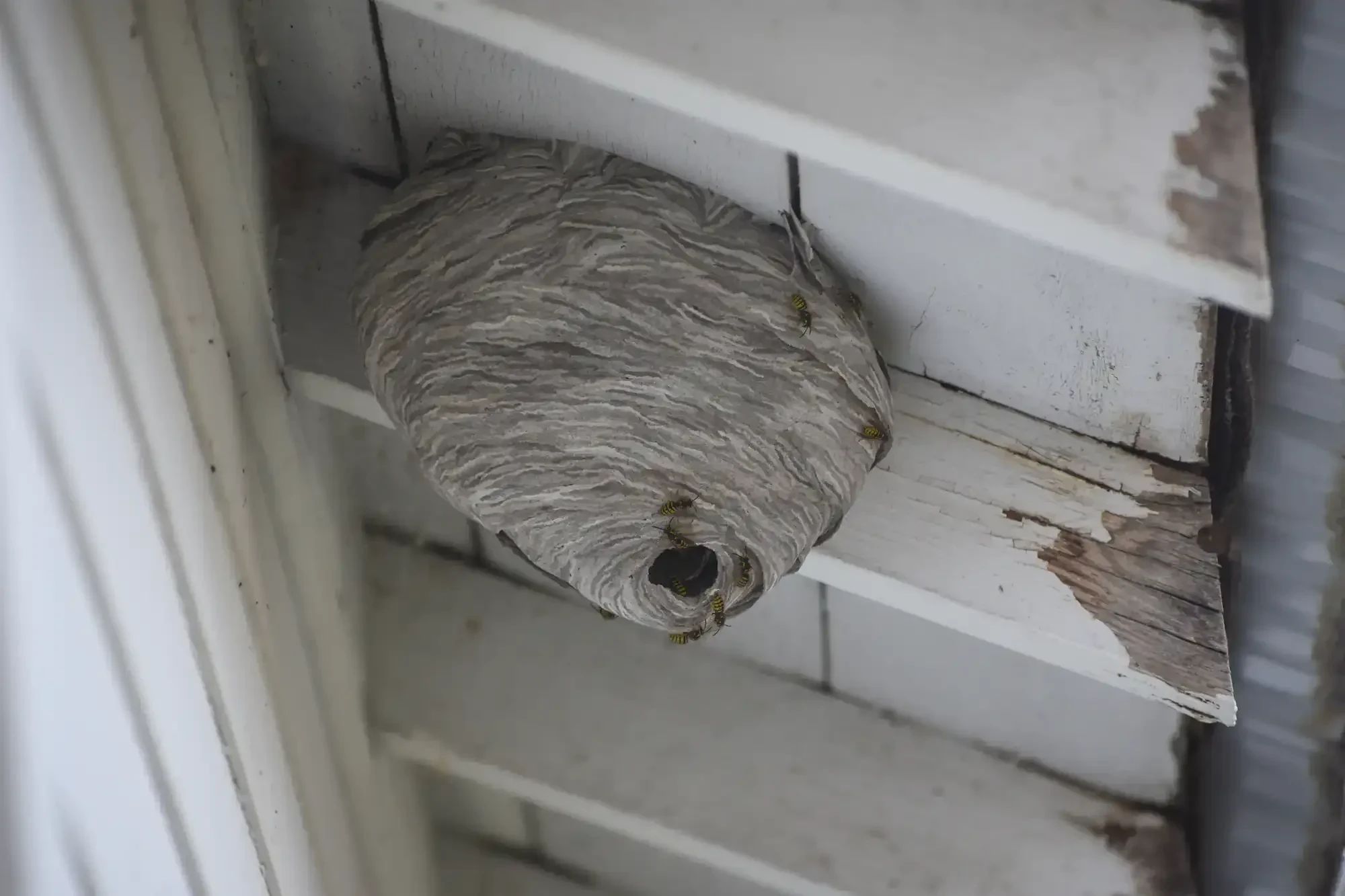
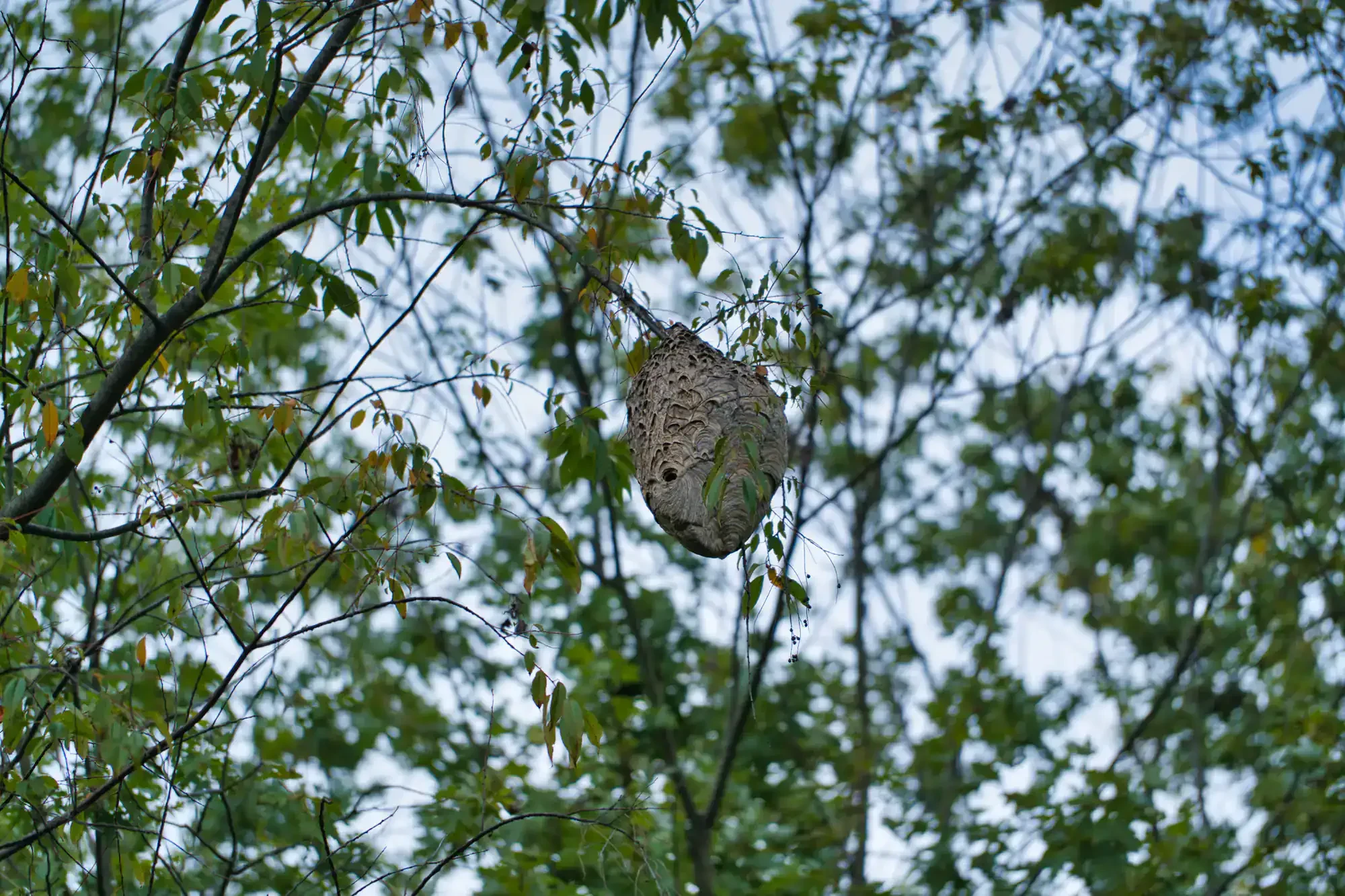
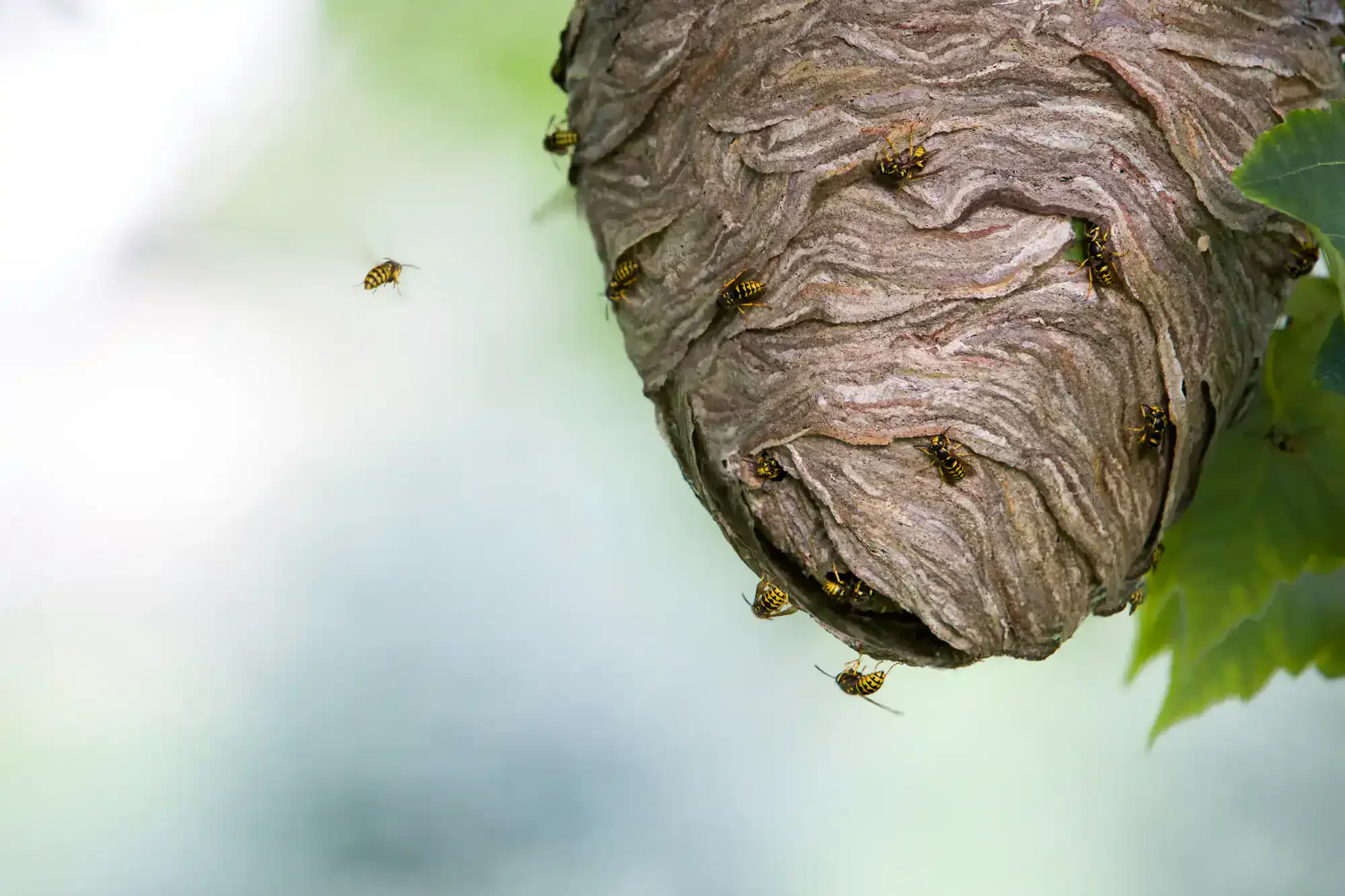
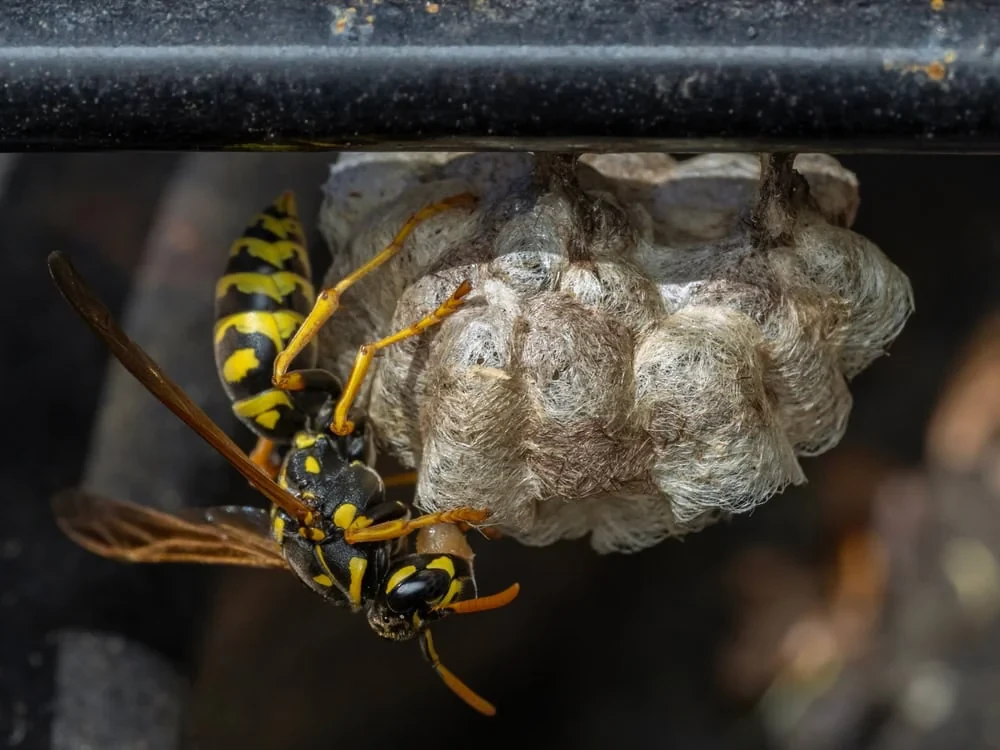
Yellow jackets are small, smooth-bodied, and distinctly yellow and black with no visible body hair. They’re fast and aggressive, especially in late summer when food sources are scarce and colonies are at peak population. Honeybees are fuzzier and more golden in color — and in Michigan, they’re a protected resource that should never be exterminated when removal and relocation is an option. Paper wasps build the open, umbrella-shaped nests you often see under eaves or on fence rails. Bald-faced hornets are larger, black and white, and build the large gray paper nests in trees. If you’re not certain what you’re dealing with on your Parshallville property, that’s exactly why we identify before treating — every time.
It’s not random, and it’s not just your property. Late summer is when yellow jacket colonies hit their peak population — thousands of workers, all competing for food as natural insect prey becomes scarcer. Workers shift their focus to scavenging for sugars and proteins, which is why they show up uninvited at outdoor meals, garbage cans, and anything sweet left outside. The closer you get to September and October, the more defensive and unpredictable they become.
For Parshallville specifically, the timing overlaps directly with the Parshallville Cider Mill’s fall season — one of the hamlet’s most-visited periods of the year. The combination of outdoor activity, food, and peak yellow jacket aggression creates real risk for families trying to enjoy their property during what should be the best time of year. The Ore Creek valley’s wooded microclimate also stays active slightly longer into fall than more exposed suburban areas, which can extend the window of aggressive behavior. If you’re noticing increased activity on your property between August and October, that’s the peak of the season, and it warrants a call.
Yes — and it’s one of the more underappreciated risks of leaving a wall-void infestation untreated. Yellow jackets don’t just occupy the space they find. They expand it. Workers chew through drywall, wood framing, and insulation as the colony grows, creating a larger cavity to accommodate the nest. By late summer, a colony that started small in spring can have done meaningful structural damage to the surrounding materials.
For older homes in Parshallville — where original wood framing, plaster walls, and aging insulation are common — that damage can be more significant than in newer construction. Once the colony dies off in fall, the abandoned nest material retains moisture and can contribute to mold growth inside the wall cavity. It also draws rodents and secondary insects looking for a food source through winter. The entry point remains open and structurally compromised until it’s actively sealed. Treating the colony while it’s active, then addressing the entry point and inspecting for interior damage, is the right sequence — and it’s significantly less expensive than discovering the full extent of the damage after a winter of secondary pest activity.
Yes. We offer discounts for seniors, veterans, and first responders. Parshallville and the broader Hartland Township area have a meaningful number of residents who fall into those categories — longtime homeowners who’ve been in the community for decades, veterans who settled in Livingston County for the rural character and quality of life, and first responders serving the township and surrounding areas. If you or someone in your household qualifies, mention it when you call and ask about current availability.
We also match reasonable competitor rates. So if you’ve already gotten a quote from another provider for yellow jacket pest control near Parshallville, it’s worth a quick call before you commit. You’ll get the same licensed, guaranteed, IPM-trained service — backed by 20 years of operation and a one-year re-treatment guarantee — at a price that’s competitive with the market. No binding contracts, no pressure, and no part-time technicians learning the job on your property.
Useful Links