
Hear from Our Customers
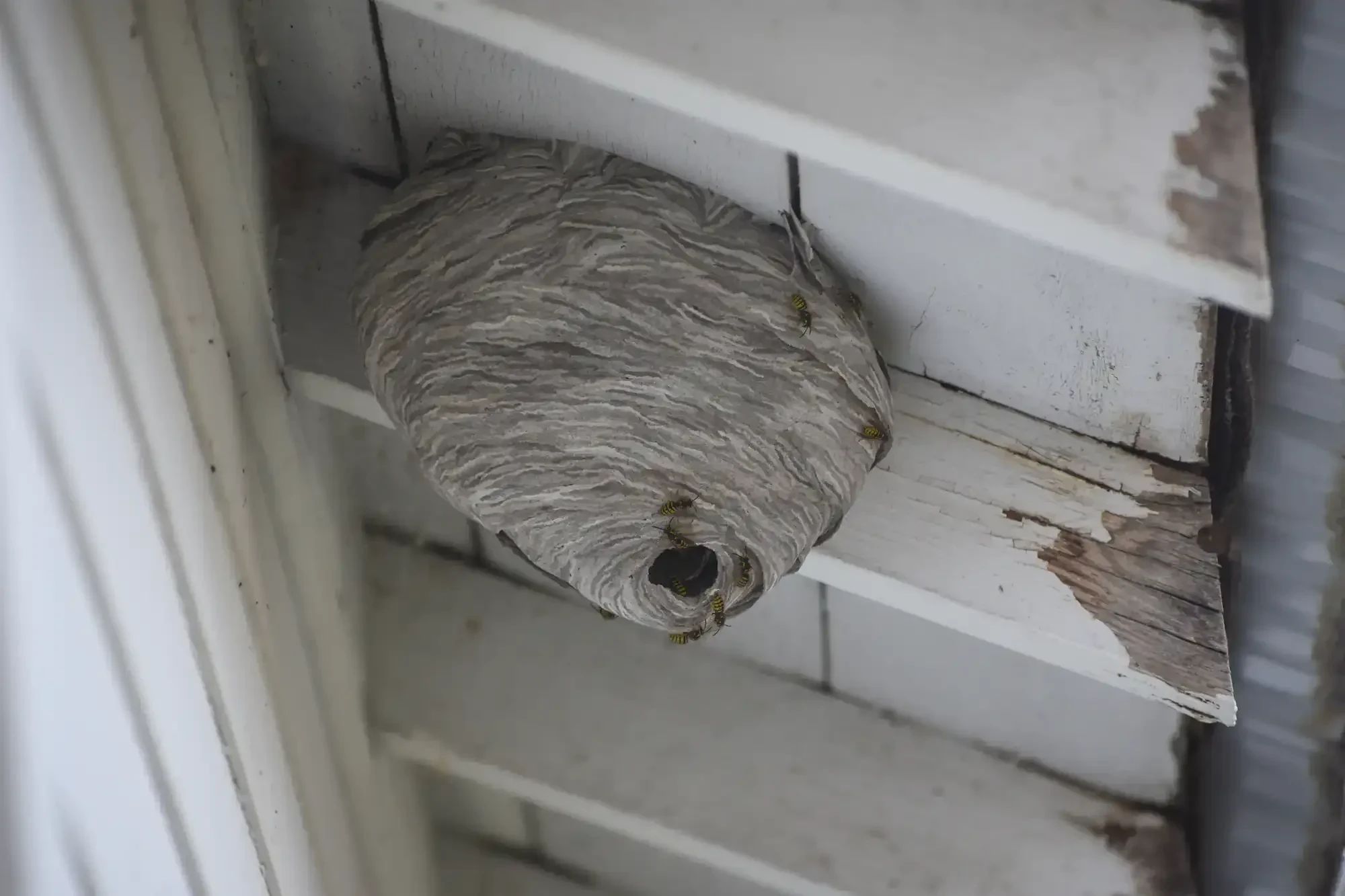
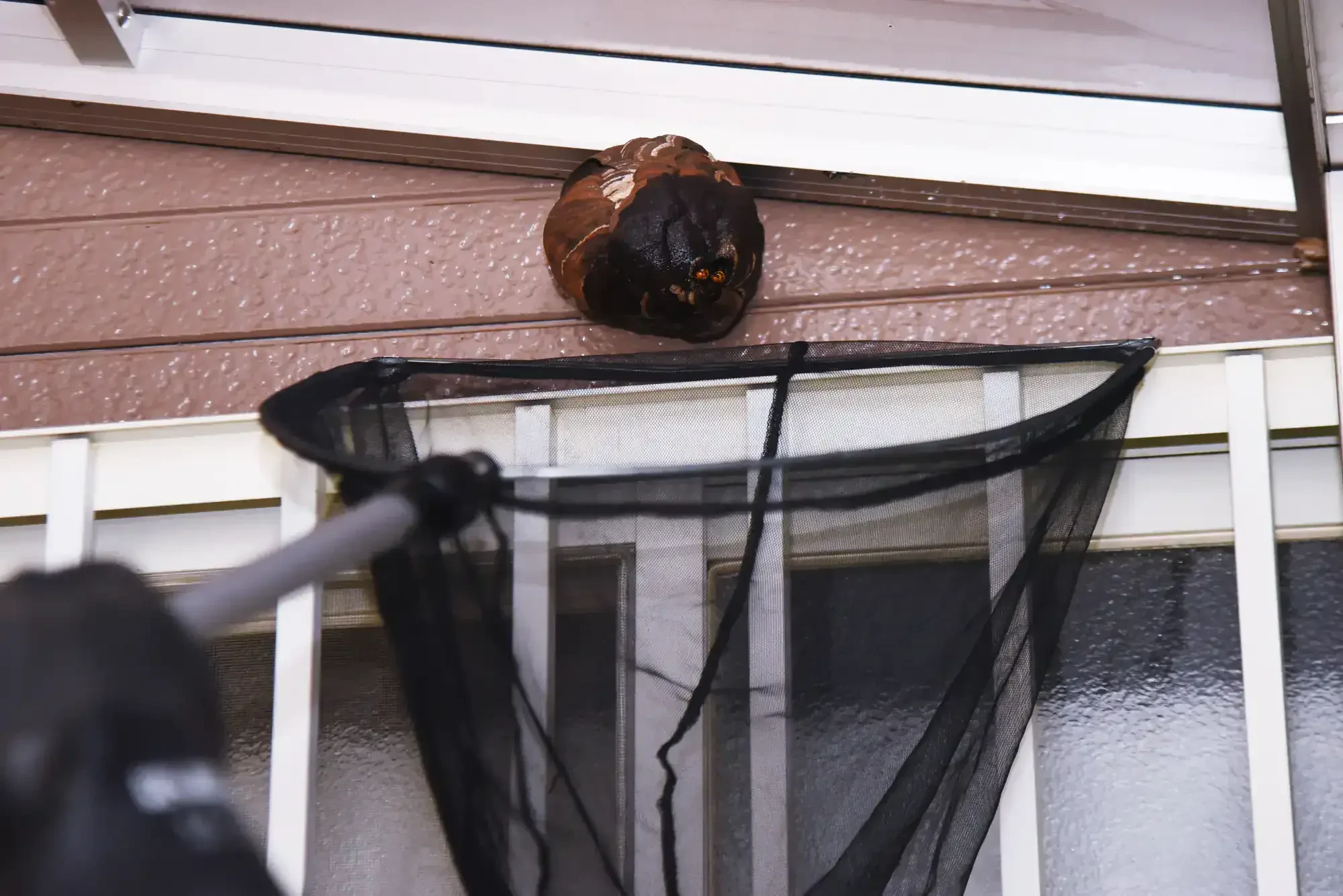
Yellow jackets don’t just sting. In a home like the ones lining Main Street or tucked into the wooded lots of the surrounding Independence Township area, they chew. The German Yellowjacket — the species most likely nesting inside your walls or attic right now — will work through insulation, drywall, and original wood framing to expand its colony. By late summer, you could be looking at thousands of workers inside a wall you didn’t even know was compromised.
For homeowners in Village of Clarkston’s Historic District, that’s not just a pest problem. It’s a threat to irreplaceable structure. Homes here are valued at $450,000 and above, many of them on the National Register of Historic Places. Repairing damage to original siding, masonry, or period woodwork costs significantly more than treating the nest before it gets worse — and it’s harder to undo.
Then there’s the outdoor side of it. Village of Clarkston’s community identity is built around being outside — Depot Park concerts on summer evenings, backyard gatherings, dining along Main Street. August and September are when yellow jacket colonies hit peak size and peak aggression. That’s the same window when you’re trying to enjoy your property most. Getting this handled isn’t just about safety. It’s about getting your summer back.
We founded First Choice Pest Control on May 31, 2005 — a family-owned company built on the idea that pest control should feel personal, not transactional. Roger Chinault, who leads the company, has 26 years of hands-on experience and holds Michigan MDARD Pesticide Application Business License #250081. That’s not a number for show — it’s a verifiable state credential that every legitimate pest control operator in Michigan is required to carry.
What actually sets us apart in a market like Oakland County is consistency. You get the same technician every time — someone who learns your property, remembers where last year’s nest was, and knows which soffits on your older Village of Clarkston home are worth watching. No seasonal hires. No rotating faces. Just experienced professionals who treat your home the way you’d expect a 20-year company to.
We’ve earned awards from both Angie’s List and HomeAdvisor, hold a 4.7 out of 5 rating on Angi, and are recognized on Nextdoor throughout the communities we serve. Seniors, veterans, and first responders receive discounts — because this community has earned them.
It starts with a call. When you reach out to us, you’re not going to a call center. You’re talking to someone who can ask the right questions — where you’re seeing activity, whether it’s coming from a wall, a soffit, the ground, or somewhere inside the structure — and get a technician scheduled quickly. In a community like Village of Clarkston, where older homes and wooded lots create very different nesting scenarios, that initial conversation matters.
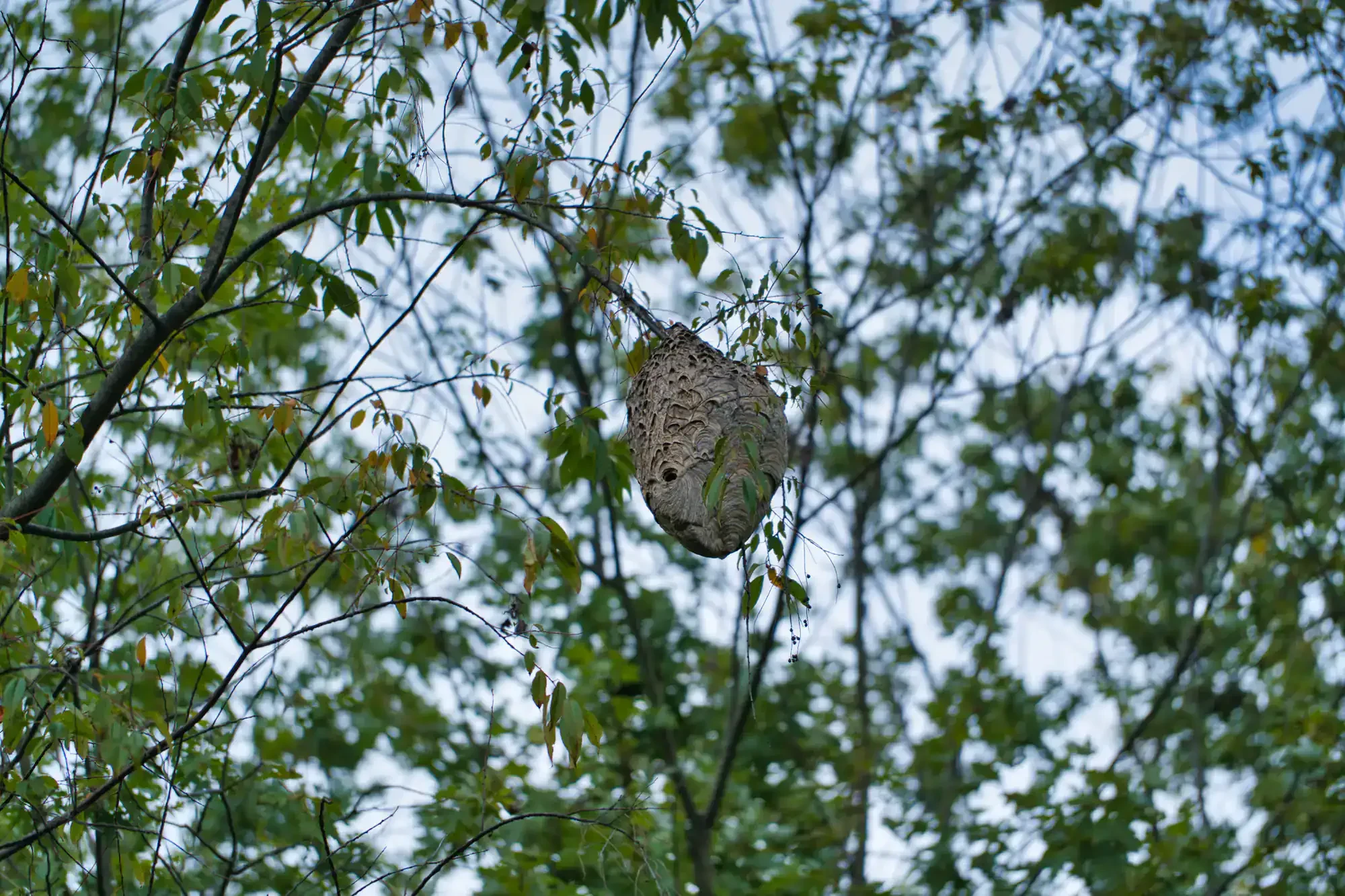
When our technician arrives, the first priority is correct identification. Michigan has two primary yellow jacket species, and they don’t nest the same way. The German Yellowjacket favors wall voids and attics — exactly the kind of gaps you’ll find in a historic home with original wood siding, aging clapboards, or a masonry chimney. The Eastern Yellowjacket nests underground, often in abandoned animal burrows left behind by the raccoons, skunks, and squirrels common in Clarkston’s wooded surroundings. Treating the wrong nest type the wrong way doesn’t just fail — it makes the colony more aggressive.
Once the nest is located and identified, we apply treatment directly and precisely. After the colony is eliminated, you’ll get clear guidance on sealing entry points and preventing a new queen from starting the cycle over in the same spot next spring. Every treatment is backed by our one-year service guarantee. If yellow jackets return within the guarantee period, so do we.
Ready to get started?
Yellow jacket pest control in Village of Clarkston isn’t one-size-fits-all — and we don’t treat it that way. Every job starts with a proper inspection and species identification before any treatment is applied. That step alone separates a successful outcome from a failed one. Misidentifying the nest type is one of the most common reasons DIY attempts and inexperienced exterminators fail, and it’s why correct identification is built into every service call.
For wall-void and attic yellow jacket removal — the most common scenario in Clarkston’s older housing stock — treatment targets the colony directly through identified entry points. For ground nests in wooded or landscaped areas, the approach is adapted to the specific site. We hold Integrated Pest Management (IPM) training certification, which means treatment is targeted, not broad. The goal is to eliminate the colony with precision, not to spray everything in sight.
After treatment, you’ll receive specific guidance on sealing the entry points most likely to attract a new colony the following season. For homeowners in the Village’s Historic District, that conversation includes how to address gaps in original materials without compromising the character of the structure. Our one-year guarantee covers the treated nest — if activity returns, we return. No additional charge. We also offer price matching against reasonable competitor rates, so you’re not paying more than you should for work done right.
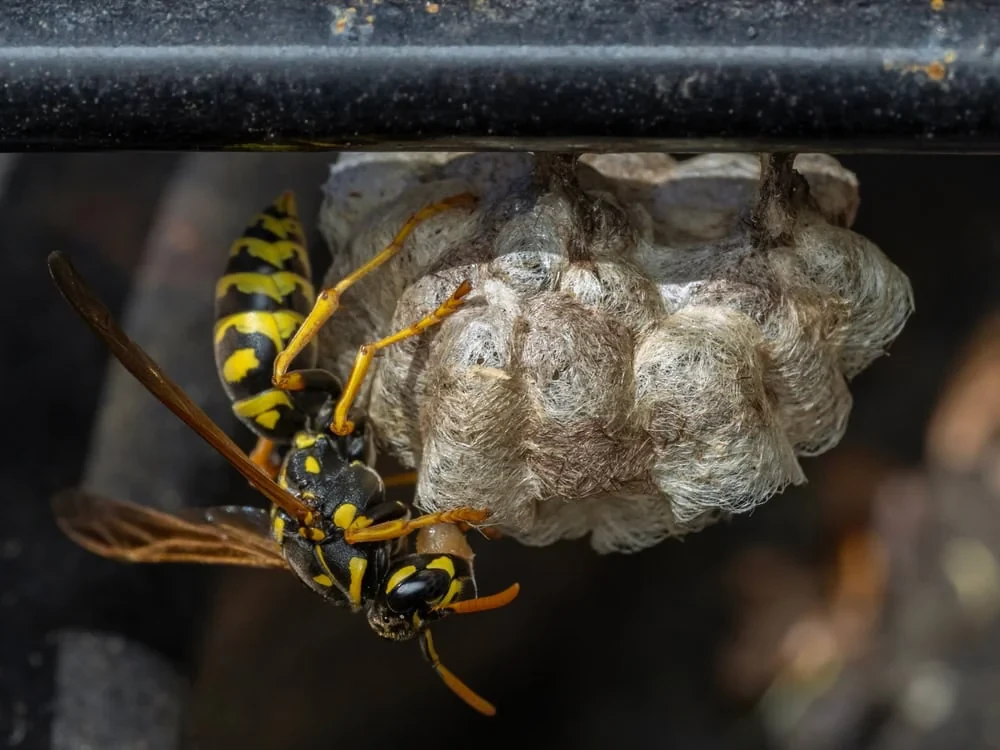
If yellow jackets are getting inside your home in Village of Clarkston, there’s almost certainly a nest established somewhere in the structure — most likely a wall void, attic space, or area behind original siding. The German Yellowjacket, which is the species most commonly found nesting inside Michigan homes, enters through very small gaps — gaps around window frames, deteriorating soffits, spaces where siding has shifted, or openings near a chimney. In Clarkston’s Historic District, where homes were built with original wood construction and have aged over decades, these entry points are more common than in newer builds.
What you’re seeing inside the house is workers that have chewed through interior drywall or found gaps around electrical outlets and plumbing penetrations. This typically means the colony has been established for at least several weeks and has grown large enough to start pressing against interior surfaces. The longer it goes untreated, the larger the colony gets and the more structural material gets compromised. A professional inspection will locate the entry point, confirm the species, and determine the most effective treatment approach for your specific situation.
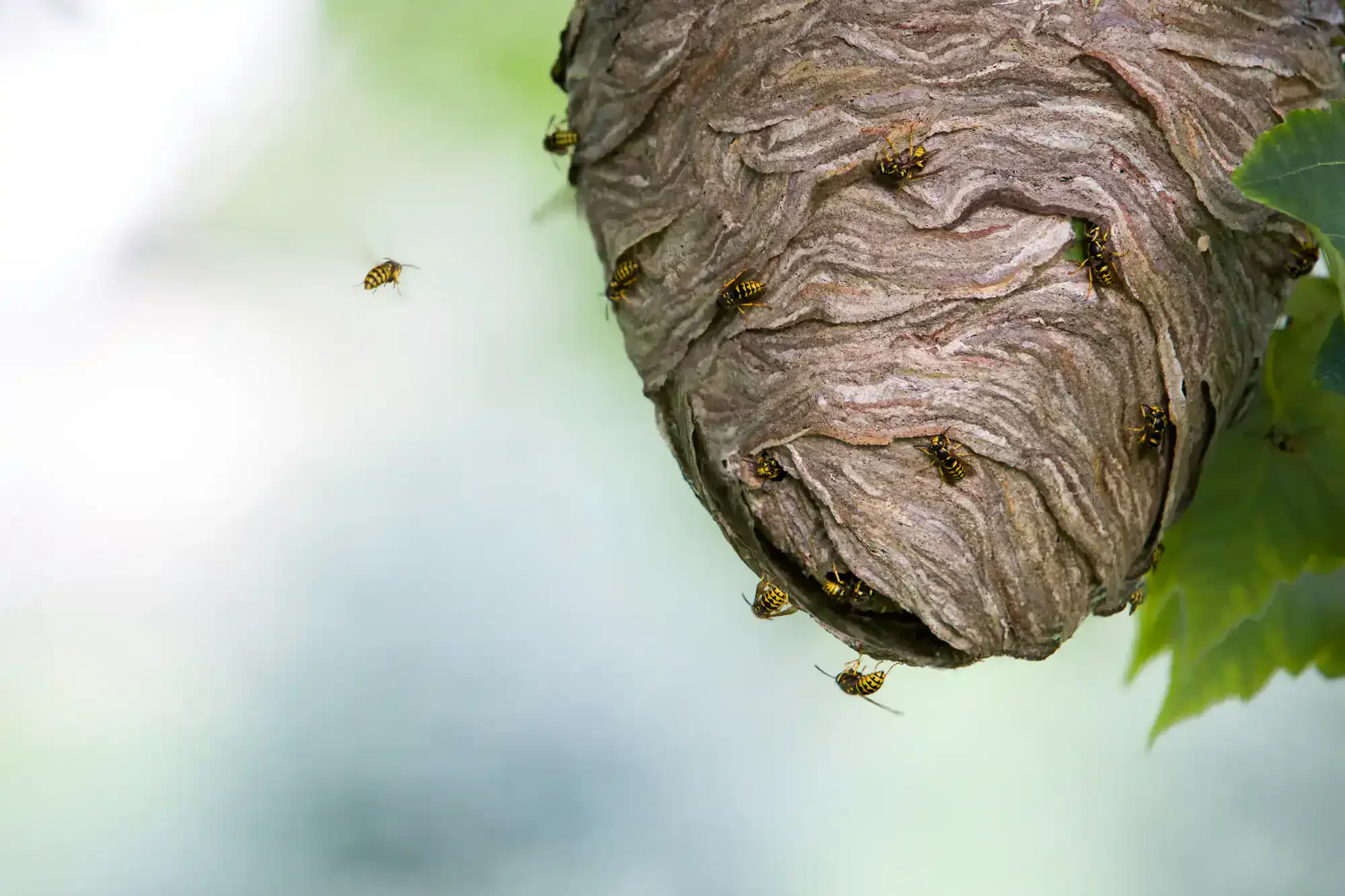
By August and September — the same weeks when Depot Park is hosting evening concerts and backyards across Village of Clarkston are full of people — yellow jacket colonies are at their largest and their most aggressive. A colony that had a few hundred workers in June can have 3,000 to 5,000 by late summer. More workers means more defenders, and more defenders means a much higher risk of multiple stings from a single disturbance.
What makes late summer especially dangerous is a behavioral shift. Earlier in the season, yellow jackets are focused on hunting insects to feed the colony’s larvae. By August, larval production slows down, and workers shift to foraging for sugars — your drinks, your fruit, your garbage. That’s why they’re suddenly everywhere at outdoor gatherings. They’re not just passing through. They’re actively searching, and they’re far less tolerant of anything they perceive as a threat. For anyone in your household with a known allergy — or for older family members who may not know their sensitivity — this is a genuine medical risk, not just an inconvenience.
Yes — and in a home with original construction materials, the damage can be significant. German Yellowjackets build their nests from chewed wood fiber mixed with saliva, which means they are actively breaking down wood to construct and expand the nest. In an attic or wall void, that includes structural framing, insulation, and any wood-based material they can access. The colony grows throughout the summer, which means the nest — and the damage zone — expands continuously from spring through fall.
For homeowners in Village of Clarkston’s Historic District, where properties include original wood siding, period framing, and materials that can’t simply be swapped out at a hardware store, the cost of repairing that damage is considerably higher than in a modern home. Historic preservation standards may also govern what materials and methods can be used in repairs, which adds another layer of complexity and cost. Treating a wall-void or attic nest early — before the colony reaches peak size — limits both the treatment complexity and the structural exposure. Waiting until October when the colony dies off naturally still leaves you with a dead nest, damaged material, and an open entry point that a new queen will find next spring.
Yellow jackets are wasps, not bees — and that distinction matters a lot when it comes to treatment. Bees are generally docile, beneficial pollinators, and in many cases can be relocated rather than exterminated. Yellow jackets are aggressive, do not produce honey, and will sting repeatedly without provocation, especially when their nest is disturbed. They do not lose their stinger after one sting the way a honeybee does, which means a single yellow jacket can sting multiple times in rapid succession.
From a treatment standpoint, the difference is significant. Honey bee removal often involves live extraction and relocation — a very different process from yellow jacket nest extermination. Yellow jacket colonies require direct treatment of the nest with appropriate materials to eliminate the colony, not relocate it. Attempting to treat a yellow jacket nest the way you’d handle a bee situation — or vice versa — leads to failed outcomes and, in the case of yellow jackets, a more agitated and dangerous colony. Correct identification before any treatment is the first step in every First Choice service call, and it’s the reason treatments succeed the first time rather than requiring a second visit.
Yellow jacket extermination costs vary depending on the nest location, size, and accessibility. Ground nests in a wooded lot are generally more straightforward to treat than a colony that has established itself inside a wall void or attic of an older home. Nationally, professional yellow jacket removal ranges from roughly $500 to $1,300, with wall-void and attic treatments on the higher end due to the complexity of locating the nest and treating it without causing unnecessary damage to the structure.
In Village of Clarkston, where many homes are historic, high-value properties, the cost of not treating — structural repair, potential ER visits, repeat infestations from unsealed entry points — consistently outweighs the cost of professional service. We offer price matching against reasonable competitor rates, so if you’ve received a quote elsewhere in the Oakland County area, bring it. You’ll get the same competitive rate along with 20 years of experience, MDARD licensing, IPM-certified treatment, and our one-year service guarantee. The goal is to make the right choice the easy choice, not to charge more because the market allows it.
Yes — we offer discounts for seniors, veterans, and first responders. In a community like Village of Clarkston, where more than 22% of residents are aged 65 or older, that discount is relevant to a significant portion of the people who call. Older homeowners are also statistically more likely to face serious medical consequences from yellow jacket stings — the risk of severe allergic reaction increases with age, and many people don’t discover a sensitivity until after a sting has already occurred.
For veterans and first responders in the broader Oakland County area, the discount reflects a straightforward value: people who have spent their careers in service to others deserve straightforward, honest service in return. There’s no complicated qualification process. If you’re a senior homeowner in Village of Clarkston dealing with a yellow jacket nest, or a veteran whose family is being kept out of the backyard by a ground colony in a wooded lot, just mention it when you call. We’ll apply the discount and get someone out to you.
Useful Links
Other Services we provide in Village Of Clarkston