You’ve confirmed it. Bed bugs. Now you’re staring at two options — heat treatment or chemical treatment — and every pest control website you visit seems to be pushing whichever one they happen to sell. That’s not helpful when you’re trying to make a real decision.
This page isn’t a sales pitch for one method over the other. It’s a straightforward look at how both treatments work, what they cost, where each one falls short, and what actually matters when you’re choosing a bed bug inspection service in Genesee County. By the end, you’ll have enough information to make a confident call.
Bed Bug Exterminators That Use Heat: What the Treatment Actually Involves
Heat treatment — sometimes called thermal remediation — works by raising the temperature inside your home to between 118 and 122°F and holding it there long enough to kill bed bugs at every life stage. That means adults, nymphs, and eggs. All of them. In a single visit.
The process typically takes six to eight hours. Industrial heaters are placed throughout the space, and technicians monitor the temperature continuously to make sure every corner of the home reaches the lethal threshold. There’s no spraying, no chemical residue, and no waiting days for a second application to take effect.
When it’s done correctly, heat treatment carries a 95–99% success rate. That’s not a marketing number — it’s the result of eliminating the one thing chemical treatments consistently struggle with: the eggs.
Organic Bed Bug Treatment: Why Heat Is the Closest Thing to It
If you have young kids, pets, or a family member with respiratory sensitivities, the idea of chemical treatment in your home is a real concern — not an overreaction. Heat treatment addresses that concern directly. There are no pesticides involved, no lingering odors, and no need to wipe down surfaces before your family comes back in. You can re-enter the home the same day treatment is complete.
This is why heat treatment is often described as the most effective organic bed bug treatment option available. “Organic” in the pest control world usually means avoiding synthetic chemical pesticides, and heat accomplishes exactly that — using temperature alone to eliminate the infestation.
That said, it’s worth being honest about one limitation. Heat treatment doesn’t leave any residual protection behind. Once the temperature drops, there’s nothing in the environment to stop a new bed bug from being introduced — from a hotel stay, a piece of used furniture, or a neighboring unit in an apartment building. For households with ongoing re-infestation risk, a targeted chemical application after heat treatment can fill that gap. It’s a combination approach, and for many situations in Genesee County, it’s the most complete solution available.
The other thing worth knowing is how heat interacts with your belongings. Before treatment, you’ll need to remove aerosol cans, certain candles, and any items that can’t tolerate high temperatures. Medications, some electronics, and heat-sensitive plastics should come out of the space. Our technician will walk you through a preparation checklist before the appointment. When the prep is done right, furniture, clothing, and structural elements are not at risk — this is a common concern that turns out to be manageable with proper preparation.
Affordable Bed Bug Heat Treatment: What It Actually Costs vs. What People Assume
The upfront cost of heat treatment — typically between $1,000 and $4,500 for a residential property depending on size — is the number that makes people hesitate. That’s understandable. It’s a real expense, and nobody wants to spend that kind of money on something they’re not sure will work.
But here’s the comparison that rarely gets made: chemical treatment costs $270 to $775 per room, and it almost always requires two to three visits. Run those numbers on a three-bedroom home and you’re looking at a total cost that approaches or exceeds heat treatment — stretched out over several weeks, with more preparation required each time, and a longer window of uncertainty while you wait to see if the treatment worked.
Heat treatment resolves the infestation in one visit. Chemical treatment resolves it over a series of visits. The time-to-resolution difference is significant.
In Genesee County specifically, there’s another cost factor worth understanding. Bed bug populations in this area have developed resistance to many of the over-the-counter pyrethroid sprays that people try first. That resistance doesn’t disappear when you move to professional chemical treatment — it means our technician needs to use multiple active ingredients with different modes of action to overcome it. A qualified professional accounts for this. A generic treatment plan doesn’t.
We offer price matching on reasonable competitor quotes, and we provide discounts for seniors, veterans, and first responders. If cost has been the thing holding you back from getting a proper bed bug inspection service, those options exist and are worth asking about.
Chemical Bed Bug Treatment: When It Makes Sense and What to Expect
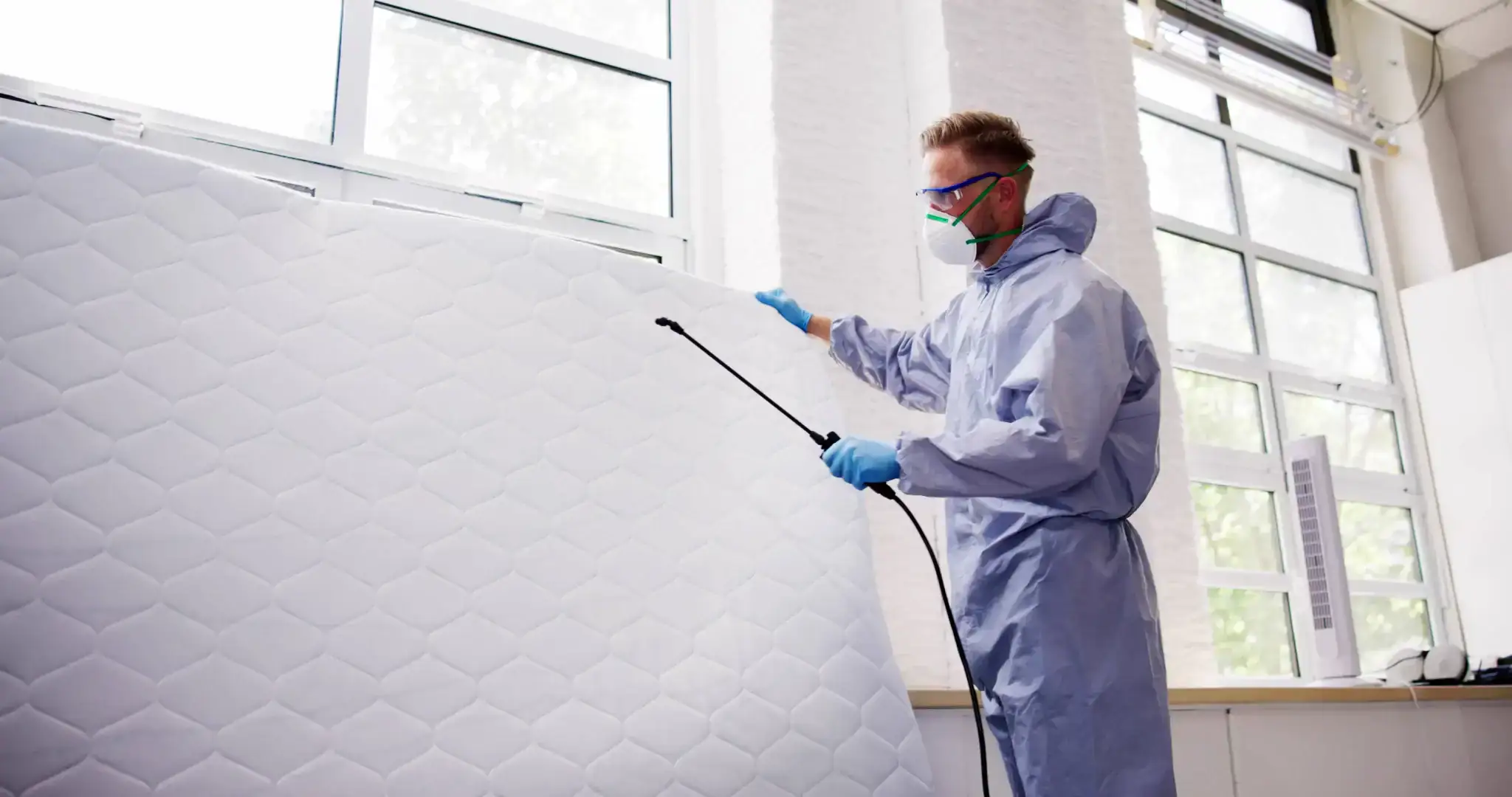
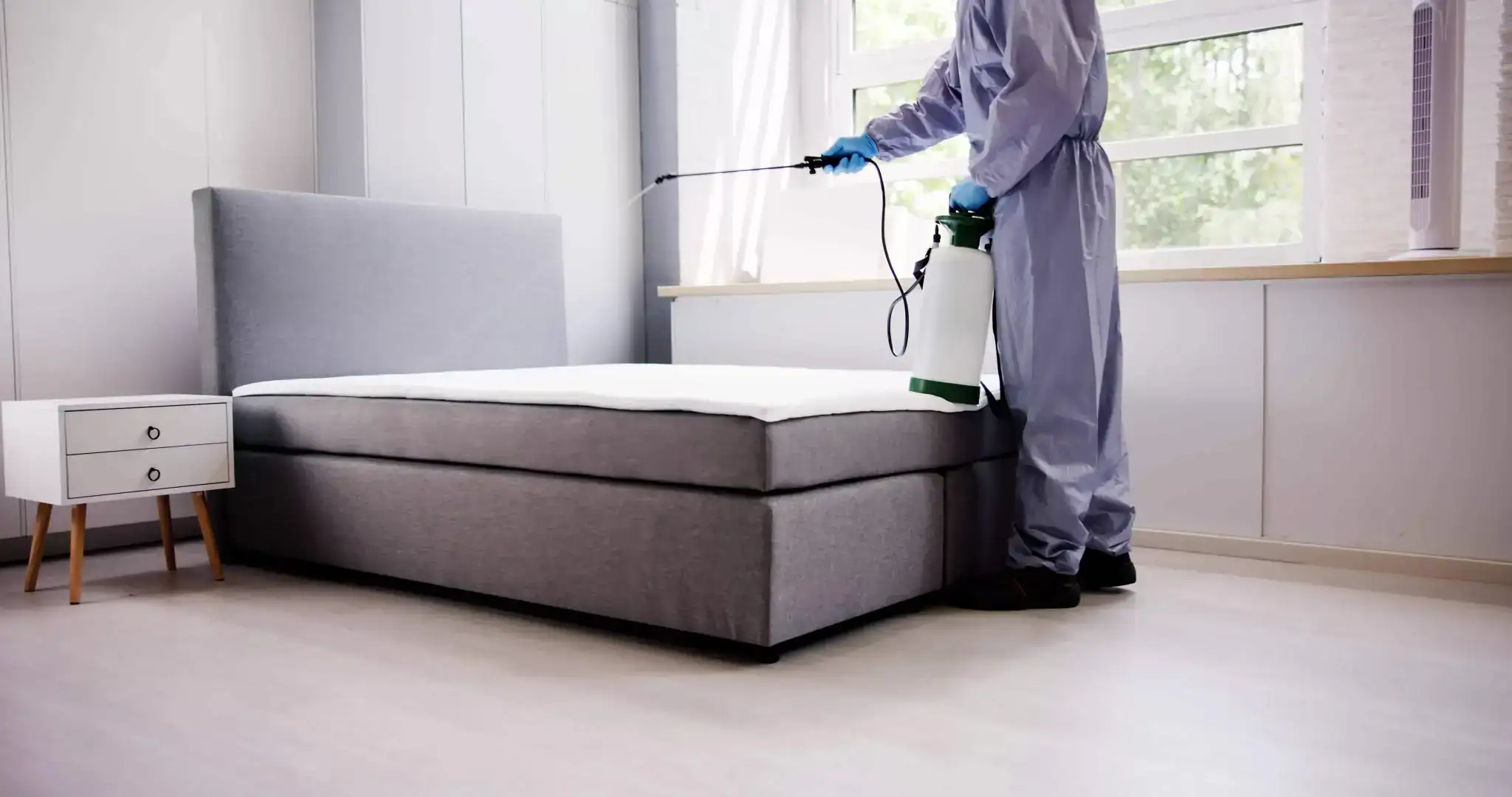
Chemical treatment uses professional-grade insecticides applied to the areas where bed bugs live and travel — mattress seams, baseboards, furniture joints, electrical outlets, wall voids. Unlike store-bought sprays, professional chemical treatments use multiple active ingredients specifically chosen to work against resistant populations.
The tradeoff is time. Because eggs are largely protected from chemical contact, treatment has to be timed across the hatching cycle. That’s why two to three visits are standard — each one targeting the next wave of newly hatched nymphs before they can reproduce. For some situations, particularly lower-level infestations caught early, this approach works well and costs less upfront than heat.
Why Chemical Treatment Alone Often Falls Short in Older Genesee County Homes
A significant portion of the housing stock in Flint and the surrounding communities — Swartz Creek, Flushing, Burton, Davison — was built before 1980. These homes have complex wall cavities, aging baseboards with gaps, and the kind of structural details that give bed bugs dozens of places to hide that no spray can reach. When a technician applies chemical treatment in a newer, tighter home, coverage is more predictable. In an older home with multiple hidden voids, it’s a harder problem.
This isn’t a reason to avoid chemical treatment entirely — it’s a reason to make sure whoever is treating your home actually knows the property. That’s one of the reasons we assign the same technician to every visit. Roger, who has 26 years of hands-on experience in Michigan pest control, isn’t walking into your home cold. He knows the difference between treating a newer Grand Blanc construction and an older Flint-area home, and he adjusts accordingly.
Chemical treatment also requires thorough preparation before each visit — laundering bedding, clearing clutter from floors and closets, vacating the space during application. For a single visit, that’s manageable. For two or three visits over several weeks, it adds up. Families with young children or elderly members sometimes find the repeated disruption more difficult than the upfront cost of heat treatment.
There’s also the question of verification. After chemical treatment, how do you know it worked? A follow-up visual inspection can catch obvious signs, but early-stage re-infestations or missed pockets are easy to overlook. This is where canine detection becomes genuinely valuable — not just for initial inspection, but for post-treatment confirmation. We’re one of fewer than 100 companies in the entire country offering certified K-9 bed bug detection, with accuracy rates up to 98%. A dog can find what a human inspector misses, and that matters when you’re trying to confirm the problem is actually gone.
FAQ: Can You Eliminate Bed Bugs Without an Exterminator?
It’s one of the most common questions people search before calling a professional, and it deserves a straight answer: technically possible, practically very difficult — and in Genesee County, the odds are stacked against you.
Here’s why. The bed bug populations in this area have developed measurable resistance to the pyrethroid-based sprays that make up most of what’s available over the counter. When you spray a resistant population, you don’t eliminate it — you stress it. Bed bugs scatter deeper into walls, furniture, and crevices, making the infestation harder to treat afterward. Many people who call us have already tried two or three rounds of store-bought treatment. The bugs are still there, and now they’re more dispersed.
Beyond resistance, there’s the coverage problem. Bed bugs hide in places that a spray can’s nozzle can’t reach — inside mattress seams, behind outlet covers, inside wall voids, under carpet tack strips. A professional treatment, whether heat or chemical, is designed to penetrate those spaces. A can of spray is not.
Flint ranks 16th nationally for bed bug infestations. Michigan ranks second among all U.S. states. This isn’t a market where a light infestation stays light for long without intervention. The longer a population establishes itself, the more it spreads — to other rooms, other furniture, and in multi-unit buildings, to neighboring units.
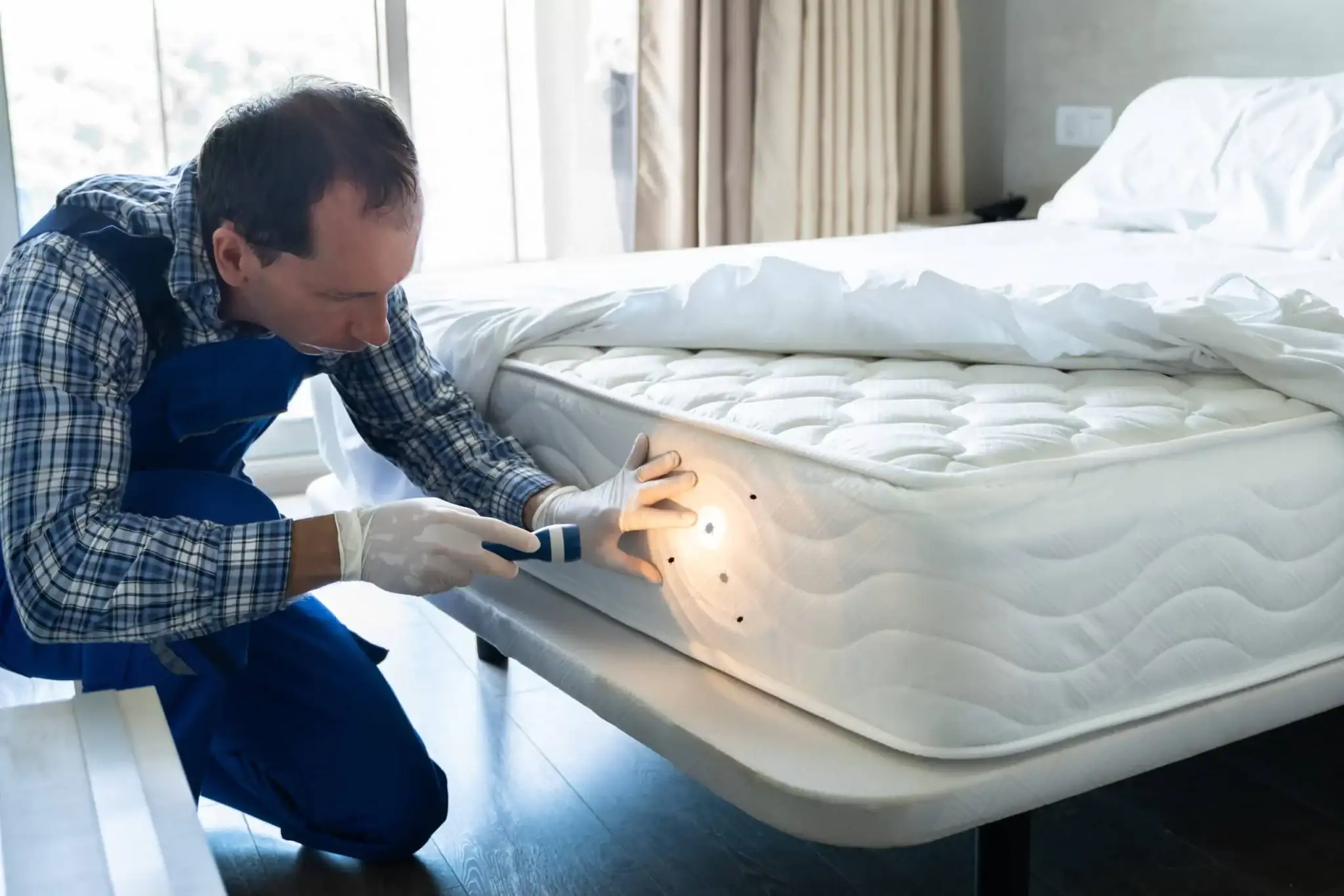
DIY treatment isn’t something we dismiss as a concept. If you’ve caught a single bug early and you’re not sure what you’re dealing with, a thorough inspection is the right first move before spending money on anything. But if you’ve already seen signs of an active infestation — bites, shed skins, small rust-colored stains on bedding — professional treatment is the faster, more reliable path to resolution. A proper bed bug inspection service gives you a clear picture of what you’re dealing with before any treatment decision is made.
Choosing the Right Bed Bug Treatment in Genesee County, MI
Heat and chemical treatment are not interchangeable, and the right choice depends on your home, your family, and the severity of what you’re dealing with. Heat works faster, eliminates all life stages in one visit, and leaves no chemical residue behind. Chemical treatment costs less upfront and offers residual protection, but takes longer and requires more preparation across multiple visits. For many situations, a combination of both delivers the most complete result.
What matters most is starting with an accurate picture of the infestation — where it is, how established it is, and what the property’s specific conditions call for. That’s what a professional bed bug inspection service is for.
If you’re in Swartz Creek, Flint, or anywhere across Genesee County and you’re ready to stop guessing, we’ve been doing this work in this community for 20 years. Reach out and we’ll start with an honest assessment — no pressure, no package upsells, just a clear look at what you’re dealing with and what it takes to fix it.