You didn’t go looking for a yellow jacket problem. Maybe you were mowing the back half of your property, or reaching into a shrub, or just walking out to the garage — and suddenly you were dealing with something a lot more serious than an inconvenience. That’s how it usually goes in Farrandville and the rural stretches of Shiawassee County. The nests are hidden, the colonies are large by the time anyone notices them, and the window between “minor issue” and “genuine danger” is shorter than most people expect. This page will walk you through what’s actually happening, how professional treatment works, and what to ask before you hire anyone.
Why Yellow Jackets Are More Dangerous Than Most Shiawassee County Residents Realize
Yellow jackets aren’t just a nuisance. Stinging insects send more than 500,000 people to the emergency room every year in the United States, and an estimated 10 to 15 percent of the population has some degree of sensitivity to their venom — many without knowing it until a sting happens. Unlike honeybees, yellow jackets can sting repeatedly. Their stingers aren’t barbed, which means one agitated yellow jacket can deliver multiple stings in a single encounter.
By late August and into September — right when Farrandville and Shiawassee County families are wrapping up summer cookouts, doing fall yard cleanup, and spending time outside — colonies can contain up to 5,000 members. That’s also when yellow jackets get aggressive about protecting the nest and start gravitating toward sugary foods and drinks, which is why they show up uninvited at every outdoor gathering. The timing is not accidental. It’s biology, and it works against you.
Why DIY Yellow Jacket Removal Often Makes Things Worse Before It Gets Better
The hardware store spray seems like the logical first move. It’s cheap, it’s available, and the instructions make it sound straightforward. But a significant number of the calls we receive come from homeowners who already tried it — and the situation got worse. Here’s why that happens so often.
Consumer-grade sprays are designed to knock down what’s visible at the surface. They’re not formulated to penetrate deep into a ground nest that extends several feet underground, or to reach a colony that’s established itself inside a wall void behind your siding. When you disturb the nest entrance without eliminating the colony, you don’t solve the problem — you agitate thousands of insects that are now on high alert and looking for the source of the threat. That source is usually you, or whoever is nearby.
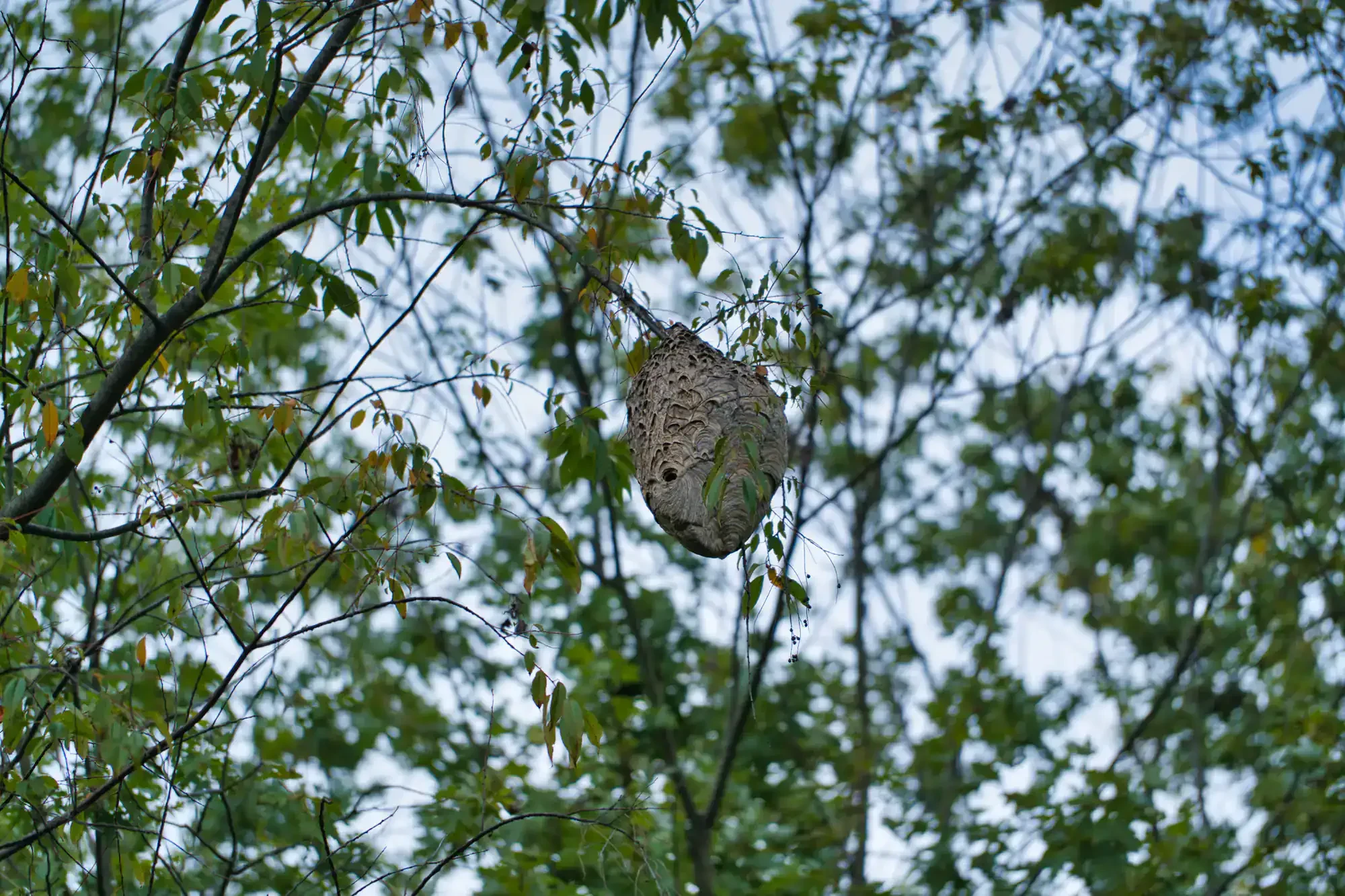
There’s also the issue of finding the nest in the first place. On rural Farrandville properties with large lots, older outbuildings, wooded borders, and unmowed fence lines, yellow jackets can be nesting in places that aren’t obvious until you’ve already disturbed them. Ground nests are especially common on this type of property, and they’re easy to stumble across while mowing or gardening. Wall-void nests in older farmhouses, barns, and garages are another frequent scenario — the entry point might be a small crack in the siding that looks like nothing until you realize there are dozens of yellow jackets moving in and out of it every few minutes.
Professional treatment starts with a real inspection — not just treating the hole you can see, but identifying the full extent of the nest, the type of colony, and the safest effective approach based on where it’s located. That process matters a great deal when the nest is in a structural cavity, underground, or somewhere that requires more than a can of spray and some distance.
MSU Extension recommends treating yellow jacket nests and then sealing the entry points afterward to prevent new colonies from moving into the same location the following spring. That last step — sealing — is one that most DIY attempts skip entirely, which is a big part of why the same property deals with yellow jackets year after year.
What Professional Yellow Jacket Extermination Actually Looks Like From Start to Finish
A professional yellow jacket treatment isn’t complicated to explain, but the details matter — and understanding the process helps you know what to expect and what questions to ask before you hire anyone.
It starts with an inspection. Our qualified technician walks the property, identifies the nest location or locations, assesses the type of nest and approximate colony size, and determines the right treatment approach. This step is where experience makes the biggest difference. Someone who has treated hundreds of yellow jacket nests in mid-Michigan knows what to look for — including secondary entry points, signs of wall-void nesting, and the structural vulnerabilities common to older rural properties in Shiawassee County.
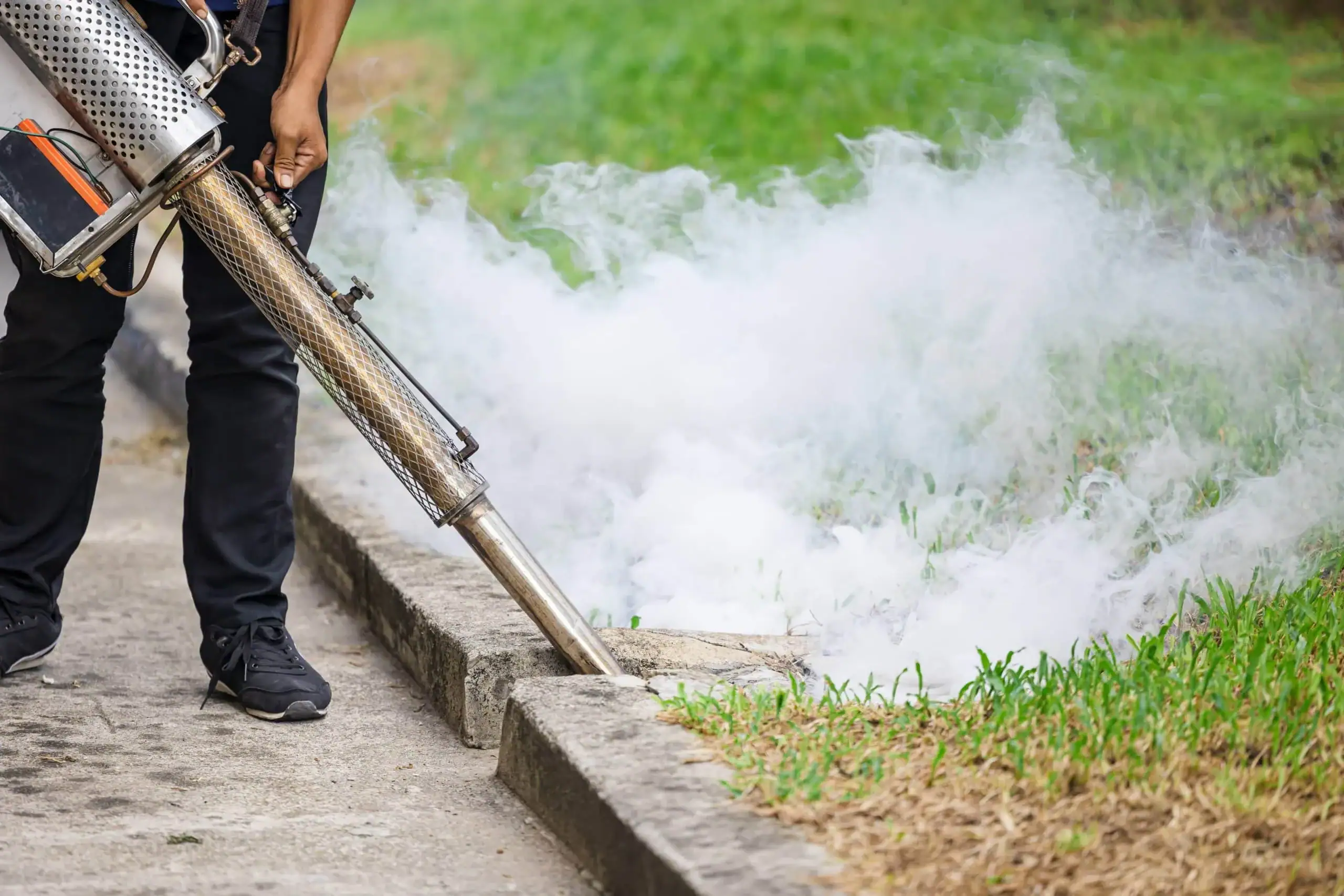
Treatment timing matters too. Yellow jackets are most active during the day and return to the nest at dusk, which means early morning or evening treatments are generally more effective because more of the colony is present. Our professional-grade products are applied directly to the nest — not just around the perimeter — and are formulated to reach the colony, not just the entrance.
After treatment, the nest structure is addressed. Depending on the location, that may mean physical removal or sealing the entry point to prevent re-colonization. This is the step that separates a complete treatment from a temporary one. Leaving the nest structure intact and the entry point open is an open invitation for a new colony to move in the following spring.
We use an Integrated Pest Management approach, which means the treatment is built around your specific situation — the nest type, the location, your property’s layout, and the safest effective method — rather than a generic spray-and-leave protocol. If the problem persists after treatment, we come back. That’s not a marketing line; it’s how we’ve kept customers in Shiawassee County coming back for twenty years.
Choosing a Yellow Jacket Exterminator in Farrandville and Shiawassee County
There’s no shortage of pest control companies willing to take your call. What’s harder to find is one that will send the same technician every time, stand behind their work, and actually know your property well enough to spot a new nest forming before it becomes a serious problem. That distinction matters more than most people realize when it comes to stinging insect control.
We’ve been serving residential and commercial customers in Shiawassee County since 2005. Roger, who leads our team, brings 26 years of hands-on experience to every job — and every technician we send is a career professional, not a part-time seasonal hire learning on your time. When you call us about a yellow jacket problem, you’re getting someone who has handled this specific situation, in this specific region, more times than they can count.
What to Ask Any Yellow Jacket Exterminator Before You Hire Them
Before you commit to any pest control company for yellow jacket removal, a few questions will tell you a lot about what kind of service you’re actually going to get.
Ask whether the technician who comes out is certified. In Michigan, every pesticide applicator is required by the Michigan Department of Agriculture and Rural Development to carry their certification card on their person during every service call. You have the right to ask to see it. If a company can’t confirm their technicians are individually certified, that’s a meaningful red flag.
Ask what the treatment process looks like — specifically, whether it includes a full inspection, how we handle nests in wall voids or underground, and what happens after treatment to prevent re-colonization. A company that can’t walk you through those steps clearly probably isn’t doing all of them.
Ask about a warranty. Yellow jackets can be persistent, and a single treatment doesn’t always resolve the problem completely, especially with large ground colonies. Any reputable exterminator should offer to return if activity continues after treatment. If there’s no guarantee on the work, you’re taking on all the risk.
Finally, ask about pricing transparency. The average professional yellow jacket extermination runs around $725. If a quote comes in significantly lower with no explanation, it’s worth understanding what’s being left out. We offer price matching for reasonable competitor quotes, which means you don’t have to choose between quality and cost. We also offer discounts for seniors, veterans, and first responders — because those are the kinds of neighbors we’ve been serving in this county for two decades, and it matters to us.
FAQs About Yellow Jacket Extermination in Farrandville and Shiawassee County
**How do I know if I have yellow jackets or bees?** Yellow jackets are wasps, not bees. They’re slender, with bright yellow and black banding, and they move in quick, darting patterns. Honeybees are rounder, fuzzier, and far less aggressive. The distinction matters because honeybees are beneficial pollinators that should be relocated, not exterminated. Yellow jackets are a pest species with no such protection. If you’re not sure what you’re dealing with, that’s part of what we assess during an inspection.
**Can I wait until winter when the colony dies off?** Most of the colony does die off in winter — but the fertilized queens survive and overwinter in protected spots like hollow logs, tree bark, and the structural cavities common in older Farrandville and Shiawassee County farmhouses and outbuildings. If the nest site isn’t sealed, a new queen will find it in the spring and start building again in the same location. Waiting until winter solves this year’s problem but sets you up for the same fight next year.
**Do yellow jackets nest underground in Shiawassee County?** Yes, and it’s one of the most common scenarios we deal with on rural properties in this area. Large lots, gravel driveways, garden beds, and unmowed fence lines all create the kind of undisturbed ground that yellow jackets prefer for nesting. Ground nests are particularly dangerous because they’re easy to stumble across while mowing or doing yard work, and the colony’s response to a perceived threat is immediate and intense. If you’re seeing yellow jackets emerging from a hole in the ground, don’t probe it, don’t pour anything into it, and don’t mow over it. Call us.
**Is it safe to be outside my home during treatment?** That depends on the nest location and the treatment method. We communicate clearly about what to expect before, during, and after treatment — including any re-entry timing and precautions for children and pets. Our IPM approach uses the least invasive, most targeted method appropriate for the specific nest, which means we’re not blanket-spraying your yard. We’ll tell you exactly what’s happening and what you need to do, or not do, during the process.
**What if the yellow jackets come back after treatment?** We stand behind our work. If activity continues after treatment, we return. That commitment is part of what twenty years of serving families and businesses in Shiawassee County looks like in practice — not just a policy, but a reputation we’ve built one job at a time.
Ready to Get Rid of Yellow Jackets in Farrandville and Shiawassee County for Good?
Yellow jackets don’t get better on their own — not in August, not in September, and not by waiting them out. The colony grows, the aggression increases, and the window to treat it before someone gets seriously hurt gets smaller. If you’re dealing with a nest on your Farrandville property, near your home, your outbuildings, or anywhere your family or employees spend time, the right move is a professional inspection from someone who actually knows this area.
We’ve been doing this work in Shiawassee County since 2005. Same technician, career professionals, a treatment approach built around your specific situation, and a guarantee that covers you if the problem isn’t resolved. If you’ve already gotten a quote somewhere else, ask us to match it.
Reach out to First Choice Pest Control to schedule an inspection. The sooner the nest is addressed, the smaller and less dangerous it will be.