Most people don’t go looking for a pest exterminator until something has already gone wrong. Maybe you’ve tried handling it yourself and the problem keeps coming back. Maybe another company came out and didn’t fix it. Or maybe you just discovered something you can’t unsee and you need it gone — fast.
Whatever brought you here, you’re in the right place. This guide is written for Farrandville homeowners and business owners who want straight answers about pest control — what the process looks like, what actually works, and what to watch out for when choosing someone to handle it.
What Pest Exterminator Services Actually Cover in Farrandville, MI
“Pest control” is a broad term, and what it means in practice depends a lot on where you live. Farrandville sits in northern Genesee County — rural-residential, surrounded by agricultural land, wooded lots, and the kind of low-lying terrain that holds water after every rain. That geography creates real, year-round pest pressure that looks different here than it does in a suburb closer to Flint.
Mosquitoes breed in standing water, and there’s no shortage of that in Vienna Township. Carpenter ants thrive in the wooded areas surrounding older homes. Yellow jackets build ground nests in the same yards where kids play. And when fall comes and the fields get harvested, mice start looking for somewhere warm — and your home is the obvious candidate.
We don’t just respond to one problem at a time. We look at the full picture: what’s getting in, where it’s coming from, and what’s going to prevent it from happening again.
How Mosquito Control Works — and Why Farrandville Needs More Than a Basic Spray
If your backyard has been unusable from June through August, you already know what mosquito pressure feels like in this part of Michigan. The wetlands and drainage areas throughout northern Genesee County aren’t going anywhere, which means mosquito populations in Farrandville tend to be more persistent than in drier, more urban parts of the county.
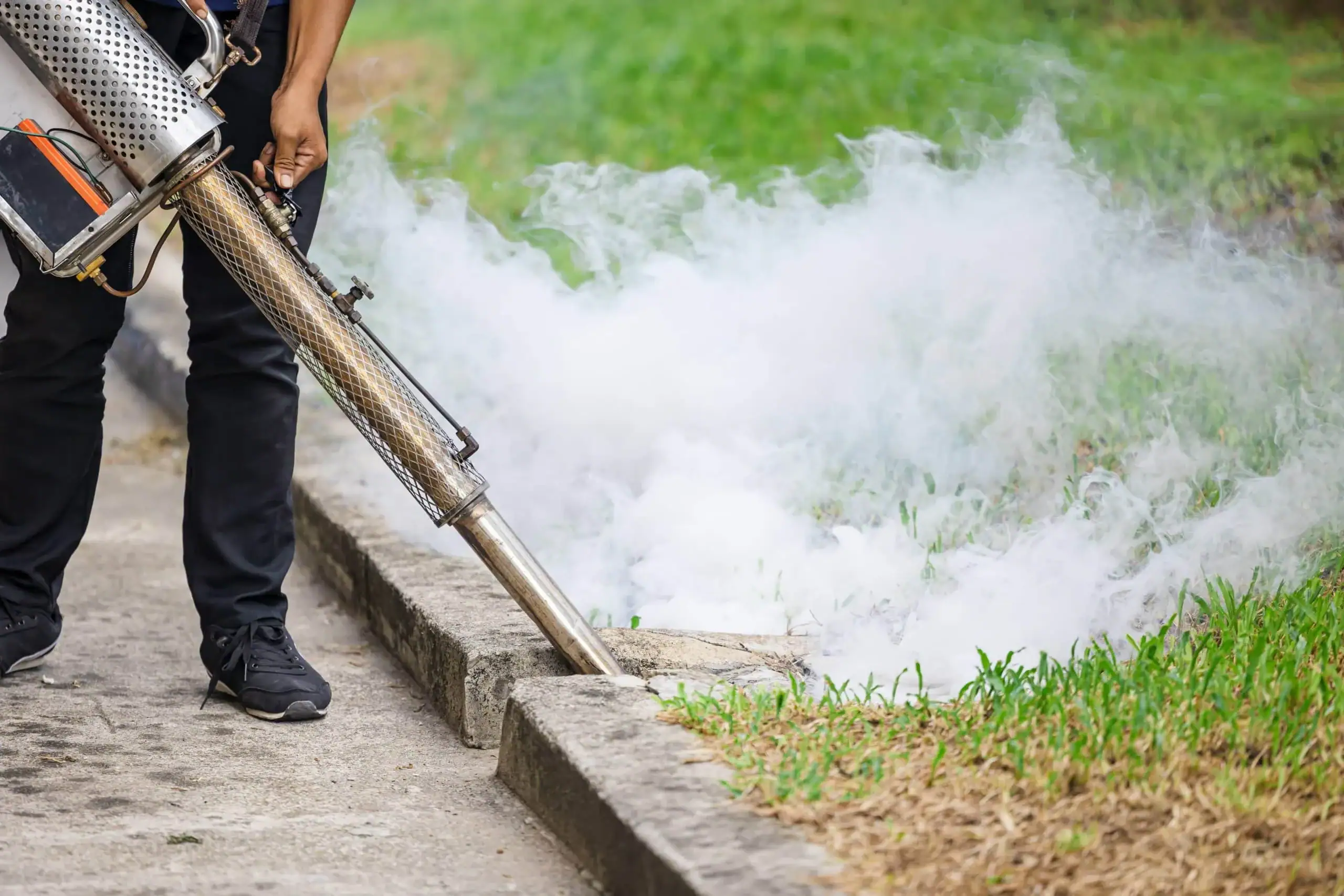
Consumer sprays and citronella candles knock back what’s visible in the moment. They don’t address breeding populations, and they wear off fast. Our mosquito control targets the areas where mosquitoes actually rest and reproduce — tall grass, dense shrubs, shaded spots near standing water — using products that keep working between visits.
Our mosquito program also includes flea and tick treatment at no extra charge. That’s not a minor detail. Deer tick populations have been increasing across rural Michigan, and Farrandville’s wooded lots and deer corridors make tick exposure a genuine concern for families and pets spending time outside. Most companies charge separately for tick treatment. We include it because if you’re protecting your yard from one biting pest, it makes no sense to leave your family exposed to the others.
The program runs seasonally, with scheduled treatments timed around Michigan’s pest calendar. You don’t have to remember to call every few weeks — we stay on top of it so you can actually use your yard again.
Bed Bug Control in Farrandville — Why Detection Matters as Much as Treatment
Bed bugs are one of the most stressful pest problems a homeowner can face, partly because they’re easy to miss. A human inspector doing a visual check catches roughly 30% of infestations accurately. That means there’s a real chance of treating the wrong area, missing the source entirely, or — just as bad — treating a room that doesn’t need it while the actual infestation continues somewhere else.
We use canine detection, which changes that equation significantly. Trained detection dogs locate bed bugs with 95 to 98% accuracy. It’s not a novelty — it’s the same scent-detection methodology used by law enforcement and medical facilities, applied to pest control. We’re one of fewer than 100 companies in the entire United States offering this service, and in Genesee County, we’re the only local provider with it.
Why does that matter for you? Because accurate detection leads to targeted treatment. You’re not paying to treat rooms that don’t need it, and you’re not missing the spots that do. For anyone who’s dealt with a recurring bed bug problem — or who’s been told by another company that the issue was resolved only to find evidence weeks later — this is the difference that actually changes the outcome.
Bed bug activity tends to increase with travel, which means summer and the holiday season are peak discovery periods. If you find signs of an infestation or just want peace of mind before guests arrive, a canine inspection is the fastest and most reliable way to get a clear answer.
Yellow Jacket and Hornet Removal: What Farrandville Homeowners Should Know
Yellow jackets and hornets are not a wait-and-see situation. By late summer, a single yellow jacket colony can contain thousands of workers, and they get significantly more aggressive as the season progresses. Ground nests — common in the lawns and landscaping of rural Genesee County properties — are especially dangerous because they’re easy to disturb accidentally.
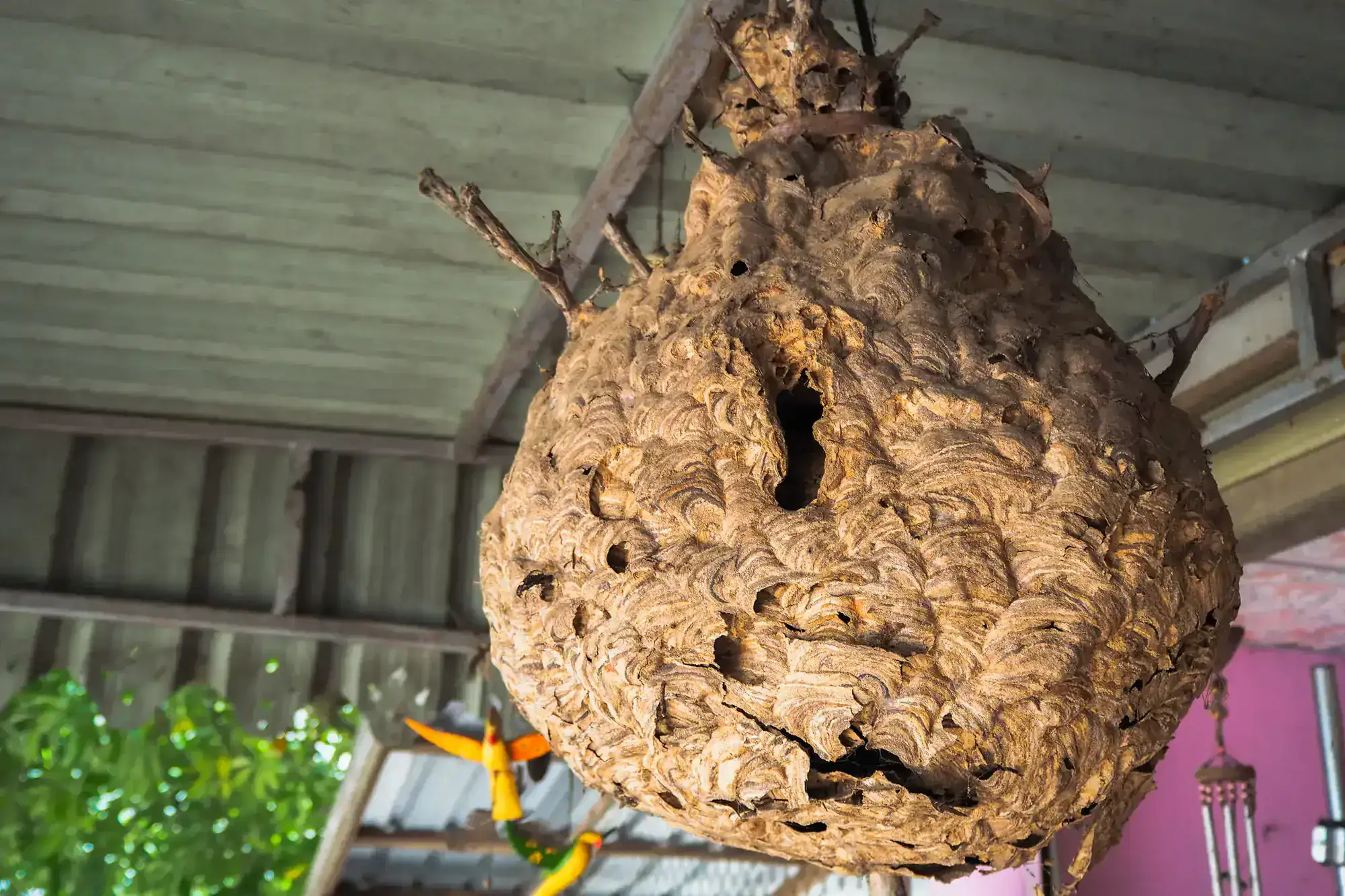
Hornet nests built under eaves, in trees, or attached to siding create a different kind of problem. They’re highly visible once they’re large enough to notice, but by that point, removal requires the right approach and the right protective equipment. Trying to handle either type of stinging insect without experience is how people end up in the emergency room.
We’ve removed nests from properties across Genesee County for 20 years. We know what to look for, how to treat ground nests safely, and how to handle aerial nests without putting your family or your property at risk.
When Should You Call a Yellow Jacket Exterminator vs. Handle It Yourself?
Small, early-season wasp nests — the kind you spot in April or May when they’re still the size of a golf ball and contain a handful of workers — can sometimes be handled with a store-bought aerosol spray applied at night when activity is low. That’s a reasonable DIY option for a very specific situation.
Everything else is a different story. Yellow jacket ground nests are nearly impossible to treat effectively without professional products and knowledge of the colony’s structure. Consumer sprays don’t penetrate deep enough to reach the queen, which means the colony survives and rebuilds. Hornet nests present a similar problem — surface treatment agitates the colony without eliminating it, and that’s when people get stung.
The review that sticks with us most on this subject came from a customer who had already paid another company to handle a yellow jacket problem. That company couldn’t get it done. We did. It’s not something we say to put competitors down — it’s just a reality that not every pest control company has the experience or the right approach for stinging insects, especially when the infestation is established and aggressive.
If you’re unsure whether your situation warrants a call, the honest answer is: if the nest is larger than your fist, if it’s in a high-traffic area, or if anyone in your household has a known allergy to stings, call us. The cost of treatment is a fraction of what an ER visit costs, and the risk simply isn’t worth it.
Frequently Asked Questions About Hiring a Pest Exterminator in Farrandville, MI
**Is pest control safe for kids and pets?** When it’s done right, yes. We use products approved for residential use at concentrations that are targeted and appropriate. We follow Integrated Pest Management principles, which means we use the least invasive approach that gets the job done — not just the heaviest chemical available. We’ll always let you know what was applied, how long to keep pets and children out of treated areas, and what to expect afterward.
**Do I have to sign a long-term contract?** No. We don’t believe in locking people into contracts. If you want a one-time treatment, we can do that. If you want an ongoing program that keeps your property protected through the seasons, we offer that too. The choice is yours.
**Why does Farrandville seem to have worse mosquitoes than other parts of Genesee County?** It’s not your imagination. Northern Genesee County — including Vienna Township and the areas surrounding Farrandville — has more agricultural land, more drainage ditches, and more low-lying terrain than the suburban areas closer to Flint. That means more standing water, which is exactly what mosquitoes need to breed. Seasonal flooding adds to it. The pest pressure in Farrandville is genuinely higher, which is why a consistent, professionally managed mosquito program makes a bigger difference than it might in a drier part of the county.
**What if I’ve already had another company out and the problem came back?** This happens more often than it should. The most common reasons are incomplete treatment, a misidentified pest, or a one-size-fits-all approach that didn’t account for the specifics of your property. When we come out, we start with a real inspection — not just a quick walk-through before spraying. We want to understand what’s happening on your specific property before we recommend anything.
**Do you offer any discounts?** Yes. We offer discounts for seniors, veterans, and first responders. If you’ve gotten a quote from another company and want to compare, ask us about price matching — we’ll match reasonable competitor rates.
Choosing the Right Pest Exterminator in Farrandville, MI
The pest pressure in Farrandville is real, and it’s year-round. Mosquitoes and stinging insects in summer, rodents moving in come fall, bed bugs with no particular season at all. We don’t just respond to each problem as it comes — we help you stay ahead of it.
What makes a real difference is consistency: the same technician who knows your property, a program built around your actual situation, and a company that’s been doing this long enough to have seen every scenario this part of Michigan can throw at you. That’s not a marketing line — it’s just what 20 years of serving Genesee County families looks like in practice.
If you’re ready to stop guessing and start getting results, reach out to First Choice Pest Control. We’ve been here since 2005, and we’ll give you a straight answer about what your property needs.