
Hear from Our Customers
When a hornet nest shows up under your eaves or in the shrubs along your fence line, your outdoor space stops feeling like yours. You stop using the back deck. The kids stay inside. You give the garage a wide berth. Your property is being held hostage by a colony that will only keep growing through August.
Swartz Creek’s older housing stock — the ranches and split-levels built in the 60s, 70s, and 80s that make up most of Winchester Village and the neighborhoods off Grand Blanc Road — has exactly the kind of wood-framed eaves, soffits, and wall gaps that hornet queens look for every spring. They don’t pick random spots. They find sheltered, south-facing overhangs and return to the same structures year after year if nothing is done.
The west branch of Swartz Creek running through the city adds another layer. Those riparian corridors along the creek and the green buffer connecting Elms Park to Otterburn Park create ideal foraging habitat. Hornets don’t stay in the woods — they follow the food, and that trail leads right into your yard. Once the nest is properly treated and removed, that pressure drops. You get your space back, and the problem doesn’t quietly restart next spring.
We’re not headquartered somewhere else and dispatching to Swartz Creek. Our office is at 5060 Grand Blanc Road — in this city, in this community. Founded in 2005, we’ve been treating homes and businesses across Genesee County for two decades, and our owner Roger brings 26 years of hands-on pest control experience to every job.
That kind of tenure means something in a city of fewer than 6,000 people. Your technician isn’t a seasonal hire or a rotating face from a national call center. We assign the same technician to your property year after year — someone who gets to know your home, your yard, and the specific conditions around it. That continuity produces better results than starting fresh every time.
We hold Michigan Pesticide Application Business License #250081, have earned awards from Angie’s List and HomeAdvisor, and carry IPM training certification through MDARD. Those aren’t just credentials on a wall — they’re the baseline for doing this work legally and doing it right.
It starts with a call. You describe what you’re seeing — where the nest is, how much activity you’ve noticed, whether it’s accessible or tucked into a wall void or high eave. That information matters because it shapes our approach before anyone shows up. A nest in an open shrub is treated differently than one inside the wall of a 1970s ranch on the east side of Swartz Creek.
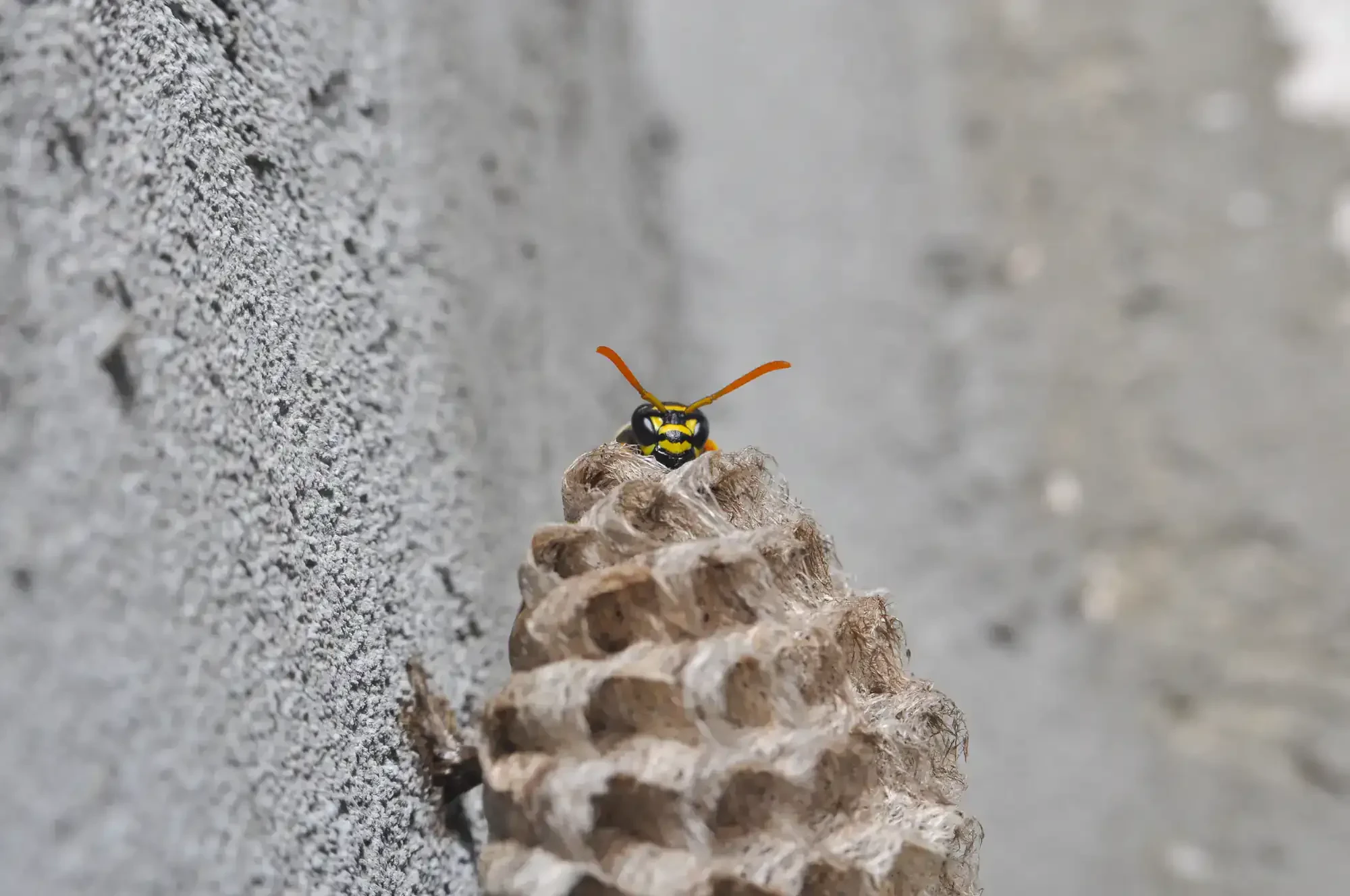
When our technician arrives, the first step is a proper inspection. That means identifying the exact species — bald-faced hornets, yellow jackets, and European hornets all behave differently and respond to different treatments. Location and access determine what method we use: a direct aerosol application for exposed nests, or a professional dust treatment injected into wall voids and structural cavities without opening your walls. Michigan’s warm, humid summers mean colonies in Swartz Creek can reach several hundred workers by late July, so timing and thoroughness both matter.
After treatment, we address the nest and assess the entry points. If the job needs a follow-up visit, that’s covered — no additional charge. You’ll also get a clear read on what made your property attractive in the first place, so you’re not starting this same conversation again next spring.
Ready to get started?
We handle hornet removal for both residential and commercial properties across Swartz Creek and the surrounding Genesee County area. Whether you’re a homeowner in Winchester Village dealing with a nest in your eaves, or a business owner along the Morrish Road corridor with a problem near your entrance or loading area, the process is the same: flat-rate, upfront pricing before anything starts, and no surprise charges when the job is done.
If you’ve already gotten a quote from another local provider, we’ll match any reasonable competitor rate. That offer exists because we’re confident in what we deliver — not because we’re competing on price alone. The work is backed by a guarantee: if a return visit is needed, it happens at no additional cost to you.
We also offer discounts for seniors, veterans, and first responders. In a community where nearly one in four residents is 65 or older and the Veterans Memorial at Otterburn Park stands as a genuine point of local pride, those discounts aren’t a promotional footnote — they reflect who actually lives here. All work is performed under Michigan Pesticide Application Business License #250081, using IPM-certified methods that target the pest specifically without unnecessary chemical exposure to your yard, your kids, or your pets.
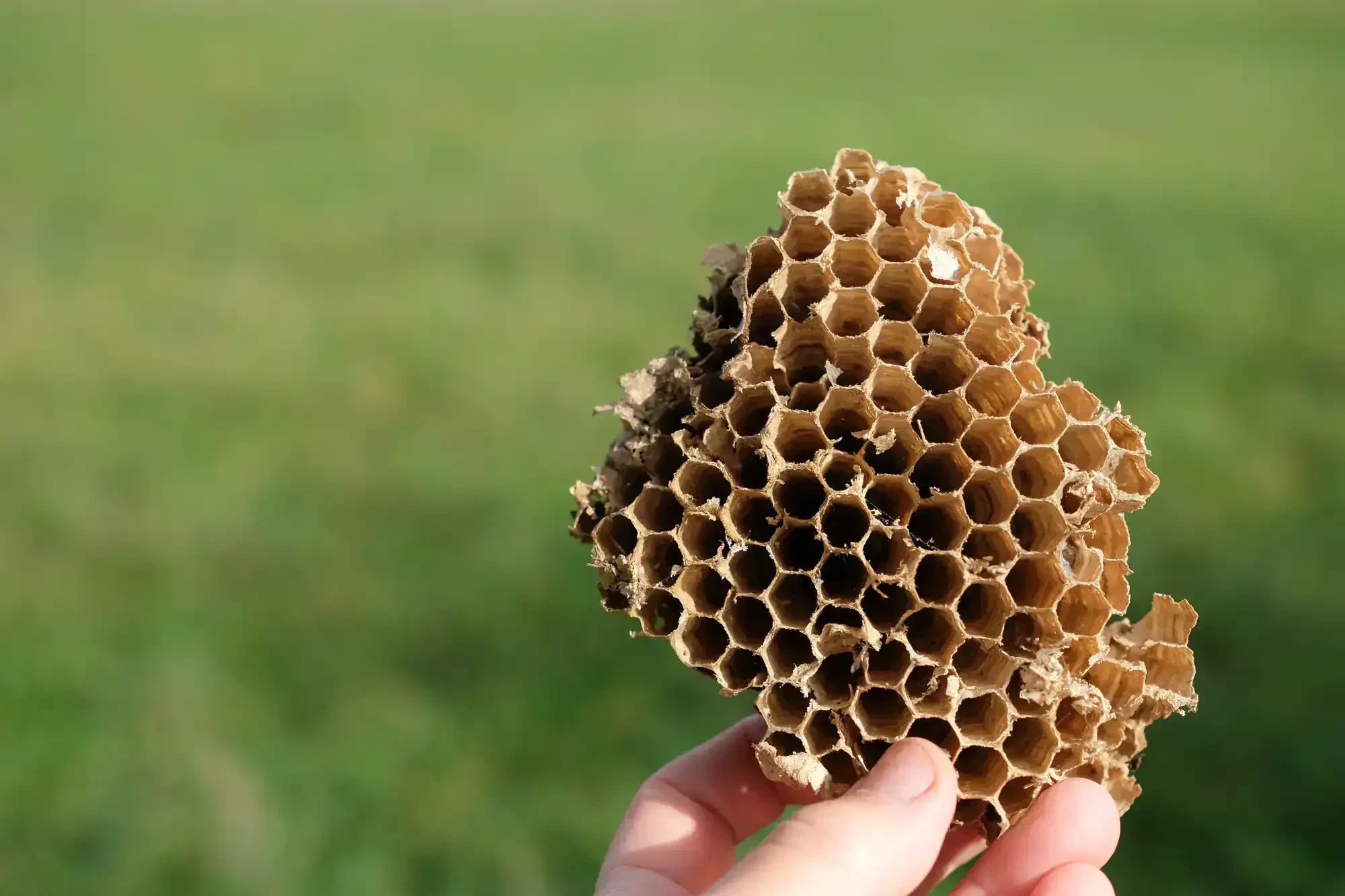
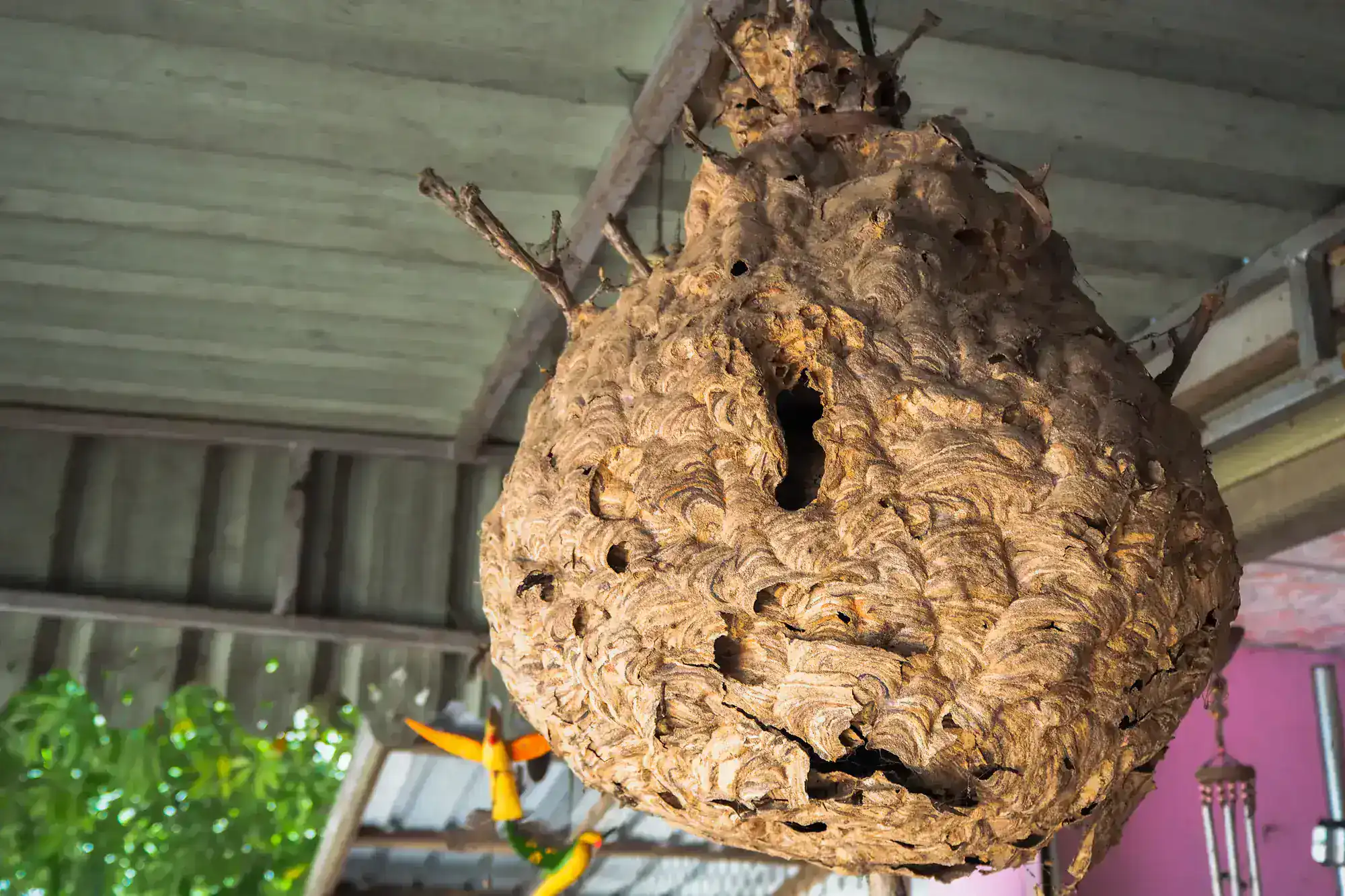
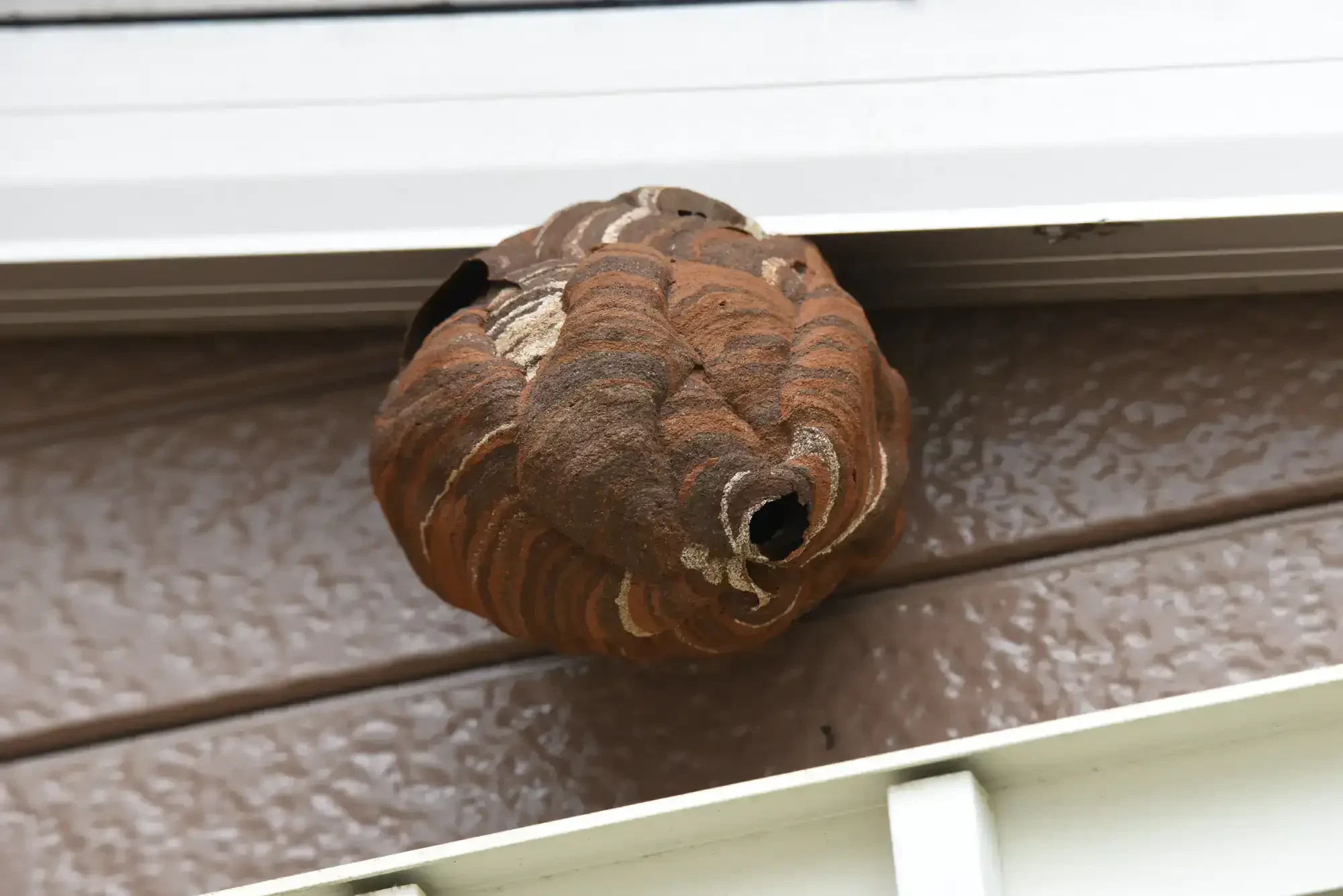
The most common stinging insects in Swartz Creek are bald-faced hornets, yellow jackets, and European hornets. Bald-faced hornets build the large gray paper nests you typically see hanging from tree branches, shrubs, or the overhangs of homes — particularly on south-facing eaves where they get warmth and shelter. Yellow jackets are more likely to nest in the ground or inside wall voids, which makes them harder to spot until you’ve already disturbed them. European hornets are larger, tend to nest in hollow trees or wall cavities, and are one of the few species active at night.
In Swartz Creek specifically, the riparian corridor along the west branch of the creek and the green buffers connecting Elms Park and Otterburn Park create ideal foraging habitat for all three. Homes adjacent to those areas — especially properties with mature trees, dense shrubs, or aging wood-framed structures — tend to see higher activity. Identifying the species correctly before treatment matters, because the approach and product used differ depending on what you’re dealing with.
For a small, newly established nest in an open, accessible location, a store-bought aerosol can work — but only if you catch it early in the season, treat at night when the colony is least active, and have a clear exit path. That’s a narrow window, and most people don’t call about the nest until it’s well past that stage.
By mid-summer in Swartz Creek, a bald-faced hornet colony can have 400 to 700 workers. A yellow jacket nest inside a wall void can have even more. Spraying into a wall void with a consumer product doesn’t penetrate the nest structure — it agitates the colony without eliminating it, and that’s when people get stung. For nests inside walls, under soffits, or in any location where retreat is limited, professional treatment is the safer and more effective option. The cost of professional hornet removal is far less than an emergency room visit, and the result is actually complete.
Professional hornet removal in the Swartz Creek area generally runs between $200 and $700, depending on the size of the nest, its location, and how accessible it is. A small, exposed nest on a low eave is on the lower end. A large colony inside a wall void or in a second-story soffit — the kind of scenario common in Swartz Creek’s older ranch and split-level homes — takes more time, specialized equipment, and product, which moves the cost higher.
We use flat-rate, upfront pricing, so you know the number before anything starts. There are no add-on charges after the fact. If you’ve received a quote from another Swartz Creek provider and it’s reasonable, we’ll match it. Senior, veteran, and first-responder discounts are also available, which can make a meaningful difference for the significant portion of Swartz Creek homeowners who qualify.
Spring is the ideal window — specifically late April through early June, when a newly established queen is building a nest that might only have a handful of workers. Treatment at that stage is simpler, less expensive, and carries far less risk than treating a mature colony in August. The problem is that most people don’t notice the nest until it’s already large enough to be a visible threat, which puts the call in July or August when colonies are at their peak.
Michigan’s warm, humid summers accelerate colony growth quickly. In Swartz Creek, where the creek corridor and surrounding green spaces provide abundant foraging territory, colonies can expand faster than homeowners expect. If you spot early activity near your eaves or in your yard in spring — even just a single queen investigating a gap in your siding — that’s the right time to call. Waiting until the nest is fully established makes the job harder and the risk higher. Fall treatment is also an option for nests that went undetected, though by that point the colony is naturally dying off and the main goal becomes preventing queens from overwintering in the same structure.
Yes — and this is one of the most common frustrations homeowners run into after a DIY treatment or an incomplete professional job. Hornet queens that survive a treatment, or fertilized queens that overwinter in your attic, wall insulation, or under bark nearby, will scout the same locations the following spring. They’re drawn to the same structural features that made the spot attractive the first time: a sheltered overhang, a gap in the siding, a south-facing eave that warms up early in the season.
In Swartz Creek’s older housing stock — homes built in the 60s through 80s with wood-framed eaves and aging siding — this is a recurring pattern. A complete treatment addresses not just the active colony but also the entry points and conditions that invited the nest in the first place. When we complete a hornet removal job, part of the conversation is about what made your property attractive and what, if anything, can be done structurally to reduce the likelihood of a repeat. That’s the difference between solving the problem once and solving it for good.
Yes. We offer discounts for seniors, veterans, and first responders. In Swartz Creek, where roughly one in four residents is 65 or older and the community’s Veterans Memorial at Otterburn Park reflects a genuine respect for military service, these discounts apply to a real and significant portion of the people who call. They’re not an afterthought — they’re a straightforward acknowledgment of who lives here and who has been calling us for the past 20 years.
When you call to schedule, just mention that you qualify. There’s no paperwork process or hoop to jump through. The discount gets applied to your flat-rate quote before the job starts, so the number you hear is the number you pay. If you’re also comparing quotes from other local providers, we’ll match any reasonable competitor rate — so between the price match and the applicable discount, there’s no reason to settle for a company that doesn’t know Swartz Creek the way we do.
Useful Links