
Hear from Our Customers
A wasp nest doesn’t just create a nuisance. It shuts things down. The back porch goes unused. The kids stay inside. The dog gets stung near the fence line. And every day you wait, the colony gets bigger and the workers get more aggressive — especially in August and September, when natural food sources dry up and yellow jackets start looking for anything they can find.
Swartz Creek’s geography makes this worse than most people expect. The riparian zones along the Swartz Creek waterway — the creek corridor that runs right through and alongside this community — create near-perfect conditions for yellow jacket ground nests. Moist soil, abandoned animal burrows, and decaying organic matter are exactly what ground-nesting yellow jackets look for. If your yard backs up to any undeveloped land or sits near the creek corridor, the risk is real and it’s local to Swartz Creek.
Older homes in Winchester Village and Winchester Woods carry a different but equally common risk: eave gaps, soffit voids, and aging wood trim that paper wasps and bald-faced hornets exploit every spring. Professional wasp nest removal in Swartz Creek means understanding both of those environments — not just spraying and leaving. When the job is done right, you get your yard back, your family moves freely again, and the colony is gone — not relocated, not partially treated, gone.
We’re not a franchise that decided to add Swartz Creek to a service map. Our office is here — 5060 Grand Blanc Road, Swartz Creek, MI 48473. Roger Chinault founded this company on May 31, 2005, and has spent 26 years doing this work hands-on. Every technician we send to your home is a career professional. No rotating seasonal staff, no part-time college students learning on your property.
We’re licensed and insured through the Michigan Department of Agriculture and Rural Development, hold Integrated Pest Management training, and have earned awards through both Angie’s List and HomeAdvisor. Those aren’t things we hang on the wall — they reflect the kind of repeat business and word-of-mouth that only comes from consistently doing the job right in Swartz Creek.
When your neighbor in Springbrook or down the street in Otterburn asks who handled their wasp problem, there’s a good chance the answer is us. That reputation was built one Swartz Creek household at a time, and it’s the reason we’re still here after two decades.
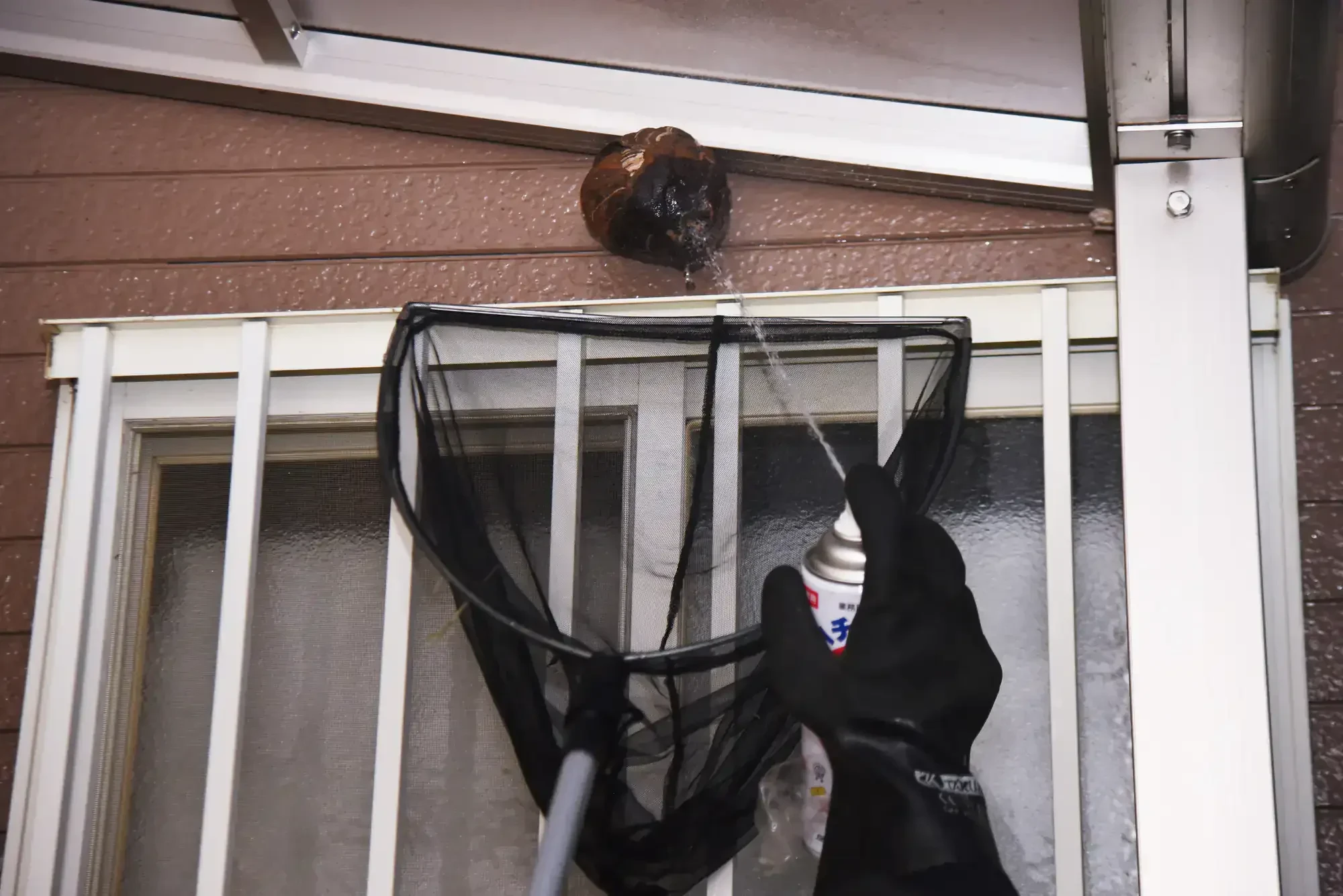
It starts with a call. You describe what you’re seeing — where the nest is, how long it’s been there, whether anyone’s been stung — and we figure out what you’re dealing with before anyone shows up. That context matters, because a paper wasp nest under a deck eave requires a different approach than a yellow jacket colony buried in the ground near the Genesee Valley Trail edge of your property.
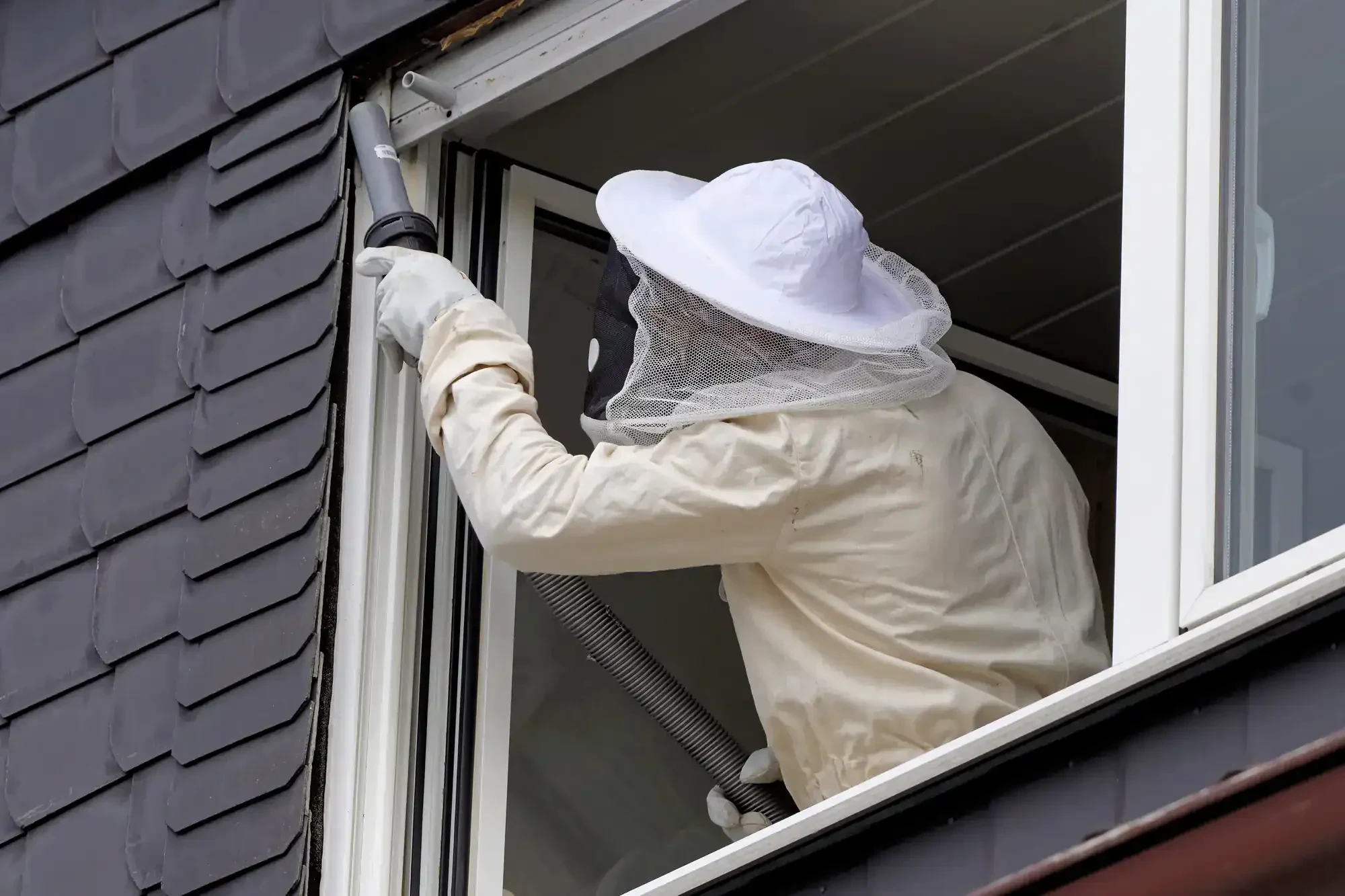
When our technician arrives, the first step is a thorough inspection. Nests aren’t always where they look like they are. What looks like wasps entering through a gap in your soffit could be a wall void colony three feet inside the structure. What looks like a small surface nest could be the visible tip of a colony with thousands of workers underneath. The inspection determines the nest type, location, size, and the safest, most effective treatment method — using an IPM approach that targets the problem without unnecessary chemical exposure to your family, your pets, or the surrounding environment.
Treatment eliminates the colony — not just the visible wasps. After treatment, we remove the nest and seal entry points where accessible to reduce the chance of re-nesting. Michigan’s wasp season peaks hard in August and September, so timing matters. If you’re calling during peak season, same-day or next-day availability is our goal. And if wasps return after treatment, so do we.
Ready to get started?
Our wasp nest removal service in Swartz Creek, MI covers the full range of stinging insect problems homeowners and businesses run into — paper wasps nesting under eaves and deck railings, bald-faced hornets building large aerial nests in trees and shrubs, and yellow jackets colonizing ground cavities, wall voids, and structural gaps in older homes throughout Genesee County. Each situation gets treated based on what’s actually there, not a one-size-fits-all spray schedule.
For Swartz Creek homeowners specifically, the combination of established neighborhoods with aging housing stock and proximity to undeveloped parcels and the creek corridor means that both structural and ground nests are common. Our service includes inspection, targeted treatment, physical nest removal where safe and accessible, and entry-point sealing to reduce re-nesting. We offer discounts for seniors, veterans, and first responders — and in a community where 25% of residents are over 65, that’s not a footnote, it’s a real part of how we serve Swartz Creek. There are no binding contracts, and we’ll match any reasonable competitor quote.
Whether you’re a homeowner in Winchester Village dealing with a recurring eave nest, or a business owner near Miller Road with a problem near your entrance, the process is the same: show up, assess, treat completely, and make sure the job holds.
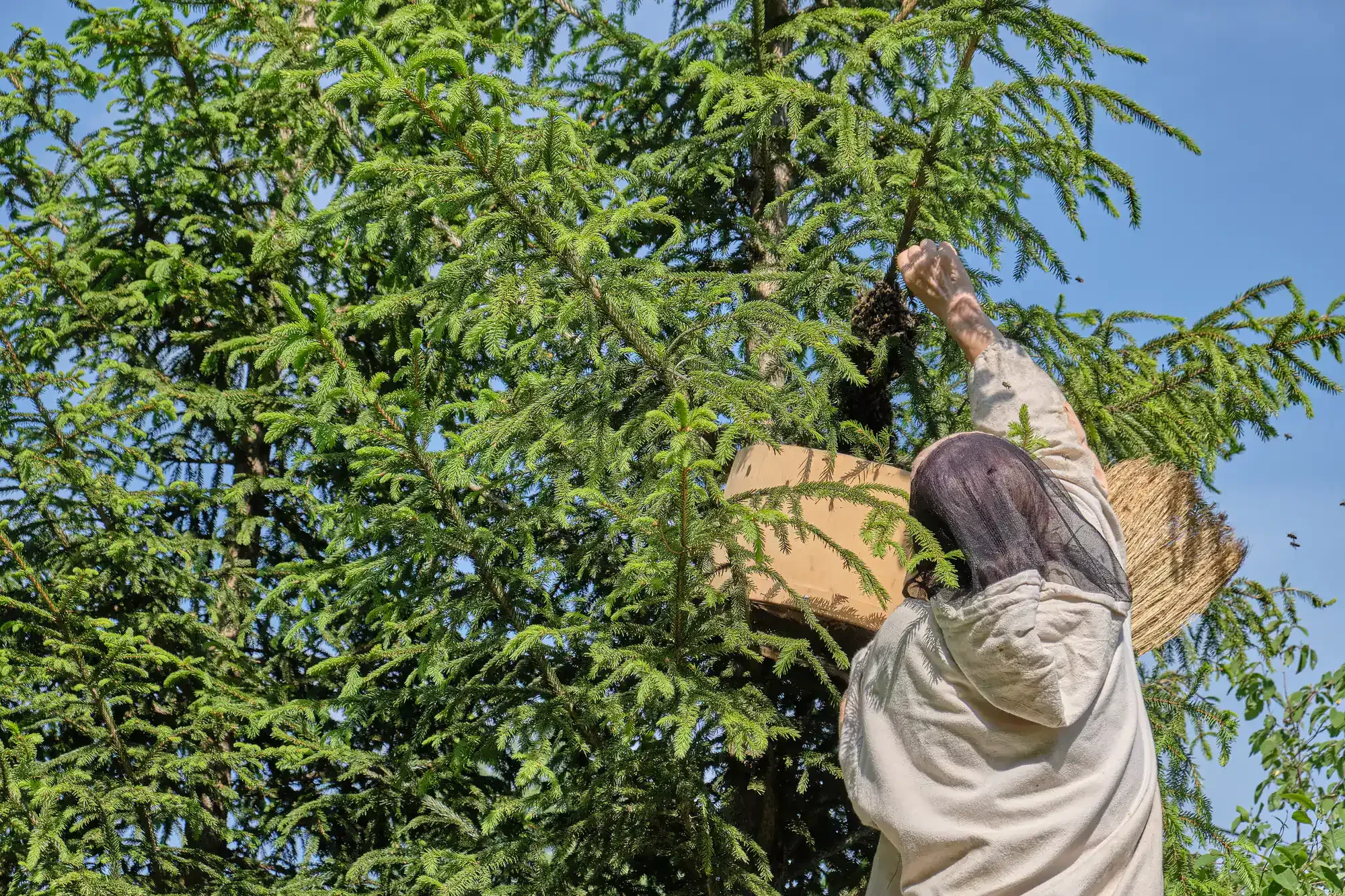
Swartz Creek’s geography plays a bigger role in this than most people realize. The Swartz Creek waterway runs through and alongside the community, and the riparian zones it creates — moist soil, decaying organic matter, abandoned animal burrows — are exactly the conditions yellow jackets look for when establishing ground nests. If your yard is anywhere near the creek corridor, undeveloped parcels, or the edge of a park like Elms Road Park or Otterburn Park, you’re in a higher-risk zone.
Beyond geography, wasp populations naturally peak in late summer. A colony that started with a single queen in April can reach 5,000 to 15,000 workers by August. As natural food sources decline in late summer, those workers become more aggressive and more visible — which is usually when homeowners notice the problem has gotten serious. The answer isn’t to wait them out. A colony that size poses a real sting risk, especially for households with children, pets, or anyone with a known allergy.
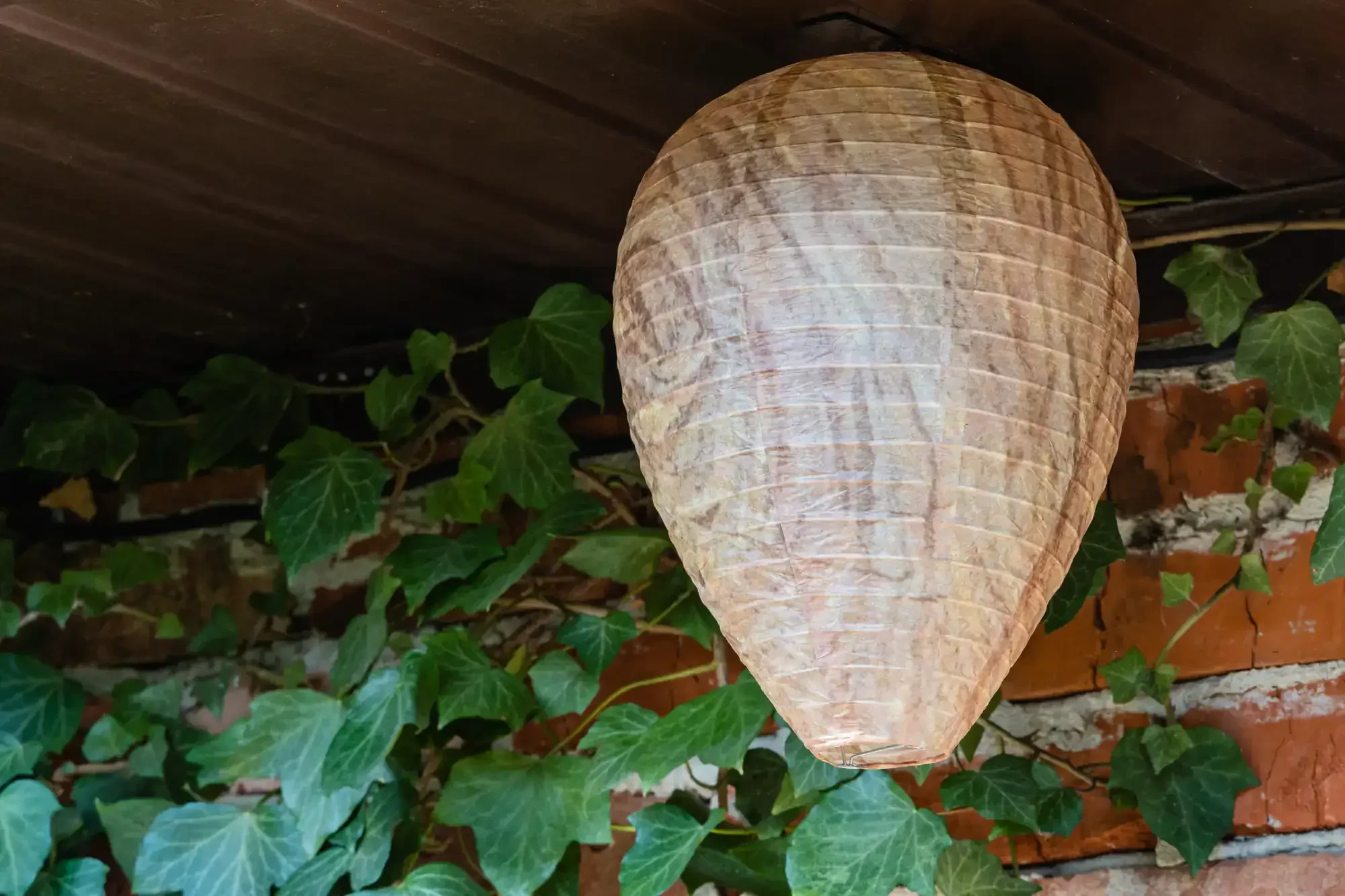
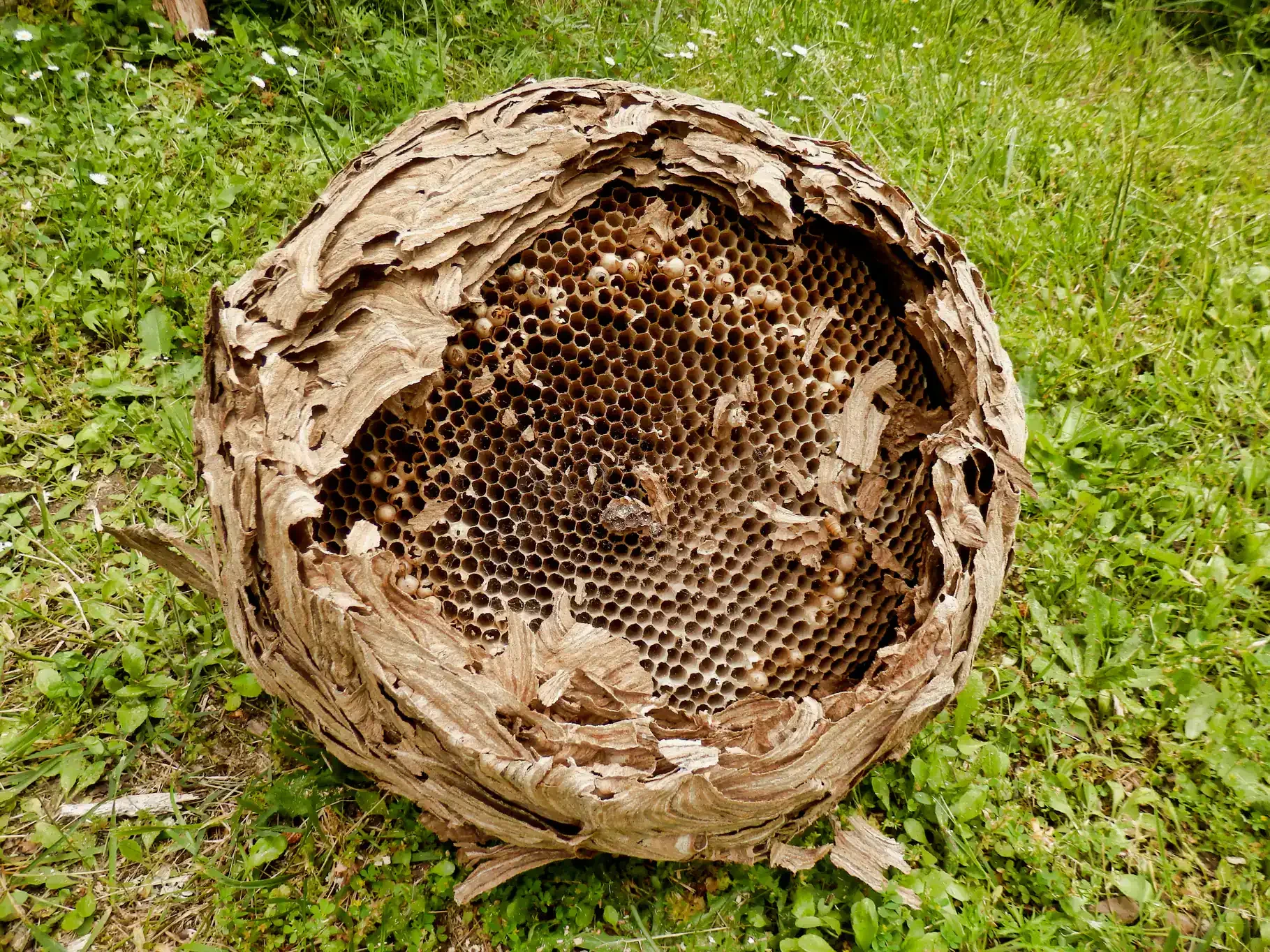
The honest answer is that it’s difficult to tell without getting close enough to put yourself at risk, which is exactly why most people should leave the identification to a professional. That said, there are some general patterns. Yellow jackets are small, smooth-bodied, and tend to nest in the ground or inside wall voids and structural cavities. They’re the ones most likely to sting without much provocation, especially in late summer. Paper wasps are longer and thinner, build open-comb nests that look like upside-down umbrellas, and are commonly found under eaves, deck railings, and window frames. Bald-faced hornets build large, enclosed, gray paper nests — usually in trees or shrubs — and are extremely aggressive when the nest is disturbed.
In Swartz Creek, all three are common. Older homes in established neighborhoods tend to see more paper wasp and bald-faced hornet activity in structural areas, while properties near undeveloped land and the creek corridor see more ground-nesting yellow jacket activity. The treatment approach differs depending on what you’re dealing with, which is why a proper inspection matters before any treatment begins.
This is one of the most common questions, and it deserves a straight answer. The re-entry time after treatment depends on the product used, where it was applied, and how it was applied. With the IPM approach we use, the goal is targeted treatment — applying the right product in the right place at the right concentration, not broad chemical application across your yard. In most cases, treated areas are safe for children and pets within a few hours of the application drying, but you’ll get specific guidance based on your situation when our technician is on-site.
For Swartz Creek households where the dog park at Elms Road Park is part of the weekly routine, or where kids are outside from morning to evening during the summer, that re-entry window matters. Our technician will walk you through exactly what to expect before leaving your property — not a vague “give it some time,” but an actual timeframe based on what was used and where. If you have a pet that was stung or a child with a known allergy, mention that when you call so we can factor it into the treatment approach.
They shouldn’t — but if they do, we come back. That’s not a complicated policy. Professional treatment eliminates the colony, not just the surface wasps. The queen, the workers, and the nest structure are all addressed. Entry points that are accessible get sealed to reduce the chance of a new colony establishing in the same location the following season.
That said, Michigan’s wasp season runs from roughly April through the first hard frost, and new queens emerging in spring can establish nests in the same general area if conditions remain favorable. This is especially relevant for Swartz Creek properties near the creek corridor or adjacent to undeveloped parcels, where habitat conditions don’t change year to year. If a new colony appears in the same spot after a completed treatment, contact us. Our callback policy exists because the goal is a solved problem, not just a completed service call.
The safest and most effective window for wasp nest removal in Swartz Creek is late spring through early summer — May through early July — when colonies are still small and workers are less aggressive. A nest treated in June with a few hundred workers is a much more straightforward job than the same nest in August with several thousand. That said, most people don’t discover a nest until it’s already large enough to disrupt daily life, which means the majority of service calls happen during peak season in August and September.
If you’re in peak season right now, don’t wait. Colony size and aggression both increase as summer progresses, and yellow jackets become significantly more dangerous as food sources decline in late summer. After the first hard frost — usually October or November in Genesee County — workers die off and nests go dormant. That’s a good time to seal entry points and assess your property for conditions that attract nesting in the first place, so you’re not starting next spring with the same problem.
Yes — we offer discounts for seniors, veterans, and first responders. In Swartz Creek, where roughly one in four residents is over 65 and the community has a strong culture of honoring military service — Veterans Memorial Park on Paul Fortino Drive reflects that directly — these discounts are a real part of how we operate, not an afterthought.
For senior homeowners on fixed incomes who’ve owned their homes in Winchester Village or Winchester Woods for decades, cost is a legitimate consideration. The discount helps, and so does our no-contract policy — you’re not locked into anything. We also match reasonable competitor rates, so if you’ve gotten a quote from another local provider, bring it up when you call. The goal is straightforward: give Swartz Creek residents access to professional, licensed wasp nest removal without making the pricing a barrier. If you’re a veteran, active-duty military member, first responder, or senior homeowner, mention it when you call and the discount applies.
Useful Links