
Hear from Our Customers
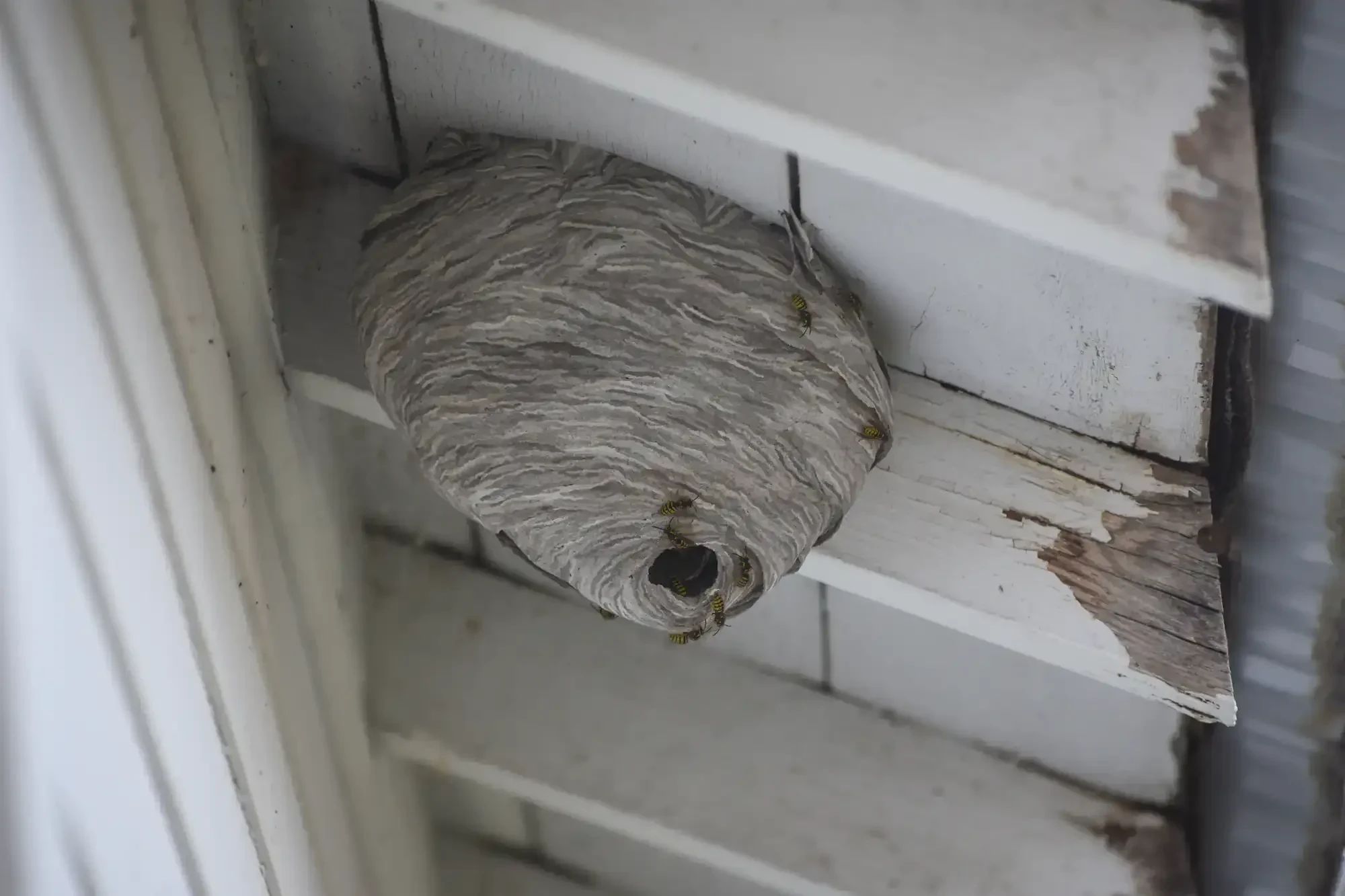
When yellow jackets take over, you stop using your own backyard. The deck sits empty, the kids stay inside, and every cookout becomes a gamble. That’s not a minor inconvenience — that’s your summer being taken from you one sting at a time.
What changes after a proper yellow jacket treatment isn’t just that the nest is gone. It’s that you can actually use your property again without scanning the air every five minutes. No more chasing kids away from the back corner of the yard. No more swatting at something that could send someone to the ER.
In Swartz Creek specifically, two things drive yellow jacket problems more than people realize. The first is the creek corridor itself — the waterway that runs through the city creates exactly the kind of riparian habitat where Eastern Yellowjackets build ground nests in abandoned animal burrows. If your property backs up to that corridor, or near Elms Road Park or the Genesee Valley Trail, your risk is higher than average. The second is the housing stock. A lot of Swartz Creek’s most established neighborhoods — Winchester Village, the Otterburn area, homes along Grand Blanc Road — were built in the 1950s and 1960s. Aging soffits, worn caulking, gaps around chimneys: that’s exactly what German Yellowjackets look for when they want to nest inside a wall or attic. When the colony is inside your walls, a can of store-bought spray doesn’t fix it. It makes it worse.
First Choice Pest Control isn’t a national brand with a local phone number. Our office is at 5060 Grand Blanc Road — right here in Swartz Creek. Founder Roger Chinault started this company in 2005 and has 26 years of hands-on pest control experience. He built First Choice around something most pest control companies don’t bother with: consistency. You get the same technician every time. Someone who knows your property, knows your history, and doesn’t need a refresher every visit.
Every technician at First Choice is a trained, full-time professional. No part-time college students, no rotating seasonal hires. We hold MDARD Pesticide Application Business License #250081, carry full insurance, and have completed Integrated Pest Management training — which means treatment decisions are based on what’s actually happening at your property, not a one-size-fits-all approach.
Swartz Creek customers have trusted First Choice for over a decade, and our reviews reflect it. That’s not an accident — it’s what happens when a company stays local, stays accountable, and actually shows up.
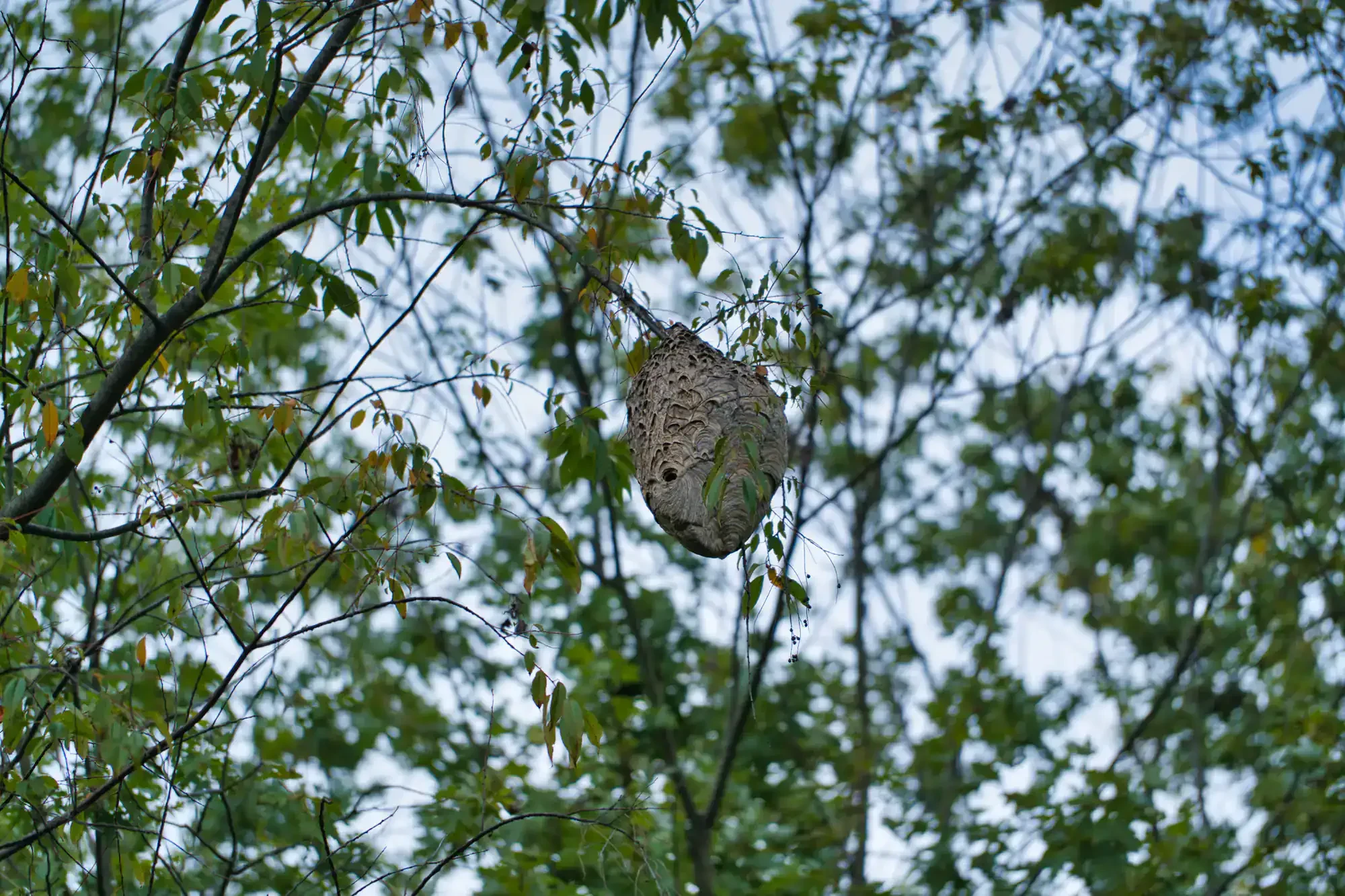
It starts with a proper inspection. Before anything gets treated, our technician identifies the species — because yellow jackets and other stinging insects don’t all behave the same way or nest in the same places. A ground nest along a creek-adjacent property near Elms Road Park gets handled differently than a German Yellowjacket colony that’s established itself inside the wall void of a 1960s ranch home off Miller Road. Getting this step wrong is how DIY attempts fail.
Once the nest location and species are confirmed, we treat the entire colony — not just the entry point. This is critical. Spraying the hole and walking away leaves the queen, the workers, and thousands of eggs intact. Within days, the colony reorganizes and the problem is back. A complete treatment eliminates the colony at the source and addresses the structural entry points that allowed them in.
After treatment, you’ll get clear guidance on what to expect over the next 24 to 72 hours, including normal activity patterns as the colony dies off. If you’re within the service guarantee period and yellow jackets return to the same treated location, we come back at no charge. No runaround, no rebooking fee — just the job finished the right way.
Ready to get started?
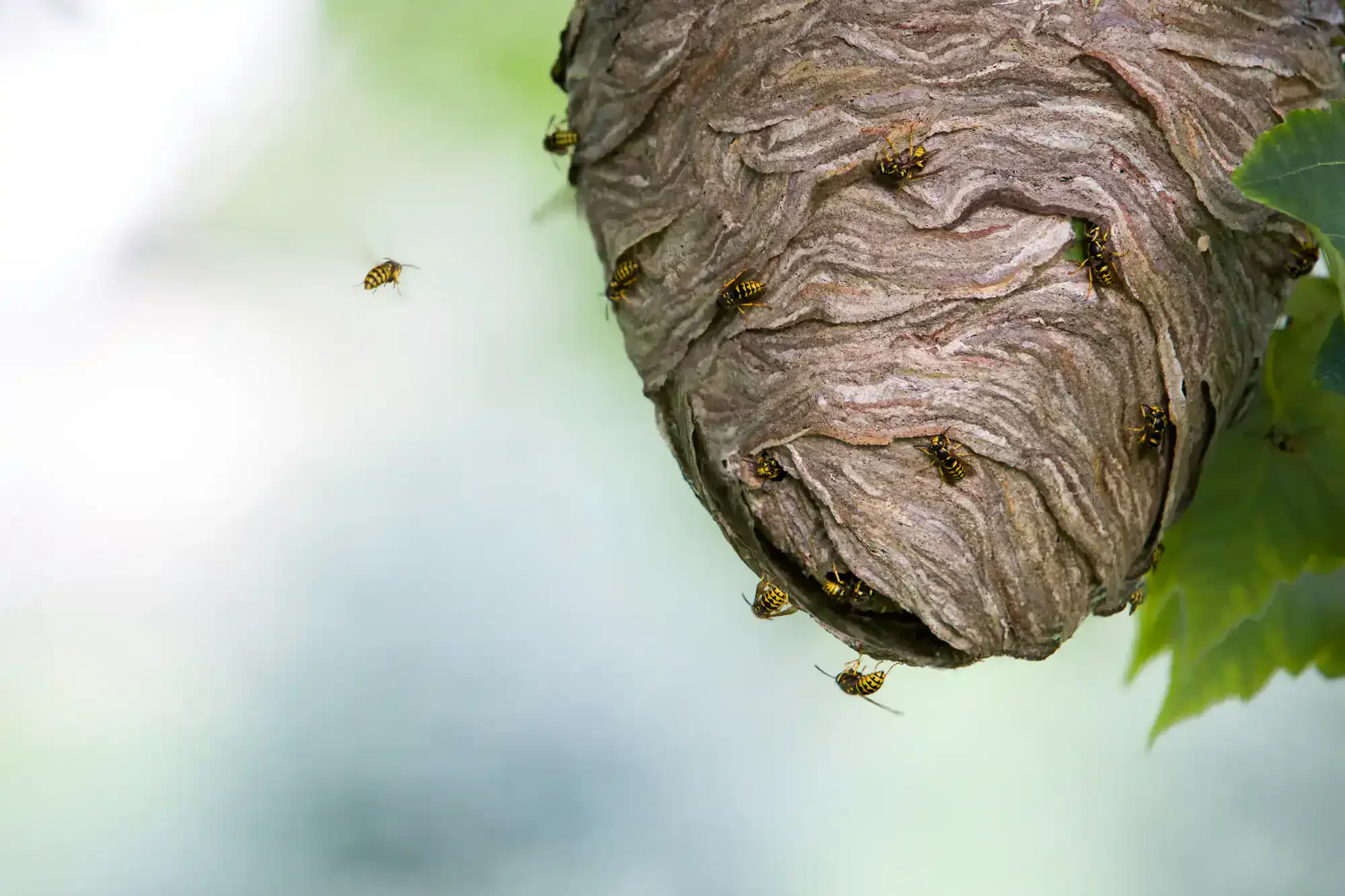
Yellow jacket pest control from First Choice covers the full scope: ground nest removal, wall-void treatment, attic yellow jacket removal, and structural entry point identification. In Genesee County, the two species you’re most likely dealing with are the Eastern Yellowjacket — which builds ground nests in abandoned burrows, common along Swartz Creek’s creek corridor and park-adjacent properties — and the German Yellowjacket, which nests inside structures and is especially prevalent in the older housing stock throughout Winchester Village, Winchester Woods, and the Otterburn neighborhood.
Attic and wall-void infestations are where the stakes get highest. A mature colony can hold 1,000 to 5,000 workers by late summer — the same time Swartz Creek families are most active outdoors. When that colony is inside your walls, you may hear buzzing before you ever see a nest. Treatment in these situations requires locating the colony within the structure, treating it completely, and identifying how they got in so the entry point can be addressed. Leaving it unsealed is an open invitation for next season.
We also serve commercial properties across the area. Discounts are available for seniors, veterans, and first responders — and if you’ve received a quote from another licensed pest control company in the area, bring it. We’ll match reasonable competitor rates.
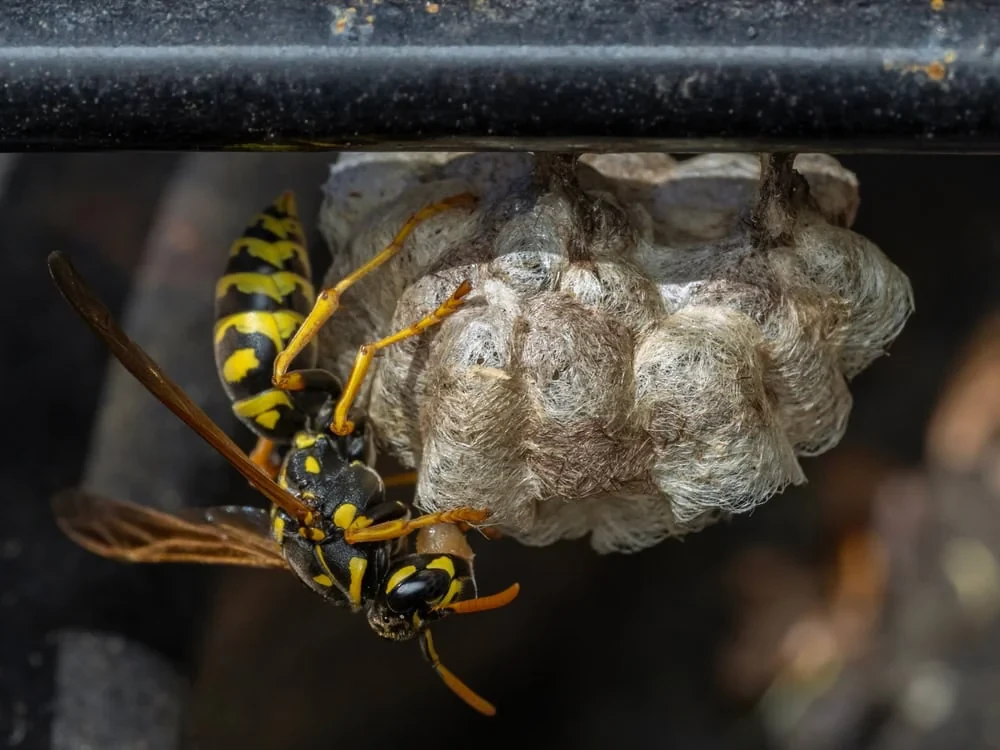
The most common signs are visible wasp traffic around a specific entry point — a gap in the siding, a soffit crack, a hole near the foundation — combined with a noticeable increase in yellow jacket activity around your yard or exterior. In older Swartz Creek homes, especially ranch and split-level styles built in the 1950s and 1960s, wall-void infestations often announce themselves as a faint buzzing sound coming from inside a wall or ceiling. By the time that sound is audible, the colony is already well-established.
Ground nests are trickier because they’re often hidden. You might notice yellow jackets repeatedly flying in and out of a low spot in the yard, near a landscaping bed, or along a fence line near the creek corridor. If you’re finding yellow jackets inside the house without an obvious entry point, that’s a strong signal the nest is inside the structure. Either way, the right move is an inspection — not a can of spray — because misidentifying the nest location makes the problem significantly worse.
For a small, exposed paper nest on an eave or fence post, a store-bought aerosol can sometimes work if you treat it at night when the colony is inactive and you can get complete coverage. That’s about the limit of where DIY makes sense. For anything larger, anything in the ground, or anything inside a wall or attic, over-the-counter spray is not the right tool — and applying it incorrectly can make the situation significantly more dangerous.
When you spray into the entry hole of a wall-void nest, you don’t eliminate the colony. You agitate it. The workers retreat deeper into the wall, and in some cases, they chew through drywall and emerge inside your living space. That’s a scenario that turns a pest problem into an emergency. Ground nests present their own risk — disturbing them without the right equipment and protective gear can trigger an aggressive response from thousands of workers simultaneously. With a colony that can reach 5,000 individuals by late August, that’s not a risk worth taking to save the cost of a professional treatment.
Late August through September is the peak danger window in Swartz Creek and across Genesee County. Here’s why: yellow jacket colonies spend the spring and early summer growing, with workers focused on hunting insects and building the nest. By late summer, the colony has reached maximum size and the workers shift their focus to sugary food sources — fruit, soda, anything sweet. That’s exactly when outdoor activity peaks in Swartz Creek, from backyard cookouts to evenings at Elms Road Park, and it’s when yellow jackets become most aggressive around food and people.
The other thing that happens in late summer is that the colony starts to feel stressed as food sources compete and temperatures begin to drop. Stressed colonies are more defensive and more likely to sting without much provocation. If you’ve noticed yellow jackets getting worse as summer goes on rather than better, that’s normal — and it’s a sign the colony is at or near peak size. Waiting it out until fall is an option, but a large colony inside a wall or attic doesn’t just disappear cleanly. Dead nest material attracts other pests, and the entry point stays open for next year’s queen.
The housing stock in established Swartz Creek neighborhoods — particularly homes built in the 1950s through 1970s in areas like Winchester Village and the Otterburn neighborhood — creates conditions that are genuinely more complex for yellow jacket treatment. Aging exterior materials mean more potential entry points: deteriorating soffit boards, gaps around chimney flashing, worn caulking around window frames, and old siding seams that have separated over decades. German Yellowjackets, which are the primary wall-void and attic nesters in Michigan, are very good at finding these gaps.
The challenge with older construction is that the colony can establish itself in areas that are difficult to access without knowing the structure well. Treatment requires locating where the colony actually is within the wall or attic — not just where the entry point is — and delivering product to the colony itself, not just the opening. An experienced technician who understands older construction knows how to read the signs and treat effectively without causing additional damage to the structure. That’s a meaningful difference from a general-purpose approach that treats the hole and hopes for the best.
Yes. We back every yellow jacket treatment with a one-year service guarantee. If yellow jackets return to the same treated location within the guarantee period, our technician comes back and re-treats at no additional charge. There’s no rebooking fee, no runaround — just the job finished the way it should have been.
This matters in Swartz Creek particularly because ground-nesting yellow jackets along creek-adjacent properties and park corridors can be persistent. The riparian zones near the Swartz Creek waterway and the green corridors connecting Elms Road Park and Otterburn Park create ongoing habitat pressure — meaning new queens can scout previously treated areas the following season. The guarantee gives you a real safety net, not just a one-time treatment and a handshake. It also reflects something straightforward about how we operate: if the problem comes back within the guarantee window, that’s on us to resolve, not on you to pay for again.
We offer discounts for seniors, veterans, and first responders. Swartz Creek has a meaningful population of retirees and long-term residents — the city’s median age is close to 46 — and a community with strong ties to manufacturing, public service, and the military through its Genesee County roots. These discounts are a straightforward acknowledgment of that. If you fall into one of those categories, ask about it when you call.
We also offer price matching for reasonable competitor quotes. If you’ve gotten a quote from another licensed pest control company serving the Swartz Creek area, bring it and we’ll match it. The goal isn’t to be the cheapest option — it’s to make sure cost isn’t the reason someone chooses a less experienced provider for a job that genuinely requires getting it right the first time. Between the price match and the one-year service guarantee, you’re covered on both ends: the price going in and the result coming out.
Useful Links