
Hear from Our Customers

If you’ve ever set up a fire pit or pulled chairs onto the porch only to retreat indoors twenty minutes later, you know exactly what’s at stake here. It’s not dramatic — it’s just a summer you can’t use. Professional mosquito control changes that. A properly maintained barrier program can reduce mosquito populations on your property by up to 90%, and that number holds up across a full season of treatments, not just the first week after a spray.
What makes Newark, MI different from a lot of other areas is where the pressure is coming from. This isn’t a subdivision where someone’s neglected birdbath is the culprit. In Gratiot County, nearly 80% of the land is in active agricultural production. That means field drainage ditches, tile systems, and low-lying cropland hold standing water after every rain — water that sits long enough to become prime breeding habitat, and none of it is on your property. You can clean up your yard perfectly and still be overwhelmed by mosquitoes hatching a hundred yards away.
That’s why our treatment approach here has to account for more than just your backyard. It has to target resting sites — the shrub lines, tree borders, and shaded edges where adult mosquitoes spend most of their time — and create a barrier that actually intercepts them before they reach where you’re sitting. When that’s done right, on a consistent schedule from May through September, you get a yard that functions like a yard again.
We’ve been serving Michigan homeowners since May 31, 2005 — twenty years of real Michigan summers, real pest pressure, and real customers in communities like Newark Township who came back because the work held up. Roger, who leads First Choice Pest Control, brings 26 years of hands-on pest management experience to every job. That’s not a number on a brochure — it means he’s seen what central Michigan mosquito seasons look like in wet years and dry ones, and he knows how agricultural county conditions like Gratiot’s change the equation.
One thing that sets us apart in a community like Newark Township is consistency. You get the same trained technician assigned to your property every single visit. Not whoever’s available that week — the same person who knows your tree lines, your low spots, and your yard’s specific problem areas. We don’t use part-time or seasonal workers. Every technician is a trained professional, and that standard doesn’t change based on how busy the season gets.
With a 4.7-star rating from more than 363 verified customers and recognition from Angie’s List and HomeAdvisor, the track record speaks for itself.
The process starts with a property assessment. Before anything gets applied, your technician walks the property to identify where mosquitoes are most likely resting and breeding — shaded shrub borders, dense vegetation, low-lying areas that hold moisture after rain. In Newark Township, that assessment often includes looking at how your property sits relative to surrounding farmland and drainage infrastructure, because the source of your mosquito pressure usually extends beyond your property line.
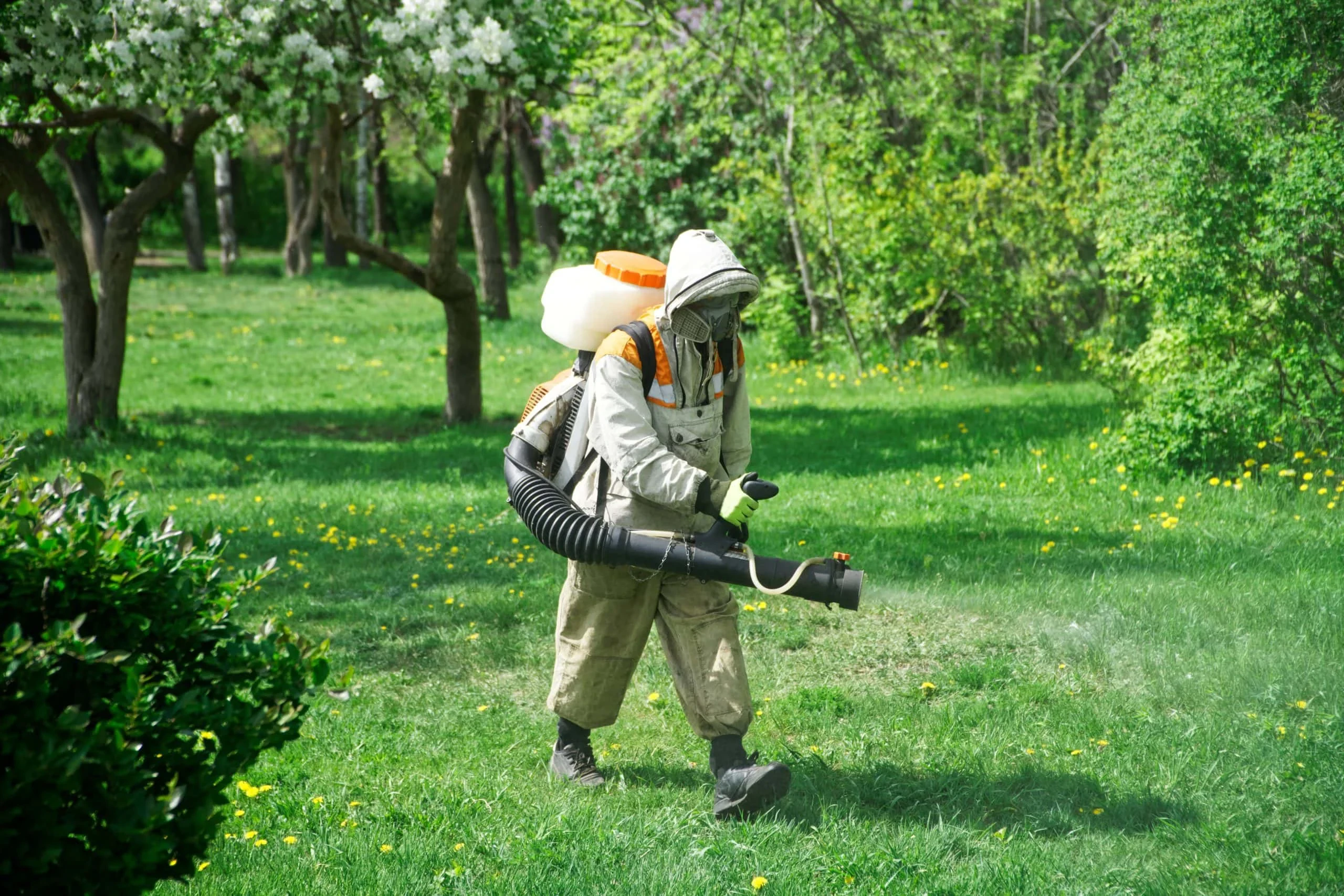
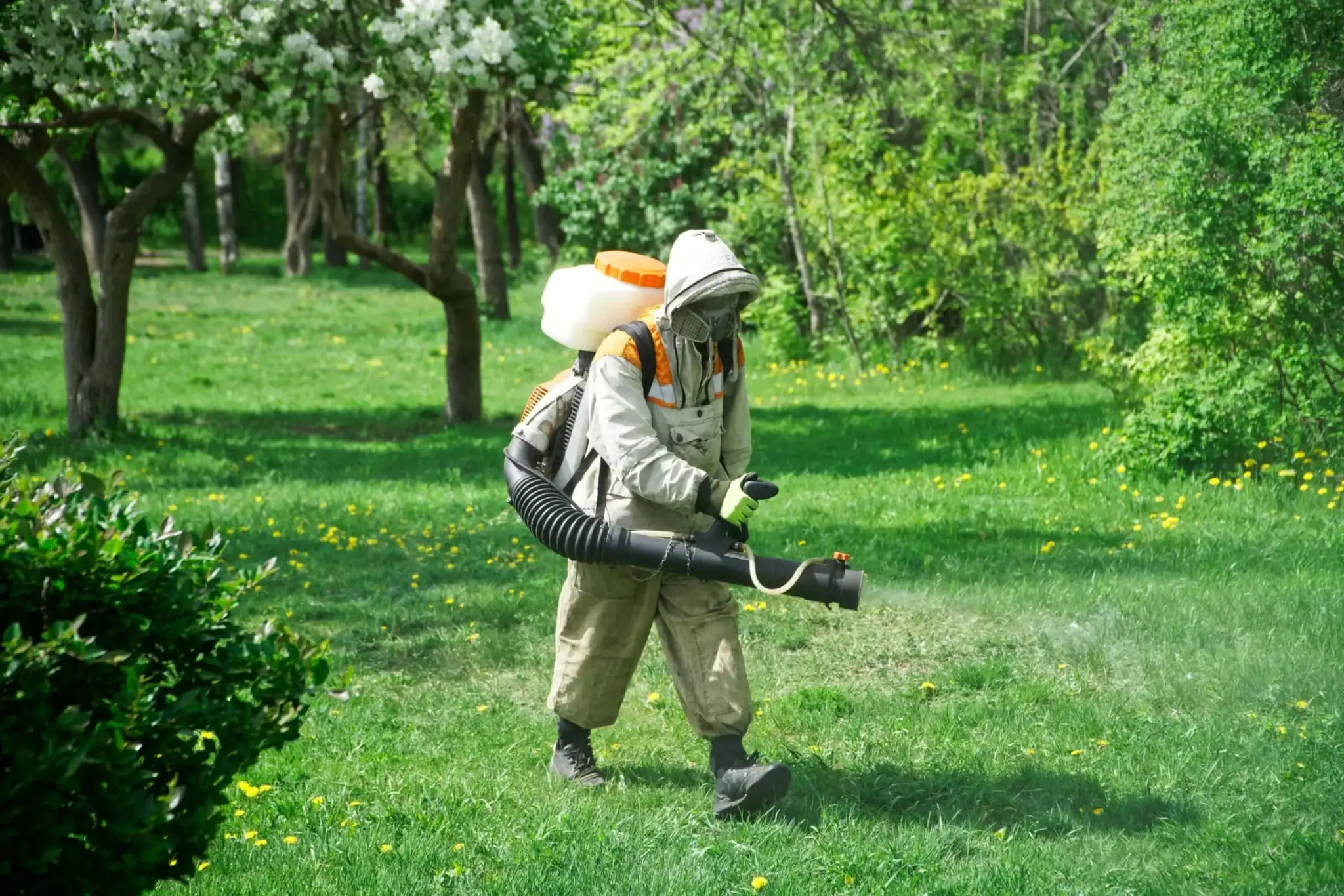
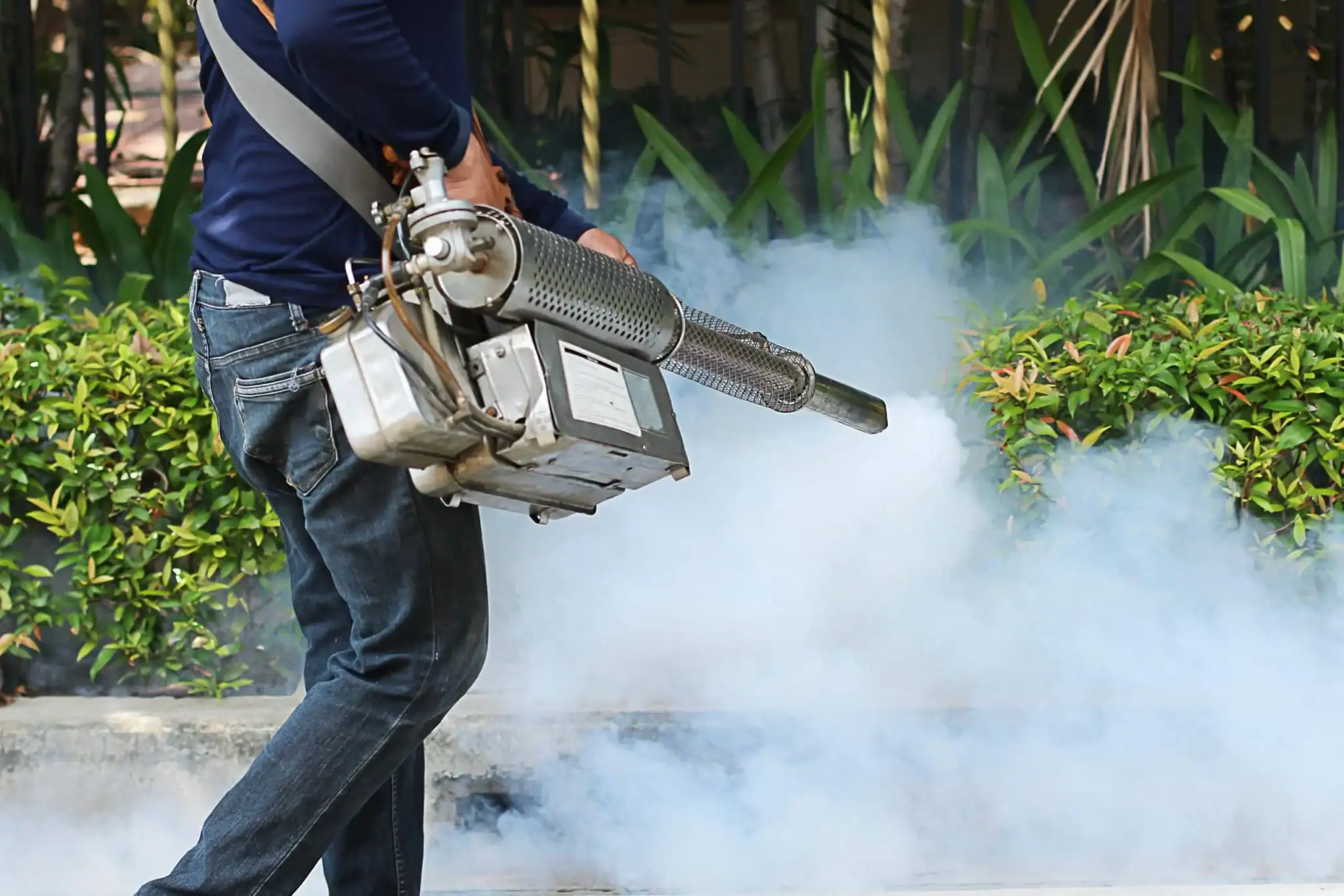
From there, a targeted barrier treatment is applied to the areas where adult mosquitoes rest during the day — not just open lawn, but the edges, the tree lines, and the transition zones where vegetation meets open space. The product used is EPA-registered and applied by an IPM-certified technician, which means the approach is calibrated to use what’s needed and nothing more. That matters in an agricultural township where chemical application near drainage systems, livestock, and field edges is a real consideration.
Treatments are scheduled on approximately a 21-day cycle throughout the season, typically from May through September. Michigan’s mosquito season in Gratiot County tends to start early when spring rains flood low-lying fields and ditches, so getting the first treatment in before peak pressure builds is important. Each return visit re-establishes the barrier and adjusts for any changes in conditions — a wet stretch, a new problem area, or anything that’s shifted since the last visit. The goal is consistent, season-long protection, not a one-time spray that fades in two weeks.
Ready to get started?
Most mosquito control companies treat mosquitoes and stop there. We include flea and tick treatment in every mosquito program at no additional charge. In a rural township like Newark, where field edges, wooded borders, and tall grass are part of everyday life, ticks aren’t a secondary concern — they’re a real risk every time the kids play outside, the dog runs the fence line, or you walk the back of your property. Getting both covered in a single program, without paying extra for it, is a straightforward value that most providers simply don’t offer.
The products we use are EPA-registered and applied under Michigan MDARD licensing requirements. We hold Integrated Pest Management certification, which means the treatment is designed to be effective without being excessive — the right product, in the right places, at the right time. For Gratiot County residents with farm animals, working dogs, or livestock nearby, that calibrated approach matters.
We also offer price matching for reasonable competitors’ rates, so if you’ve already gotten a quote from another provider, bring it. Seniors, veterans, and first responders qualify for additional discounts — and in a community like Newark Township, those aren’t afterthoughts. If you or someone in your household qualifies, ask about it when you call. The program is available for both residential and commercial properties throughout the Newark, MI area.
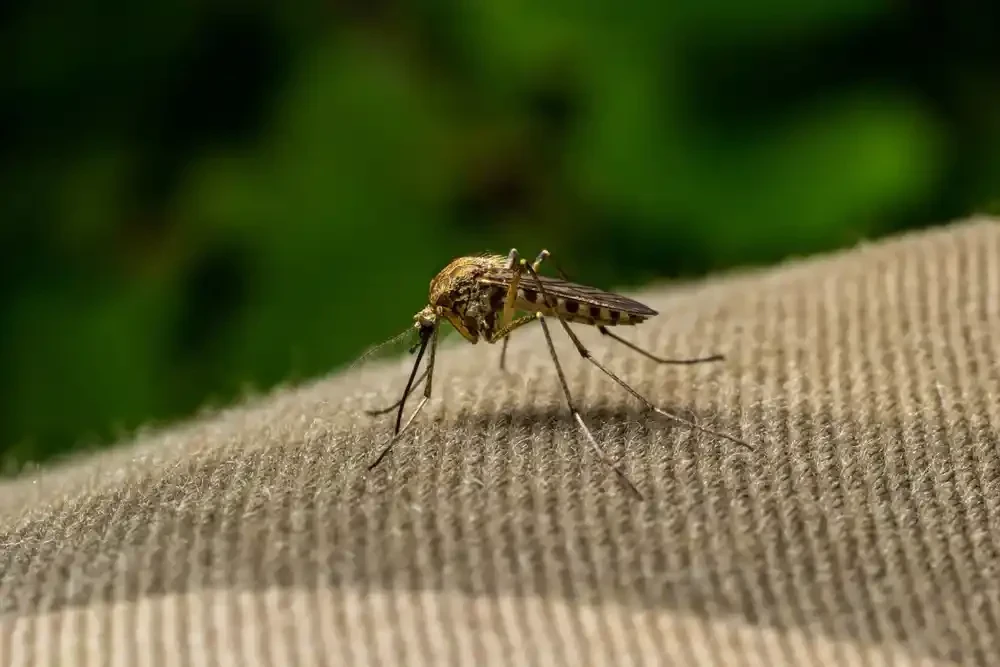
This is one of the most common questions from Newark Township residents, and it’s a fair one. When your mosquito problem is coming from drainage ditches and low-lying agricultural fields that aren’t on your property, it can feel like treatment won’t make a dent. The honest answer is that professional barrier treatment doesn’t eliminate the source — but it doesn’t need to. The goal is to target where adult mosquitoes rest during the day, which is almost always in shaded, vegetated areas on or near your property: shrub borders, tree lines, dense ground cover. By treating those resting zones consistently, you intercept mosquitoes before they reach the areas where you’re actually spending time.
A properly maintained seasonal program can reduce the active mosquito population on your property by up to 90%, even when the pressure is coming from agricultural land nearby. The key word is “maintained” — a single treatment won’t hold up against ongoing pressure from surrounding farmland. That’s why the 21-day treatment cycle exists. It keeps the barrier active throughout the season, so each new hatch from those field ditches runs into treated resting zones before it reaches your porch.
In Gratiot County, the mosquito season tends to start earlier than most people expect. Spring rains and snowmelt flood low-lying farm fields and drainage ditches, triggering the first significant hatch of the season — sometimes as early as late April or early May, depending on the year. By the time mosquitoes are noticeably bad in your Newark yard, the population is already well established, which makes getting ahead of it much easier than trying to knock it back mid-season.
The recommendation is to schedule your first treatment in May, before peak pressure builds. This gives the barrier time to establish before the heaviest part of the season — June and July — when temperatures are consistently warm and breeding cycles accelerate. If you wait until you’re already being driven indoors, you’re playing catch-up for the rest of the summer. Starting early means the program works with the season’s natural rhythm rather than against it, and you get the full benefit of consistent protection from the beginning of summer through September.
The products we use are EPA-registered and applied by an IPM-certified technician, which means they’ve been evaluated for safety and are applied in a targeted, calibrated way — not broadcast across everything indiscriminately. For most households, the standard guidance is to keep people and pets off treated surfaces until the application has dried, which typically takes about 30 minutes to an hour depending on conditions.
For Newark Township residents with farm animals, chickens, or livestock near the treatment area, that’s a conversation worth having directly with your technician before the visit. The IPM approach is specifically designed to minimize unnecessary chemical exposure, and your technician can walk the property with you beforehand to identify any areas that need special consideration. We’ve been navigating these kinds of rural property situations in central Michigan for twenty years — it’s not an unusual request, and it’s handled as part of the standard process, not as an exception.
Each treatment is effective for approximately 21 days under normal conditions. After that window, the barrier begins to break down — through rainfall, humidity, and natural weathering — and the protection fades. That’s why the seasonal program is built around a 21-day treatment cycle rather than a one-time application. A single spray might feel like it’s working for a week or two, but without consistent reapplication, you’re leaving the second half of the summer unprotected.
In a wet year — and Gratiot County gets them — the 21-day window can shorten. Heavy rain events can wash treated surfaces and accelerate breakdown, particularly in low-lying areas near drainage infrastructure. Your technician accounts for this as part of the seasonal program, adjusting timing when conditions call for it. The goal is a barrier that stays active throughout the season, not one that works great in June and leaves you unprotected by August when you’re still trying to use your yard.
The cost of a professional seasonal mosquito program varies based on property size and the number of treatments in the schedule, but it’s designed to be competitive — and we offer price matching for reasonable competitors’ rates, so you’re not paying more than the market supports. When you factor in that flea and tick treatment is included at no extra charge, you’re effectively getting three services for the price of one, which changes the math compared to most providers who charge separately for each.
The honest comparison to DIY is this: consumer mosquito sprays, citronella products, and bug zappers provide limited, short-term relief at best. They’re not designed for the kind of sustained, agricultural-scale pressure that Newark Township properties deal with. A summer’s worth of those products — candles, sprays, zappers, foggers — adds up faster than most people realize, and none of it comes close to the 90% population reduction a professional barrier program can achieve. If you’re spending money on the problem anyway, spending it on something that actually works is the better calculation.
Yes — we offer discounts for seniors, military veterans, and first responders. In a rural township like Newark, where a lot of households include older homeowners on fixed incomes or veterans who’ve settled in Gratiot County’s quieter communities, those discounts reflect a straightforward recognition of who’s actually in the community and what they’ve contributed. It’s not a promotional add-on — it’s just how we do business.
If you or someone in your household qualifies, mention it when you call. There’s no complicated process or paperwork involved. We’ve been serving Michigan families for twenty years, and a significant part of our customer base includes exactly the kind of people these discounts are meant for. Senior homeowners in Newark Township in particular tend to be more motivated by the health risk side of mosquito control — West Nile Virus has been confirmed in Michigan every summer since 2002, and 2023 saw 21 confirmed human cases statewide. Having a yard you can actually use safely, without worrying about exposure every time you step outside, is worth something real — and the discount makes that easier to access.
Useful Links