
Hear from Our Customers
You stop watching where you walk. You stop keeping the kids away from the back of the barn. You stop wondering if that gap in the soffit is getting worse — because it was, and now it isn’t. That’s what professional yellow jacket nest removal in Newark actually delivers: your property back.
Newark Township’s older rural housing stock is exactly what the German Yellowjacket looks for. Aging siding, loose fascia, uninsulated crawlspaces — these insects find the gaps that have been there for years and move in quietly. By the time you notice the activity, the colony is already established inside the wall, and it’s been chewing through insulation and wood framing for weeks. Getting ahead of it matters, and getting it right the first time matters more.
The Eastern Yellowjacket adds a different layer of risk for anyone spending time outdoors on Gratiot County farmland. These are the ones nesting underground — in the abandoned burrows along field edges, fence rows, and overgrown lot lines that are everywhere in this part of central Michigan. Mowing, gardening, or walking the property can disturb a ground nest without any warning. When a colony has had all summer to grow, that disturbance means thousands of stings in seconds. Yellow jacket pest control near Newark isn’t a luxury — it’s a practical call for anyone managing rural land.
We’ve been doing this since May 31, 2005 — twenty years of serving Michigan homeowners, including families across Gratiot County and the Newark Township area. Roger Chinault founded First Choice Pest Control and still brings 26 years of hands-on pest control experience to every job. This isn’t a franchise with rotating managers. It’s a family-owned operation where the same technician comes back to your Newark property year after year, already knowing your home’s layout, your outbuildings, and where the problem spots tend to show up.
We hold MDARD Pesticide Application Business License #250081, have completed Integrated Pest Management training, and have earned recognition from both Angie’s List and HomeAdvisor. Our Angi rating sits at 4.7 out of 5 — earned through real jobs, real customers, and real results. Whether you’re dealing with a yellow jacket colony inside the walls of your farmhouse south of Ithaca or a ground nest in the equipment yard, you’re getting a licensed professional who knows what they’re doing and stands behind the work.
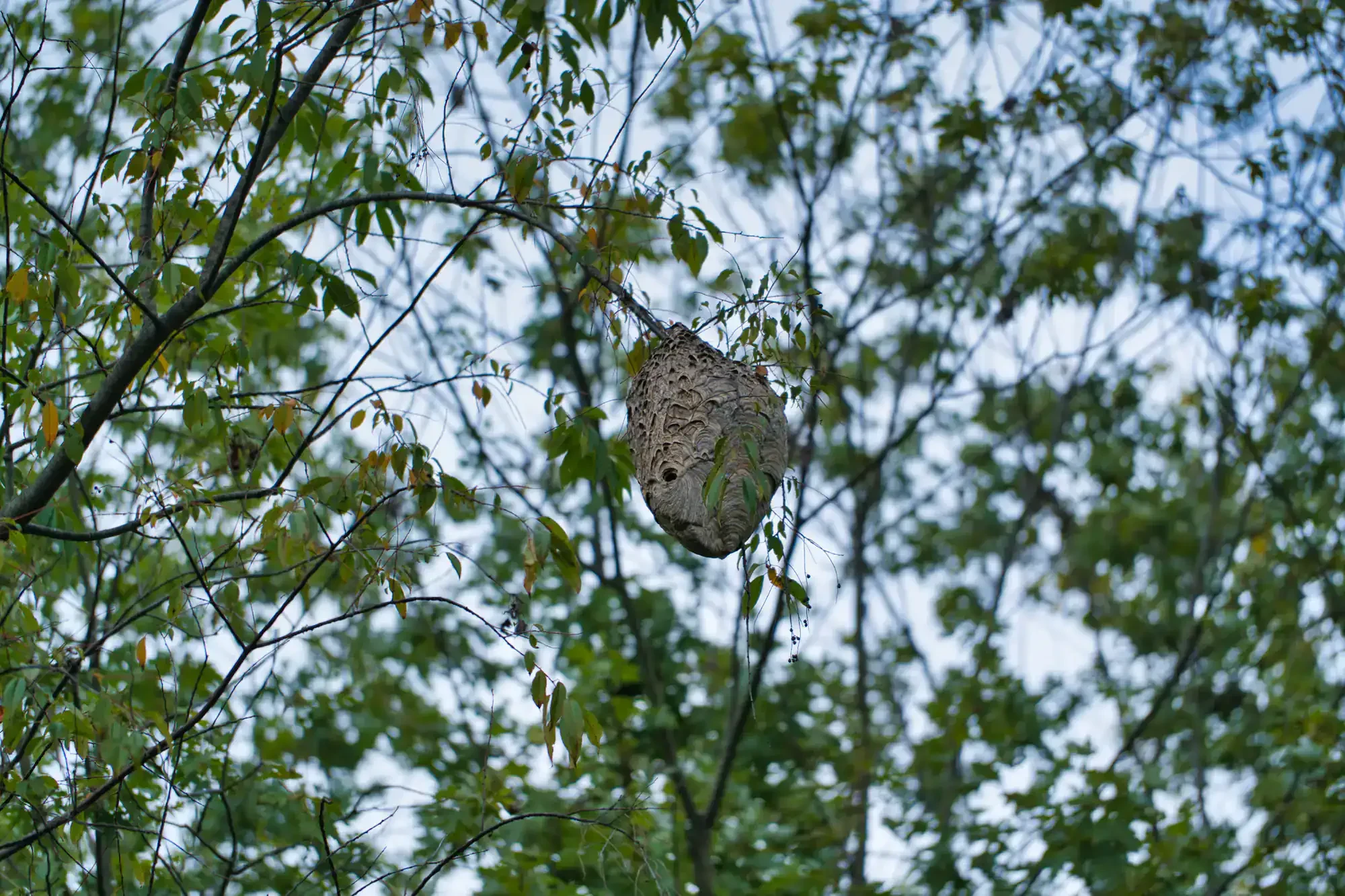
It starts with identification, and that step matters more than most people realize. Michigan has two dominant yellow jacket species, and they nest differently. The German Yellowjacket goes into wall voids, attics, and crawlspaces — the kind of enclosed cavities common in the older farmhouses and rural homes throughout Newark Township. The Eastern Yellowjacket goes underground, favoring the abandoned burrows that are abundant along the field margins and woodlot edges on Gratiot County rural properties. Treating the wrong species the wrong way doesn’t just fail — it makes the colony more aggressive and the problem harder to solve.
Once the species and nest location are confirmed, treatment is targeted. Wall-void and attic colonies require a dust application delivered directly into the nest cavity to reach the queen and eliminate the colony at the source. Ground nests require a different approach entirely. Either way, the treatment is applied with precision — no broad spraying across your lawn, no unnecessary chemical exposure around your family, your pets, or your livestock.
After treatment, you’ll know what was found, what was done, and what to watch for. If activity returns within the guarantee period, we come back at no additional charge. The entry points that allowed the colony access in the first place — those gaps in the siding, the loose soffit, the crack in the foundation — should be sealed before next spring, when a new fertilized queen will be looking for exactly that kind of opening. That’s a conversation our technician will have with you before they leave.
Ready to get started?
Every yellow jacket job starts with a proper inspection — not a quick glance, but a real look at the entry points, the nest location, and the structural conditions that made your property vulnerable. For Newark Township homeowners, that often means checking the areas that don’t get looked at often: the soffits on an older farmhouse, the roof void of a hay barn, the crawlspace under a rural home that hasn’t been fully inspected in years. Attic yellow jacket removal in Newark requires knowing what you’re dealing with before anything gets opened or treated.
Treatment is species-specific and site-specific. We do not apply a one-size-fits-all solution to every job. The German Yellowjacket nesting in your wall gets a targeted dust treatment. The Eastern Yellowjacket colony in the field burrow gets a different method. Both get a licensed professional using IPM-certified methodology — meaning the treatment is deliberate, appropriate, and as contained as possible given your property and the people on it.
We serve both residential and commercial customers throughout the area, including agricultural operations, outbuildings, and commercial properties across Gratiot County. Seniors, veterans, and first responders receive discounts — and if you find a reasonable competitor rate, we will match it. No binding contracts. No surprises. If the work doesn’t hold within the guarantee period, we come back and make it right.
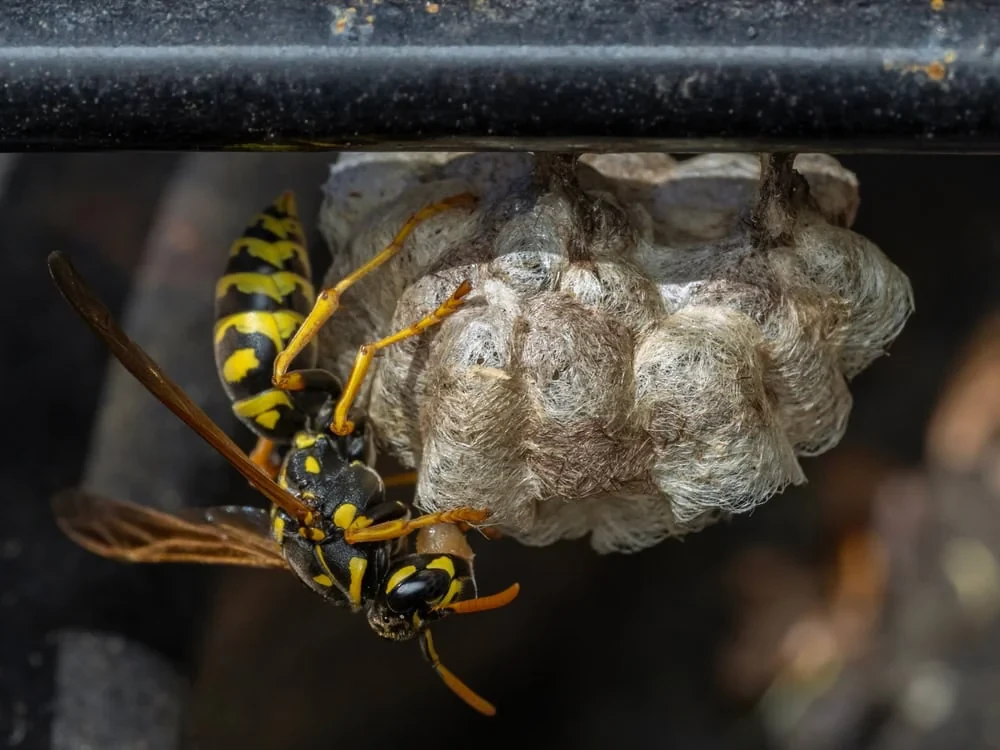
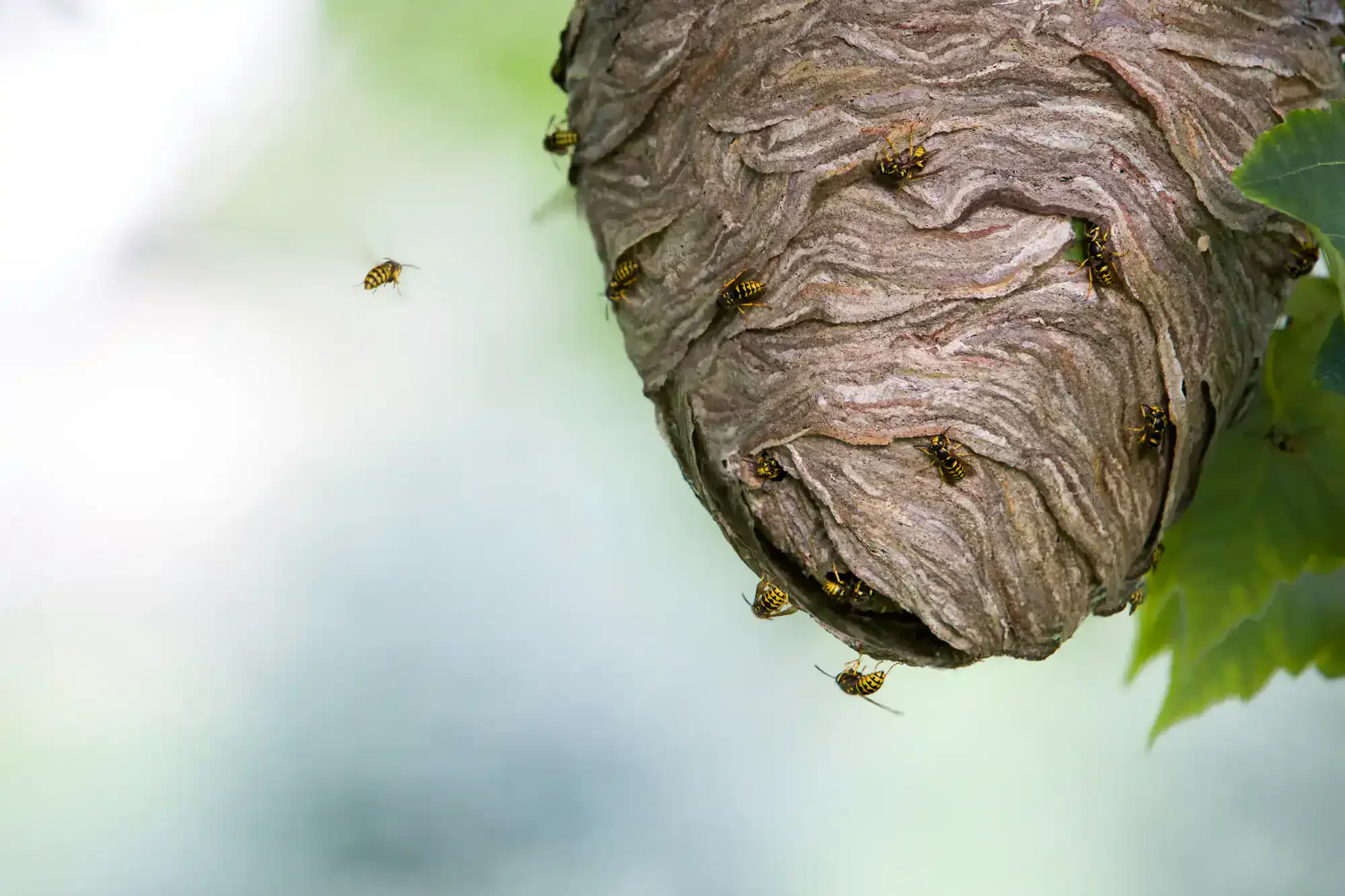
By July and August, a yellow jacket colony that started with one queen in April has grown to anywhere from 1,000 to 5,000 workers. The colony is at its largest, the workers are at their most aggressive, and the food stress that comes with late summer drives them to defend the nest hard and seek out proteins and sugars wherever they can find them. For anyone spending time outdoors on Newark Township’s rural land — mowing, tending a garden, working around outbuildings, or running equipment along field edges — that’s a serious daily risk.
The agricultural landscape around Newark makes it worse. Nearly 80% of Gratiot County land is in active farm production, which means the field margins, fence rows, and woodlot edges that Eastern Yellowjackets use for underground nesting are everywhere. There’s no shortage of abandoned rodent burrows to start a colony in. The more rural the property, the more potential nesting sites exist — and the more exposure you have during the exact months when yellow jacket colonies are at peak size and aggression.
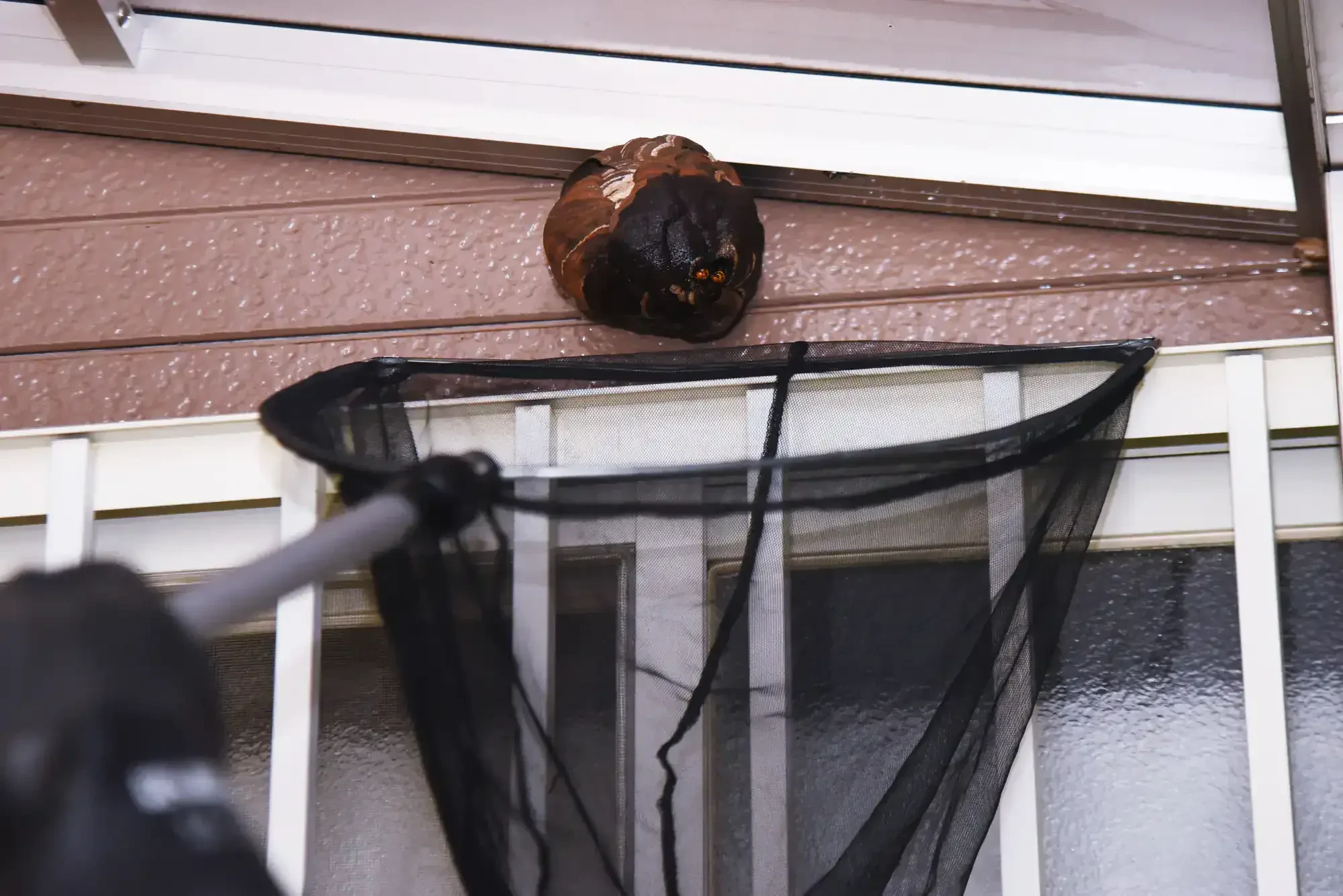
Yes, and it’s more common in older rural housing than most people expect. The German Yellowjacket — the species most likely to nest inside the walls, attics, and crawlspaces of Newark Township’s older farmhouses — builds its nest by chewing wood fiber into a papery material. As the colony grows through summer, the nest expands, and workers chew through drywall, insulation, and wood framing to make room. What starts as a small void becomes a significantly larger one by September.
The structural damage compounds when the colony dies off in fall and the nest is left in place. Dead nest material absorbs moisture, attracts rodents, and creates conditions that invite secondary infestations. The entry point — the gap in the siding, the crack in the soffit — stays open through winter, ready for a new queen to find it the following spring. Treating a wall-void colony early is almost always less expensive than repairing the structural damage from one that was left alone until it became impossible to ignore.
For a small, exposed nest early in the season — maybe a paper nest under an eave with a handful of workers — a careful homeowner with the right product might manage it. But that’s not what most people in Newark Township are dealing with by the time they’re searching for help. By midsummer, you’re typically looking at a mature colony with hundreds to thousands of workers, often in a location that’s difficult to access and treat safely: inside a wall void, in an attic space, or in an underground burrow that you can’t see the full extent of.
Yellow jackets don’t have barbed stingers like honeybees — they can sting repeatedly, and a disturbed colony will respond fast. Store-bought sprays are often insufficient to reach the queen in a wall-void or ground nest, which means the colony survives, the workers are now agitated, and the problem is harder to solve than it was before. A licensed professional can identify the species, locate the nest, and apply the right treatment in the right way — which matters a lot when the nest is inside your home or in a structure where your family, workers, or livestock spend time.
This is one of the most common questions, and the short answer is no — not if the nest is inside a structure. The worker colony does die off by late fall, but waiting until winter creates problems that outlast the cold season. The nest itself remains in the wall void or attic, and the dead material attracts rodents and flesh flies through winter. More importantly, the entry point that allowed the colony access in the first place stays open — and a new fertilized queen emerging from dormancy in spring will find that opening and start the cycle over in the same spot.
If you’re dealing with an outdoor ground nest in a low-traffic area of your property and the season is already winding down, waiting may be a reasonable call. But for any nest inside a Newark Township farmhouse, outbuilding, or structure where people or animals are present, treating it now — and sealing the entry point afterward — is the right move. The cost of professional yellow jacket nest removal is a fraction of what structural repairs cost after a colony has spent a full season expanding inside your walls.
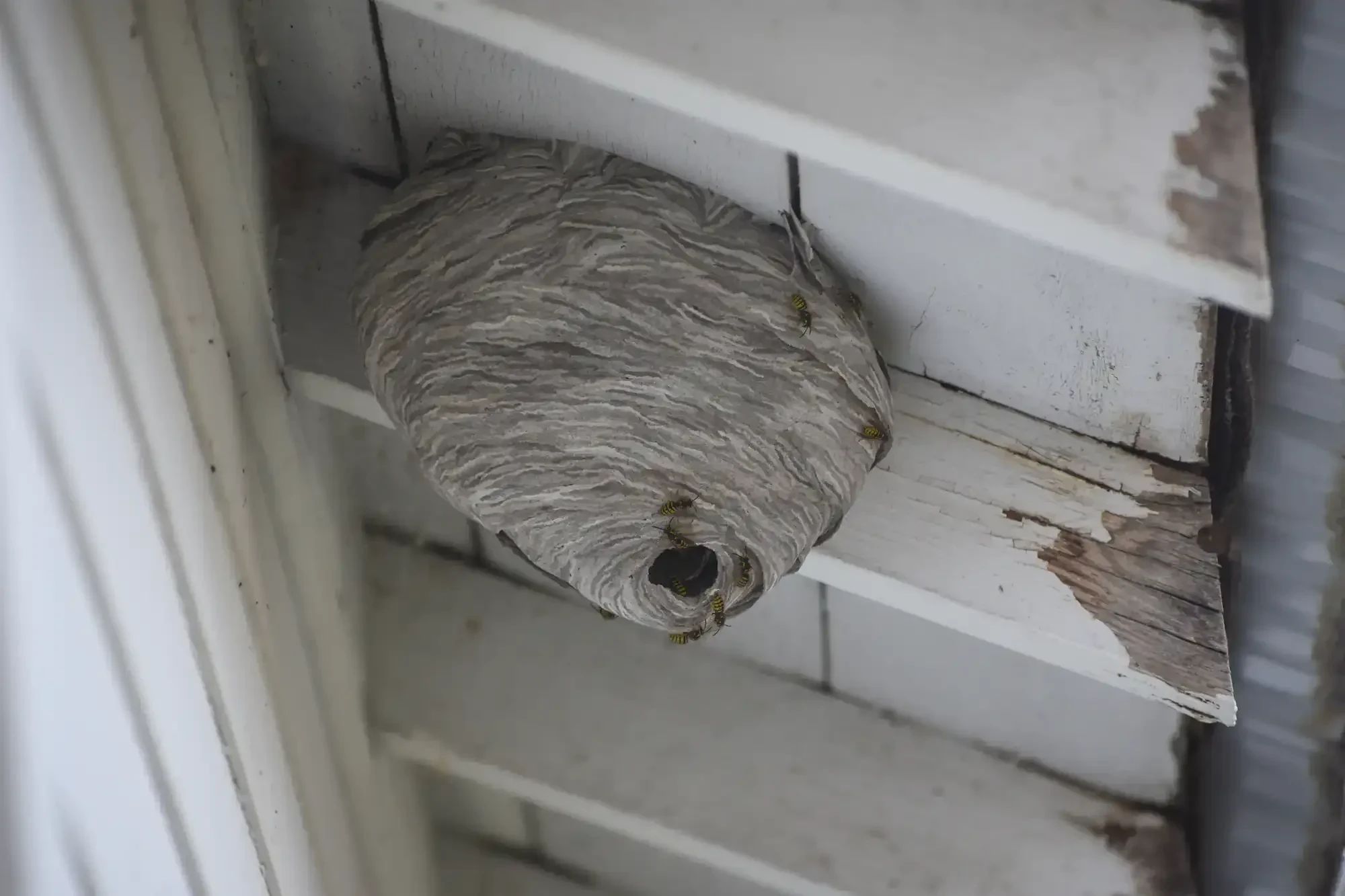
The clearest sign of a wall-void nest is consistent traffic — workers entering and exiting through the same small gap, crack, or hole in your siding, soffit, fascia, or foundation, usually at a steady pace throughout the day. You may also hear a low buzzing or chewing sound coming from inside the wall, particularly in older farmhouses where the wall cavities are accessible and the insulation is minimal. The German Yellowjacket, which is the species most commonly found nesting inside structures in Newark Township, tends to establish in wall voids and attic spaces of older rural homes where gaps and deteriorating building materials give them easy access.
If you’re seeing yellow jacket activity near your home but can’t pinpoint an entry point, watch the insects in the late afternoon when traffic is heaviest. They’ll funnel back to the same spot repeatedly. Don’t probe or block the entry point yourself — sealing it while the colony is active traps workers inside and can force them to chew through drywall into your living space. A licensed technician will treat the nest first, then advise on sealing the entry point after the colony is eliminated.
Yes. We offer discounts for seniors, veterans, and first responders. Gratiot County has a real working community — farmers, longtime rural homeowners on fixed incomes, veterans who settled in central Michigan, and the first responders who cover a wide geographic area across the county. These discounts exist because those groups are a genuine part of the community we serve, not as a promotional tactic.
If you’ve already gotten a quote from another provider and it’s a reasonable rate, we will match it. There are no binding contracts, so you’re not locked into anything after the first service. The goal is straightforward: do the job right, stand behind it with a service guarantee, and make it easy for Newark Township homeowners to choose a licensed, experienced professional without having to compromise on price to get there. Call to ask about current discount availability when you schedule.
Useful Links