
Hear from Our Customers
Yellow jackets don’t just show up randomly in West Highland. The 5,900-acre Highland State Recreation Area borders the township’s western edge, and yellow jacket workers range up to a mile from their nest looking for food. If your property sits near wooded corridors along Hickory Ridge Road or backs up to any of the township’s 26 lakes, you’re dealing with more foraging pressure than most Michigan homeowners ever face.
When a colony gets into a wall void, an attic, or a barn structure — which happens regularly on the older and agricultural properties throughout this area — the problem doesn’t stay contained. A mature colony can hold 1,000 to 5,000 workers by late August, and they become significantly more aggressive as summer winds down and food sources dry up. That’s exactly when your outdoor spaces should feel most usable, not most dangerous.
After we treat the nest properly, you get that back. The dock, the back porch, the paddock — all of it becomes accessible again without watching where you step or swat. For families with kids, horses, or dogs using the property, that’s not a small thing. That’s the whole point of living in West Highland.
First Choice Pest Control was founded on May 31, 2005, and has been serving Oakland County homeowners — including those along Hickory Ridge Road and throughout Highland Township — for two decades. Roger Chinault leads the company with 26 years of hands-on pest control experience and a straightforward approach: send the right person, do the job correctly, and stand behind the work.
One thing that separates us from the bigger names you’ll find in search results is consistency. You get the same technician every visit, someone who learns your property over time and doesn’t need to be re-briefed each season. That matters when your West Highland lot is wooded, your structures are older, or you’ve got horses and outbuildings that require a more careful approach than a standard suburban call.
We hold MDARD Pesticide Application Business License #250081, have completed Integrated Pest Management (IPM) training, and have earned recognition from both Angie’s List and HomeAdvisor. No binding contracts, price matching on reasonable competitor quotes, and discounts available for seniors, veterans, and first responders.
The first step is identifying exactly what you’re dealing with. Not every stinging insect is a yellow jacket, and the treatment approach changes depending on the species, the nest location, and how established the colony is. Michigan has several yellow jacket species, and the German Yellowjacket — the one most likely to nest inside wall voids, attics, and enclosed structures — requires a very different approach than a ground nest in your lawn. Getting this right from the start is what separates a treatment that works from one that drives the colony deeper into your structure.
Once the nest is located and the species is confirmed, we apply treatment using targeted methods based on IPM principles. For West Highland properties specifically, that often means accounting for the rural and semi-wooded character of the lot — whether there are outbuildings, agricultural structures, or areas of undisturbed ground near wooded buffers where secondary nests could be developing. Michigan’s yellow jacket season peaks in August and September, so timing and thoroughness both matter.
After treatment, you’ll get guidance on what to watch for and how to reduce the conditions that attract yellow jackets back to the property. If activity returns within the guarantee period, we come back — no additional charge. That’s the 1-year service guarantee, and it means the job isn’t done until the problem actually is.
Ready to get started?
Yellow jacket nest removal in West Highland isn’t one-size-fits-all, and we don’t treat it that way. Our service covers the full range of nest types and locations you’re likely to encounter on a Highland Township property: underground colonies in abandoned rodent burrows, wall-void infestations in older homes with aging siding or loose soffits, attic nests in residential structures, and nests inside agricultural outbuildings — barns, sheds, and storage structures that are especially common in an equestrian community like this one.
Highland Township’s status as Michigan’s first officially designated equestrian community means a meaningful number of properties in the West Highland area have horse barns, hay storage, and wooden outbuildings. These structures are prime targets for the German Yellowjacket, which thrives in enclosed, sheltered cavities with exposed wood framing. A nest that starts small in May can reach thousands of workers by August, and by then it’s not something you want to approach without proper equipment and experience.
Every service call includes species identification, targeted treatment using IPM-based methods, and a property walkthrough to identify contributing conditions. We serve both residential and commercial accounts throughout Oakland County, and all work is performed under MDARD License #250081 by trained, full-time technicians — not part-time seasonal workers.
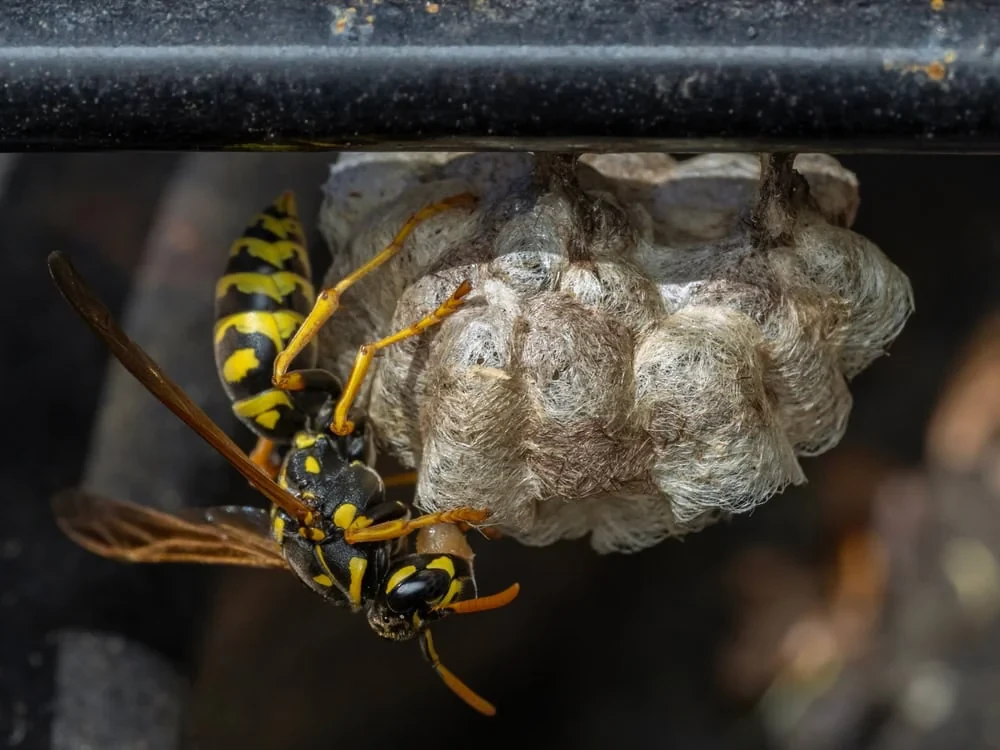
West Highland’s location puts it at the intersection of several conditions that drive yellow jacket pressure higher than you’d see in a typical suburban neighborhood. The Highland State Recreation Area covers 5,900 acres directly adjacent to the township’s western edge, providing an enormous expanse of woodland and meadow habitat where yellow jacket colonies establish themselves each spring. Yellow jacket workers forage up to a mile from the nest, which means properties along Hickory Ridge Road and the surrounding area are well within range of colonies nesting on state land.
On top of that, Highland Township’s 26 lakes and wooded lot character create the kind of undisturbed, moisture-rich ground conditions that Eastern Yellowjackets favor for underground nesting. Properties with larger lots, tree lines, or areas of undisturbed ground near wooded buffers are especially likely to develop ground nests in abandoned rodent burrows — which are abundant in this area. The combination of adjacent state land, wooded corridors, and semi-rural lot sizes makes annual yellow jacket activity a predictable pattern in West Highland, not a random occurrence.
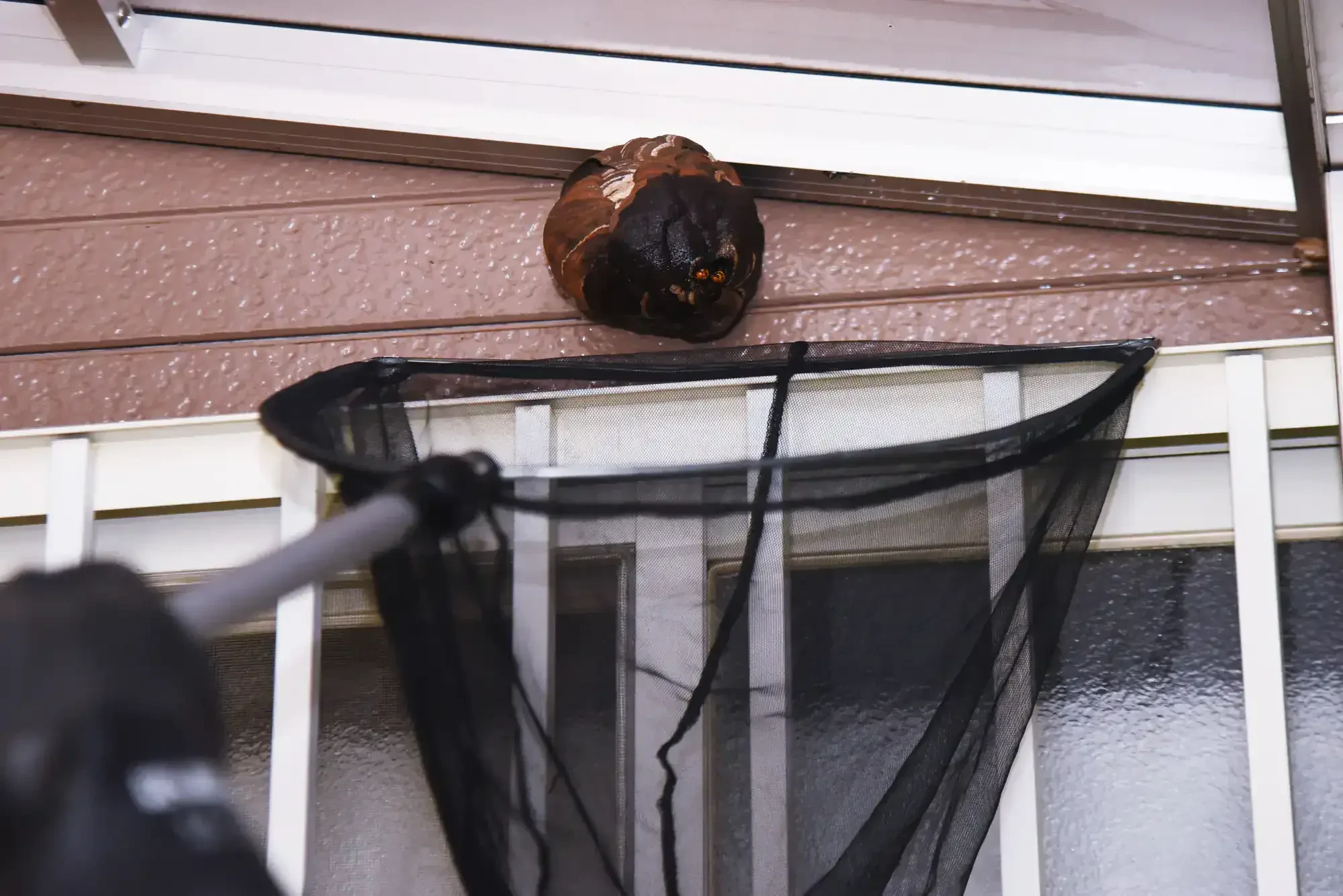
The clearest sign of a wall-void infestation is consistent traffic in and out of a specific gap or crack in your home’s exterior — around window frames, where siding meets trim, near soffit boards, or at chimney penetrations. If you’re seeing yellow jackets entering and exiting the same spot repeatedly, especially in the morning and late afternoon when foraging activity peaks, there’s almost certainly a nest on the other side of that wall.
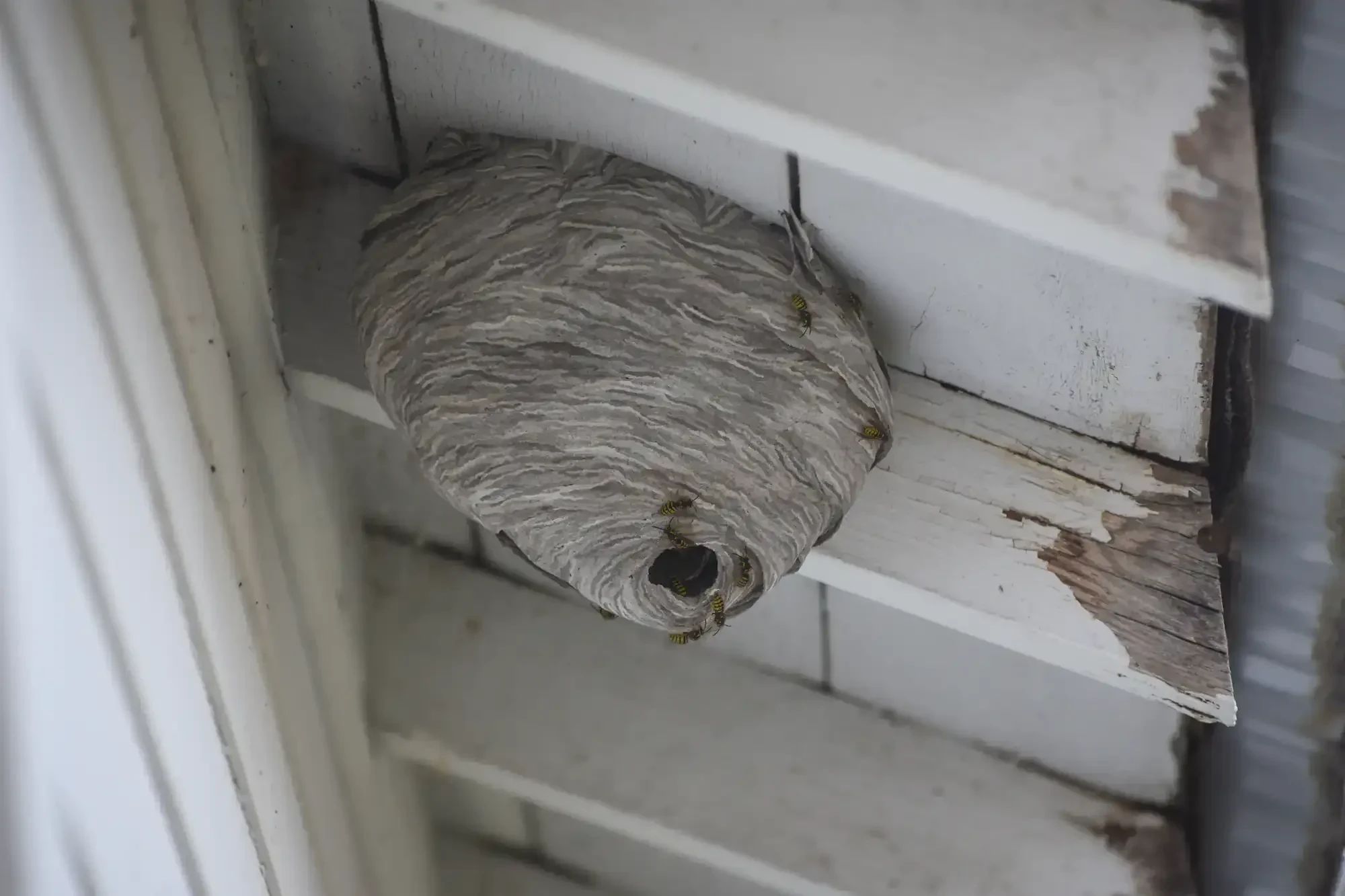
Older homes throughout the West Highland area — particularly those with wood siding, aging trim, or gaps around chimneys — are more vulnerable to this than newer construction with tighter building envelopes. The German Yellowjacket, which is the species most likely to nest inside structures in Michigan, actively seeks out enclosed cavities with temperature stability. Once inside a wall void, the colony expands by chewing through insulation and, in some cases, drywall. If you’ve started noticing yellow jackets appearing inside the house near light fixtures or outlets, that’s a sign the nest has grown and the colony is pressing further into the structure. At that point, professional treatment is the only realistic option.
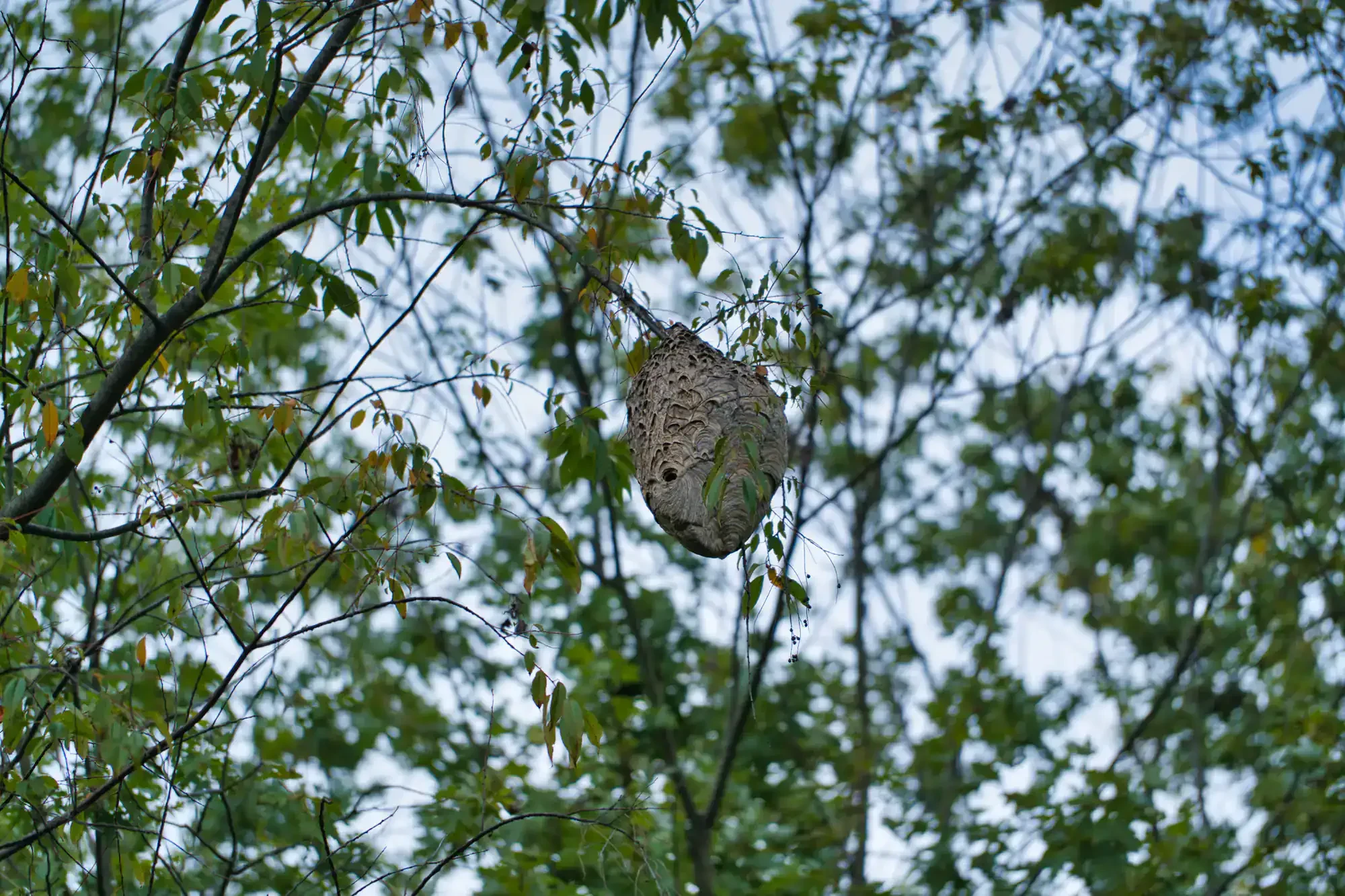
For a visible aerial nest in a low-traffic area, a store-bought aerosol applied at night when the colony is inactive can sometimes work. But that’s a narrow set of conditions, and most yellow jacket situations in West Highland don’t fit that description. Ground nests, wall-void infestations, and nests inside outbuildings or barn structures are a different situation entirely. Spraying the entry point of a wall-void nest typically triggers the colony’s alarm response, drives workers deeper into the structure, and increases aggression without reaching the queen or the nest core. The colony doesn’t die — it relocates or expands, and the problem gets harder to treat.
There’s also the anaphylaxis risk to consider. Between 0.5% and 4% of people have a severe allergic reaction to yellow jacket venom, and many don’t find out until the first sting. A disturbed colony in a wall void or barn can release dozens of workers in seconds. For properties with children, horses, or dogs nearby, that’s a serious safety concern. A licensed professional can identify the species, locate the nest accurately, apply treatment to the right point of entry, and do it with the proper protective equipment and application methods. The upfront cost is almost always less than the cost of a failed DIY attempt followed by a professional call anyway.
Yes — and this is one of the more serious yellow jacket risks for Highland Township properties specifically. Horse barns, hay storage structures, and wooden outbuildings are prime nesting environments for the German Yellowjacket. These structures offer enclosed cavities, temperature stability, and often undisturbed wall voids that go unnoticed for months while the colony builds through spring and early summer. By August, a nest inside a barn wall can hold several thousand workers.
Horses are at genuine risk from yellow jacket colonies nesting in or near their living spaces. Unlike humans, horses can’t quickly retreat from an attack, and a mass stinging event can cause serious injury or worse. The combination of a horse’s movement, scent, and vibration near a nest can trigger an aggressive response from a colony that’s already on edge during the late-summer peak. If you’ve noticed yellow jackets entering and exiting gaps in your barn’s siding, eaves, or foundation — or if your horses have been acting unusually agitated near a specific structure — that’s worth investigating before it becomes an emergency. We have experience treating agricultural and outbuilding infestations throughout Oakland County and can assess the situation safely.
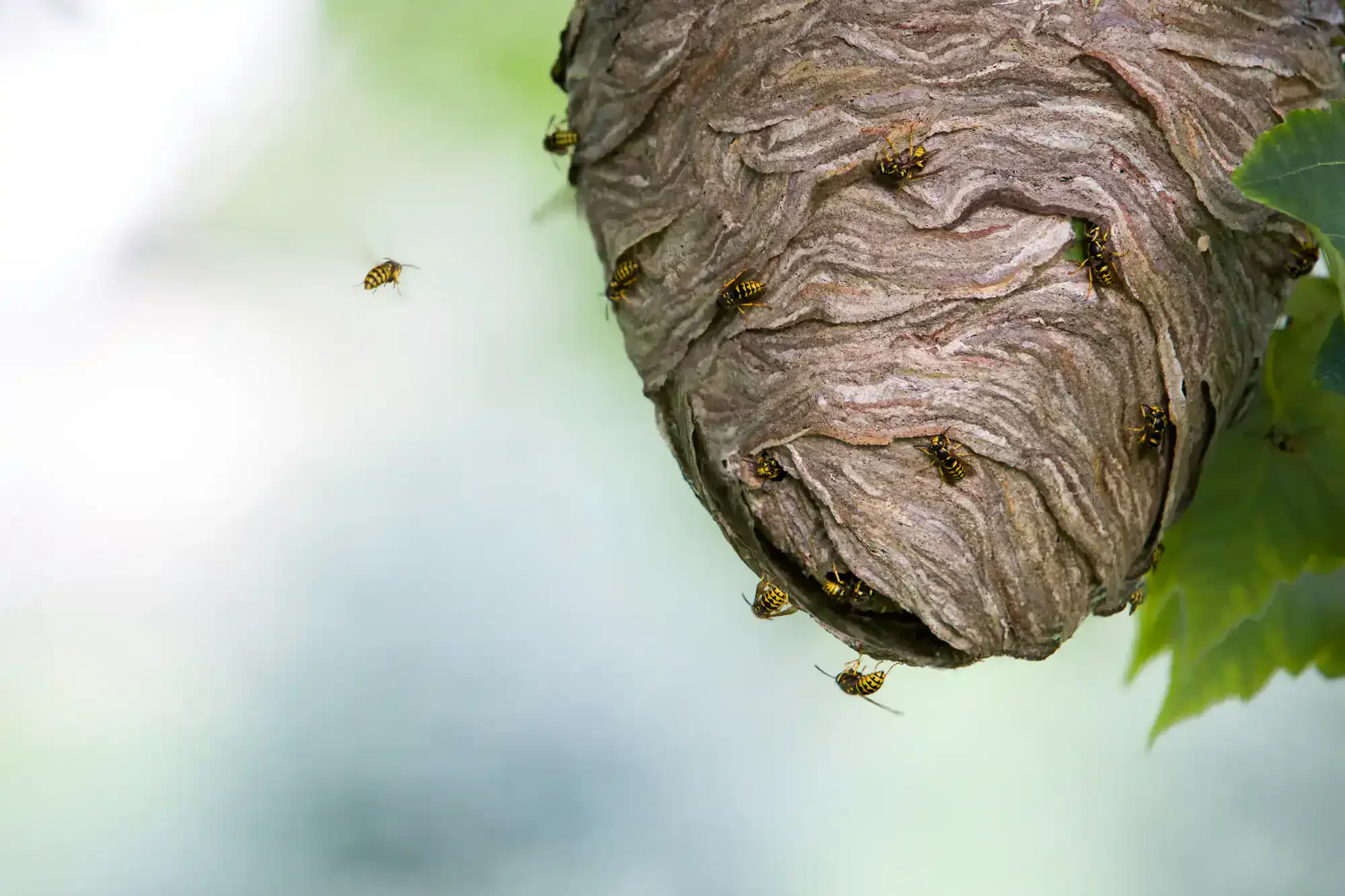
Yellow jacket queens in Michigan begin building new nests in late March or April, right after overwintering. Through May, June, and July, the colony grows steadily but stays relatively small and less aggressive. August and September are when things change — the colony reaches its maximum size, food sources start to dry up, and yellow jackets shift from hunting insects to aggressively scavenging sugary foods and beverages. That’s when they become most dangerous and most visible around outdoor spaces.
For West Highland homeowners, that late-summer peak hits exactly when you want to be using your property most — lakeside decks, backyard barbecues, outdoor areas near the barn, recreational use of the trails and parks nearby. The best time to call is as soon as you notice consistent yellow jacket activity near your home or outbuildings, even if it seems manageable. A colony that’s tolerable in June is often a serious problem by August. Waiting until the colony is at full size and maximum aggression makes the situation more dangerous and the treatment more complex. If you’re seeing yellow jackets regularly in the same area of your property, that’s the right time to have someone take a look.
We offer discounts for seniors, veterans, and first responders — and it’s worth asking about current availability when you call. Highland Township has a strong community of people who’ve spent careers in service, and these discounts are one way we acknowledge that directly.
Beyond discounts, we also match reasonable competitor rates. If you’ve already gotten a quote from another licensed pest control company serving the West Highland or Highland Township area, bring it up when you call. The goal is to make sure cost isn’t the reason you end up with a less experienced technician or a company that won’t stand behind their work. The 1-year service guarantee is included regardless of how you book — if yellow jacket activity returns within the guarantee period, we return at no additional charge. For a property in a wooded, wildlife-adjacent area like West Highland, that kind of coverage isn’t a minor detail. It’s what makes the investment in professional service actually worth it.
Useful Links