
Hear from Our Customers
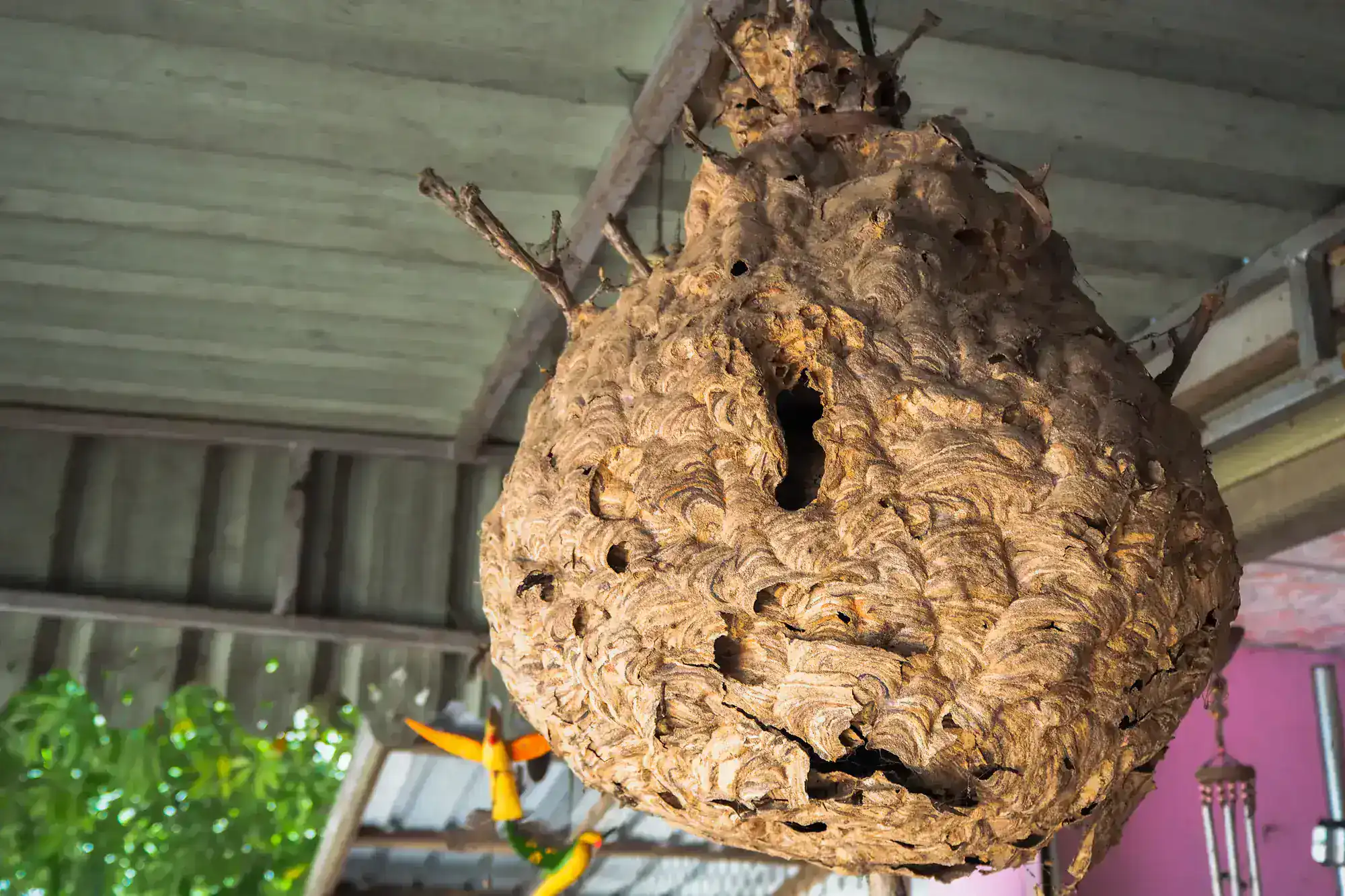
A hornet nest on a suburban porch eave is one thing. A colony buried in the rafters of a working barn, tucked into the wall void of a grain shed, or hanging in the tree line at the edge of your field is something else entirely. In Newark Township, where properties spread across open farmland and outbuildings are part of daily life, hornets don’t just show up in one obvious place — they show up where you least expect them, and often where you can’t afford a surprise.
When the problem gets handled right, you stop second-guessing whether it’s safe to walk into the barn. Your kids can be outside again. You can get back to the work that actually needs doing without watching over your shoulder every time you pass a tree line or open a shed door.
The other thing worth knowing: hornets get worse the longer you wait. A colony that starts as a golf ball in May can be the size of a basketball by August — right when harvest season puts you outside the most. Getting ahead of it early is almost always cheaper and safer than calling after someone’s already been stung.
First Choice Pest Control was founded on May 31, 2005 — which means in 2025, we’re marking 20 years of solving pest problems across mid-Michigan. Roger, our owner, has 26 years of hands-on experience and still leads the company he built. That’s not a detail buried in an About page — it’s the reason the work actually gets done right.
We serve residential and commercial customers across our Michigan service area, including the rural farmsteads and agricultural properties throughout Gratiot County and Newark. We hold Michigan Pesticide Application Business License #250081, carry IPM training certification recognized by MDARD, and have earned awards from both Angie’s List and HomeAdvisor. These aren’t credentials collected for a website — they reflect a company that has had to earn its reputation job by job, year after year.
For Newark residents who’ve dealt with pest control companies that treat every property like a suburban split-level, we’re a different conversation. We understand what a rural property actually looks like.
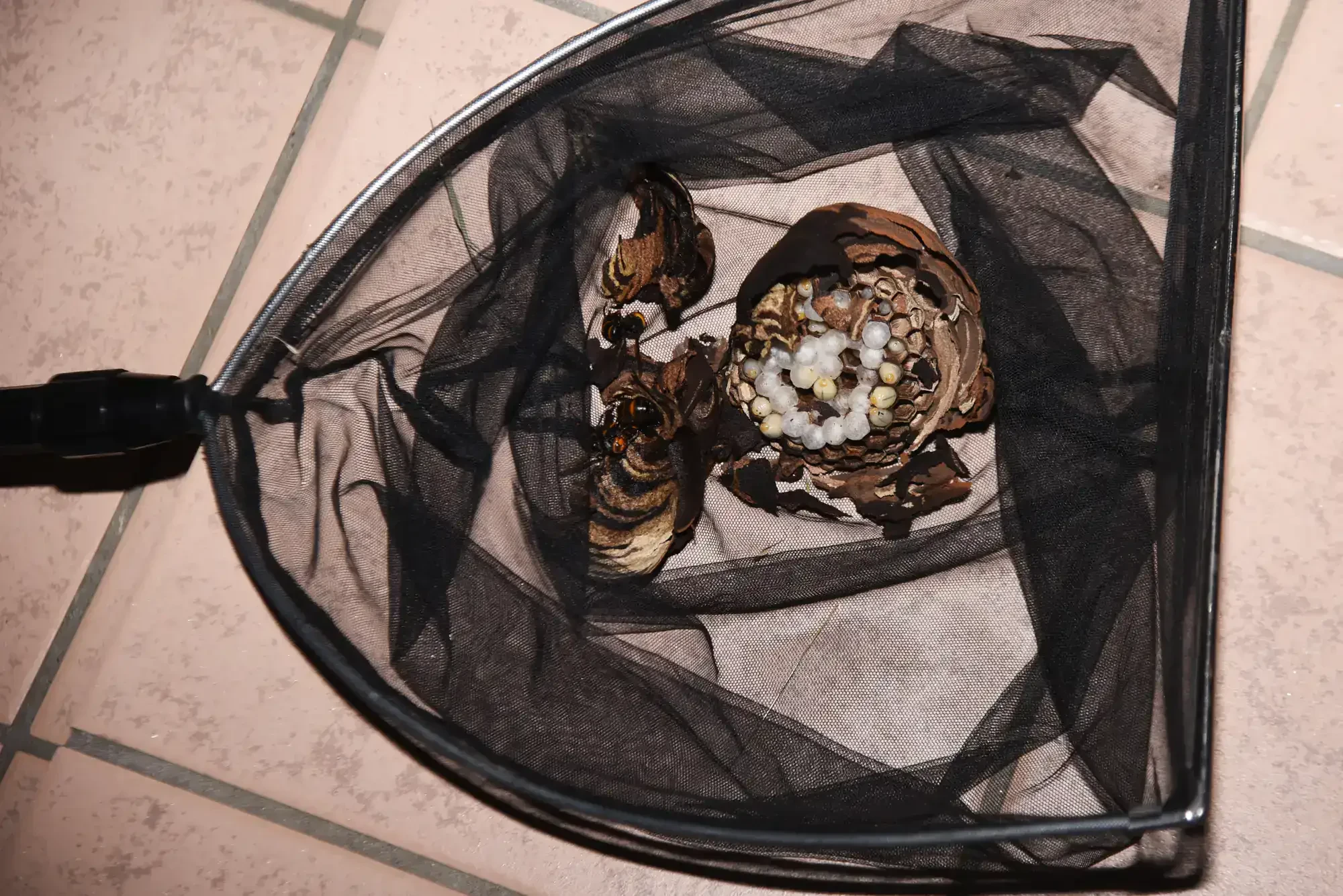
It starts with a call. You describe what you’re seeing — where the nest is, how long it’s been there, whether anyone’s been stung — and we use that information to come prepared. On a Newark property, that often means planning for more than one structure. Barns, equipment sheds, detached garages, and tree lines all get checked, not just the spot you called about. A technician who only treats the visible nest and misses the satellite colony in the outbuilding hasn’t solved your problem.
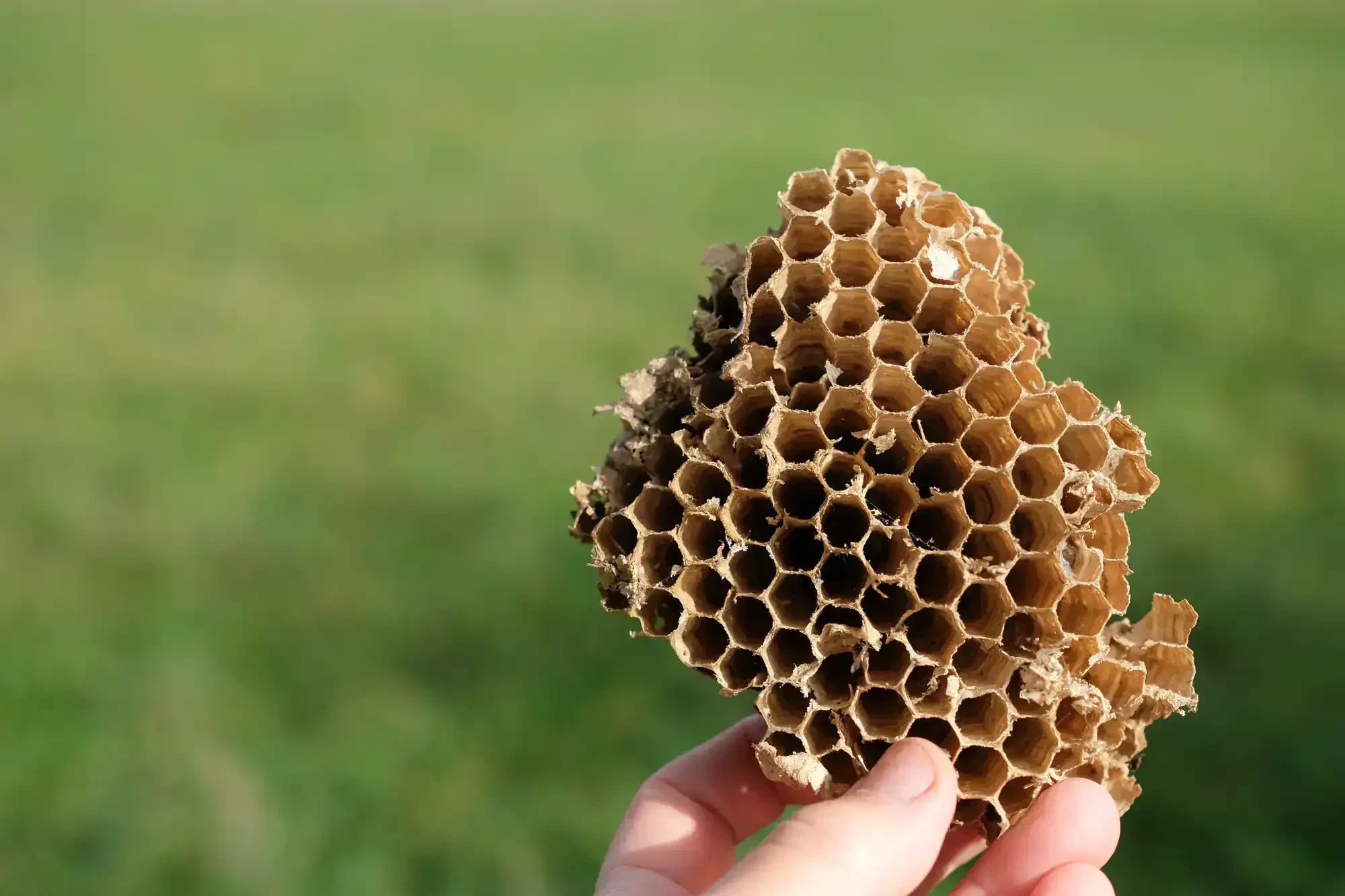
Once on-site, our technician identifies the species first. Bald-faced hornets — Michigan’s most common and most aggressive — build those enclosed paper nests you’ll find in trees and under eaves. European hornets nest in wall voids, hollow trees, and attic spaces, and they’re active at night, which is often how people in rural areas first realize something’s wrong. Treatment varies by species and location. Wall void nests require a different approach than a tree nest ten feet off the ground. The right tool for the job matters.
After treatment, you’ll know exactly what was done, what to watch for, and what to do if activity continues. If a return visit is needed, we come back — no additional charge. You’re paying for the result, not just the attempt.
Ready to get started?
Most pest control companies are set up for subdivisions. We’re equipped for the kind of properties that actually exist in Newark Township — spread across 34 square miles of Gratiot County farmland, with multiple structures, mature tree cover, and the kind of nesting situations that a can of hardware store spray was never going to fix.
Our IPM certification through MDARD means every treatment is targeted. For Newark property owners with livestock, gardens, or agricultural land nearby, that matters. You’re not getting a blanket chemical application across your entire property — you’re getting a treatment matched to the specific species, the specific location, and the specific risk level. That approach protects your animals, your land, and your family without overkill.
Pricing is flat-rate and upfront — you know the number before anyone shows up. We also match reasonable competitor rates, so if you’ve already gotten a quote from another company serving the Gratiot County area, bring it. Discounts are available for seniors, veterans, and first responders, which matters in a community like Newark where those groups make up a real and meaningful part of the population. No contracts, no hidden fees, no surprises on the invoice.
The honest answer is: if you’re asking, it probably does. Most homeowners who call have already tried a store-bought spray, watched it fail, and made the colony more aggressive in the process. By the time a nest is visible — on a barn eave, in a tree, under a shed overhang — it’s usually large enough that DIY treatment carries real risk, especially on a rural Newark property where you may not have neighbors nearby or quick access to MidMichigan Medical Center–Gratiot in Ithaca if a reaction happens.
Size is one indicator. A nest bigger than a softball has hundreds of workers and will defend aggressively if disturbed. Location is another — a nest inside a wall void, in an attic, or in the rafters of a working barn is not accessible with a spray can and requires professional-grade dust treatment to reach the colony effectively. If you’ve been stung once already, or if the nest is anywhere near a door, a path you walk daily, or an area where animals or children are present, professional removal is the right call.
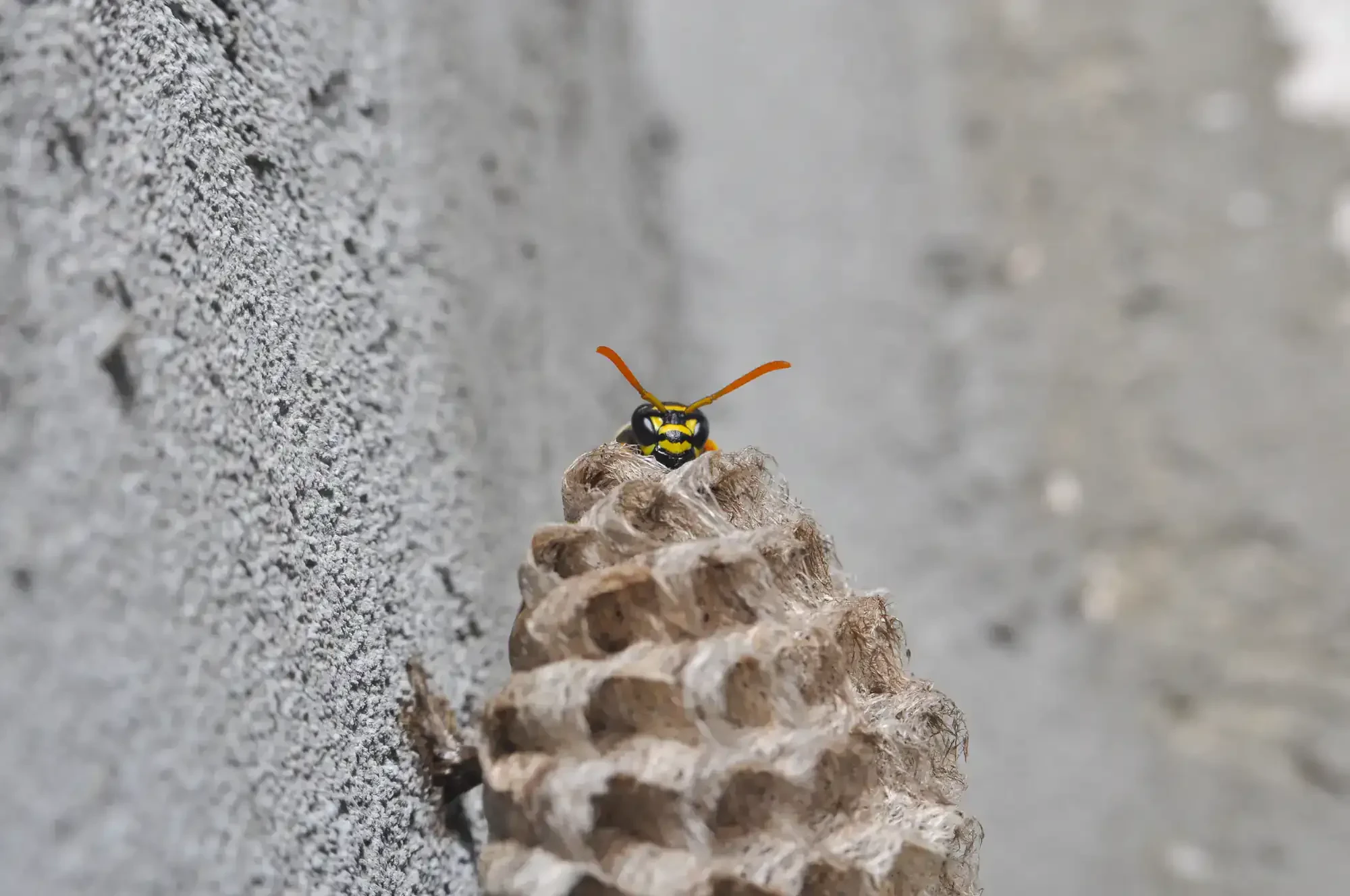
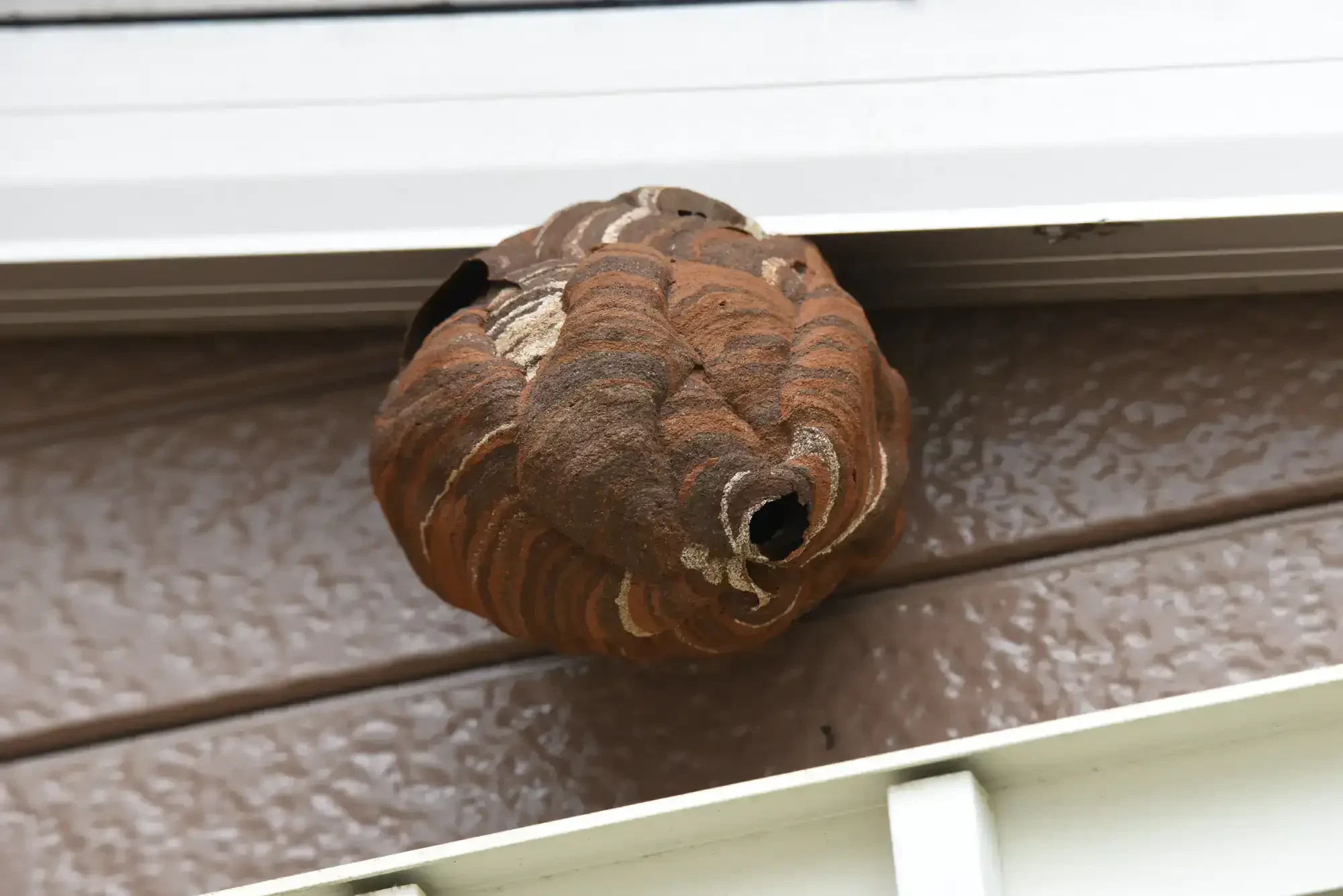
It does, and the distinction is worth understanding before anyone starts spraying. In Michigan, the two insects you’re most likely dealing with are the bald-faced hornet and the paper wasp. Bald-faced hornets are larger, black and white, and build those enclosed, football-shaped paper nests — usually in trees, under eaves, or on the sides of structures. They’re highly aggressive when disturbed and will chase. Paper wasps build the open, umbrella-shaped nests you’ll often see under porch overhangs or on the top of door frames. They’re defensive but less volatile.
The European hornet is the only true hornet in North America and tends to nest inside wall voids, hollow trees, and attic spaces. They’re active at night, which is how a lot of rural property owners in Gratiot County first discover them — hearing buzzing inside a wall after dark. Treatment for an enclosed wall void nest is completely different from treating a tree nest. Getting the species identification right before treatment is part of what separates a professional service from a guess.
The earlier in the season, the better — and that’s not just a sales line. In central Michigan, hornet queens come out of hibernation in April and May and immediately start building. A nest treated in late May or June is a fraction of the size it will be in August, which means less colony activity, less aggression, and a lower cost. By the time Gratiot County hits peak harvest season in August and September, a neglected nest can hold several hundred workers — all of them defensive and all of them active during the exact hours you’re outside working.
That said, if it’s August and you’ve got a problem, don’t wait. A large late-season colony is more dangerous, but it’s still a manageable professional removal. What you want to avoid is letting an active nest sit through the fall, because while the workers die off in winter, the new queens that were produced will overwinter nearby and return to establish in the same area next spring. Removal plus prevention in the same visit is the smarter long-term approach.
Yes, and there are a few specific reasons for it. Rural properties in Newark Township typically have more nesting opportunities — mature trees, woodlots, windbreaks, and multiple outbuildings all provide exactly the kind of sheltered, low-traffic spaces where hornets prefer to establish. A barn that gets opened twice a week is a very different environment than a front door that gets used ten times a day. Nests in lower-traffic structures can grow undetected for months before anyone notices.
There’s also the exposure factor. On a working rural property, you’re outside more often and in more varied locations than a typical suburban homeowner. A farmer walking into a storage shed during equipment maintenance, or someone moving through a tree line to check on livestock, is encountering more potential nest sites with less predictability. The flat, open landscape of Gratiot County also means fewer natural barriers between your activity and an active colony. That combination of more nesting habitat and more unstructured outdoor movement is exactly why professional hornet removal calls from rural areas tend to involve larger, more established colonies.
They can, and it happens more often than most people expect — especially in older rural structures. European hornets in particular are drawn to wall voids, hollow spaces in attic framing, and gaps in the exterior of buildings that give them access to a protected interior cavity. On agricultural properties in Newark Township, older barns and outbuildings with weathered siding, open soffits, or gaps around utility penetrations are especially vulnerable. These are exactly the kinds of structures that don’t get inspected regularly.
The challenge with interior nests is that you can’t treat them effectively from the outside. A spray applied to the entry point will kill foragers but leave the colony intact inside the wall. Professional treatment for a wall void nest uses professional-grade dust injected directly into the cavity, which reaches the colony and prevents reinfestation. It also requires knowing where the nest actually is — not just where the entry point is — which is why a thorough inspection matters before any treatment starts. If you’re hearing buzzing inside a wall at night, that’s a strong indicator of a European hornet colony and worth a professional assessment.
Yes — we offer discounts for seniors, veterans, and first responders. In a community like Newark Township, where a significant portion of residents are older homeowners on fixed incomes or have served in the military or as first responders, those discounts reflect a genuine understanding of who lives here and what fair pricing actually means to them.
Beyond the discounts, we also match reasonable competitor rates. So if you’ve already gotten a quote from another pest control company serving the Gratiot County area, you don’t have to choose between the more experienced option and the more affordable one. Pricing is flat-rate and given upfront — there are no rural service surcharges, no mileage add-ons, and no line items that weren’t discussed before the technician arrived. What you’re quoted is what you pay. And if the job requires a return visit to fully resolve the problem, that’s covered — no additional charge.
Useful Links