
Hear from Our Customers
You shouldn’t have to think twice before walking to your barn, firing up the grill on the deck, or letting the kids loose in the backyard. That’s what a wasp problem actually costs you — not just a sting, but the daily calculation of whether it’s safe to go outside. Professional wasp nest removal in West Highland ends that calculation.
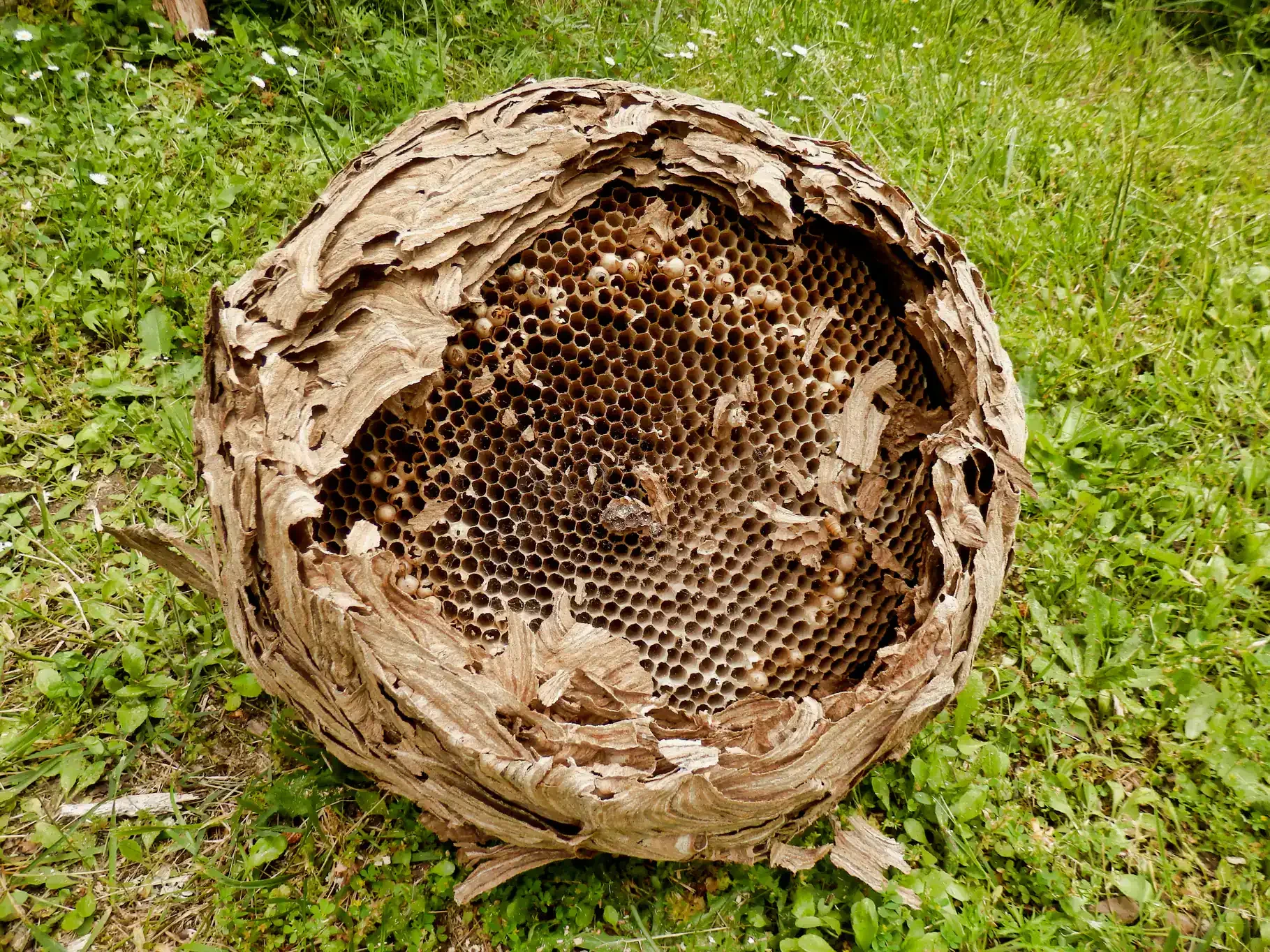
West Highland’s landscape is genuinely different from a standard suburban neighborhood. The wooded acreage lots, the proximity to the Highland State Recreation Area, the moisture-rich ground along wooded fence lines — all of it creates prime nesting habitat for yellow jackets and paper wasps. A nest that started small in May can hold 5,000 or more workers by August. By the time most homeowners on larger, wooded properties even find it, the colony is at full size and fully aggressive.
If you have horses, dogs, or kids who spend time outside, the stakes are real. Yellow jackets disturbed near a paddock or play area don’t give warnings. We eliminate the colony, remove the nest structure, and seal the entry point so the same spot doesn’t become next season’s problem. That’s the outcome — not just gone today, but handled.
First Choice Pest Control was founded on May 31, 2005 — which means 2025 marks 20 years of protecting Michigan homes and properties. We’re a family-owned, owner-operated business led by Roger Chinault, who brings 26 years of hands-on pest control experience to every job. That’s not a credential on a wall. That’s someone who has seen every version of a Michigan wasp problem a property can produce and knows exactly how to handle it.
We hold Integrated Pest Management training credentials and have earned recognition from both Angie’s List and HomeAdvisor — platforms where reviews are verified and awards reflect sustained performance over time. We serve both residential and commercial customers throughout West Highland and Highland Township, carry full MDARD licensing and insurance, and operate without binding contracts. You call when you need help, the work gets done right, and you decide whether to call us back.
For West Highland and Highland Township homeowners — many of whom are on larger, wooded properties near the M-59 corridor or bordering the Highland State Recreation Area — that combination of experience, accountability, and no-contract flexibility is exactly what the job calls for.
It starts with a call. You describe what you’re seeing — where the nest is, how active it looks, whether anyone has been stung. That conversation matters because location and species affect the approach. A paper wasp nest under a deck eave is handled differently than a yellow jacket colony in the ground along a wooded fence line, and West Highland properties tend to have both.
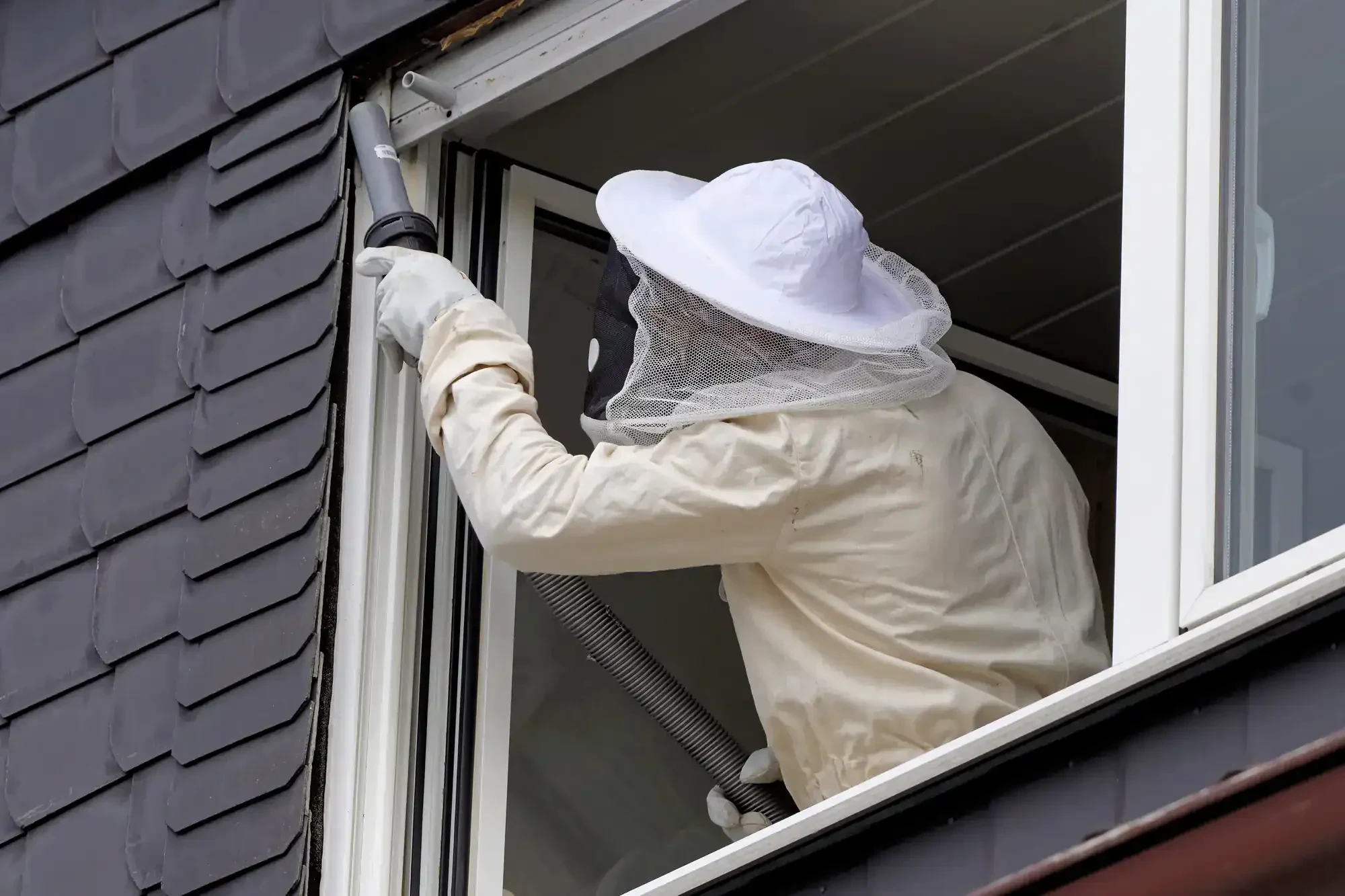
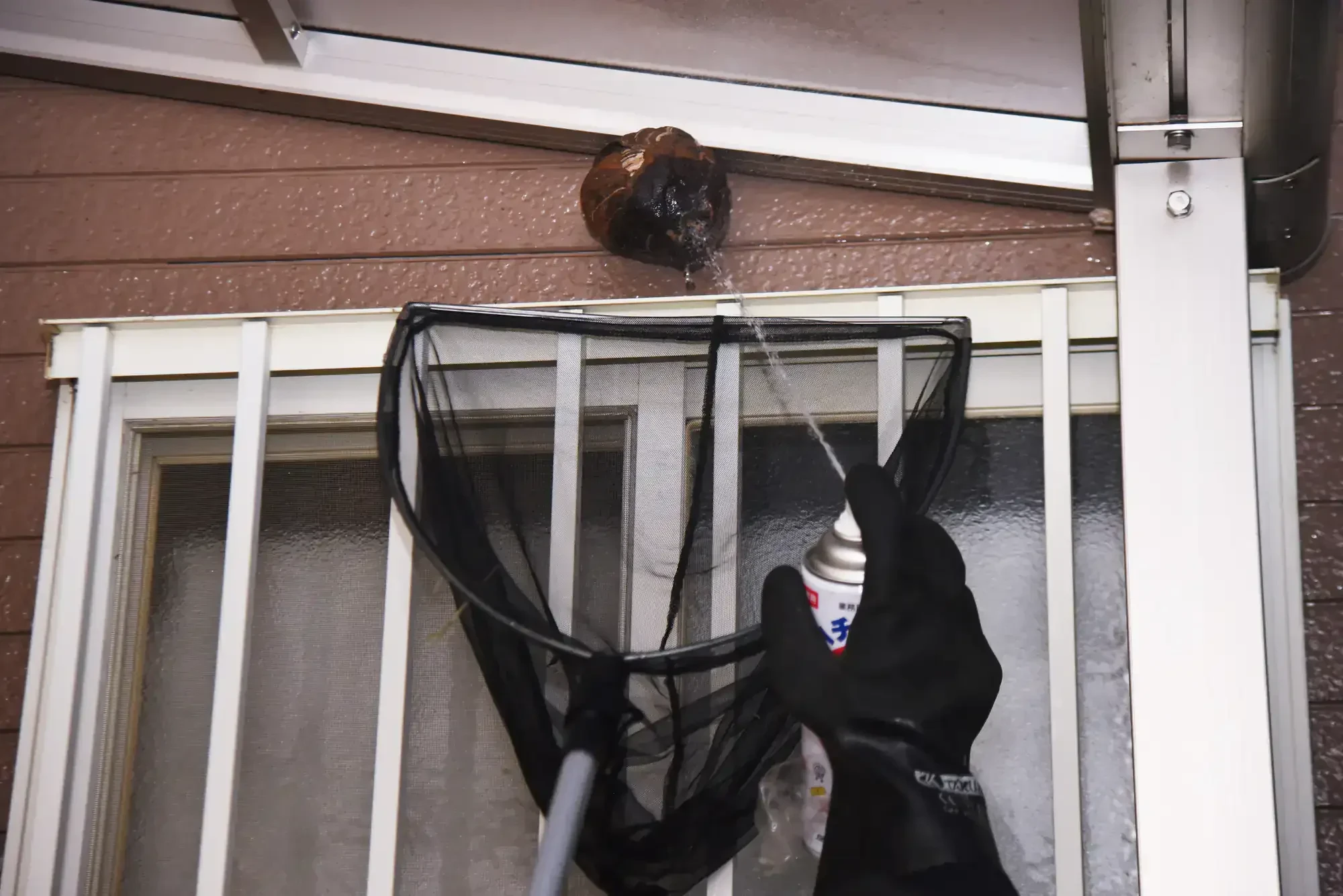
From there, a technician comes out and does a full inspection — not just the nest you found, but the rest of the property. On larger, wooded lots, there’s often more than one nesting site, and finding them all on the front end saves you from dealing with a second problem two weeks later. We apply treatment based on what’s actually there, not a blanket spray approach. Our IPM training means the treatment is precise — effective where it needs to be, and not excessive where it doesn’t.
After treatment, we remove the nest structure and seal entry points. You’ll get a clear answer on when it’s safe to go back outside — specific timing for your family, your pets, and your animals, not a vague “give it a few hours.” Michigan’s peak wasp season runs August through September, and that’s when response time matters most. We move quickly because a mature colony doesn’t wait.
Ready to get started?
Most wasp removal calls in West Highland involve one of three scenarios: a yellow jacket colony in the ground on a wooded lot, a paper wasp nest built under a deck eave or barn overhang, or a nest inside a wall void or outbuilding that wasn’t discovered until the colony was already large. All three are common here, and all three require different treatment strategies. We handle all of them — and our inspection covers your full property, not just the one spot you called about.
Highland Township’s character as Michigan’s first officially designated equestrian community means a significant portion of local properties include horse facilities, detached outbuildings, and substantial wooded perimeters. These are exactly the structures where wasps establish nests early in the season and where a missed colony creates real risk for people and animals working outdoors daily. Our service accounts for that — treatment is thorough, and post-treatment safety communication covers livestock and pets specifically.
There are no special municipal permits required for wasp nest removal in West Highland. All pest control in Michigan is regulated at the state level through MDARD, and we’re fully licensed and insured under that framework. Seniors, veterans, and first responders receive discounts, and we’ll match any reasonable competitor’s rate. No contracts, no pressure — just the work done right.
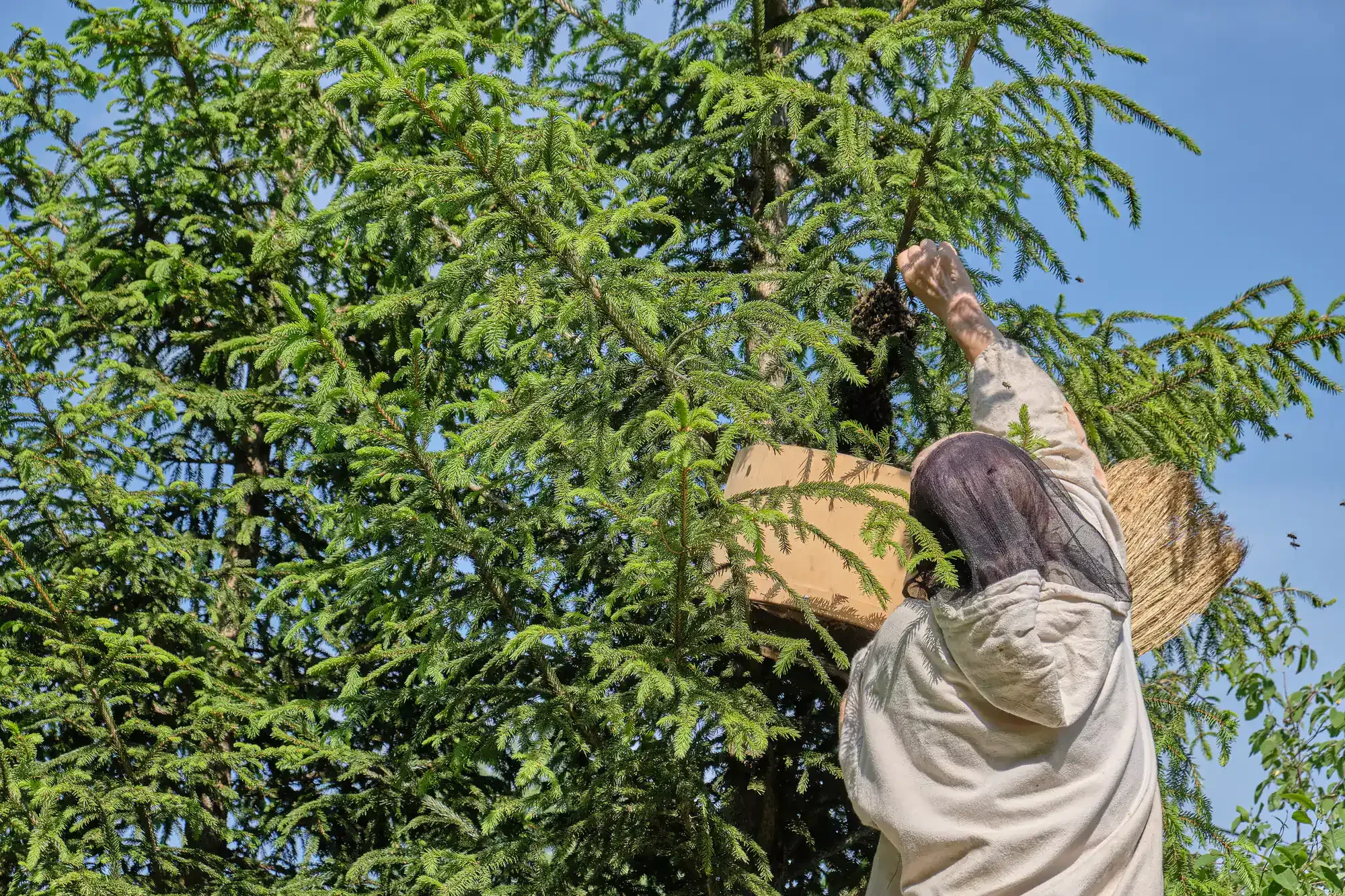
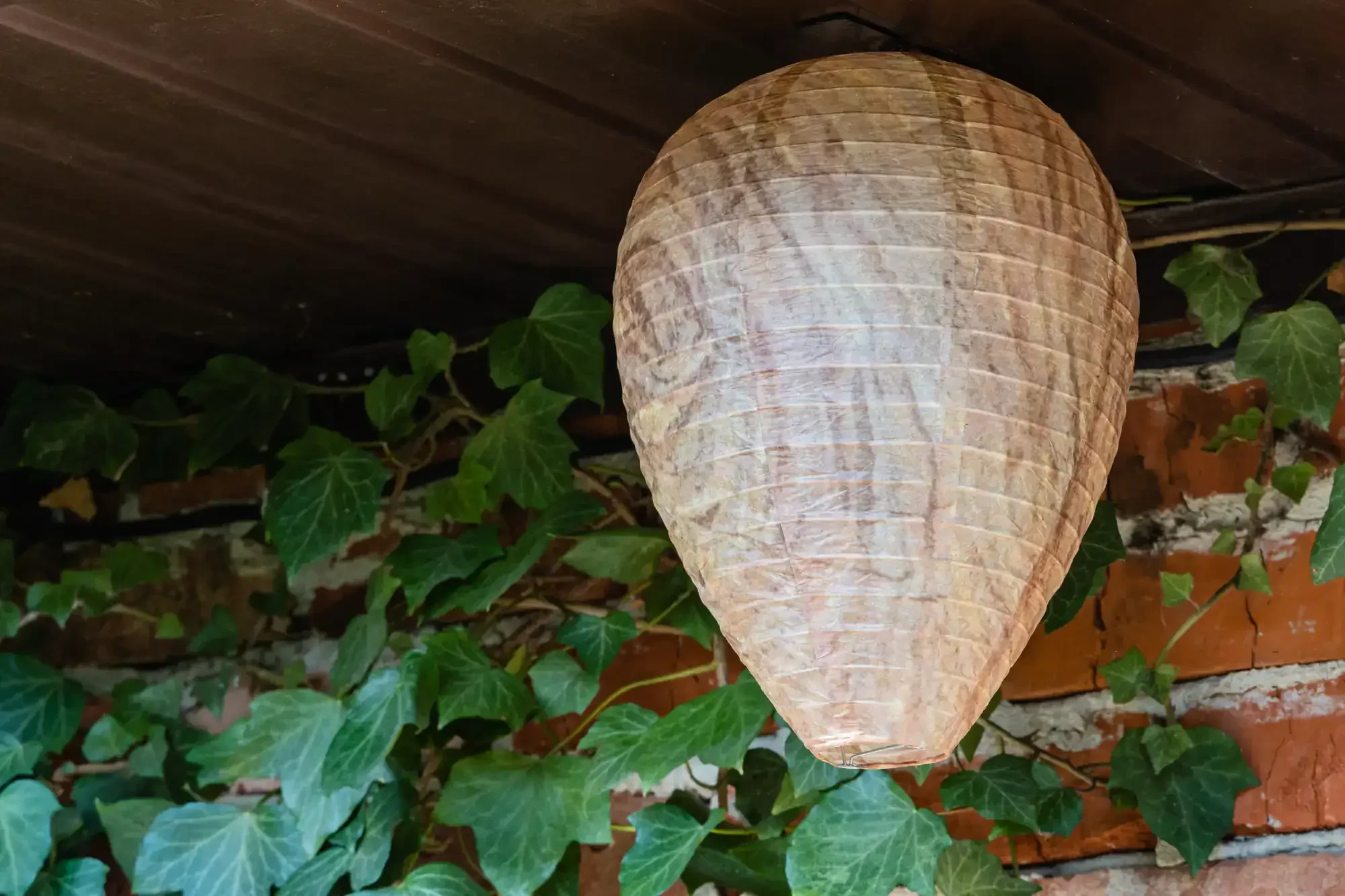
The two most common stinging insects on West Highland properties are yellow jackets and paper wasps, and they behave very differently. Paper wasps build the open, umbrella-shaped nests you typically see under eaves, deck railings, barn overhangs, and porch ceilings. They’re territorial but generally won’t chase you unless you get close to the nest. Yellow jackets are a different story — they nest in the ground, in wall voids, and in wood piles, which makes them easy to stumble into accidentally while mowing, gardening, or working around outbuildings.
West Highland’s combination of wooded acreage lots, mature tree canopies, and proximity to the Highland State Recreation Area creates ideal habitat for both species. Yellow jackets especially favor the moist, sheltered ground along wooded fence lines and near the base of old tree stumps — conditions that are common throughout Highland Township. If you’re finding wasps near a structure or coming up out of the ground, don’t assume it’s a small problem. By late summer, a yellow jacket colony can hold thousands of workers, and disturbing it without professional treatment puts everyone nearby at serious risk.
August and September are the peak months for stinging insect activity in West Highland and throughout Michigan. Queen wasps emerge from overwintering sites in April or May and begin building new colonies in sheltered locations — under eaves, in the ground, inside wall voids. Through June and July, the colony grows steadily. By August, it can contain 5,000 or more workers, and that’s when the aggression level peaks. Natural food sources start declining in late summer, which pushes yellow jacket workers to forage more aggressively near outdoor dining areas, trash cans, and anywhere people are spending time outside.
For West Highland residents who use their properties heavily in summer — lakefront decks, outdoor entertaining spaces, equestrian facilities — August is exactly when stinging insect pressure is highest and when a nest that went unnoticed all season suddenly becomes a real problem. The most important thing to know is that waiting doesn’t help. A colony at full size in August is significantly harder and riskier to deal with than one caught earlier in the season. If you find a nest, the right time to call is now.
DIY wasp removal carries real risk even on a standard suburban lot — on a wooded, acreage-style Highland Township property, the variables multiply quickly. The main problem with DIY treatment is that it rarely eliminates the full colony. Over-the-counter sprays can agitate workers without killing the queen or reaching the nest core, which means you’ve now got thousands of disturbed, defensive wasps and a colony that’s still alive. If the nest is in the ground or inside a wall void — both common on West Highland’s larger properties — you likely can’t even reach the colony effectively without professional equipment.
There’s also the anaphylaxis risk to consider. Roughly 1–3% of adults can develop a life-threatening reaction to a single sting, and anyone who’s had a severe reaction before faces a significantly higher chance of anaphylaxis on the next exposure. We remove the colony, remove the physical nest, seal the entry point, and tell you exactly when it’s safe to return to that area. For a property with horses, dogs, or children nearby, that level of certainty is worth the call. The national average for professional wasp nest removal runs $375–$525, with yellow jacket removal averaging around $725 for more complex ground or wall-void nests.
Yellow jackets near equestrian facilities are a specific concern in Highland Township, and they’re more common than most horse owners expect. The signs to watch for are consistent wasp traffic in and out of a single point at ground level, near the base of a fence post, under a barn floor board, or along a wooded perimeter. If you’re seeing wasps coming up from the ground rather than flying in from a distance, there’s a very good chance you’re looking at an active underground colony rather than individual foragers.
The risk on equestrian properties is compounded by the fact that horses, lawnmowers, and outdoor equipment can disturb a ground nest without any warning. A yellow jacket colony mobilizes fast — workers can emerge in large numbers within seconds of a disturbance. For horses in a paddock, that’s a dangerous situation that can result in injury to both the animal and the handler. If you’re seeing consistent wasp activity near your barn, outbuildings, or fence lines, have it inspected before someone — or something — stumbles into it. We cover the full property perimeter during inspection, not just the one spot you’ve noticed.
Wasps don’t reuse the same physical nest the following year — colonies die off each fall with the first hard frosts, and the nest itself is abandoned. But yellow jackets and paper wasps absolutely return to the same favorable locations season after season. If a spot offered good shelter, low traffic, and easy access last year, a new queen will find it again in spring. That’s why nest removal alone isn’t enough — entry points need to be sealed after treatment to close off the location for future colonies.
On West Highland’s wooded, acreage-style properties, this is especially relevant. A barn eave that hosted a paper wasp nest last summer will attract another queen next April if the access point isn’t addressed. A ground nest along a wooded fence line that was treated but not filled and sealed creates the same opportunity for next year’s colony. We seal entry points as part of our service — not as an add-on. If you’ve had a nest in the same general area two or three years in a row, that’s a sign the location itself needs to be addressed, not just the current colony.
Yes — we extend discounts to seniors, veterans, and first responders throughout our service area, including West Highland and Highland Township. For homeowners who have spent decades building and maintaining a property in this community, that discount is a straightforward acknowledgment of what that kind of commitment deserves. It applies to wasp nest removal and other pest control services — just mention it when you call.
We also offer price matching for reasonable competitor rates, so if you’ve already gotten a quote from another licensed, insured provider, bring it up. Our no-contract model means there’s no obligation beyond the service itself — you pay for the work, the work gets done right, and you choose whether to call us back based on the results. For West Highland homeowners who value straightforward business relationships over sales pressure and recurring billing, that’s the way we’ve operated for 20 years, and it’s not changing.
Useful Links